

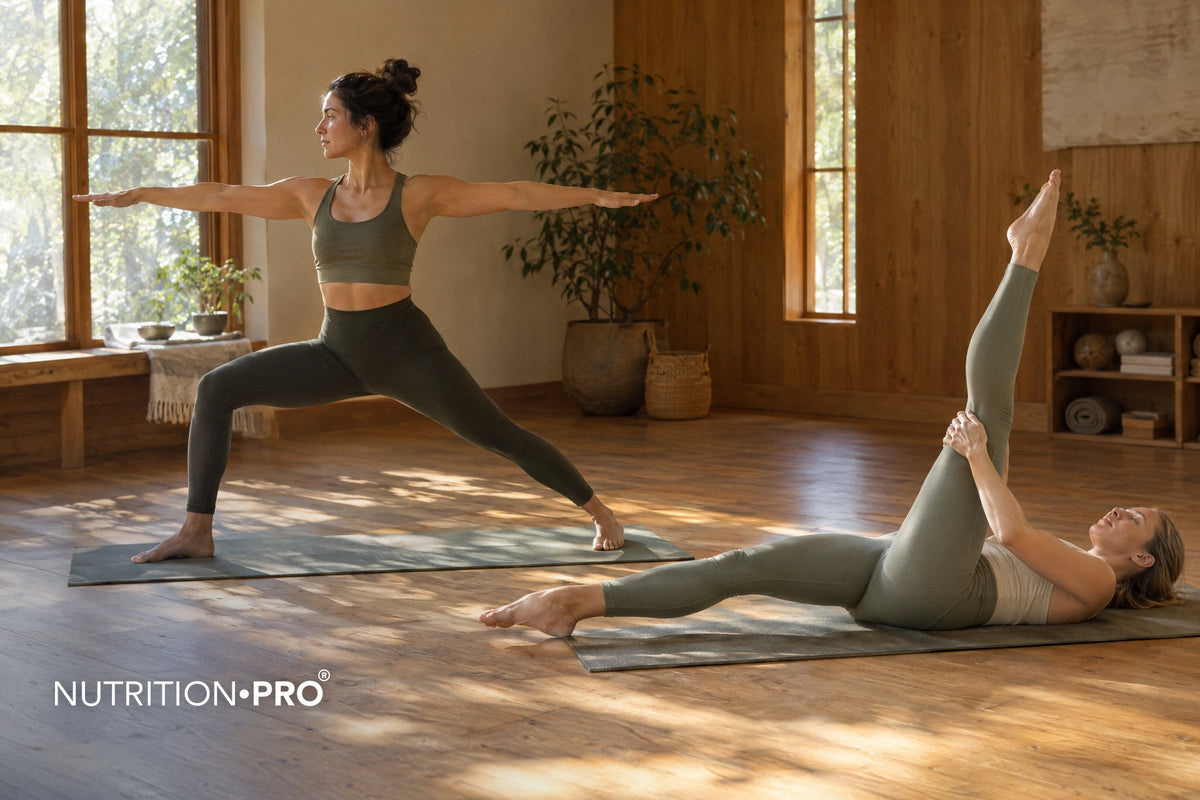
Pilates or yoga? In a network meta-analysis comparing exercises for chronic back pain across 118 trials and 9,710 participants, Pilates ranks at the top. Yet when a Korean team assigned stressed adults to either a Pilates class or a yoga class for 8 weeks, flexibility, balance, perceived stress, and anxiety improved comparably in both groups.
This guide brings together what studies identified via PubMed show: origins and flow of a session, trials directly comparing both methods, effects on the back, balance, strength, stress, sleep, and weight. Followed by a table by objective, a typical week, our advice on mats and trials on magnesium.

Two methods, similar benefits : yoga, born in India, combines postures, breathing, and often meditation; Pilates, created by Joseph Pilates (1883-1967), focuses on core engagement, control, and precision. The rare trials that directly compare them, all small, find comparable progress on flexibility, balance, stress, and neck pain. Neither burns many calories.
According to your objective : against chronic back pain, Pilates ranks at the top of several network meta-analyses, with weak level of evidence, and yoga performs as well as other exercises. Yoga is better studied for anxiety; Pilates ranks ahead of yoga, with no significant difference, in a large indirect comparison on sleep. Magnesium might slightly shorten sleep onset, with weak level of evidence; for stress, available trials lack placebo control or are of poor quality.
- Yoga and Pilates: two histories, two philosophies
- The flow of a session
- Trials that compare them directly
- Pilates or yoga for the back
- Balance, flexibility, and strength
- Stress, anxiety, and mood
- Sleep: Pilates ranked first in a large comparison
- Pilates or yoga to lose weight?
- Which to choose according to your objective
- Combining yoga and Pilates throughout the week
- One mat for both practices
- Magnesium, stress and sleep: what the research says
- Frequently asked questions
Yoga and Pilates: two histories, two philosophies
<<<19>>> Yoga yoga originated in India, within an ancient philosophical and spiritual tradition. In the West, it combines postures (asanas), breathing exercises (pranayama) and often includes a time for meditation or relaxation. A review of 306 randomized trials identified 52 styles, including hatha yoga (36 trials) and Iyengar yoga (31 trials): 91% of trials concluded there was a benefit, with no significant difference between styles, and the authors suggest that the choice can be made according to your preferences.
<<<22>>> Pilates Pilates takes its name from Joseph Pilates (1883-1967), whose machines, designed according to his plans, still equip studios, starting with the reformer; it is also practiced on the floor, on a mat. A review of 119 publications defines it as a mind-body exercise focused on strength, core stability, flexibility, muscular control, posture and breathing; its historical principles, from centering to fluidity, were mentioned in only 23% of articles on average.
Both care for breathing and alignment, but yoga makes breathing and meditation practices in their own right, while Pilates is primarily a strengthening method.
| Criterion | Yoga | Pilates |
|---|---|---|
| Origin | India, philosophical and spiritual tradition | Joseph Pilates (1883-1967) |
| Heart of the session | Held or flowing postures, breathing, relaxation | Precise and controlled exercises, core stability |
| Breathing | Practice in its own right, pranayama | Principle of the method, in service of movement |
| Equipment | A mat, sometimes blocks and a strap | A mat, or machines such as the reformer |
| Intensity | Mainly light, more sustained in dynamic flow sequences | Light, low heart strain |
| Key strengths studied | Anxiety, balance, flexibility, back | Back, balance, flexibility, sleep |
The structure of a session
The Korean trial cited in the introduction describes its 60-minute sessions, conducted at the same perceived intensity, 12 on the Borg scale of 6 to 20. On the yoga side, about twenty sun salutation B sequences, a flow of 17 postures, from chair to downward dog, on ujjayi breathing, through the nose, mouth closed. On the Pilates side, 21 classic floor exercises, from hundred to roll-up including shoulder bridge, focused on core stabilization.
In group classes, a yoga session often ends with guided relaxation lying down; a floor Pilates session chains short and precise series, on the back, side, or belly. In both cases, everything happens barefoot on a mat: a thin and non-slip model, like our NP Pilates Mat, works equally well for yoga's standing postures and Pilates' lying exercises.
On the expenditure side, a review of 17 studies using indirect calorimetry places a yoga session at 3.3 METs on average (ranging from 1.83 to 7.4), 2.9 without the extreme value of sun salutations: approximately 2.2 METs for isolated postures, 1.3 for breathing exercises, and moderate to vigorous intensity for a few sequences like sun salutations. For Pilates, a trial in 18 young women averaging 61 kg measured 1.93 kcal per minute on the floor and 2.59 on the reformer, or approximately 115 and 155 kcal per hour at this pace, by our calculation, with no notable increase in heart rate or blood lactate compared to rest.
The MET expresses an activity's energy expenditure in multiples of resting expenditure: below 3 METs, an activity is light, from 3 to 6 METs, moderate, according to the classification adopted by the review. Yoga and Pilates therefore remain most often of light intensity.
Trials comparing them directly
In 24 adults aged 30 to 39 with moderate stress, two 60-minute sessions per week for 8 weeks improved flexibility, balance, perceived stress, anxiety, depressive symptoms, and markers of autonomic nervous system function, with no significant difference between Pilates and yoga. Weight and fat mass did not change. The trial had no exercise-free control group.
Song JH, Choi JH, Beak HJ, Park HY. Phys Act Nutr 2026;30(2):43-52. DOI: 10.20463/pan.2026.0019
Two trials focused on chronic neck pain. In the first, quasi-randomized, 56 adults were divided between Pilates, yoga, and a control group; the 39 in the exercise groups completed 12 sessions in small groups led by a physical therapist: the cervical disability index decreased from 11.1 to 6.8 points with Pilates and from 12.8 to 8.1 with yoga, with no change in controls and no adverse effects. In the second, 56 patients followed for 6 weeks showed similar progress with Pilates, yoga, or isometric exercises.
In 90 adults aged 30 to 49, Pilates improved movement quality and quality of life more than yoga. Conversely, in 30 women aged 60 and older suffering from urinary incontinence, yoga postures targeting the pelvic floor performed better than Pilates, in a pilot trial.
| Population | Protocol | Result | Study |
|---|---|---|---|
| 24 stressed adults, aged 30 to 39 | 2 one-hour sessions per week, 8 weeks | Flexibility, balance, stress, anxiety: comparable progress | Song, 2026 |
| 56 adults, neck pain, including 17 controls | 12 supervised sessions in small groups | Disability: −4.3 points with Pilates, −4.7 with yoga | Dunleavy, 2016 |
| 56 patients, neck pain | 6 weeks, with physical therapy | Comparable effects, deep neck muscle thickened with Pilates alone | Uluğ, 2018 |
| 90 adults, 30 to 49 years old | 3 one-hour sessions per week, 8 weeks | Advantage for Pilates on movement quality and quality of life | Lim and Park, 2019 |
| 30 women aged 60 and over, incontinence | 4 supervised sessions, then 8 weeks at home | Advantage for yoga on incontinence score | Kannan, 2022 |
These trials are small, test different programs, and do not designate a winner. To compare the two methods on a specific objective, one must turn to meta-analyses, often indirect.
Pilates or yoga for back pain
Chronic back pain is the best-studied area. According to a synthesis of 70 systematic reviews, Pilates, motor control, tai-chi, aquatic exercises, and yoga provide small benefits for pain and disability, especially in the short term, with weak to moderate levels of evidence; the seven network meta-analyses identified place motor control and Pilates at the top for pain, with weak level of evidence.
Across 118 trials and 9,710 adults with chronic low back pain, all types of exercise reduced pain and disability compared to controls, except stretching for pain and the McKenzie method for disability. Pilates achieved the best ranking scores, 93% for pain and 98% for disability; the most favorable programs included at least 1 to 2 Pilates or strengthening sessions per week, over 3 to 9 weeks for Pilates.
Fernández-Rodríguez R, Álvarez-Bueno C, Cavero-Redondo I, et al. J Orthop Sports Phys Ther 2022;52(8):505-521. DOI: 10.2519/jospt.2022.10671
The rankings are not unanimous: in a network meta-analysis of 75 trials, tai-chi (2.11), yoga (1.76), and Pilates (1.52) relieved pain more than standard rehabilitation, in that order, and yoga also improved physical function (1.72).
An effect size relates the difference between two groups to the dispersion of measurements: by convention, 0.2 corresponds to a small effect, 0.5 to a medium effect, and 0.8 to a large effect. Values as high as those in these rankings warrant caution when the level of evidence is weak.
Cochrane reviews nuance these results. For yoga (21 trials, 2,223 participants), improvement compared to no exercise is small at 3 months: 4.5 points out of 100 for pain, when 15 would be needed for a clinically important difference; it likely performs equally with other exercises for function. For Pilates (10 trials, 510 participants), pain decreased by 14 points out of 100 in the short term compared to minimal intervention, with weak level of evidence and no demonstrated superiority over other exercises.
Yoga is associated with more adverse effects than no exercise, especially a recurrence of back pain (43 cases per 1,000 versus 9), but not more than other exercises (84 versus 91 per 1,000), and these effects remain minor. Both Cochrane reviews conclude that the choice can be based on preferences and cost, and availability for yoga.
Balance, flexibility, and strength
Balance. In adults aged 60 and over, a meta-analysis of 6 trials (307 participants) attributes to yoga a small effect on balance (0.40) and a medium effect on mobility (0.50). Across 39 studies, Pilates improves, compared to no exercise, balance (0.36), strength (0.63), and flexibility (0.41), and notably reduces estimated fall risk (effect size of 0.90), with weak to moderate level of evidence; another meta-analysis of 39 studies and 1,770 participants confirms the balance gain, without demonstrated reduction in the number of falls or fear of falling, and without advantage over other exercises.
In adults aged 60 and over with no particular illness, yoga improved balance (effect size of 0.7), lower body flexibility (0.5), and lower limb strength (0.45) compared to inactive controls. Compared to active controls, such as walking, it retained an advantage for leg strength (0.49), flexibility (0.28), and depressive symptoms (0.54).
Sivaramakrishnan D, Fitzsimons C, Kelly P, et al. Int J Behav Nutr Phys Act 2019;16(1):33. DOI: 10.1186/s12966-019-0789-2
Strength. National and international guidelines list yoga among muscle-strengthening and balance activities, the authors of this meta-analysis recall. Yoga and Pilates primarily use body weight: they maintain functional strength and endurance. To gain muscle mass, our guide for building muscle details the role of progressive resistance.
Stress, anxiety, and mood
In anxious individuals, a meta-analysis of 8 randomized trials and 319 participants attributes to yoga a small short-term effect compared to no treatment (0.43), a large effect compared to active interventions (0.86), and a small effect on depressive symptoms (0.35). No effect appeared, however, in cases of anxiety disorder diagnosed according to standard psychiatric criteria.
Compared to active interventions, practices including yoga postures were associated with lower cortisol in the evening and upon waking, lower ambulatory systolic blood pressure and resting heart rate, as well as lower fasting blood glucose and cholesterol, indicating better regulation of the sympathetic nervous system and stress axis according to the authors.
Pascoe MC, Thompson DR, Ski CF. Psychoneuroendocrinology 2017;86:152-168. DOI: 10.1016/j.psyneuen.2017.08.008
Less studied, Pilates shows similar trends. A meta-analysis of 8 publications found strong reductions in depressive symptoms (1.27; 6 studies, 261 participants) and anxiety symptoms (1.29; 5 studies, 231 participants), as well as reduced fatigue (0.93), but based on few, small trials compared to inactive controls: such high effects require confirmation. Our articles cortisol and stress and mental fatigue detail other daily levers.
An anxiety disorder or depression cannot be treated alone on a mat. If anxiety, sadness, or sleep disturbances persist, talk to your doctor: effective treatments exist, and yoga or Pilates can complement them.
Sleep: Pilates leading in a vast comparison
A network meta-analysis published in 2025, combining 86 randomized trials and 7,276 participants, ranked six types of exercise: all improved sleep quality compared to control groups, with Pilates showing the strongest estimated effect (1.65, based on only 5 trials), followed by aerobic exercise (1.21) and yoga (0.82), with no significant difference between exercise types.
Pilates achieved the best ranking score (91.7%), ahead of aerobic exercise (69.7%), and yoga the lowest among the six exercise types (30.1%), although all improved sleep. The relationship between exercise dose and sleep followed a U-shaped curve: the most favorable dose was estimated at 920 MET-minutes per week across all practices, with Pilates being effective from 390.
Wang H, Xin X, Pan Y. BMC Public Health 2025;25(1):1371. DOI: 10.1186/s12889-025-22570-1
This ranking is based on indirect comparisons, however, and in seniors, a meta-analysis of 27 studies found no significant difference between Pilates, yoga, qigong, and tai-chi, with all these practices reducing sleep disturbances (0.60) and depressive symptoms (0.56).
If your nights remain poor, talk to your doctor: cognitive behavioral therapy is considered the most effective treatment for chronic insomnia, note the authors of the magnesium bisglycinate trial presented below.
On the supplements side, our guide on glycine and sleep presents another studied lever, and our Optimal Sleep combines, in a capsule to be taken 45 minutes before bedtime, lemon balm, hops, passionflower, valerian, and 1.9 mg of melatonin; it is not recommended for children under 12 years old.
Pilates or yoga to lose weight?
Yoga and Pilates burn few calories, and meta-analyses on weight show mixed results. For Pilates, 11 randomized trials in 393 overweight or obese adults found an average weight loss of 2.4 kg, a 1.17 point reduction in body mass index, and 4.22 points of fat mass loss, with no effect on waist circumference or lean mass, the reduction appearing more pronounced in longer programs. Another meta-analysis found mat Pilates no more effective than other exercises or no intervention on body composition, including in overweight cases.
For yoga, a meta-analysis of 30 trials and 2,173 participants found no overall effect on weight, body mass index, fat mass, or waist circumference; in overweight or obese individuals, body mass index decreased compared to usual care (0.99), a result the authors consider fragile. In the Korean trial, two sessions per week for 8 weeks changed neither weight nor fat mass, regardless of method.
To lose weight, yoga and Pilates therefore find their place alongside diet and aerobic exercise: the World Health Organization recommends adults 150 to 300 minutes of moderate aerobic activity per week, or 75 to 150 minutes of sustained intensity. Our guides lose weight without dieting, how many steps per day and flat belly detail these levers.
Which to choose based on your goal
Objective by objective, the differences remain modest and rely mainly on indirect comparisons.
| Objective | What studies show | Level of evidence |
|---|---|---|
| Chronic back pain | Pilates top of several rankings, yoga as effective as other exercises | Low to moderate |
| Neck pain | Comparable progress in two direct trials | Low, small trials |
| Balance | Both improve it; reduction in number of falls not demonstrated | Low to moderate |
| Flexibility | Comparable progress in a direct 8-week trial | Low |
| Strength | Average gain with Pilates in seniors, leg strength with yoga | Moderate for Pilates in seniors |
| Stress, anxiety | Yoga better documented, Pilates promising on few trials | Limited, small trials |
| Sleep | Pilates ahead of yoga in a network meta-analysis of 86 trials | Moderate to low, non-significant difference |
| Weight loss | Contrasting results, insufficient without diet and endurance | Contradictory |
In practice, to slow down, work on your breathing and meditate, yoga is ideal; to strengthen your core and refine movement precision, Pilates is designed for that. With limited flexibility or pain, both adapt well, in beginner classes and with a trained instructor.
Both Cochrane reviews estimate that the choice can be based on preferences and cost, and availability for yoga; the review of 306 trials found no yoga style more favorable than another. The best method is the one you'll want to practice every week: if in doubt, try one class of each.
Combining yoga and Pilates during the week
Nothing forces you to choose. The WHO recommends that adults, in addition to aerobic activity, do muscle strengthening at least 2 days per week and, from age 65, an activity combining balance and strengthening at least 3 days per week to prevent falls. Yoga and Pilates cover strengthening, flexibility and balance well, much less endurance.
A combined program illustrates this. Over 4 months, 25 already active office employees followed three sessions per week, two circuit strengthening sessions and one combining yoga and Pilates, compared to 25 colleagues without a program. Body fat, muscle and joint pain, flexibility and balance improved, push-ups increased from 7.8 to 11 on average, and 84% of participants greatly appreciated the program. Cardiorespiratory fitness didn't change: the authors recommend adding endurance to it.
Glaucoma : in a study, inverted postures increased intraocular pressure in less than one minute, from 17 to 28 mmHg on average in the downward-facing dog position in patients with glaucoma, before returning to the baseline value in 2 minutes; consult your ophthalmologist. Osteoporosis : a series of 9 cases described vertebral fractures occurring after forward trunk flexions performed in yoga, in individuals aged 53 to 87 years; have forward flexions and spinal rolls adapted, including those in Pilates such as the roll-up. Back pain : reduce range of motion rather than forcing. Pregnancy and postpartum : choose adapted classes, with the approval of your midwife or doctor.
One mat for both practices
A single mat is usually sufficient. In yoga, standing postures and hand support positions, such as downward-facing dog, primarily require grip and stability; in floor Pilates, rolling exercises along the spine, such as the roll-up, require minimum cushioning under the back.
Our practical opinion: a thin mat promotes balance and precision, and suits most sessions on a home or studio floor. A thick mat provides more cushioning for rolling exercises on a hard floor and protects sensitive knees, at the cost of less stability in balance postures. To practice both, a thin non-slip mat is a good compromise: this is the choice we made for our 3 mm mat.

Magnesium, stress, and sleep: what the trials show
A review of 18 studies suggests a favorable effect of magnesium on anxiety in vulnerable individuals, mildly anxious, suffering from premenstrual syndrome or hypertension, but judges the quality of evidence as weak; none measured stress using a validated questionnaire.
In France, 264 stressed adults aged 18 to 50 years with low serum magnesium took magnesium alone or combined with vitamin B6 for 8 weeks. Their stress score decreased by 42.4% and 44.9%, with no significant difference between groups; in a subgroup analysis, among the 162 participants with severe or extremely severe stress, the combination with vitamin B6 performed 24% better. The trial did not include a placebo, which the authors consider necessary to measure the actual benefit.
Pouteau E, Kabir-Ahmadi M, Noah L, et al. PLoS One 2018;13(12):e0208454. DOI: 10.1371/journal.pone.0208454
In this trial, magnesium was provided in the form of lactate, combined in one group with a high dose of vitamin B6, 30 mg per day. Our Magnesium+ also combines magnesium and vitamin B6, but in other forms, Magshape® and magnesium malate, with taurine: it was not tested in this trial, so the results do not directly apply.
On the sleep side, evidence is limited but points in the same direction. A meta-analysis of 3 trials in 151 insomniac seniors found, in the 2 trials that measured it (magnesium oxide or citrate), faster sleep onset of approximately 17 minutes with magnesium compared to placebo, with no significant gain in sleep duration, at a weak to very weak level of evidence. In 155 adults who slept poorly, magnesium bisglycinate taken before bed for 4 weeks lowered the insomnia score by 3.9 points, compared to 2.3 with placebo: a small effect (0.2), which appeared more pronounced, in an exploratory analysis, when the diet provided little magnesium.
These sleep trials used other forms of magnesium (oxide, citrate, bisglycinate) than those in our Magnesium+, which was not tested in them. Our Magnesium+ is taken at 4 capsules per day, in a course of minimum 3 months. Our articles magnesium morning or evening, comparison of magnesium forms and proven effects of magnesium supplement this point.
Digestive disturbances are the most common adverse effect: 8 to 14% of stress trial participants depending on the group, including 4.5 to 7.6% experiencing diarrhea. In case of kidney disease, consult your doctor; if pregnant or breastfeeding, consult a healthcare professional.
Magshape®, a patented microencapsulated magnesium chosen for its bioavailability and digestive tolerance, combined with magnesium malate, taurine and vitamin B6, in vegetable capsules. Four capsules per day with a large glass of water, in doses that can be spaced throughout the day, for a recommended course of minimum 3 months: one pill organizer lasts one month.
View Magnesium+For your home sessions, also discover our NP Pilates Mat, designed for both Pilates and yoga.
Frequently asked questions
Pilates or yoga: which should you choose?
Whichever you will practice regularly. Trials comparing them directly find similar benefits for flexibility, balance, stress and neck pain. Pilates ranks first in several rankings for back pain and in a large meta-analysis on sleep; yoga is better studied for anxiety.
What is the difference between yoga and Pilates?
Yoga, born in India, combines postures, breathing and often meditation, in dozens of styles. Pilates, created by Joseph Pilates (1883-1967), is a strengthening method centered on core stability, control, precision and breathing, practiced on the floor or on machines like the reformer.
Pilates or yoga for weight loss?
Neither is sufficient alone. A meta-analysis of 11 trials found an average weight loss of 2.4 kg with Pilates in overweight adults, another found no advantage, and yoga had no overall effect on weight. Diet and endurance training remain essential.
Pilates or yoga to build muscle?
Both strengthen using body weight. In seniors, compared to inactive controls, Pilates improves strength (mean effect of 0.63) and yoga improves leg strength (0.45). To gain muscle mass, add progressive resistance.
Pilates or yoga for back pain?
Both help. Pilates achieves the highest scores in a network meta-analysis of 118 trials, but another analysis of 75 trials ranks yoga ahead of it. According to Cochrane reviews, neither surpasses other exercises. Consult if you have fever, numbness or leg weakness.
Pilates or yoga for flexibility?
Both improve flexibility. In a direct 8-week trial, trunk flexibility improved comparably with both Pilates and yoga. In seniors compared to inactive controls, yoga improved lower body flexibility (0.5) and Pilates improved flexibility (0.41).
Do yoga or Pilates reduce stress and anxiety?
Yes, to some extent. Yoga has a small effect on elevated anxiety (0.43 compared to no treatment), but not on anxiety disorders diagnosed according to the DSM, and Pilates shows substantial anxiety reductions in a few small studies. In a direct trial, stress and anxiety decreased similarly with both.
Pilates or yoga for better sleep?
Pilates ranks first in a network meta-analysis of 86 trials on sleep quality, where yoga also improved sleep, with an estimated smaller effect, without significant difference. This ranking is based on indirect comparisons, and in seniors no difference appears between Pilates, yoga, qigong and tai-chi.
Is breathing the same in Pilates and yoga?
No. Yoga makes breathing a practice in itself, pranayama, with for example ujjayi breathing, through the nose with mouth closed. Pilates makes it one of its principles and coordinates it with movement and core engagement.
Can you do yoga and Pilates the same week?
Yes, they complement each other well. The World Health Organization recommends at least 2 days of strength training and 150 to 300 minutes of moderate aerobic activity per week. A typical week can combine two Pilates sessions, one yoga session, and three endurance sessions, such as brisk walking or cycling.
Can you use the same mat for yoga and Pilates?
Yes. A thin, stable, and grippy mat works for both and promotes balance and precision. A thicker mat provides more cushioning for Pilates rolling exercises on a hard floor, at the cost of less stability in standing postures; a folded towel placed under the knees often complements a thin mat.
Vinyasa yoga or Pilates: which is more intense?
Dynamic yoga can be more so: chained sun salutations reached 7.4 METs in one study, whereas most yoga sessions remain light. Pilates places little demand on the heart, at 1.93 kcal per minute on the mat and 2.59 on a reformer in a trial.
Sources
The studies cited below were identified via PubMed.
- Cramer H, Lauche R, Langhorst J, Dobos G. Is one yoga style better than another? A systematic review of the relationships between yoga style and outcomes of randomized controlled trials. Complementary Therapies in Medicine, 2016;25:178-187. DOI
- Lewitt MS, McPherson L, Stevenson M. Developing a framework for teaching Pilates from an international survey of teacher practices. Journal of Bodywork and Movement Therapies, 2019;23(4):943-949. DOI
- Wells C, Kolt GS, Bialocerkowski A. Defining Pilates exercise: a systematic review. Complementary Therapies in Medicine, 2012;20(4):253-262. DOI
- Song JH, Choi JH, Beak HJ, Park HY. Effects of 8 weeks of Pilates or yoga on body composition, flexibility, balance, autonomic nervous system, and mental health in stressed adults. Physical Activity and Nutrition, 2026;30(2):43-52. DOI
- Larson-Meyer DE. Systematic review of energy expenditure and metabolic intensity of yoga. Medicine and Science in Sports and Exercise, 2016;48(8):1558-1569. DOI
- de Souza Andrade L, da Silva Almeida I, Mochizuki L, et al. What is the intensity of Pilates? Analysis of energy expenditure, blood lactate, and intensity of Pilates sessions on machines and mat. Journal of Bodywork and Movement Therapies, 2021;26:36-42. DOI
- Dunleavy K, Kava K, Goldberg A, et al. Comparative effectiveness of group Pilates and yoga for chronic mechanical neck pain: a quasi-randomized parallel controlled trial. Physiotherapy, 2016;102(3):236-242. DOI
- Uluğ N, Yılmaz ÖT, Kara M, Özçakar L. Effects of Pilates and yoga in patients with chronic neck pain: an ultrasound study. Journal of Rehabilitation Medicine, 2018;50(1):80-85. DOI
- Lim EJ, Park JE. Effects of Pilates and yoga practice on functional movement and individual health level. Journal of Exercise Rehabilitation, 2019;15(4):553-559. DOI
- Kannan P, Hsu WH, Suen WT, et al. Yoga and Pilates compared to pelvic floor rehabilitation in urinary incontinence in older women: a randomized controlled pilot trial. Complementary Therapies in Clinical Practice, 2022;46:101502. DOI
- Comachio J, Beckenkamp PR, Ho EK, et al. Benefits and risks of therapeutic exercise and physical activity in low back pain: an umbrella review. Journal of Sport and Health Science, 2025;14:101038. DOI
- Fernández-Rodríguez R, Álvarez-Bueno C, Cavero-Redondo I, et al. The best exercise options to reduce pain and disability in adults with chronic low back pain: Pilates, strengthening, core stabilization and mind-body exercises, a network meta-analysis. Journal of Orthopaedic and Sports Physical Therapy, 2022;52(8):505-521. DOI
- Li Y, Yan L, Hou L, et al. Exercise in patients with chronic low back pain: systematic review and network meta-analysis. Frontiers in Public Health, 2023;11:1155225. DOI
- Wieland LS, Skoetz N, Pilkington K, et al. Yoga for nonspecific chronic low back pain. Cochrane Database of Systematic Reviews, 2022;11(11):CD010671. DOI
- Yamato TP, Maher CG, Saragiotto BT, et al. Pilates for low back pain. Cochrane Database of Systematic Reviews, 2015;2015(7):CD010265. DOI
- Youkhana S, Dean CM, Wolff M, et al. Yoga-based exercise improves balance and mobility in people aged 60 and over: systematic review and meta-analysis. Age and Ageing, 2016;45(1):21-29. DOI
- Fernández-Rodríguez R, Álvarez-Bueno C, Ferri-Morales A, et al. Pilates improves physical performance and decreases fall risk in older adults: systematic review and meta-analysis. Physiotherapy, 2021;112:163-177. DOI
- de Campos Júnior JF, de Oliveira LC, Dos Reis AL, et al. Effects of Pilates exercises on postural balance and fall risk reduction in older adults: systematic review and meta-analysis. Complementary Therapies in Clinical Practice, 2024;57:101888. DOI
- Sivaramakrishnan D, Fitzsimons C, Kelly P, et al. Effects of yoga compared to active and inactive controls on physical function and health-related quality of life in older adults: systematic review and meta-analysis of randomized trials. International Journal of Behavioral Nutrition and Physical Activity, 2019;16(1):33. DOI
- Cramer H, Lauche R, Anheyer D, et al. Yoga for anxiety: systematic review and meta-analysis of randomized trials. Depression and Anxiety, 2018;35(9):830-843. DOI
- Pascoe MC, Thompson DR, Ski CF. Yoga, mindfulness-based stress reduction and physiological markers of stress: a meta-analysis. Psychoneuroendocrinology, 2017;86:152-168. DOI
- Fleming KM, Herring MP. Effects of Pilates on mental health: meta-analysis of controlled trials. Complementary Therapies in Medicine, 2018;37:80-95. DOI
- Wang H, Xin X, Pan Y. Best approaches and doses of exercise to improve sleep quality: network meta-analysis and dose-response study. BMC Public Health, 2025;25(1):1371. DOI
- Makhfudli M, Tonapa SI, Has EMM, et al. Efficacy of mind-body exercise for reducing sleep disorders and depression in older adults: systematic review and meta-analysis. Asian Nursing Research, 2024;18(4):408-419. DOI
- Schuster J, Cycelskij I, Lopresti A, Hahn A. Magnesium bisglycinate supplementation in healthy adults reporting poor sleep: placebo-controlled randomized trial. Nature and Science of Sleep, 2025;17:2027-2040. DOI
- Wang Y, Chen Z, Wu Z, et al. Pilates in overweight or obesity: a meta-analysis. Frontiers in Physiology, 2021;12:643455. DOI
- Cavina APS, Pizzo Junior E, Machado AF, et al. Effects of the mat Pilates method on body composition: systematic review and meta-analysis. Journal of Physical Activity and Health, 2020;17(6):673-681. DOI
- Lauche R, Langhorst J, Lee MS, et al. Systematic review and meta-analysis of the effects of yoga on weight-related parameters. Preventive Medicine, 2016;87:213-232. DOI
- Bull FC, Al-Ansari SS, Biddle S, et al. World Health Organization 2020 guidelines on physical activity and sedentary behavior. British Journal of Sports Medicine, 2020;54(24):1451-1462. DOI
- Karatrantou K, Batatolis C, Chatzigiannis P, et al. A combined and appreciated exercise program in the workplace for the health of trained employees: yoga, Pilates and strength training circuit. Sports, 2023;11(4):84. DOI
- Jasien JV, Jonas JB, de Moraes CG, Ritch R. Increased intraocular pressure in subjects with and without glaucoma in four common yoga postures. PLoS One, 2015;10(12):e0144505. DOI
- Sfeir JG, Drake MT, Sonawane VJ, Sinaki M. Vertebral compression fractures associated with yoga: a case series. European Journal of Physical and Rehabilitation Medicine, 2018;54(6):947-951. DOI
- Boyle NB, Lawton C, Dye L. Effects of magnesium supplementation on anxiety and subjective stress: a systematic review. Nutrients, 2017;9(5):429. DOI
- Pouteau E, Kabir-Ahmadi M, Noah L, et al. Superiority of magnesium and vitamin B6 combination over magnesium alone in cases of severe stress in healthy adults with low magnesemia: a randomized single-blind clinical trial. PLoS One, 2018;13(12):e0208454. DOI
- Mah J, Pitre T. Oral magnesium supplementation for insomnia in the elderly: a systematic review and meta-analysis. BMC Complementary Medicine and Therapies, 2021;21(1):125. DOI


