

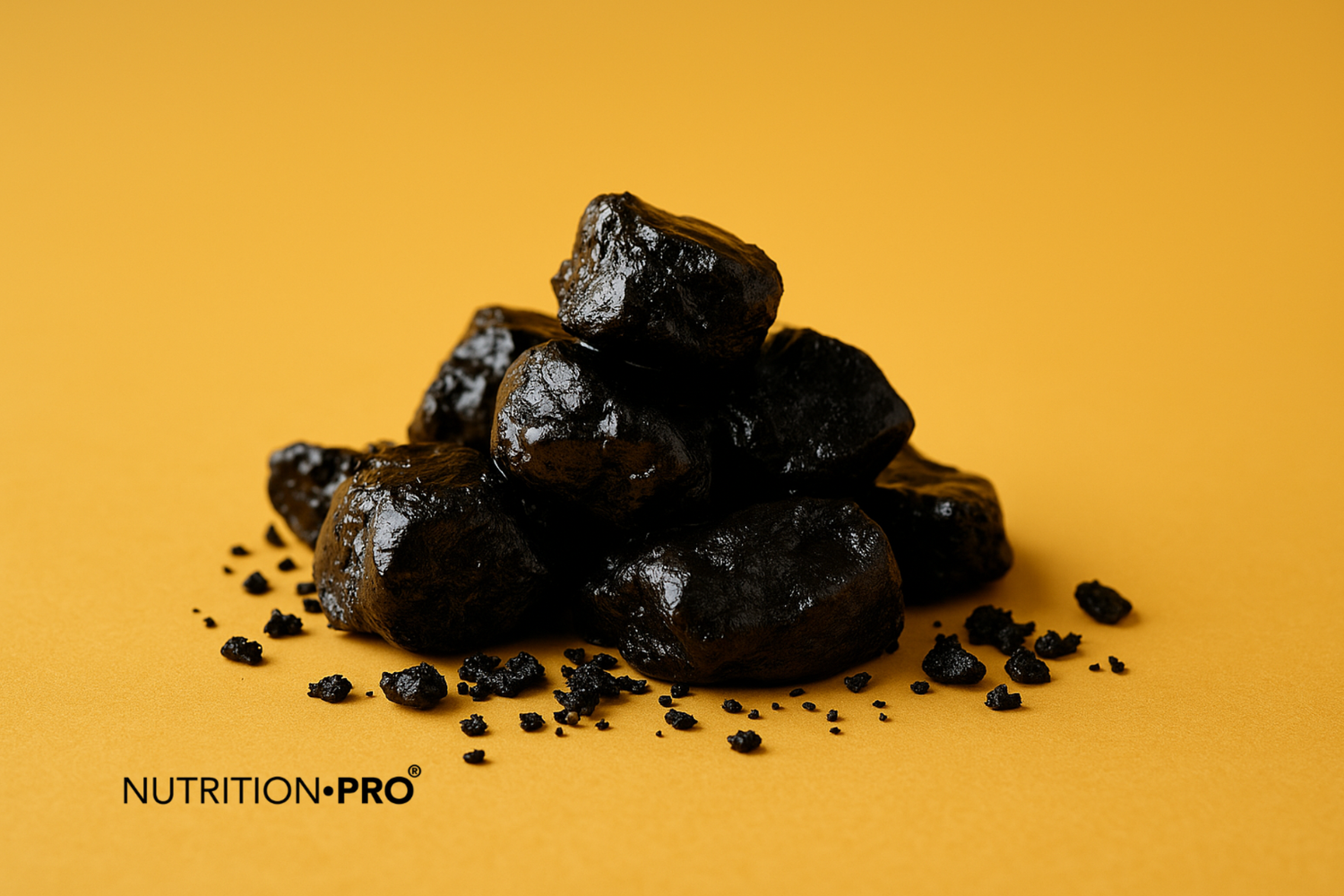
Shilajit is one of the most powerful and popular natural supplements in Ayurvedic medicine. But like any concentrated active ingredient, it is not without risks. This article provides a comprehensive, transparent, and rigorous analysis of the possible dangers of shilajit (heavy metals, side effects, contraindications), backed by 4 published scientific studies, so that you can use it — or not — with full knowledge of the facts.

Shilajit PrimaVie® 60 capsules
The shilajit extract most studied in the world, clinically validated (Morgado 2023), standardized in fulvic acid and dibenzo-α-pyrones, certified heavy metal-free by Eurofins laboratory. PrimaVie® patent · full traceability · no chemical solvents.
View Shilajit PrimaVie® €34.99 →- Is shilajit really dangerous? Answer in 2 minutes
- Danger #1: low-quality shilajit
- Side effect #1: digestive issues
- Side effect #2: skin reactions
- Side effect #3: nervousness and insomnia
- Side effect #4: blood pressure variations
- Side effect #5: elevated uric acid
- Contraindication #1: pregnancy and breastfeeding
- Contraindication #2: gout and hyperuricemia
- Contraindication #3: autoimmune diseases
- Contraindication #4: heavy medication use
- Contraindication #5: children and adolescents
- Drug interactions: the complete list
- Comparison chart: resin vs capsules vs liquid
- Our 3 Eurofins-certified Shilajit forms
- Self-test: is shilajit right for you?
- 7 criteria for choosing a shilajit safely
- How to start a course safely
- FAQ: 18 questions about the dangers of shilajit
Medical disclaimer: this article is informational and does not replace medical advice. Shilajit is a dietary supplement with systemic effects. If you have a chronic condition, are taking medication, are pregnant or breastfeeding, consult your doctor before starting any course. Dietary supplements are not a substitute for a varied diet and a healthy lifestyle.
Is shilajit really dangerous? The answer in 2 minutes
If you're on this page, it's probably because you're hesitating. You've heard about the benefits of shilajit (energy, vitality, immunity, fertility), but one question is holding you back: is it really safe? Here is the honest answer, in a few lines.
According to the reference scientific review published by Stohs in 2013 in Phytotherapy Research, entitled "Safety and efficacy of shilajit", the animal and human data accumulated over decades show that shilajit is generally well tolerated. The safety of the product is documented for courses of 250 to 500 mg/day over 8 to 12 weeks, provided the product is purified and free of contaminants.
The essential point to understand
The main danger associated with shilajit does not come from the substance itself, but from three specific and easily controllable factors:
- Product quality : a poorly purified shilajit may contain heavy metals, solvents or contaminants
- User profile : certain medical conditions (pregnancy, gout, autoimmune diseases) are contraindications
- Dosage and timing : an overdose or late intake can cause mild side effects
In summary: a purified, certified shilajit used according to recommendations in a healthy adult is generally safe. It is questionable shilajit, sold without quality control, or taken without regard to one's medical background, that poses a problem.
Our approach in this article: neither to downplay the risks, nor to cause alarm. To give you all the factual information to make a fully informed decision about whether shilajit is right for you, and if so, how to choose and use it safely.
Danger #1: poor-quality shilajit
The main danger associated with shilajit does not come from the substance itself, but from the quality of the product consumed. In its raw state, shilajit is an organo-mineral substance naturally exuded from high-mountain rocks (Himalayas, Altai, Caucasus, Gilgit-Baltistan). It forms over several centuries through the slow decomposition of microorganisms, plants, lichens, and minerals.
This exceptional geological process gives shilajit its remarkable richness in fulvic acid, humic acid, trace elements, and dibenzo-α-pyrones, but it also makes it vulnerable to environmental contamination.
Why uncontrolled shilajit is risky
In unregulated extraction areas, or through artisanal and opaque purification processes, shilajit may contain:
- Heavy metals : lead, arsenic, mercury, cadmium, aluminum
- Pesticides from agricultural runoff in extraction areas
- Pathogenic microorganisms (bacteria, yeasts, molds)
- Solvent residues used in chemical extraction
- Fillers (colored powders, unpurified humic earth) in fraudulent products
According to a recent scientific review published by Hussain & Saeed in 2024 in Biological Trace Element Research, shilajit naturally contains approximately 65 metallic elements including trace toxic metals (Pb, As, Cd, Hg, Al, Cu). However, the humic substances present in shilajit possess a chelating and detoxifying capacity for 12 heavy metals. The maximum thresholds recommended by the WHO and FDA for plant-based supplements are: 0.20–0.30 ppm for cadmium, 1 ppm for mercury, 10 ppm for arsenic and lead, 20 ppm for copper, and 50 ppm for zinc. The review concludes that the majority of commercially available shilajit products analyzed comply with these thresholds, with the exception of a few isolated studies where levels were exceeded. Consuming shilajit without knowledge of these levels is not without risk.
The real risks of contaminated shilajit
Consuming unpurified, contaminated shilajit may lead to:
- Accumulation of heavy metals in the liver, kidneys, or central nervous system (cumulative effect over prolonged use)
- Chronic low-grade toxicity particularly neurotoxic in the case of lead and mercury
- A complete loss of the product's benefits (if adulterated, oxidized, or inactive)
- Digestive issues linked to solvent residues or microorganisms
- Allergic reactions caused by contaminants
What to look for before any purchase
Before buying shilajit, always verify four key elements:
- The presence of a recent independent certificate of analysis, confirming the absence of heavy metals above WHO thresholds
- The precise extraction location (Himalayas, Altai, Gilgit-Baltistan)
- The purification technique used (free from chemical solvents, ideally through cold aqueous filtration)
- The type and form of the product : a standardized extract (such as PrimaVie®) or pure resin generally offers better traceability than cheap powder capsules
Choose a reliable, highly bioavailable product that meets safety requirements, so you can fully enjoy the benefits of shilajit — with complete peace of mind.
5 possible side effects of shilajit (and how to avoid them)
Shilajit, even when of superior quality, remains a concentrated source of active compounds. Its action on cellular metabolism, hormones, and the nervous system makes it a powerful product — and like any powerful product, it can cause side effects in some people, especially in cases of sensitivity or overdosing.
Although the majority of users tolerate shilajit very well, the scientific literature and clinical feedback report some adverse effects, generally mild and transient, which are worth knowing about in order to avoid or manage them.
Some people experience nausea, abdominal pain, bloating or mild diarrhea, especially if shilajit is taken on an empty stomach or at too high a dose. These effects are linked to the product's high content of organic acids (fulvic acid, humic acid).
How to avoid them:
- Take shilajit with a meal and not on an empty stomach
- Start with a half dose (250 mg/day) for the first 3 to 5 days
- Opt for pure resin form or a standardized extract in capsules (better tolerated than raw powders)
- Drink a large glass of water when taking the supplement
Rare cases ofskin rashes, itching or minor redness have been observed, particularly in individuals with an allergic or atopic background, or a sensitivity to concentrated natural products.
How to avoid them:
- Do a 3-day test at half dose before starting the full course if you have a history of allergies
- Choose a product free from additives and allergenic excipients (vegetable capsules, gluten-free, lactose-free)
- Ensure the product is purified without chemical solvents which may be a source of reactions
- Consult a doctor if a reaction persists after 48 hours without the product
Shilajit stimulates ATP production (cellular energy) and acts as an adaptogenic tonic. Taken later in the day, it may interfere with falling asleep in sensitive individuals or those prone to anxiety.
How to avoid them:
- Always take shilajit in the morning or early afternoon (before 2 PM)
- Never ever take it after 5 PM, even at a low dose
- If insomnia persists, reduce the dose by 50% for 1 week then reassess
- Pair with magnesium bisglycinate in the evening to support falling asleep
Although rare, slight increases or decreases in blood pressure may occur, particularly in individuals with low blood pressure, sensitive subjects, or patients on antihypertensive treatment. Shilajit has a moderate vasodilatory effect that may amplify the action of blood pressure-lowering medications.
How to avoid them:
- If you have low or high blood pressure, seek your doctor's advice before starting a course
- If you are taking an antihypertensive treatment, monitor your blood pressure regularly throughout the course
- Do not combine shilajit with other vasoactive adaptogens (high-dose rhodiola, ginseng) without medical advice
Shilajit may, in rare cases, slightly increase uric acid levels in the blood. This phenomenon is negligible in healthy individuals, but may be problematic in cases ofhyperuricemia, gout, or a history of uric acid urinary stones.
How to avoid it:
- Absolute contraindication in cases of gout or uric acid lithiasis (see dedicated section)
- If you have a sensitive metabolic profile, measure uric acid levels before and after the course
- Drink at least 1.5 L of water per day during the course
- Simultaneously limit dietary sources of purines (organ meats, processed meats, alcohol)
A scientific review published in Phytotherapy Research concludes that shilajit is generally well tolerated at moderate doses, but recommends caution in sensitive individuals, particularly during the first uses. Starting slowly, listening to your body, and adjusting as needed remains the golden rule.
The 5 absolute contraindications of shilajit
Shilajit is a natural supplement rich in minerals, organic acids and bioactive compounds. But despite its ancestral profile and long history of use in Ayurvedic medicine, it is not suitable for everyone. Certain physiological or pathological conditions require caution, or even represent a complete contraindication.
It should never be forgotten thata powerful natural active ingredient remains a substance with systemic effects, capable of interacting with other biological mechanisms or medications. Here are the 5 cases where shilajit is strongly discouraged.
No safety study has evaluated shilajit during pregnancy or breastfeeding. As a precautionary principle, it is strongly recommended to abstain completely from any course of treatment during these sensitive periods, particularly due to:
- Its hormonal potential (effect on testosterone, possibly on estrogens)
- The theoretical risk of placental transfer of certain compounds
- The possibility of passage into breast milk that has not been documented
- The natural presence of iron and copper which may interfere with recommended intake levels during pregnancy
Resuming the course of treatment at least 3 months after the end of breastfeeding is the recommended precaution.
Shilajit may increase uric acid concentration in the blood. It is therefore strongly contraindicated in:
- People suffering from chronic gout or recurrent attacks
- People with a known hyperuricemia (uric acid level > 70 mg/L)
- People with a history of uric acid urinary stones
- Metabolic conditions sensitive to uric acid (metabolic syndrome, renal insufficiency)
If you are affected, better-tolerated adaptogenic alternatives exist: ashwagandha KSM-66®, rhodiola, cordyceps.
Although shilajit possesses interesting immunomodulatory properties, it may stimulate certain immune mediators. In the context of autoimmune conditions such as:
- <<<27>>> multiple sclerosis sclérose en plaques (MS)
- <<<30>>> systemic lupus erythematosus lupus érythémateux disséminé
- <<<32>>> rheumatoid arthritis polyarthrite rhumatoïde
- <<<34>>> Hashimoto's thyroiditis thyroïdite de Hashimoto and Graves' disease
- <<<37>>> inflammatory bowel diseases maladies inflammatoires intestinales (Crohn's disease, ulcerative colitis)
- <<<40>>> severe psoriasis psoriasis sévère, vitiligo and other cutaneous autoimmune conditions
An auto-stimulation of the immune system could theoretically worsen symptoms or interfere with treatments (immunosuppressants, corticosteroids, biotherapies). Medical advice required before any use.
Due to its systemic effect (particularly hepatic and hormonal), shilajit may interact with several classes of medications :
- Anticoagulants (warfarin, VKA, DOACs such as rivaroxaban, apixaban)
- Hormonal treatments (thyroid replacement therapy, contraception, HRT)
- Immunosuppressants (ciclosporin, tacrolimus, methotrexate)
- Anticancer chemotherapies (unpredictable pharmacokinetic interactions)
- Antihypertensives (beta-blockers, ACE inhibitors, ARBs)
- Antidiabetics (metformin, sulfonylureas, insulin)
- Gout treatments (allopurinol, febuxostat)
In functional medicine, shilajit is sometimes used as a support, but never without the prior advice of a qualified healthcare professional.
Shilajit has not been studied in children or adolescents. Given:
- Its potential hormonal effect (on testosterone in particular)
- Its action energizing and adaptogenic not evaluated in growing subjects
- The absence of pediatric safety data
It is recommended to reserve shilajit for adults over 18 years of age. For young adults who are still growing or competing in sports, waiting until 21-25 years of age may be more prudent.
Cases requiring prior medical advice (without absolute contraindication)
Even in the absence of a strict contraindication, certain profiles should consult a healthcare professional before starting a course of shilajit:
- Elderly patients on multiple medications (>4 simultaneous treatments)
- Patients with a history of kidney stones (oxalate or uric acid)
- Users of supplements rich in iron or copper (shilajit naturally contains both)
- Individuals with iron overload (hemochromatosis) or copper overload (Wilson's disease)
- Subjects with chronic liver disease (cirrhosis, chronic hepatitis)
- Patients undergoing active chemotherapy or radiotherapy
Drug interactions: the complete list you need to know
Shilajit is partially metabolized by the liver and contains active compounds (fulvic acid in particular) that can modulate the absorption or metabolism of certain medications. Below is the comprehensive list of interactions to monitor, organized by therapeutic class.
| Drug class | Interaction type | Recommendation |
|---|---|---|
| Anticoagulants (VKA, DOAC) | INR modulation, hemorrhagic risk | Medical advice required |
| Antiplatelet agents | Increased bleeding risk | Enhanced monitoring |
| Antihypertensives | Possible additive effect (vasodilation) | Monitor blood pressure |
| Antidiabetics | Enhanced hypoglycemic effect | Monitor blood sugar levels |
| Thyroid replacement therapy | Possible absorption interference | Space doses 4 hours apart |
| Hormonal contraceptives | No formal contraindication | Consult gynecologist |
| Immunosuppressants | Possible partial antagonism | Relative contraindication |
| Chemotherapy agents | Unpredictable interactions | Formal contraindication |
| Allopurinol (gout) | Antagonism (shilajit ↑ uric acid) | Contraindication |
| Iron supplementation | Risk of iron overload | Space doses 4 hours apart, monitor ferritin |
| Lithium (psychiatry) | No data on interaction | Consult psychiatrist |
| Statins | No known interaction | Compatible with caution |
Absolute rule: if you are on long-term medication (>3 months), never start a shilajit course without speaking to your doctor or pharmacist first. A simple consultation of a few minutes can prevent weeks of complications.
Comparison chart: resin vs capsules vs liquid
Shilajit is available in several commercial forms, each offering specific advantages in terms of purity, convenience, dosage and digestive tolerance. Here is a neutral comparison chart to help you choose the one that best suits you.
| Criterion | Pure resin | PrimaVie® capsules | Liquid |
|---|---|---|---|
| Original form | Purified raw | Standardized extract | Diluted extract |
| Eurofins certification | ✓ Heavy metal-free | ✓ Heavy metal-free | ✓ Heavy metal-free |
| Convenience | Manual handling | Very convenient (capsules) | Precise drop-by-drop |
| Active standardization | Varies by batch | Standardized (patented) | Standardized |
| Dosage | Subjective ("pea-sized" amount) | Precise (per capsule) | Precise (per drop) |
| Digestive tolerance | Excellent | Excellent | Excellent |
| Taste | Very intense (earthy/bitter) | None (capsule) | Moderate |
| Storage | 2-3 years in jar | 2 years | 1 year after opening |
| Clinical study | Millennial tradition | Validated (Morgado 2023) | Validated (pure extract) |
| Ideal for | Traditional connoisseurs | Convenience + precision | Gentle start |
The 3 forms have their unique strengths. The resin appeals to those seeking authentic Ayurvedic tradition. PrimaVie® capsules are ideal for those who want the convenience of a controlled dosage and the assurance of a standardized extract. The liquid is a perfect fit for easing in gently or fine-tuning your dose.
Our 3 Shilajit forms certified by Eurofins
Whether you choose the PrimaVie® capsules, the pure resin or the liquid, you benefit from the same maximum quality guarantee : Eurofins certification (Europe's leading laboratory for dietary supplement analysis) heavy metal-free, Himalayan origin, solvent-free extraction, and certificates of analysis available upon request.
Patented standardized extract

Authentic Ayurvedic

Ideal for a gentle start
Why Eurofins? Eurofins Scientific is one of the world leaders in food and supplement testing, recognized across Europe for the rigor of its methods (ICP-MS for heavy metals, accredited microbiological analysis). An Eurofins certification guarantees that every batch is tested for Pb, As, Cd, Hg and other contaminants, with thresholds below WHO and FDA standards.
Self-test: is shilajit right for you?
Before placing an order, take 2 minutes to answer these 12 questions honestly. Check the boxes that apply to you. The result will tell you whether you can start with complete peace of mind, whether you need to take precautions, or whether shilajit is not suited to your current profile.
12 boxes checked = you are the ideal profile to start a shilajit regimen safely. Choose a certified product and get started.
10-11 checked = profile compatible with moderate caution. Adjust the missing points and start carefully.
7-9 checked = consult your doctor before any regimen to validate your eligibility for shilajit in your specific situation.
Fewer than 7 checked = shilajit is probably not suited to your current profile. Explore other better-tolerated adaptogens (ashwagandha, rhodiola).
7 criteria for choosing a shilajit without risk
The quality of a shilajit is the first guarantee of safety. Here are the 7 essential criteria to check before any purchase, in order of importance.
Criterion #1: independent certificate of analysis
The absolute number one criterion. A serious manufacturer must be able to provide, upon request, a recent certificate of analysis (less than 12 months old) issued by an accredited independent laboratory such as Eurofins Scientific (European reference), Intertek or SGS, verifying the absence of heavy metals (Pb, As, Cd, Hg) above WHO/FDA thresholds, as well as the absence of pathogenic microorganisms. No certificate = no purchase.
Criterion #2: precise geographical origin
Authentic shilajit comes from high-mountain rocks, primarily from theHimalayas (India, Nepal, Pakistan), theAltai (Russia, Mongolia), the Caucasus or Gilgit-Baltistan. Beware of products with no clear origin or simply stating "Asia."
Criterion #3: purification technique
Raw shilajit must be purified before consumption to eliminate impurities, microorganisms and toxic metals. Acceptable methods are traditional cold aqueous filtration (Ayurvedic method) or modern processes without chemical solvents. Avoid any product purified with industrial ethanol or unspecified organic solvents.
Criterion #4: standardization of active compounds
A quality shilajit displays a guaranteed active compound content, primarily in:
- Fulvic acid (generally 50% or more in quality products)
- Dibenzo-α-pyrones (DBPs) in patented standardized extracts (PrimaVie® in particular)
- Humic acid in significant quantities
Criterion #5: product form
The patented standardized extracts (PrimaVie®) and pure resin generally offer the best guarantees of purity and traceability. The inexpensive powder capsules without standardization carry the highest risk of contamination or adulteration with fillers.
Criterion #6: brand and traceability
Choose a brand that is established and transparent about its supply chain, one that can document the origin of its shilajit, extraction methods, quality controls, and that answers your questions. Opaque brands sold exclusively on marketplaces with no information should be avoided.
Criterion #7: realistic pricing
A quality shilajit has a high production cost (high-altitude extraction, purification, testing, certifications). A product sold at less than €15 for 60 capsules or 30g of resin is suspicious: the product is either diluted, unpurified, or fraudulent. Expect to pay €30 to €50 for a 1 to 2-month supply from a reputable manufacturer.
How to start a course safely (protocol)
Once you have checked your eligibility (self-test above) and chosen a product that meets all 7 quality criteria, here is the 4-step protocol to start your course safely.
Step 1 (days 1-5): half-dose adaptation phase
Start at 250 mg/day in the morning with breakfast (1 capsule for PrimaVie®, or half a "pea-sized" amount of resin, or 10 drops of liquid). This phase allows your body to adapt gradually and detect any individual sensitivity.
Monitor: digestive tolerance, sleep quality, energy levels, skin, and bowel movements. If all is well, move on to step 2.
Step 2 (days 6-14): transition to full dose
Increase to 500 mg/day in the morning (2 capsules or a full "pea-sized" amount of resin, or 20 drops of liquid). Continue to monitor your reactions.
Step 3 (weeks 3-12): main course
Maintain the dose of 500 mg/day for 8 to 10 weeks. Effects on energy, vitality, and recovery generally appear between weeks 3 and 6.
Step 4 (after 12 weeks): break
Take a 2 to 4-week break between two shilajit courses. This break allows your body to regulate itself and prevents habituation. You can then begin a new course, or alternate with other adaptogens (ashwagandha, rhodiola, cordyceps).
To support your shilajit course alongside, several synergistic supplements can enhance its effects depending on your goal: multivitamins to address basic deficiencies, magnesium bisglycinate to support sleep and regulate cortisol, or whey isolate for athletes looking to maximize muscle recovery.
Key takeaways: never double doses "to speed things up." Shilajit works gradually, over time. Consistency beats intensity. A complete, properly followed course delivers better results than sporadic high doses.
Alternatives to shilajit: what to choose if contraindicated?
If the self-assessment above revealed that shilajit is not suited to your current profile (gout, pregnancy, heavy medication, autoimmune disease), don't panic: there are other natural adaptogens, better tolerated, that can meet your needs for energy, vitality, and stress resilience.
For energy and vitality: ashwagandha KSM-66®
Theashwagandha (Withania somnifera) is the most studied adaptogen in the world, with more than 24 clinical studies validating its effectiveness. Unlike shilajit, it does not raise uric acid levels and is compatible with gout. The KSM-66® extract has the highest concentration of active withanolides.
Indications: chronic stress, fatigue, sleep disorders, decreased libido, sports performance, natural testosterone support.
For muscle recovery: whey isolate
If your goal is sports performance and muscle building, the 100% isolate whey delivers 24 g of pure protein per serving, without the contraindications of shilajit. Compatible with virtually all profiles, including athletes on medication.
For stress management: magnesium bisglycinate
The magnesium bisglycinate is the #1 mineral for regulating cortisol, improving sleep, and reducing chronic fatigue. Compatible with pregnancy and breastfeeding (with medical advice), it is suitable for virtually all profiles.
For nutritional deficiencies: multivitamins
If your fatigue is linked to nutritional deficiencies (lack of B vitamins, vitamin D, iron, zinc), a complete multivitamin complex is the simplest and most universal option. No major contraindications at recommended doses.
Conclusion: a powerful supplement to use with discernment
Shilajit is one of the most fascinating supplements in the natural pharmacopoeia, backed by a long Ayurvedic tradition and serious scientific research. But just because a product is natural doesn't mean it's safe.
As we have seen, the risks associated with shilajit don't come solely from its nature, but from its origin, its purity, its dosage, and above all the health status of the person consuming it. The proliferation of poor-quality, inadequately purified, or even fraudulent products represents a genuine safety concern today.
Fortunately, by taking the time to:
- Choose a purified shilajit, laboratory-tested and traceable (such as our PrimaVie®, our Pure Resin or our Liquid)
- Follow an appropriate dosage and a gradual approach
- Check your contraindications with the self-assessment test
- Seek advice from a healthcare professional if in doubt
… it is entirely possible to enjoy its benefits in a safe and responsible way.
Good health always starts with knowledge. A well-used supplement can be a tremendous asset. Used incorrectly, it can become a source of imbalance. Shilajit is no exception to this rule.
FAQ: 18 questions about the dangers of shilajit
Is shilajit dangerous for your health?
No, shilajit is not inherently dangerous, provided it is high quality, purified, properly dosed, and suited to the user's profile. According to a scientific review published in Phytotherapy Research (Stohs 2013), the safety of shilajit is well documented through animal and human studies.
The risks mainly come from contaminated or poorly extracted products. Pure, properly used shilajit is generally well tolerated.
What are the side effects of shilajit?
The most commonly reported side effects are rare and generally mild: digestive issues (nausea, mild diarrhea), skin rashes in allergy-prone individuals, nervousness or insomnia (if taken too late in the day), and more rarely blood pressure fluctuations.
These effects are rare and often linked to individual sensitivity or an excessive dose. They generally resolve by adjusting the dosage.
Can shilajit contain heavy metals?
Raw shilajit may naturally contain traces of heavy metals (lead, arsenic, mercury, cadmium) as it originates from high-mountain rocks. However, according to a 2024 review (Hussain & Saeed), levels in purified shilajit generally remain below WHO and FDA thresholds.
This is why an independent certificate of analysis (for example from Eurofins Scientific, the European reference for supplement testing) and rigorous purification are essential before any purchase. Our entire NUTRITION•PRO Shilajit range (PrimaVie®, Resin, Liquid) is Eurofins certified heavy metal-free.
How do you identify a quality shilajit?
Four key criteria: (1) an independent certificate of analysis guaranteeing the absence of heavy metals, (2) a clearly indicated origin (Himalayas, Altai, Gilgit-Baltistan), (3) a purification without chemical solvents, (4) a standardized fulvic acid content.
The resin form or a standardized extract such as PrimaVie® generally offer better traceability than cheap powders.
Can shilajit be taken every day?
Yes, a standard course lasts 6 to 12 weeks, at a rate of 250 to 500 mg per day depending on your needs. It is advisable to take a 1 to 2 week break after each course to avoid prolonged overstimulation and allow the body to regulate itself.
What is the maximum recommended dose?
The clinically validated and well-tolerated dose is 250 to 500 mg/day of purified shilajit. For standardized extracts such as PrimaVie®, the effective dose is 250 mg twice daily.
Beyond 500 mg/day for the resin or 500 mg of PrimaVie®, the risk of side effects increases with no proven additional benefit. More is not better.
What time of day should shilajit be taken?
Shilajit is best taken in the morning at breakfast (or in two doses: morning and midday) to take advantage of its energizing and adaptogenic effect.
Avoid taking it after 5 p.m. as it may cause sleep disturbances in sensitive individuals.
Should shilajit be taken on an empty stomach or with meals?
To minimize digestive discomfort, it is recommended to take shilajit with a meal (breakfast or lunch), with a large glass of water.
Taking it on an empty stomach is possible but may cause nausea in sensitive stomachs, especially with the resin form or at high doses.
Is shilajit suitable for women?
Yes, shilajit is suitable for healthy adult women to supportenergy, metabolism and resistance to oxidative stress. It is however not recommended during pregnancy and breastfeeding as a precautionary measure.
In the case of hormonal treatment, contraceptives, or chronic conditions (endometriosis, PCOS, thyroid issues), consult a healthcare professional before starting a course.
Is shilajit suitable for older adults?
Shilajit may be beneficial for seniors (memory, energy, antioxidants), but caution is advised in cases of polypharmacy, kidney problems, or chronic conditions.
Ahealthcare professional's advice is recommended before starting a course, especially after age 70 or when taking multiple medications.
Can children take shilajit?
No. Shilajit has not been studied in children or adolescents and its use is reserved for adults over 18 years of age.
To support energy or concentration in young people, better-studied alternatives exist: pediatric multivitamins, omega-3s, magnesium, on medical advice.
Is shilajit suitable for athletes?
Yes, shilajit is particularly beneficial for athletes of all levels: it supports ATP production (cellular energy), improves recovery, increases aerobic capacity, and promotes hormonal regulation.
For male athletes, the PrimaVie® extract demonstrated in a clinical study (Pingali 2022) a significant improvement in total and free testosterone. Always follow recommended dosages (250–500 mg/day) and take regular breaks.
Can shilajit interact with medications?
Yes. Due to its metabolic and hormonal activity, shilajit may interact with several classes of medications: anticoagulants, hormonal treatments, immunosuppressants, antihypertensives, antidiabetics, gout medications.
It is essential to seek medical advice if you are on long-term treatment before starting a course.
Can shilajit be taken with anticoagulants?
Shilajit may modulate the effect of anticoagulants (warfarin, VKA, DOAC). Before starting any course, speak to your doctor or pharmacist to assess the need for close INR or coagulation monitoring.
In most cases, use is possible with increased monitoring, but should never be started without medical advice.
Is shilajit compatible with thyroid treatment?
Yes in the majority of cases, but with two precautions : (1) space out the intake of shilajit and levothyroxine (Levothyrox®) by at least 4 hours to avoid any absorption interference, (2) relative contraindication in cases of active Hashimoto's thyroiditis (immunomodulatory effect of shilajit).
Your endocrinologist's advice is recommended before starting a course.
Can shilajit be taken during cancer treatment or chemotherapy?
No. During active cancer treatment (chemotherapy, radiotherapy, immunotherapy, hormone therapy), shilajit is contraindicated due to the risk ofunpredictable pharmacokinetic interactions.
Any resumption after the end of active treatment and remission, only on the advice of the oncologist.
What form of shilajit is best?
All 3 forms have their strengths. The pure resin is the traditional Ayurvedic form, ideal for connoisseurs. The PrimaVie® standardized extract capsules offer convenience, precise dosing and clinical guarantee. The liquid allows for a gentle start with precise drop-by-drop adjustment.
The most important criterion is not the form, but the quality, traceability and certificate of analysis.
Is PrimaVie® truly superior to other extracts?
PrimaVie® is the shilajit extract most studied in the world, and the only one to have been the subject of formal clinical validation in a systematic review (Morgado 2023, Int J Impot Res) for its efficacy in men with hypogonadism. It is standardized in fulvic acid and dibenzo-α-pyrones, which guarantees a consistent active content from one batch to the next.
This does not mean that other forms (resin, liquid) are inferior, but PrimaVie® offers the greatest predictability of results.
Scientific Sources
- Stohs SJ. Safety and efficacy of shilajit (mumie, moomiyo). Phytother Res. 2014;28(4):475-9. DOI: 10.1002/ptr.5018
- Hussain A, Saeed A. Hazardous or Advantageous: Uncovering the Roles of Heavy Metals and Humic Substances in Shilajit (Phyto-mineral) with Emphasis on Heavy Metals Toxicity and Their Detoxification Mechanisms. Biol Trace Elem Res. 2024;202(12):5794-5814. DOI: 10.1007/s12011-024-04109-4
- Carrasco-Gallardo C, Farías GA, Fuentes P, Crespo F, Maccioni RB. Can nutraceuticals prevent Alzheimer's disease? Potential therapeutic role of a formulation containing shilajit and complex B vitamins. Arch Med Res. 2012;43(8):699-704. DOI: 10.1016/j.arcmed.2012.10.010
- Morgado A, Tsampoukas G, Sokolakis I et al. Do "testosterone boosters" really increase serum total testosterone? A systematic review. Int J Impot Res. 2024;36(4):348-364. DOI: 10.1038/s41443-023-00763-9
To go further, here are the NUTRITION•PRO resources to support you:
Important reminder: this guide is informational and does not replace personalized medical advice. Shilajit is a dietary supplement with systemic effects. If you have a chronic condition, are taking medication, are pregnant or breastfeeding, consult your doctor before starting any course of supplementation. Dietary supplements are not a substitute for a varied diet and a healthy lifestyle.


