

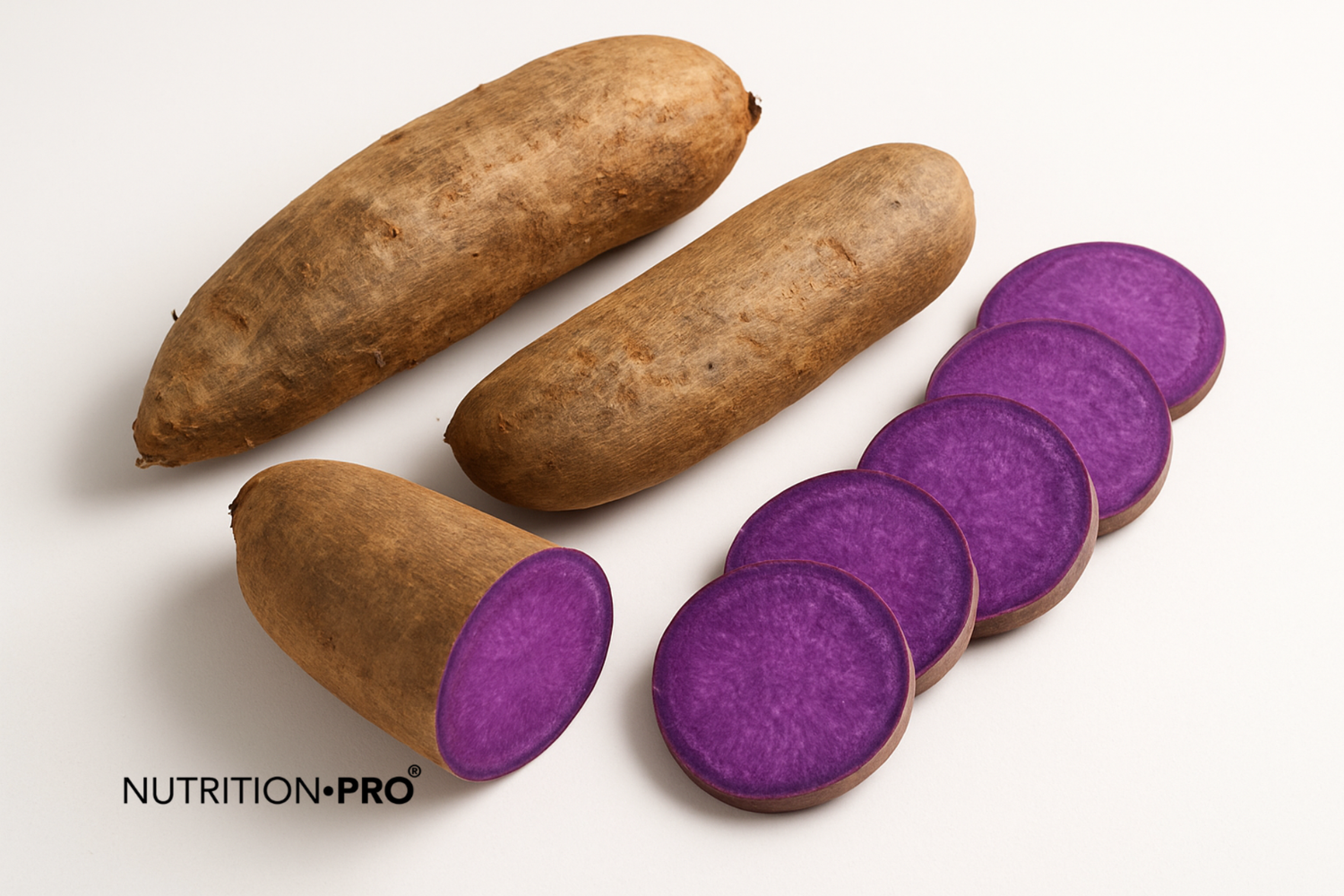
You see it everywhere these days: in smoothies, purple pastries, colored plant-based milks… Theube, or purple yam, is conquering social media, food enthusiasts' plates, and now the health food shelves.
But what really lies behind this vibrant color? And why is this traditional ingredient from Southeast Asia attracting so much attention in natural nutrition?
Ube, often confused with purple sweet potato or taro, is actually a tuber of exceptional nutritional richness, used for centuries in Philippine cuisine. Its soft texture, its slightly sweet taste, and especially its content of anthocyanins – powerful antioxidants – make it much more than just a trendy ingredient.
In this article, we will discover:
- what ube truly is,
- where it comes from and how it is traditionally consumed,
- how it differs from other purple tubers,
- and especially why it is increasingly catching the attention of health nutrition specialists and manufacturers of natural dietary supplements.
A natural superfood, colorful, nutritious… and perhaps the next must-have for supporting your daily wellness? Let's explore it together.
What is Ube?
Theube, sometimes spelled ubé in French, is a variety ofpurple yam belonging to the species Dioscorea alata. This tuber with naturally purple flesh has been cultivated for centuries in Southeast Asia, particularly in the Philippines where it is an iconic ingredient in local cuisine. It is also sometimes nicknamed purple yam in English-language publications.
What immediately distinguishes ube from other tubers is its intense violet color, due to its richness in anthocyanins, natural pigments with powerful antioxidant properties. Once cooked, it develops a soft and creamy texture, as well as a slightly sweet and vanilla-like taste, highly prized in pastry-making. Unlike other yams that are more starchy or neutral, ube possesses a naturally pleasant sweet flavor, which explains its success in plant-based desserts and "healthy" preparations.
It is important to note that ube should not be confused with:
- the purple sweet potato (Okinawa variety), which belongs to a completely different botanical family (Ipomoea batatas);
- the taro, another tuber often used in Asian cuisine but whose flesh is white or speckled gray, and with a more neutral taste.
A traditional food turned superfood
Long consumed as a staple food in several tropical regions, ube is today being rediscovered as a superfood thanks to its very interesting nutritional profile. Its vibrant color and potential health benefits make it a highly sought-after ingredient by natural nutrition enthusiasts, as well as by innovative dietary supplementbrands, who now exploit it in the form of powder, puree, or concentrated capsules.
Where does Ube Come From?
Theube, or Dioscorea alata, is a tuber originating from the tropical regions of Asia, in particular from the Philippines, fromIndonesia, and from Papua New Guinea, where it has been cultivated and consumed for several centuries. Very present in the traditional agriculture of the Pacific islands, it is an integral part of many ancestral recipes.
But it is especially in the Philippines that ube has acquired an emblematic status. There, it is used in a multitude of traditional desserts such as ube halaya (thick purple yam jam), ube cakes, colored breads or ube ice creams. This deep-rooted local popularity, firmly anchored in culinary culture, allowed ube to cross borders and become a flagship ingredient in Asian fusion cuisine.
From traditional food to global phenomenon
With the rise of social media and colorful, natural food trends, ube began to appeal to audiences far beyond Asia. On TikTok and Instagram, it can now be found in purple lattes, in antioxidant smoothies or in visually spectacular plant-based cakes . This explosion of culinary creativity propelled it to the status of trendy superfood in Western countries.
But beyond the "colorful and Instagram-worthy" effect, the nutritional interest in ube is now attracting the attention of dietary supplement and natural nutrition brands. Because behind its vibrant purple hue lies a genuine concentration of health-promoting actives, still largely untapped in Europe.
Why is it attracting attention in nutrition?
Beyond its spectacular appearance and naturally sweet taste, ube is gaining a prime place in the world of health nutrition. And this is no coincidence. This purple tuber is packed with protective nutrients, with promising potential to support the body against oxidative stress, inflammation, or digestive disorders.
1. An exceptional richness in antioxidants
The intense purple color of ube is due to its content of anthocyanins, a group of flavonoids well known for their antioxidant properties. These compounds help neutralize free radicals, protect cells from premature aging and strengthen natural defenses.
Several studies have suggested that anthocyanins could play a beneficial role in preventing chronic age-related diseases, including cardiovascular disease, certain neurodegenerative disorders, and even certain forms of cancer.
2. High in fiber and beneficial for digestion
Ube contains an interesting proportion of dietary fiber both soluble and insoluble. These fibers promote:
- a healthy digestion,
- a regular transit,
- a feeling of satiety lasting (useful for weight management goals).
Its consumption could also help regulate blood sugar levels and nourish the intestinal microbiota.
3. A natural source of vitamins and minerals
Ube is naturally rich in:
- Vitamin C (immune support, collagen, antioxidant),
- Vitamin A (vision, skin, immunity),
- Vitamin B6 (nervous system balance and metabolism),
- Potassium (muscle function and blood pressure regulation),
- Iron and manganese (energy production, cellular health).
These essential micronutrients position ube as a functional food, capable of supporting multiple physiological functions at once.
A nutritional profile still underutilized in Europe
While it has been used for centuries in Asia, ube remains relatively uncommon in European eating habits. Its introduction in the form of powder, puree or dietary supplement in capsules now makes it possible to benefit from its properties in a concentrated, convenient and modernformat, adapted to Western lifestyles.
How is it used? (culinary + dietary supplement)
Ube is not just a photogenic ingredient. It is also extremely versatile and can be consumed in different ways depending on your goals: culinary pleasure, wellness cure, or targeted nutritional support. Today, two major uses stand out: revisited traditional cuisine and ube-based dietary supplements.
1. Ube in the kitchen: a star ingredient in healthy pastries
In its raw form, ube is often transformed into:
- puree (ube halaya) : base of many Philippine pastries,
- ube ice creams : naturally colored, without artificial dyes,
- cakes, pancakes, smoothies, and even plant-based lattes.
Its naturally sweet and vanilla taste makes it possible to limit the addition of refined sugars, which appeals to those favoring a more natural diet.
More and more "healthy" recipes are reinterpreting ube in a gluten-free, lactose-free, veganversion, making it accessible to a wide nutritional community.
2. Ube as a dietary supplement: a concentrated and practical form
Facing growing demand for superfoods in an easy-to-consume format, ube is now available as:
- <<<14>>> powder poudre (for smoothies, yogurts, beverages),
- <<<17>>> capsules gélules or concentrated gummies,
- sometimes even in drink sticks or antioxidant blends.
These formats allow for:
- precise and reproducible dosing,
- optimized bioavailability (depending on extraction processes),
- a convenient cure to benefit from its antioxidant, digestive or energizing effects.
This makes ube an ideal candidate for a beauty, weight management or vitalitycure, particularly in the context of an active, demanding urban lifestyle.
Frequently Asked Questions (FAQ)
What is the difference between ube, purple sweet potato, and taro?
Although these three foods are purple, they do not belong to the same botanical family.
- Ube (Dioscorea alata) is a purple yam, used mainly in Asia for its nutritional qualities and slightly sweet taste.
- The purple sweet potato comes from another species (Ipomoea batatas), with firmer flesh and a more earthy flavor.
-
Taro has white speckled flesh, a neutral taste, and is rich in starch, but less antioxidant than ube. a une chair blanche mouchetée, un goût neutre et est riche en amidon, mais moins antioxydant que l’ube.
👉 For a natural antioxidant treatment, ube stands out.
What are the health benefits of ube?
Ube is naturally rich in anthocyanins, which are powerful antioxidants that protect cells against aging. It also contains dietary fiber, vitamins (A, C, B6) and minerals such as potassium and manganese.
Its recognized benefits include:
- support for digestion and transit,
- natural satiating effect (useful for weight management),
- action with anti-inflammatory and detoxifying,
- properties participation in cellular vitality.
Why choose an ube-based dietary supplement?
The ube capsules allow for easy intake with no preparation required, with controlled dosage of active ingredients. Unlike culinary ube, supplements are standardized in active principles, which optimizes their effectiveness for:
- an antioxidant treatment,
- a skin health and beauty routine,
-
nutritional support in a natural weight management program.
They are also flavorless, sugar-free, and compatible with fasting or plant-based eating.
Is ube good for weight loss?
Yes, as part of a balanced lifestyle. Thanks to its fiber content which promotes satiety, and its low glycemic index, ube can help reduce cravings and support controlled eating. As a dietary supplement, it can be integrated into a natural weight loss program to support dietary rebalancing or a weight loss goal.
Can you consume ube every day?
Yes, as long as consumption remains reasonable. In the form of a cooked dish, a recipe made with ube, or concentrated capsules, it integrates perfectly into a daily wellness routine. However, during prolonged use, it is recommended to respect the dosages indicated on the supplement and to take breaks between courses.
Conclusion
Long overlooked in Europe, ubeube proves to be much more than a trendy ingredient. Behind its striking purple color, this ancestral superfood hides impressive nutritional density and genuine health benefits: antioxidant protection, digestive support, cellular vitality and overall wellness.
Whether in a healthy recipe or in the form of concentrated dietary supplement, ube establishes itself as a natural solution for those seeking to care for their body on a daily basis. Easy to integrate, flavorful or neutral depending on the format, it checks all the boxes of a modern wellness ingredient.
Our advice: incorporate ube into your routine today, starting with a natural and stress-free course thanks to our formula in concentrated capsules made from pure and standardized ube. A simple, effective and sustainable solution to support your health from within.


