

When you want to have a child, you'd like clear answers and concrete strategies. Between contradictory advice and promises from "fertility" supplements, it's hard to know what really helps. This guide takes an honest look, for both men and women, at what truly matters to maximize your chances.
We'll explore how fertility works, when to consult a doctor, how to identify the fertile window, lifestyle factors that make a real difference, preconception nutrition, sperm quality, and what fertility supplements are actually worth, backed by evidence. One key principle: this guide supports a natural approach, it never replaces medical advice, and difficulty conceiving is common and is not a failure.

A supplement designed to support women in their conception journey, to be combined with good lifestyle habits and medical follow-up.

A supplement to support men in their conception journey, combined with favorable lifestyle habits and medical advice.
To increase your chances of conceiving, success depends on timing and lifestyle: identify the fertile window and have intercourse every 1 to 2 days, aim for a healthy weight, quit smoking, limit alcohol and stress, for both partners. Regarding nutrition, folates in preconception are the most well-established for women (Gaskins, Am J Obstet Gynecol, 2018), and a healthy diet supports fertility in both. Regarding supplements, let's be honest: antioxidants in men might help but with low certainty (de Ligny, Cochrane, 2022), and maca has no demonstrated effect on sperm (Lee, Front Pharmacol, 2022). Soy, on the other hand, does not harm fertility (Gaskins, 2018). Most importantly: consult if you're having difficulties, the evaluation concerns the couple.
- Understanding Fertility
- When to Consult
- Proven Strategies for Couples
- The Fertile Window and Optimal Timing
- Female Fertility: Preconception Nutrition
- Male fertility: sperm quality
- Supplements: what studies really say
- Myths to debunk
- Your 3-month preconception plan
- Medical journey overview
- When to consult without delay
- Frequently asked questions
1. Understanding fertility
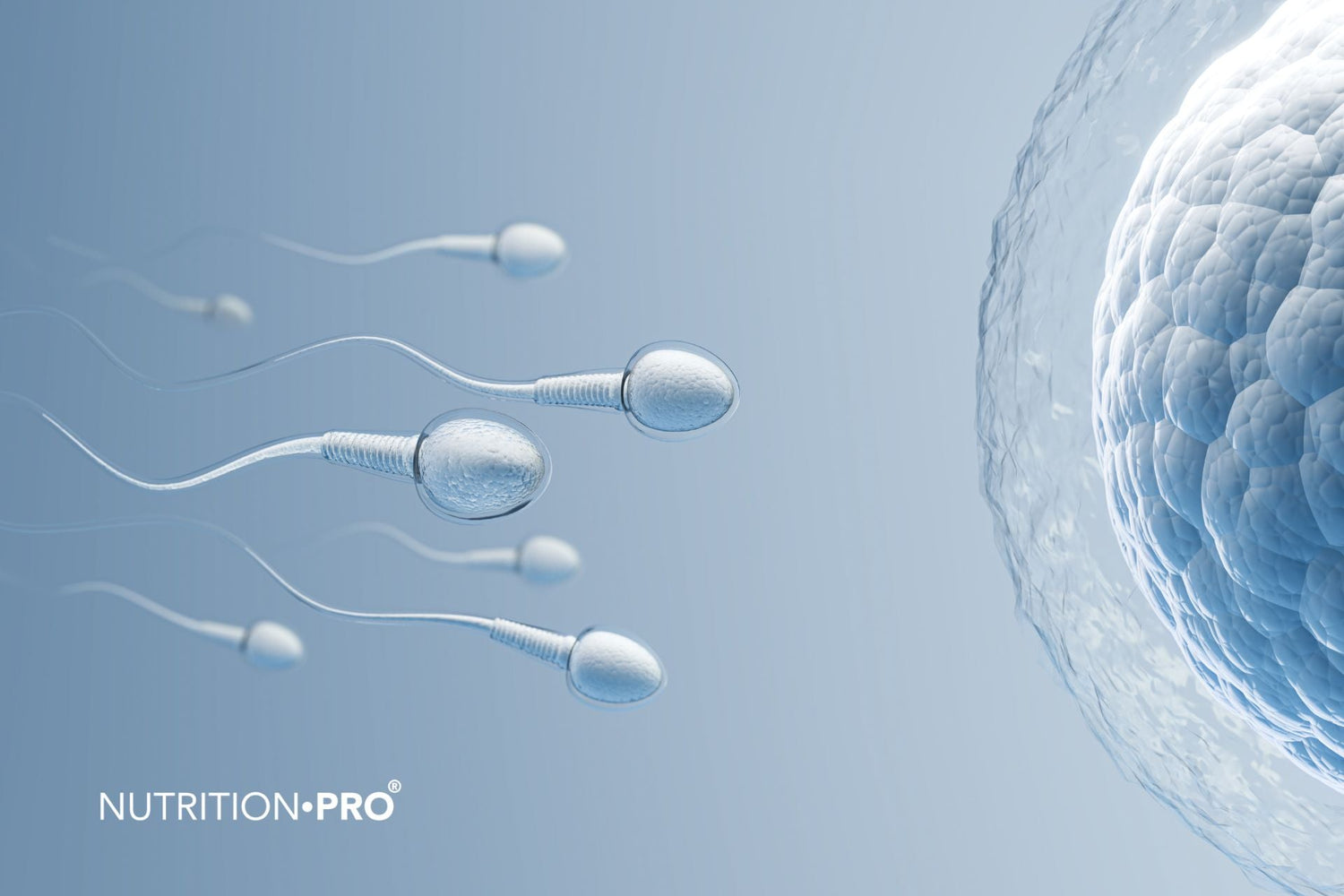
Conception requires the meeting of an egg and a sperm at the right time. In women, an egg is released at each cycle during ovulation. In men, sperm production ( spermatogenesis) is continuous and lasts approximately 74 days, or nearly 3 months—an important detail when trying to improve sperm quality.
A few reassuring facts: most couples who have regular intercourse conceive within the year. When this is not the case, it is common and does not mean personal failure: it is estimated that approximately 1 in 6 couples experience difficulties at some point. And in these situations, the cause is just as often male as female, sometimes both, sometimes unexplained. Hence the importance of addressing the topic as a couple, without guilt.
2. When to consult
The usual timeframe before consulting is 12 months of regular attempts, reduced to 6 months if the woman is over 35 years old, as female fertility declines more rapidly from that age. Also consult earlier in case of very irregular cycles, absence of periods, gynecological history, or known risk factors. The assessment always evaluates both partners : there is no reason to place all responsibility on one or the other.
3. Proven levers for couples
Before any supplement, it is the couple's lifestyle habits that lay the foundation. The most relevant factors:
- Weight : both overweight and excessive thinness can disrupt ovulation in women and sperm quality in men. Aiming for a healthy weight is beneficial for both.
- Tobacco : harmful to both female and male fertility (and to pregnancy); quitting is one of the most important steps.
- Alcohol and caffeine : as a precaution, to be limited during attempts; alcohol should be avoided from the start of pregnancy.
- Sleep and stress : sufficient sleep and stress management support hormonal balance and couple well-being.
Let's be honest about the level of evidence: a Cochrane review notes that lifestyle counseling programs have, to date, only an uncertain effect on the number of births, due to lack of quality trials (Boedt, Cochrane, 2021). This does not mean that these factors are unimportant: tobacco, obesity or alcohol remain recognized risk factors. It simply calls for moderation: we act on what is within our control, without guilt or expecting miracles.
4. The fertility window and good timing
We underestimate the importance of timing. Sperm can survive for several days in the female genital tract, but the egg is only fertilizable for about 24 hours. The fertile window therefore covers the 5 days preceding ovulation and the day of ovulation.
How to identify it? Several markers, to be combined:
- Cycle length : ovulation occurs approximately 14 days before the next period (so around day 14 of a 28-day cycle, but this varies).
- Cervical mucus : it becomes more abundant, clear and stretchy around ovulation.
- Ovulation tests urine-based, which detect the peak of LH hormone.
In practice, the simplest approach is to have intercourse every 1 to 2 days during the fertile window, without making it a chore. There's no need to "save" intercourse: regular frequency produces better results than prolonged abstinence followed by a single encounter.
Tools can help identify ovulation: cycle tracking apps, basal body temperature chart, or urine ovulation tests. But be careful not to turn conception into a source of anxiety: these markers are aids, not obligations, and over-monitoring can weigh on the couple. The goal is to increase opportunities, not to aim for a single "perfect" moment.
5. Female fertility: preconception nutrition
The preconceptionperiod, meaning the months preceding pregnancy, is a key window. The most consensual measure:
Folic acid supplementation, particularly at doses higher than those recommended for prevention of neural tube defects, is consistently associated with lower infertility, lower miscarriage risk, and better treatment success.
Gaskins AJ, Chavarro JE. Am J Obstet Gynecol 2018;218(4):379-389. DOI: 10.1016/j.ajog.2017.08.010
In practice, for a woman planning pregnancy: a folate supplementation (vitamin B9) is recommended beforehand, at the dose recommended by the doctor, for the future baby's health and fertility. This is supplemented, as needed, with iron and vitamin D in case of deficiency (vitamin D provides no benefit if status is normal), andiodine. A healthy diet (vegetables, fruits, whole grains, fish, legumes) and a stable weight support cycle regularity. Our supplement Female Fertility fits into this support approach, in addition to medical monitoring. For cycle comfort, you can also explore raspberry leaf.
A supplement to integrate into a balanced diet and your doctor's monitoring, as part of your conception plan.
Discover Female Fertility →6. Male fertility: sperm quality
Half of conception difficulties have a male component: sperm quality (concentration, mobility, sperm morphology) matters as much as female fertility. Good news: since spermatogenesis takes approximately 3 months, changes have time to take effect over this period. The key factors:
- Quit tobacco and limit alcohol, which are harmful to sperm.
- Aim for a healthy weight and stay active, without overtraining.
- Limit heat exposure : very hot baths, frequent sauna use, laptop on your lap for extended periods, tight underwear.
- A diet rich in antioxidants (fruits, vegetables, fish), and depending on the case, supplementation with zinc and selenium, involved in sperm function.
Regarding antioxidant supplements, let's be honest (see the following section): they could help, but the evidence is uncertain. Our supplement Male Fertility supports this approach, in addition to healthy lifestyle habits and medical advice. For male vitality in the broader sense, also see our guide on boosting testosterone naturally and our article on zinc.
Good to know: semen parameters fluctuate naturally from one sample to another. An abnormal spermogram is therefore not a verdict: it should be rechecked after a time interval, generally after a few weeks, before drawing any conclusions. A diet rich in omega-3 and antioxidants is part of a favorable approach, without expecting miracles.
7. Supplements: what the research really says
Here is an honest overview, without overselling. Supplements can support a healthy lifestyle, never treat infertility.
| Avenue | Level of evidence | Key takeaways |
|---|---|---|
| Folates (women) | Well-established in preconception | Recommended before and early pregnancy; dosage per physician. |
| Antioxidants (men) | Possible benefit, low certainty (Cochrane 2022) | Possible support, without guarantee; to discuss with a doctor. |
| Omega-3 (women) | Favorable avenue (Gaskins 2018) | A diet rich in fatty fish is beneficial in any case. |
| Zinc / selenium (men) | Involved, especially if deficient | Useful through diet; targeted supplementation if needed. |
| Vitamin D | Useful only if deficient (Gaskins 2018) | No benefit if status is normal. |
| Maca | No demonstrated effect on sperm (Lee 2022) | Interesting for libido, not proven for fertility. |
Overall, serious "fertility" supplements are built on these foundations (folates, antioxidants, zinc, selenium, omega-3), to be integrated into a comprehensive approach. Maca can support couples' libido and energy, without claims about conception (we detail this in our article maca and fertility). Find our dedicated supplements in the libido and fertility.
collection
"Soy harms fertility"
Soy and dairy products are not consistently associated with reduced fertility; soy could even help in assisted reproductive treatment (Gaskins 2018).
"You must stay lying down after intercourse"
No evidence that a particular position or staying lying down improves chances of conception. No need to impose these constraints on yourself.
"Long abstinence improves sperm"
On the contrary, regular intercourse is better than long abstinence followed by a single intercourse at the supposedly ideal time.
"This supplement will unlock pregnancy"
No supplement treats infertility or guarantees conception. They are a supplement, never a substitute for medical evaluation.
9. Your 3-month preconception plan
10. The medical journey in brief
If you consult for difficulties conceiving, the doctor first proposes a couple evaluation : hormonal examination and testing in women, ultrasound, and semen analysis in men, among other things. The objective is to identify a possible cause (ovulation, fallopian tubes, sperm, or unexplained cause).
Depending on the results, several options formedically assisted reproduction exist: ovarian stimulation, intrauterine insemination or in vitro fertilization (IVF). Each addresses specific situations and is part of a medical decision, with professional support. This guide's role ends here: lifestyle and nutrition prepare the ground and support the journey, but it is the medical team that guides the treatment plan.
11. When to consult without delay
You have been trying for 12 months (or 6 months if the woman is over 35 years old) without becoming pregnant; your cycles are absent, very irregular, or painful ; you have a history (pelvic surgery, sexually transmitted infection, endometriosis, intensive treatment); or you simply need reassurance and support. Difficulty conceiving is common and treatable: a doctor or gynecologist is the right person to consult, and sooner is better than later.
Finally, a word about the experience : trying to conceive, especially when it takes time, can be emotionally taxing for both mood and the relationship. You are not alone, and seeking support (from your doctor, a psychologist, or a support organization) is entirely appropriate. Taking care of your relationship and well-being is as much a part of the journey as the practical advice in this guide.
Frequently asked questions
How can you increase your chances of getting pregnant naturally?
The most useful approaches involve lifestyle and good timing: identifying the fertile window (ovulation) and having regular intercourse, aiming for a healthy weight, quitting smoking, limiting alcohol, managing stress, and taking care of nutrition for both partners. In women, folate supplementation before pregnancy is recommended. Supplements have at best a modest effect, and medical advice remains essential.
How long should you try before consulting a doctor?
Generally, it is recommended to consult after 12 months of regular intercourse without pregnancy, or after 6 months if the woman is over 35 years old, or sooner if there is a medical history. The assessment concerns both partners. Do not delay in seeking medical advice: time matters, especially with age.
When are you most likely to get pregnant?
The most fertile days are the few days before ovulation and the day of ovulation itself. This is the fertile window. Having intercourse every 1 to 2 days during this period maximizes chances.
How often should you have intercourse?
Having intercourse every 1 to 2 days, particularly around ovulation, offers the best chances. There is no need for extreme frequency or, conversely, to space it out too long: regularity is key.
Which nutrients support fertility?
For women, folates in the preconception period are the best established (Gaskins, Am J Obstet Gynecol, 2018), along with iron and vitamin D if deficient. For men, zinc, selenium, and certain antioxidants are being studied. Above all, a healthy diet (fish, vegetables, fruits, whole grains) supports fertility in both partners.
Do folates (folic acid) help with fertility?
Folate supplementation before and at the beginning of pregnancy is recommended to prevent neural tube defects, and it is associated with better fertility and fewer miscarriages (Gaskins, 2018). This is one of the best-established nutritional points; discuss it with your doctor for the appropriate dose.
Do antioxidant supplements improve male fertility?
Perhaps, but the evidence is uncertain. A Cochrane review of 90 studies concludes that antioxidants could improve pregnancy and live birth rates in couples with male infertility, but with low to very low certainty (de Ligny, Cochrane, 2022). It should be considered as a possible complement, not a guarantee, and discussed with a doctor.
Does maca improve fertility?
The data are limited. A meta-analysis did not show a clear effect of maca on sperm quality, due to insufficient studies (Lee, Front Pharmacol, 2022). Maca remains popular for libido and energy; its benefit for fertility is not demonstrated.
Does soy harm fertility?
No. Contrary to popular belief, soy and dairy products are not consistently associated with reduced fertility; soy could even be beneficial for women undergoing assisted reproductive treatment (Gaskins, 2018). You can consume it as part of a balanced diet.
Do alcohol and coffee reduce fertility?
Evidence for an effect of moderate consumption is less solid than previously thought (Gaskins, 2018). As a precaution, it is better to limit alcohol and caffeine when trying to conceive, and avoid alcohol from the start of pregnancy.
Does excess weight influence fertility?
Both excess weight and excessive thinness can disrupt the cycle and reduce fertility in both women and men. Aiming for a healthy weight is one of the useful strategies, even though supportive trials remain of modest quality (Boedt, Cochrane, 2021).
Does heat affect male fertility?
Sperm production is sensitive to heat. Prolonged exposures (very hot baths, frequent saunas, laptop on the lap for long periods) can temporarily impair sperm quality. Choosing loose-fitting underwear and avoiding excessive heat sources is a simple step.
How long does it take to improve sperm quality?
Sperm production takes approximately 74 days, or nearly 3 months. Changes in lifestyle habits (quitting smoking, weight loss, diet) therefore take several months to be reflected in a semen analysis.
Does age affect fertility?
Yes. Female fertility declines noticeably after age 35, and male fertility also declines more progressively with age. This is why it is recommended to consult earlier (after 6 months) when the woman is over 35 years old.
Does stress prevent pregnancy?
Chronic stress can disrupt the cycle and libido, and the conception journey itself is a source of stress. Managing stress (sleep, activity, support) benefits the couple, without being a sole cause or a miracle solution.
When to consider assisted reproductive treatment (ART)?
After an evaluation of both partners, the doctor can propose, depending on the cause, ovarian stimulation, insemination, or in vitro fertilization (IVF). This is a personalized medical decision. Consult without delay if you have difficulty conceiving, especially after age 35.
- Ovulation
- Release of an egg by the ovary, which marks the most fertile period of the cycle.
- Fertile window
- The most favorable period for conception: the days preceding ovulation and the day of ovulation.
- Spermatogenesis
- Production of sperm, which lasts approximately 74 days (nearly 3 months).
- Semen analysis
- Analysis of semen evaluating concentration, motility, and shape of sperm.
- Folates (vitamin B9)
- Vitamin recommended in the preconception period, important for fertility and the development of the future baby.
- Preconception
- Period preceding pregnancy, suitable for preparing your lifestyle and nutrition habits.
- Ovarian reserve
- Stock of eggs a woman has, which decreases with age, especially after age 35.
- ART / ARP
- Assisted reproductive treatment: medical techniques to aid conception (stimulation, insemination, IVF).
- Cervical mucus
- Secretion from the cervix whose appearance changes around ovulation, useful for identifying the fertile window.
- Gaskins AJ, Chavarro JE. Diet and fertility: a review. Am J Obstet Gynecol 2018;218(4):379-389. DOI : 10.1016/j.ajog.2017.08.010
- de Ligny W, Smits RM, Mackenzie-Proctor R, et al. Antioxidants for male subfertility. Cochrane Database Syst Rev 2022;5(5):CD007411. DOI : 10.1002/14651858.CD007411.pub5
- Boedt T, Vanhove AC, Vercoe MA, et al. Preconception lifestyle advice for people with infertility. Cochrane Database Syst Rev 2021;4(4):CD008189. DOI : 10.1002/14651858.CD008189.pub3
- Lee HW, Lee MS, Qu F, et al. Maca (Lepidium meyenii) on semen quality parameters: a systematic review and meta-analysis. Front Pharmacol 2022;13:934740. DOI : 10.3389/fphar.2022.934740


