

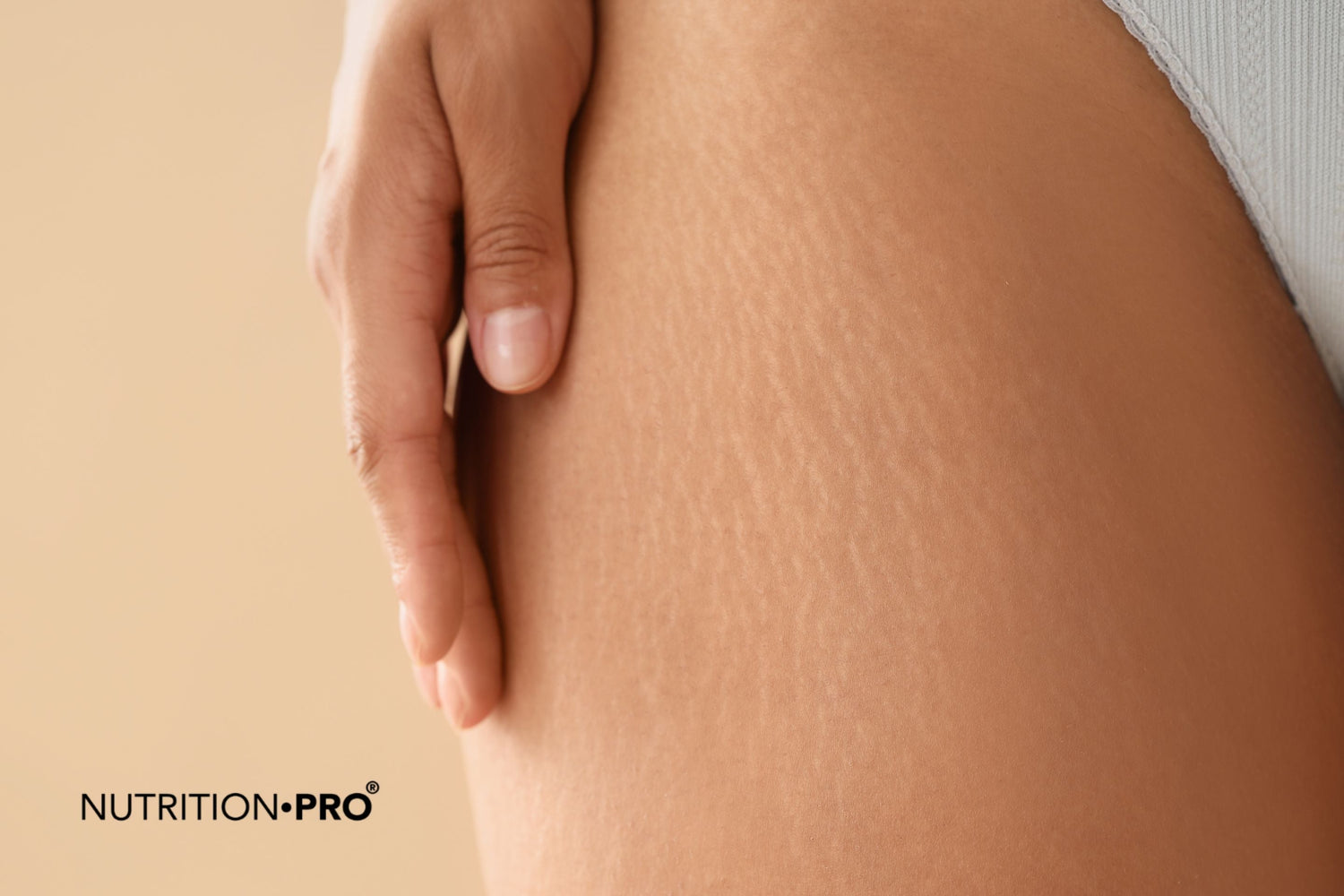
Cellulite affects 80 to 90% of women after puberty according to the reference review by Friedmann 2017 in Clinical, Cosmetic and Investigational Dermatology. Yet most French articles on the subject remain vague or marketing-focused. We have compiled a comprehensive guide based on Cochrane meta-analyses and controlled clinical trials: actual pathophysiology (fibrous septa, adipocyte hypertrophy, microcirculation), the 3 types of cellulite and their adapted treatments, and scientifically proven active ingredients (caffeine -2.1 cm thigh circumference in 60 days according to Puviani 2017, horse chestnut -32.1 mL leg volume according to Pittler 2012). Here's everything you need to know to act effectively.

Dietary supplement with 8 natural active ingredients in synergy: meadowsweet, cherry stem, dandelion, green tea, guarana, grape marc, black carrot, vitamin B3. Draining, thermogenic and microcirculatory action.
See Cellulip® →
Cellulip® + toning and firming topical gel (caffeine, escin, fucus, horse chestnut, ivy, menthol-camphor). The oral + topical approach documented as most effective by Puviani 2017 and Roure 2011.
See the Duo →Cellulite (gynoid lipodystrophy) affects 80 to 90% of women. It results from the interaction between vertical fibrous septa (Friedmann 2017 in Clin Cosmet Investig Dermatol), adipocyte hypertrophy and microcirculatory stasis. Three main types: adipose, aqueous, fibrous. Clinically proven active ingredients: topical caffeine (-2.1 cm thigh circumference, -56% orange peel depth in 60 days, Puviani 2017 in J Cosmet Dermatol), Horse chestnut (-32.1 mL leg volume, Cochrane meta-analysis Pittler 2012), Caffeine + carnitine + forskolin + retinol (Roure 2011 on 78 women over 12 weeks). The most effective approach combines oral administration (drainage, fat-burning) and topical application (skin lipolysis, microcirculation).
Health information. Cellulip® is not recommended for people undergoing anticoagulant treatment (presence of meadowsweet, salicylate derivative), children, pregnant or nursing women, and people allergic to salicylate derivatives. In case of chronic disease or medication treatment, consult a doctor before supplementation.
- What is cellulite: the scientific definition
- Anatomy of cellulite: septa, adipocytes, microcirculation
- Why 80-90% of women and so few men
- The 3 types of cellulite: adipose, aqueous, fibrous
- The 4 clinical grades (Nürnberger-Müller scale)
- The causes: genetics, hormones, lifestyle
- What works vs what doesn't work
- Scientifically proven active ingredients
- Oral administration: Cellulip® and drainage
- Topical application: gels and massage
- Why combine oral and topical
- 8-week protocol: daily routine
- Diet and lifestyle hygiene
- Self-test: what type of cellulite do you have?
- Frequently asked questions
What is cellulite: the scientific definition
Cellulite, or gynoid lipodystrophy (sometimes called gynoid hydrolipodystrophy, GHLG), is an alteration of skin texture characterized by a dimpled appearance with orange peel texture, primarily located on the thighs, buttocks, hips, more rarely on the arms and belly. It affects 80 to 90% of women after puberty according to Friedmann 2017 in Clin Cosmet Investig Dermatol.
Contrary to a very widespread misconception, cellulite is not an abnormal accumulation of fat. It is a modification of subcutaneous tissue structure that combines three phenomena:
- Hypertrophy of adipocytes in subcutaneous tissue, which increase in volume and exert pressure on surrounding structures
- Tension of vertical fibrous septa, collagen partitions that separate fat lobules and create dimpling by trapping swollen adipocytes
- Venolymphatic stasis, that is, a slowdown in the circulation of interstitial fluids that promotes local edema and low-grade chronic inflammation
This definition is important because it explains why a lean woman can have cellulite : it is not a question of overall weight but of local tissue organization. Conversely, an overweight woman without the genetic predisposition to vertical septa can have smoother skin than a lean woman who is genetically predisposed.
Anatomy of cellulite: septa, adipocytes, microcirculation
Three anatomical actors: (1) adipocytes store triglycerides and swell in case of caloric or hormonal surplus, (2) fibrous septa, collagen partitions arranged vertically in women and perpendicular to the skin, which retain adipose lobules, (3) venolymphatic microcirculation, which drains fluids and waste and whose slowing aggravates edema.
Adipocytes
<<<26>>> Adipocytes adipocytes are fat storage cells. In women, they are particularly abundant in the gluteal-trochanteric area (thighs, hips, buttocks) under estrogenic influence. When caloric intake exceeds needs, adipocytes accumulate triglycerides and can increase their volume up to 30 to 50 times their initial size.
Fibrous septa
Septa are collagen partitions that separate adipose tissue lobules. According to Friedmann 2017, the orientation of these septa is the key to the gender difference :
- In women : vertical septa, perpendicular to the skin. When adipocytes swell, they are compressed between the septa and protrude toward the surface, creating the dimpled appearance
- In men : cross-hatched septa, which distribute pressure and conceal deformations. Result: very few men develop visible cellulite
Venolymphatic microcirculation
Subcutaneous tissue is traversed by a network of blood and lymphatic capillaries that ensure the exchange and drainage of interstitial fluids. When hypertrophied adipocytes compress this network, drainage becomes less effective. Fluids stagnate, edema develops, low-grade chronic inflammation intensifies, and a vicious cycle begins. This is why draining actives (horse chestnut, cherry stem, dandelion) and microcirculation support (grape marc, ivy) are major leverage points.
Why 80-90% of women and so few men
Three main reasons: (1) anatomy of fibrous septa vertical in women (crossed mesh in men), (2) estrogen-driven adipose distribution in the gluteal-trochanteric zone, (3) higher capillary permeability under hormonal influence, promoting local edema.
Nearly all women develop cellulite at some point in their lives. Friedmann 2017 reports 80 to 90% prevalence in post-pubertal women, across all ethnicities. In men, the figure is below 10%, most often associated with hormonal disorders (hypogonadism, estrogenic treatments).
Estrogens at the heart of the mechanism
<<<18>>> Estrogens œstrogènes are female hormones that have multiple pro-cellulite effects:
- Stimulate adipogenesis (creation of new adipocytes) in the gluteal-femoral zone
- Increase the activity of lipoprotein lipase in the thighs and buttocks
- Increase capillary permeability, which promotes edema
- Decrease the rigidity of fibrous septa, which stretch more easily
This explains why cellulite appears or worsens at the 3 major estrogenic peaks in a woman's life : adolescence (pubescent rise), pregnancy (massive estrogenic peak), and perimenopause (estro-progestational imbalance).
The 3 types of cellulite: adipose, aqueous, fibrous
Adipose cellulite : soft, painless, due to excess fat mass. Aqueous cellulite : spongy, associated with heavy legs and water retention, due to lymphatic stasis. Fibrous cellulite : firm, painful when pinched, long-standing, due to retraction of collagen septa. Many women present a mixed form. Appropriate treatment depends on the dominant type.
| Type | Appearance | Pinching | Cause | Approach |
|---|---|---|---|---|
| Adipose | Soft, orange peel appearance when standing | Painless | Excess localized fat mass | Activity, caloric deficit, thermogenics |
| Aqueous | Spongy, heavy legs | Painless | Lymphatic stasis, fluid retention | Draining agents, microcirculation, hydration |
| Fibrous | Firm, established, compact dimpling | Painful | Collagen septae retraction | Deep massage, topical gel, sometimes medical procedures |
| Mixed | Combination of all 3 types | Variable | Progressive development | Combined oral + topical approach |
How to identify your type
Simple test to do at home, standing, on the outer thigh:
- Pinch the skin between thumb and index finger over 2-3 cm width
- If the skin is soft and painless, adipose cellulite
- If the skin is spongy, swollen by end of day and accompanied by heavy legs, aqueous cellulite
- If pinching is painful, the skin is firm and dimpling remains visible when lying down, fibrous cellulite
The 4 clinical grades (Nürnberger-Müller scale)
The Nürnberger-Müller scale classifies cellulite into 4 grades. Grade 0 : smooth skin when standing, no dimpling when pinched. Grade 1 : smooth skin when standing, dimpling visible only when pinched. Grade 2 : dimpling visible when standing. Grade 3 : dimpling visible in all positions, including when lying down.
This scale is used in most clinical trials to assess cellulite severity before and after treatment. The Puviani 2017 study included women with grade I to III, and showed a significant reduction in mean score (from 2.3 to 1.8 without pinching, from 3.3 to 2.2 after pinching) over 60 days of treatment.
What this means for prognosis
- Grade 1 : very good prognosis with a complete anti-cellulite protocol (diet + activity + topical + oral drainage agents). Possible resolution within a few months
- Grade 2 : good prognosis. Significant improvement possible but persistence of mild dimpling even after treatment
- Grade 3 : significant improvement possible (reduction in volume and appearance), but complete resolution rarely achieved without medical procedures (laser, radiofrequency, subcision according to Friedmann 2017)
The causes: genetics, hormones, lifestyle
Three families of factors: (1) genetic (orientation of septa, morphotype, fat distribution), (2) hormonal (estrogen, pregnancy, menopause, contraception), (3) lifestyle (pro-inflammatory diet, sedentary habits, prolonged standing, dehydration, smoking, chronic stress).
Genetic factors
The orientation and thickness of fibrous septa are largely determined genetically. A mother with cellulite has an increased risk of having a daughter who will develop cellulite. Fat distribution (gynoid vs. android morphotype) is also partly hereditary.
Hormonal factors
- Puberty : massive estrogen surge, frequent first appearance
- Pregnancy : major estrogen peak + weight gain + water retention, typical worsening
- Estrogen-progestin contraception : variable effect, sometimes worsening
- Peri-menopause : hormonal imbalance and fat redistribution, frequent worsening
Lifestyle factors
- Pro-inflammatory diet : refined sugar, excessive salt, alcohol, ultra-processed products
- Sedentary lifestyle : slows down microcirculation and lymph
- Prolonged standing or sitting : promotes venous stasis
- Dehydration : paradoxically amplifies water retention (the body retains water if it's lacking)
- Tobacco : impairs microcirculation and skin collagen
- Chronic stress : elevated cortisol, which promotes abdominal fat storage and inflammation
What works vs what doesn't work
What works : topical actives (caffeine, escin, horse chestnut, ivy), oral actives (plant-based drainage agents, thermogenic compounds), combined physical activity cardio+strengthening, regular deep massage, anti-inflammatory diet. What doesn't work : severe diets alone, "miracle" creams without validated actives, occasional massages, "magnetic" treatments or pseudo-scientific waves.
What has documented efficacy
- Topical creams with validated actives : caffeine + escin (Puviani 2017), caffeine + carnitine + forskolin + retinol (Roure 2011)
- Drainage dietary supplements : horse chestnut (Cochrane Pittler 2012), multi-active combinations (drainage + microcirculation + thermogenesis)
- Combined physical activity : cardio (fat loss) + strengthening (muscle toning of thighs and glutes)
- Regular manual or mechanical massage (palper-rouler, LPG) : documented improvement in drainage and appearance
- Medical procedures for severe cases : radiofrequency, laser, subcision (Friedmann 2017)
What doesn't work (and what competitors don't tell you)
- Very restrictive diets alone : can even worsen fibrous cellulite by accelerating lean mass loss
- "Miracle" creams without validated actives : most creams sold in retail stores have insufficient concentrations of actives or formulations that don't penetrate
- Isolated manual lymphatic drainage : real but temporary effect, requires regular repetition
- Drinking huge amounts of water : 1.5 to 2 L per day is sufficient, beyond that the effect is null
- "Miracle" weight loss supplements without documented actives (raspberry ketone, garcinia alone, burners without evidence)
We acknowledge that old fibrous cellulite rarely disappears without medical procedures (laser, radiofrequency, subcision). Dietary supplements and topical creams can, however, significantly reduce its appearance, decrease thigh circumference and improve skin firmness, as demonstrated by the Puviani 2017 study with -2.1 cm reduction in thigh circumference in 60 days. Our objective is not to promise complete disappearance, but measurable and lasting improvement.
Scientifically proven active ingredients
Three major families of active ingredients: (1) lipolytic (caffeine, guarana, green tea) which stimulate the release of stored fats, (2) veino-lymphatic draining (horse chestnut, cherry stem, dandelion, bladderwrack) which reduce stasis and edema, (3) microcirculatory (grape marc, ivy, vitamin B3) which improve tissue irrigation.
Caffeine
The best documented anti-cellulite active ingredient. Caffeine inhibits phosphodiesterase, which increases cyclic AMP in adipocytes and activates hormone-sensitive lipase, triggering the release of stored fatty acids. Hernandes 2021 in AAPS PharmSciTech documents its transdermal permeation. Puviani 2017 and Roure 2011 confirm its clinical efficacy on cellulite.
Aescin (horse chestnut)
<<<20>>> Aescinescine is the main active ingredient of horse chestnut. The Cochrane meta-analysis by Pittler 2012 on chronic venous insufficiency shows a reduction in leg pain of -42.4 mm on 100 mm VAS and a reduction in leg volume of -32.1 mL versus placebo. Venotonic and anti-edematous effect validated.
Grape marc and polyphenols
Grape marc (skin and seeds) is rich in proanthocyanidins, antioxidant polyphenols documented for their action on microcirculation and capillary resistance.
Green tea and guarana
Green tea contains catechins (EGCG) and caffeine, guarana is one of the plants richest in caffeine (3 to 5% vs 1 to 2% in coffee). Together, they stimulate thermogenesis (resting energy expenditure) and lipolysis via cAMP pathways.
Plant-based drainers
Cherry stem, dandelion, meadowsweet, fucus : active ingredients traditionally used for their mild diuretic and draining effect. Particularly useful for aqueous cellulite with water retention.
Vitamin B3 (niacinamide)
The niacinamide improves skin barrier, firmness and skin microcirculation. Present in Cellulip® to support skin quality during the treatment course.
Oral route: Cellulip® and internal drainage
The oral route acts on the 3 internal mechanisms : venolymphatic drainage (horse chestnut, cherry stem, dandelion), thermogenesis and lipolysis (green tea, guarana), microcirculation (grape seed extract, vitamin B3). Cellulip® combines 8 active ingredients in synergy to cover these 3 axes.
The 8 active ingredients in Cellulip® and their role
| Active ingredient | Main action |
|---|---|
| Meadowsweet | Draining, anti-water retention |
| Cherry stem | Mild diuretic, draining |
| Green tea | Thermogenesis, lipolysis (EGCG) |
| Guarana | Concentrated caffeine, lipolysis |
| Grape seed extract | Polyphenols, microcirculation |
| Black carrot | Antioxidant, polyphenols |
| Dandelion | Draining, liver support |
| Vitamin B3 | Skin microcirculation, firmness |
Dosage and duration
4 capsules per day with a large glass of water, in 2 divided doses spaced apart (morning and noon preferably) to maximize the draining effect throughout the day. A treatment course of 1 to 3 months is recommended, with a break of 2 to 4 weeks before any possible resumption. The box of 120 capsules allows for one month of treatment.
Topical route: gels and massages
The topical route works locally and directly on affected areas. Active ingredients (caffeine, escin, ivy, fucus, horse chestnut) penetrate the skin and stimulate cutaneous lipolysis, drainage and microcirculation. The Puviani 2017 study shows -2.1 cm reduction in thigh circumference and -56% reduction in orange peel appearance depth in 60 days with a caffeine + escin cream.
Active ingredients in the Anti-cellulite Duo topical gel
The topical gel included in the Anti-cellulite Duo® combines several documented active ingredients:
- Caffeine (Paullinia cupana): cutaneous lipolysis through phosphodiesterase inhibition
- Fucus (Fucus vesiculosus): draining, rich in iodine and fucoidan
- Ivy (Hedera helix): venotonic and anti-edema effect
- Horse Chestnut (Aesculus hippocastanum): escin, microcirculation
- Menthol and camphor : hot-cold sensory effect that stimulates skin microcirculation
Optimal application to maximize effectiveness
- 2 applications per day : morning before getting dressed, evening before bed
- Vigorous circular massage for 3 to 5 minutes on affected areas (outer thighs, buttocks, hips, abdomen if affected)
- Movements toward the heart to promote venous and lymphatic return
- No friction that is too violent which could irritate the skin, but sustained pressure
The Roure 2011 study on 78 women showed that simple twice-daily application for 12 weeks of an active cream (caffeine + carnitine + forskolin + retinol) leads to significant circumference reduction on abdomen, hips-buttocks and waist from the 4th week onwards, with improvement in orange peel appearance and skin firmness. Massage is therefore an efficacy amplifier, not an isolated requirement.
Why combine oral and topical
The combined approach combines mechanisms of action without redundancy: the oral route acts internally on systemic drainage, thermogenesis and deep microcirculation; the topical route acts locally on cutaneous lipolysis, firmness and superficial microcirculation. This is the approach documented as most effective.
The scientific logic behind the combination is solid:
- Systemic drainage (oral) + local drainage (topical) = amplified anti-retention effect
- Internal thermogenesis (oral) + cutaneous lipolysis (topical) = comprehensive action on fat storage
- Deep microcirculation (oral) + superficial microcirculation (topical) = optimal tissue oxygenation
- Polyphenol antioxidants (oral) + cutaneous microcirculation (topical) = support for collagen quality and skin elasticity
Roure 2011 and Puviani 2017 individually validated each pathway, but it is their combination that maximizes the effect on all cellulite aspects . This is precisely why we offer the Anti-cellulite Duo®, which combines Cellulip® capsules and a synergistic topical gel.
8-week protocol: daily routine
Daily routine over 8 weeks: morning = 2 Cellulip® capsules with water + topical gel application with 3-5 min massage; midday = 2 Cellulip® capsules with water; evening = topical gel application with 3-5 min massage. In parallel : 1.5-2 L of water, physical activity 3-5 times/week, anti-inflammatory diet.
Weeks 1 and 2: adjustment
Start the oral and topical treatment in daily routine. Be sure to note your baseline thigh circumference and take before photos. Hydration minimum 1.5 L. Regular physical activity 3 times per week.
Weeks 3 to 6: active phase
Maintain the routine consistently. Increase physical activity to 4-5 sessions per week (cardio + strengthening). Improve diet (less salt, sugar, alcohol, more green vegetables and lean proteins). First visible results expected by week 4 (according to Roure 2011).
Weeks 7 and 8: consolidation
Final assessment: after photos, thigh circumference measurement, Nürnberger-Müller score. Expected results according to Puviani 2017: -1 to -2 cm reduction in thigh circumference, visible improvement in orange-peel appearance, improved firmness.Decide on next steps: 2-4 week pause then new treatment cycle to consolidate, or topical maintenance only.
Nutrition and lifestyle habits
5 major levers: (1) limit salt (5 g/day max), (2) limit refined sugar and alcohol (pro-inflammatory), (3) increase green vegetables (potassium, polyphenols), (4) hydration 1.5-2 L/day, (5) combined physical activity cardio + muscle strengthening of thighs and glutes.
Foods to prioritize
- Green vegetables : spinach, broccoli, zucchini, green beans (potassium, polyphenols, low calorie)
- Red berries : blueberries, raspberries, blackberries (antioxidant polyphenols)
- Lean proteins : chicken, turkey, fish, eggs, legumes (lean mass preservation)
- Green tea : 2-3 cups per day (catechins, thermogenesis support)
- Olive oil and nuts and seeds in moderate amounts (omega 3, anti-inflammatory)
- Water : 1.5 to 2 L per day, spread throughout the day
Foods to limit
- Salt and salty foods : cured meats, cheeses, processed meals (max 5 g salt per day)
- Refined sugar : sodas, pastries, candy (pro-inflammatory, fat storage)
- Ultra-processed products : ready-made meals, industrial snacks
- Alcohol : dehydrates, overloads the liver, slows metabolism
- Excess saturated fats : fatty meats, fried foods
Optimal physical activity
Ideal combination: 3 cardio sessions (brisk walking, swimming, cycling, moderate running) + 2 strength training sessions (squats, lunges, hip thrusts, planks) per week. Swimming and aquabike are particularly effective for aqueous cellulite because the hydrostatic pressure of water provides a draining effect. Strengthening the thighs and glutes tones the underlying muscles, which mechanically smooths the skin's appearance.
Self-test: what type of cellulite do you have?
7 questions to identify your dominant cellulite type and the most suitable protocol. Check everything that applies to you.
Frequently Asked Questions
What exactly is cellulite?
Cellulite, scientifically called gynoid lipodystrophy, is an alteration of skin texture affecting 80 to 90% of women after puberty according to Friedmann 2017 in Clin Cosmet Investig Dermatol. It results from a combination of three factors: hypertrophy of subcutaneous adipocytes, tension of vertical fibrous septa holding them, and alterations in veno-lymphatic microcirculation.
Why do 80 to 90% of women have cellulite and not men?
It's a matter of subcutaneous anatomy. In women, fibrous septa are arranged vertically, which promotes visible deformation when adipocytes swell. In men, septa are in a crosshatch pattern, which distributes pressure and masks dimples. Estrogen also increases fat storage in the thighs and buttocks.
What are the 3 types of cellulite?
Adipose cellulite (excess fat mass, painless, soft when pinched), aqueous cellulite (water retention and lymphatic stasis, spongy skin, heavy legs) and fibrous cellulite (compact, long-standing dimples, painful when pinched, firmer skin). Many women have a mixed form.
Is cellulite only cosmetic or is it a health problem?
It is primarily a cosmetic concern, not a disease. The Friedmann 2017 review describes it as an alteration of skin texture with no medical significance. However, in its aqueous form with water retention and early venous insufficiency, it can be accompanied by sensations of heavy legs that warrant a broader medical approach.
Do anti-cellulite creams really work?
Yes, certain formulations have scientifically documented efficacy. The Puviani 2017 study in J Cosmet Dermatol with a cream combining caffeine, escin and beta-sitosterol shows a thigh circumference reduction of -2.1 cm and a reduction in orange peel skin depth of -56% measured by Antera 3D. The Roure 2011 study in Int J Cosmet Sci confirms the efficacy of a caffeine + carnitine + forskolin + retinol formulation on 78 women.
Is topical caffeine really effective?
Yes. Topical caffeine penetrates the epidermis and stimulates lipolysis by inhibiting phosphodiesterase, which increases intracellular cyclic AMP and triggers the release of fatty acids stored in adipocytes. The Hernandes 2021 study in AAPS PharmSciTech documents the transdermal permeation of caffeine and its clinical efficacy on cellulite.
How long does it take to see cellulite results?
First visible results generally appear between 4 and 8 weeks of regular treatment. The Puviani 2017 study shows significant effects from 30 days, optimal at 60 days. The Roure 2011 study documents improvements in all parameters from 4 weeks and all body areas at 12 weeks. Daily consistency is essential.
Which draining plants are effective against cellulite?
The most documented are horse chestnut (Cochrane meta-analysis Pittler 2012: -32.1 mL leg volume), cherry stem, dandelion, meadowsweet, green tea and guarana, grape pomace. Cellulip® by Nutrition•pro combines these 8 actives synergistically.
Cellulite and diet: what should you eat or avoid?
Limit salt, refined sugar, alcohol, ultra-processed products. Prioritize lean proteins, potassium-rich vegetables, red fruits (polyphenols), water (1.5 to 2 L/day), green tea. No miracle diet.
Cellulip or Duo Anti-cellulite: which one to choose?
Cellulip® capsules alone acts internally (drainage, fat-burner, microcirculation) via 8 actives. Duo Anti-cellulite® combines Cellulip® with a synergistic topical gel. The oral + topical approach is documented as most effective by Roure 2011 and Puviani 2017.
What is the most effective sport against cellulite?
The combination of cardio + muscle strengthening of the thighs and glutes. Cardio burns subcutaneous fat and activates circulation. Strengthening tones the underlying muscles. Swimming and aquabike are particularly interesting because hydrostatic drainage reduces water retention.
Is manual massage effective against cellulite?
Manual and mechanical massage (LPG) temporarily improves lymphatic drainage and skin appearance by mobilizing fibrous septa. Real but transient effect that requires regular sessions. Combined with an active cream applied during the massage, the effect is potentiated.
Does drinking plenty of water reduce cellulite?
Drinking adequately (1.5 to 2 L per day) is essential to promote lymphatic drainage and elimination of metabolic waste. But it's not a magic solution: drinking 4 liters per day won't make cellulite disappear. Proper hydration is a necessary prerequisite, not sufficient on its own.
Can cellulite disappear completely?
Recent adipose cellulite and aqueous cellulite can regress significantly with an appropriate protocol. Old and established fibrous cellulite is more resistant: it can be significantly reduced, rarely eliminated completely without medical procedures such as subcision, laser, or radiofrequency (Friedmann 2017).
At what age does cellulite appear?
Cellulite can appear as early as puberty with the first rises in estrogen. It is rarely present before age 15 and already affects 50% of young thin women. It often intensifies at 3 hormonally charged moments: adolescence, pregnancy, menopause.
Are there any contraindications to Cellulip?
Cellulip is not recommended for people on anticoagulant therapy (presence of meadowsweet, salicylate derivative), children, pregnant or nursing women, and people allergic to salicylate derivatives. In case of chronic pathology or medication, consult a doctor before supplementation.
Can you lose weight with an anti-cellulite protocol?
An effective anti-cellulite protocol generally includes physical activity and dietary improvements that promote moderate weight loss. Cellulip contains green tea and guarana, actives documented for thermogenesis. For a priority weight loss objective, combine with Pure Konjac (satiety) and Actifminceur (enhanced thermogenesis).
Does cellulite cause pain?
Classic adipose cellulite is painless. Old fibrous cellulite can be sensitive to pinching. Aqueous cellulite is often associated with sensations of heavy legs, especially at the end of the day. If pain is marked, consult a doctor to rule out more severe venous insufficiency.
How many Cellulip capsules per day?
The recommended dosage is 4 capsules per day, to be taken with a large glass of water. Doses can be spread throughout the day to maximize the draining effect. The 120-capsule format allows for a one-month course. A course of 1 to 3 months is recommended, with a break of 2 to 4 weeks before possible resumption.
- Gynoid lipodystrophy
- Scientific name for cellulite. Alteration of skin texture specifically linked to the distribution of female adipose tissue and the organization of vertical fibrous septa.
- Fibrous septa
- Collagen partitions that separate adipose tissue lobules. Vertical in women (promote dimpling), in cross-hatch pattern in men (conceal deformations).
- Adipocyte
- Fat cell that stores triglycerides. Can increase its volume up to 30-50 times its initial size in case of caloric surplus or hormonal impregnation.
- Nürnberger-Müller Scale
- Reference dermatological classification for cellulite, in 4 grades (0 to 3), created by Nürnberger and Müller in 1978.
- Phosphodiesterase
- Enzyme that degrades cyclic AMP. Its inhibition by caffeine increases intracellular cAMP and stimulates lipolysis via hormone-sensitive lipase.
- Aescin
- Triterpenic saponin extracted from horse chestnut seeds. Anti-edematous, venotonic, microcirculatory action documented (Cochrane meta-analysis Pittler 2012).
- Antera 3D
- 3D imaging system used in dermatology to objectively measure the depth and volume of skin texture, and thus the orange peel appearance.
- Friedmann DP, Vick GL, Mishra V. Cellulite: a review with a focus on subcision. Clin Cosmet Investig Dermatol. 2017;10:17-23. DOI: 10.2147/CCID.S95830
- Puviani M, Tovecci F, Milani M. A two-center, assessor-blinded, prospective trial evaluating the efficacy of a novel hypertonic draining cream for cellulite reduction: A Clinical and instrumental (Antera 3D CS) assessment. J Cosmet Dermatol. 2017;17(3):448-453. DOI: 10.1111/jocd.12467
- Roure R, Oddos T, Rossi A, Vial F, Bertin C. Evaluation of the efficacy of a topical cosmetic slimming product combining tetrahydroxypropyl ethylenediamine, caffeine, carnitine, forskolin and retinol, In vitro, ex vivo and in vivo studies. Int J Cosmet Sci. 2011;33(6):519-526. DOI: 10.1111/j.1468-2494.2011.00665.x
- Pittler MH, Ernst E. Horse chestnut seed extract for chronic venous insufficiency. Cochrane Database Syst Rev. 2012;11(11):CD003230. DOI: 10.1002/14651858.CD003230.pub4
- Hernandes AN, Boscariol R, Balcão VM, Vila MMDC. Transdermal Permeation of Caffeine Aided by Ionic Liquids: Potential for Enhanced Treatment of Cellulitis. AAPS PharmSciTech. 2021;22(3):121. DOI: 10.1208/s12249-021-01956-5
- Nürnberger F, Müller G. So-called cellulite: an invented disease. J Dermatol Surg Oncol. 1978;4(3):221-229.
- ANSES. Opinion regarding the evaluation of risks related to the consumption of dietary supplements containing draining and slimming plants, 2019.


