

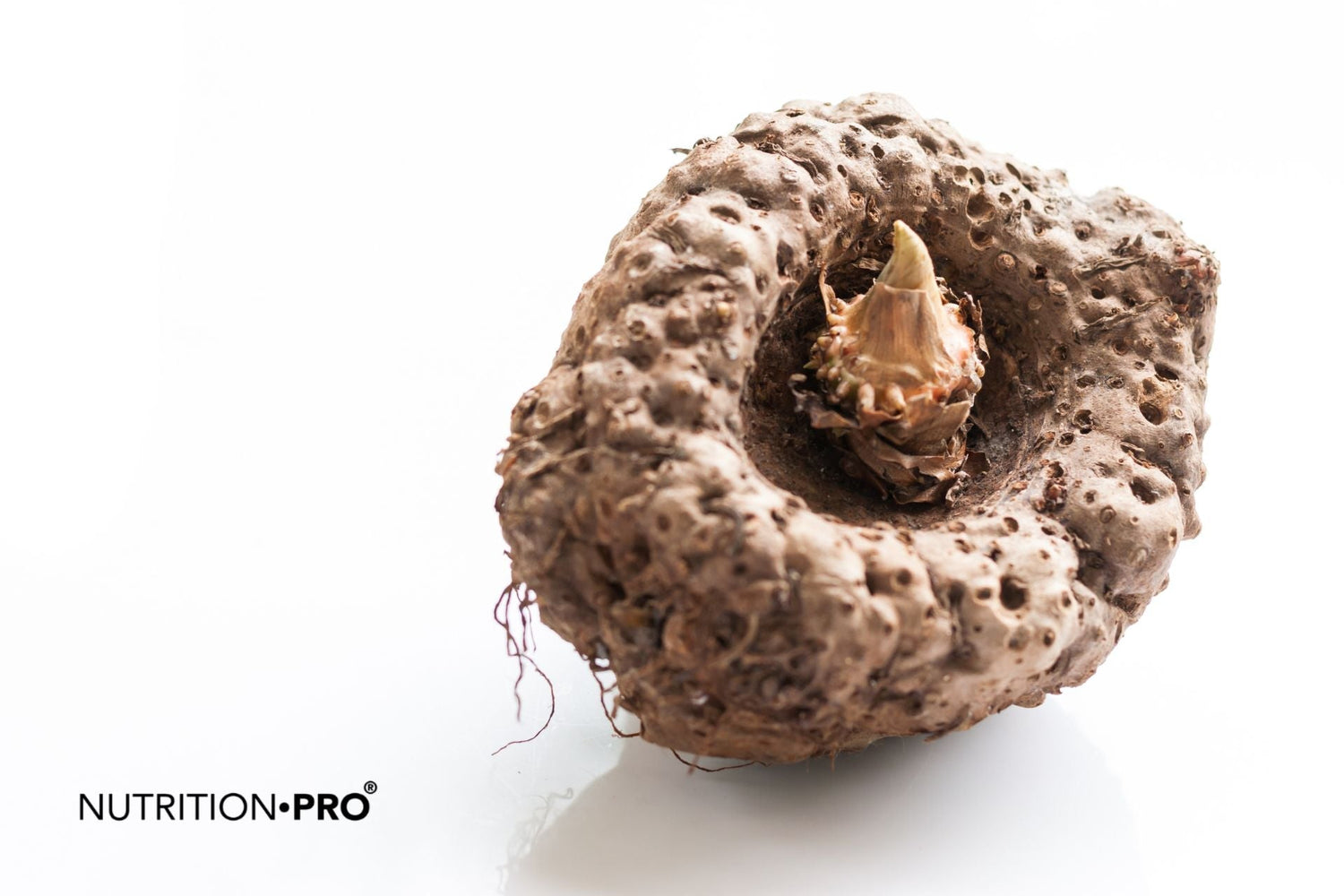
Konjac is more than just a trendy Asian appetite suppressant: it is one of the very few plant-based ingredients to have received three European health claims (EFSA) across three distinct objectives : weight loss (3 g/day), cholesterol reduction (4 g/day), and digestive regularity. The active molecule, glucomannan, is an exceptionally viscous soluble fiber that absorbs up to 50 times its weight in water, creating a dense gel in the stomach responsible for mechanical satiety. We have compiled everything you need to know about konjac from meta-analyses (Onakpoya 2014, Sood 2008), official EFSA opinions, and recent data (Citarrella 2024).

Pure Konjac - 120 capsules
Pure glucomannan extracted from the root of Amorphophallus konjac, dosed at the EFSA value for weight loss as part of a calorie-restricted diet.
View Pure Konjac →Konjac (Amorphophallus konjac) provides a unique soluble fiber, glucomannan, which swells to 50 times its weight in the stomach. Three validated EFSA claims: weight loss at 3 g/day (Q-2009-00373), cholesterol at 4 g/day (Q-2008-280), and digestive regularity. Onakpoya 2014 meta-analysis in J Am Coll Nutr (8 RCTs) confirms weight loss. Sood 2008 meta-analysis in Am J Clin Nutr (14 studies, n=531) shows -19.28 mg/dL in total cholesterol and -15.99 mg/dL in LDL. Effect on blood glucose: -7.44 mg/dL fasting. Excellent safety profile provided adequate hydration is maintained (250 mL of water per serving).
Health information. Konjac may slow the absorption of certain medications (levothyroxine, anticoagulants, oral antidiabetics, contraceptives). Allow at least 1 hour before or 4 hours after taking other medications. In the case of chronic illness, ongoing medical treatment, or pregnancy, consult a healthcare professional.
- Konjac: the plant and its history
- Glucomannan: the active molecule explained
- How glucomannan works in the body
- EFSA claim #1: Weight loss (3 g/day)
- EFSA claim #2: Cholesterol (4 g/day)
- EFSA claim #3: Intestinal transit
- Effects on blood sugar and diabetes
- Capsules, powder, shirataki: which form to choose
- Dosage and optimal timing
- Side effects and contraindications
- Konjac vs other fibers (psyllium, bran, inulin)
- How to choose a good konjac supplement
- The myths around konjac
- Self-test: is konjac right for you?
- Practical protocol: a typical day
- Frequently asked questions
Konjac: the plant and its history
Konjac (Amorphophallus konjac) is a perennial plant native to Southeast Asia, grown primarily in Japan, China, Indonesia, and Korea for over 2,000 years. Its tuberous root, known as a corm, is rich in glucomannan (up to 60% of its dry matter).
Konjac belongs to the Araceae family, like the arum lily. Its tuberous root can reach 25 cm in diameter and weigh several kilograms. In Japan, it has traditionally been used since the Nara period (8th century) to make konnyaku (food jelly) and shirataki (low-calorie transparent noodles), iconic staples of Japanese cuisine.
Scientific interest in konjac is more recent. The first European and North American clinical studies date back to the 1980s, and the EFSA validated its first health claim (cholesterol) in 2009, followed by the weight loss claim in 2010. It is nowone of the most scientifically documented plant fibers, with a clear regulatory status in Europe.
Glucomannan: the active molecule explained
Glucomannan is a soluble fiber polysaccharide composed of glucose and mannose in an approximate ratio of 1:1.6, linked by β-1,4 bonds. Its exceptional viscosity is the key to its effectiveness: capable of absorbing 50 times its weight in water and forming a very thick gel in the stomach.
The molecular structure of glucomannan sets it apart from other dietary fibers. The chains can reach a molecular weight of 200,000 to 2,000,000 daltons, making it one of the most viscous fibers known. For comparison: pectin (from apples) peaks at 30,000 daltons, psyllium ranges between 100,000 and 200,000, and guar gum stays below 250,000.
This exceptional viscosity has two practical consequences:
- Powerful mechanical satiety effect : the gel formed takes up considerable volume in the stomach and strongly activates gastric mechanoreceptors
- Slowing of gastric emptying : food leaves the stomach more slowly, which prolongs satiety and smooths post-prandial blood sugar levels
Glucomannan is not digested by human enzymes (like other soluble fibers). It reaches the colon where it is fermented by the gut microbiota, producing short-chain fatty acids (acetate, propionate, butyrate) that nourish colonocytes and contribute to overall metabolic regulation.
How glucomannan works in the body
Four mechanisms: (1) gastric distension which activates mechanoreceptors and signals satiety via the vagus nerve, (2) slowing of gastric emptying which smooths blood sugar levels and prolongs satiety, (3) bile acid binding in the intestine, which forces the liver to draw on cholesterol to synthesize new ones, (4) colonic fermentation which produces regulatory short-chain fatty acids.
Mechanism 1: mechanical gastric distension
When glucomannan swells in the stomach, it occupies a much greater volume than the same mass of conventional food would provide. The gastric mechanoreceptors, sensitive to stretching, send a satiety signal to the brain via the vagus nerve. This is the primary mechanism behind the appetite-suppressing effect.
Mechanism 2: slowing of gastric emptying
The viscosity of the gel slows the passage of the food bolus into the duodenum. Consequences: prolonged satiety for several hours after the meal, and most notably reduction of the post-prandial blood sugar spike, which explains the interest in konjac for diabetic or pre-diabetic individuals (Citarrella 2024 study in Nutrients).
Mechanism 3: bile acid binding
In the small intestine, glucomannan sequesters a portion of bile acids, preventing their reabsorption (enterohepatic cycle). The liver must then draw on its cholesterol reserves to synthesize new bile acids, which mechanically lowers blood cholesterol levels. This is the primary mechanism behind the cholesterol reduction demonstrated by Sood 2008.
Mechanism 4: colonic fermentation and short-chain fatty acids
Upon reaching the colon, glucomannan is fermented by the gut microbiota, producing acetate, propionate, and butyrate. These molecules nourish colonic cells (butyrate), modulate insulin release (propionate), and activate FFAR2/FFAR3 receptors involved in appetite regulation. Overall beneficial effect oninsulin resistance.
Weight loss: 3 g/day with a calorie-restricted diet
The European Food Safety Authority (EFSA) validated in 2010 the following claim, incorporated into EU Regulation No. 432/2012:
"Glucomannan, in the context of an energy-restricted diet, contributes to weight loss."
The landmark meta-analysis by Onakpoya et al. 2014 published in J Am Coll Nutr pooled 8 randomized controlled trials (n=308) and confirmed significant weight loss in the glucomannan group vs. placebo, under caloric deficit conditions. The broader meta-analysis by Sood et al. 2008 in Am J Clin Nutr (14 studies, n=531) had already documented a loss of -0.79 kg on average, modest but reproducible.
The important aspect of the EFSA wording: the claim only works combined with a caloric deficit. No scientific authority has validated glucomannan as a standalone weight loss tool. Its role is to support diet adherence by reducing hunger, not to replace dietary changes.
Cholesterol: 4 g/day for healthy cholesterol levels
EFSA also validated in 2009 a separate claim regarding the cholesterol-lowering effect:
"Glucomannan contributes to the maintenance of normal blood cholesterol levels."
The meta-analysis by Sood et al. 2008 in Am J Clin Nutr (14 RCTs, n=531) shows that glucomannan significantly reduces:
- Total cholesterol: -19.28 mg/dL (95% CI: -24.30 to -14.26)
- LDL cholesterol: -15.99 mg/dL (95% CI: -21.31 to -10.67)
- Triglycerides: -11.08 mg/dL (95% CI: -22.07 to -0.09)
- Fasting blood glucose: -7.44 mg/dL
The effect on HDL cholesterol is not significant. The primary mechanism is the binding of bile acids in the small intestine : the liver must draw on its cholesterol reserves to synthesize new bile acids, thereby reducing circulating cholesterol levels.
Important: glucomannan is not a substitute for statins in cases of severe hypercholesterolemia or established cardiovascular disease. It is intended to complement a comprehensive strategy (Mediterranean diet, physical activity, medical treatment if prescribed).
Intestinal transit: regulation through fiber
Konjac falls under the general category of dietary fibers beneficial for digestive transit. The EFSA has validated several claims regarding fiber in general:
"Dietary fiber contributes to normal bowel function."
Glucomannan increases fecal bulk by absorbing water in the colon, which regulates bowel transit in both directions: it softens hard stools and soothes overly loose stools. A more moderate effect than psyllium on transit alone, but a real one nonetheless.
In practice, for primarily transit-focused benefits, organic blonde psyllium remains more versatile (mixed soluble + insoluble fiber). Konjac is better suited when the primary goal is weight loss or cholesterol management, with improved transit as a secondary benefit.
Effects on blood sugar and diabetes
Glucomannan slows carbohydrate absorption in the intestine, which smooths post-meal blood sugar spikes. Sood 2008 meta-analysis: reduction in fasting blood glucose of -7.44 mg/dL. Recent study Citarrella 2024 in Nutrients on metabolic syndrome confirms a benefit on insulin resistance combined with metformin.
Beyond the effect on weight and cholesterol, glucomannan presents a notable interest for type 2 diabetic or pre-diabetic subjects. The mechanism is twofold:
- Slowing of gastric emptying : carbohydrates reach the intestine more slowly, which spreads the post-prandial glycemic peak
- Production of short-chain fatty acids through colonic fermentation: the propionate modulates insulin release and peripheral sensitivity
The study Citarrella et al. 2024 published in Nutrients followed 58 patients with metabolic syndrome on metformin. Those who received glucomannan supplementation (4 g/day) with D-chiro-inositol and inulin for 16 weeks showed a significant improvement in insulin levels, HOMA-IR (insulin resistance), total cholesterol, triglycerides and LDL, compared to the control group. The authors conclude that glucomannan is a valid and safe complementary approach for metabolic syndrome.
Health information. In cases of diabetes treated with insulin or oral antidiabetic medications, konjac may potentiate the hypoglycemic effect and require treatment adjustment. Always discuss with a doctor before starting a course, and monitor blood glucose levels at the beginning of supplementation.
Capsules, powder, shirataki: which form to choose
For weight loss or cholesterol goals, capsules dosed at the EFSA value are the reference form : practical, precise, easy to follow on a daily basis. Raw powder allows you to incorporate konjac into recipes (smoothies, thickening soups). Shirataki (konjac noodles) provide an interesting food volume but a low dose of glucomannan.
Capsules: the most effective form for the course
Capsules contain extracted and concentrated glucomannan, precisely dosed (generally 500 mg per capsule). To reach the EFSA dose of 3 g/day, take 6 capsules spread across 3 servings (2 capsules × 3 times per day before meals). Advantages: exact dosage, easy to carry, no taste, ideal for maintaining a course over several weeks.
Raw powder: for cooking
Konjac powder is used as a natural thickener in sauces, smoothies, soups and certain culinary preparations. It provides glucomannan but with greater dose variability (glucomannan content varies depending on extract quality). Neutral taste. Precaution: always dilute in a large volume of liquid and consume immediately (the gel forms very quickly).
Shirataki: Japanese noodles
Shirataki are noodles made from konjac flour and water (97 to 99% water). Very low caloric content (approximately 8 kcal per 100 g), ideal for replacing regular pasta in a diet. Moderate glucomannan content: approximately 3 g of glucomannan per 100 g of shirataki, equivalent to one EFSA dose in a 100 g serving. Limitation: unusual texture (gelatinous) which is not to everyone's taste, and not well suited for a structured course as the dose varies depending on consumption.
Nutrition•pro offers only pure glucomannan in capsules dosed at the EFSA value. We have chosen not to offer shirataki (pasta) or raw powder, as our goal is to provide the most concentrated, most convenient, and most effective form for weight loss or cholesterol management. Shirataki is nonetheless an interesting dietary option to incorporate into a diet, as a complement to capsule supplementation to reach the effective dose.
Dosage and optimal timing
EFSA weight loss dose: 3 g/day divided into 3 servings of 1 g before each meal, with 250 to 500 mL of water, 30 to 60 minutes before the meal. For cholesterol: 4 g/day divided into 2 to 4 servings with meals. Always introduce gradually (1 g/day during the first week to assess digestive tolerance).
Standard course protocol (weight loss goal)
- Days 1 to 3 : 1 g of glucomannan before lunch only (2 capsules) with 250 mL of water
- Days 4 to 7 : 1 g before lunch + 1 g before dinner (4 capsules total)
- From day 8 onwards : 1 g before each main meal (breakfast, lunch, dinner) = 3 g/day, 6 capsules divided into 3 servings
- Duration : 1 to 3 months maximum, then a 2 to 4 week break
Common mistakes to avoid
- Drinking too little water : risk of digestive discomfort and, very rarely, esophageal obstruction. Minimum 250 mL per serving
- Taking during or after the meal : reduced effectiveness, the gel must have time to form in the empty stomach
- Starting at full dose : bloating, gas, discomfort. Always introduce gradually
- Relying on konjac alone without dieting : the EFSA claim requires an associated caloric deficit
- Taking at the same time as medications : space at least 1 hour before or 4 hours after
Side effects and contraindications
Most common adverse effects: bloating, gas, digestive discomfort at the start of the course (introduce gradually). Rare: esophageal obstruction if ingested without sufficient water. Absolute contraindications: digestive stenosis, severe swallowing disorders, intestinal obstruction, children under 12 years of age, pregnancy and breastfeeding.
Mild side effects (common)
Highly viscous soluble fibers such as glucomannan may cause at the start of the course:
- Bloating and flatulence due to colonic fermentation (generally transient over 1 to 2 weeks)
- Abdominal discomfort, feeling of excessive fullness
- Changes in bowel habits (most often an improvement, sometimes a temporary acceleration)
These discomforts almost always diminish as the microbiome adapts. A gradual introduction (1 g/day in the first week) significantly reduces these issues.
Rare but serious adverse effect
Theesophageal obstruction is the only genuinely documented risk of konjac. It occurs when capsules or powder are swallowed with too little water, as the glucomannan swells before reaching the stomach and blocks the passage. A few clinical cases have been reported in the literature, all linked to ingestion without sufficient water. Simple prevention: drink at least 250 mL of water per serving.
Absolute contraindications
- Esophageal or intestinal stenosis
- Digestive obstruction or partial obstruction
- Severe swallowing disorders (severe dysphagia, risk of choking)
- Children under 12 years of age
- Pregnancy and breastfeeding (insufficient data available)
- Inflammatory bowel disease during flare-ups (active Crohn's disease, active UC)
Medication precautions
Glucomannan may slow the absorption of several classes of medications :
- Levothyroxine (thyroid hormone)
- Oral anticoagulants
- Oral antidiabetics and insulin (possible potentiation of the hypoglycemic effect)
- Oral contraceptives
- Certain anticonvulsants
General rule: space medication doses by at least 1 hour before or 4 hours after konjac. In the case of long-term treatment, seek medical advice before starting a course.
Konjac vs. other fibers: choosing the right one for your needs
| Fiber | Type | Main action | Effective dose |
|---|---|---|---|
| Glucomannan (konjac) | Highly viscous soluble | Satiety, weight loss, cholesterol (3 EFSA claims) | 3 g/day |
| Blond psyllium | Soluble + insoluble | Satiety, bowel regularity in both directions, cholesterol | 10-20 g/day |
| Beta-glucans (oat) | Soluble | Cholesterol, blood sugar | 3 g/day |
| Inulin | Soluble fermentable | Microbiome, prebiotic | 5-10 g/day |
| Oat bran | Soluble + insoluble | Bowel regularity, moderate satiety | 20-30 g/day |
| Guar gum | Viscous soluble | Blood sugar, satiety | 5-10 g/day |
When to choose konjac vs psyllium
Both fibers are complementary. Choose konjac as a priority if the goal is weight loss (specific EFSA claim) or cholesterol reduction at higher doses. Opt for psyllium if the primary need is bowel regularity (constipation, irritable bowel syndrome) or if you're looking for a more versatile, less concentrated fiber. Both can be combined as part of a comprehensive strategy.
How to choose a quality konjac supplement: key criteria
Four key criteria: (1) glucomannan purity (at least 90%, ideally 95%+), (2) origin and traceability (controlled Asian cultivation), (3) clearly stated dose per capsule making it easy to reach 3 g/day, (4) absence of allergenic excipients.
Glucomannan purity
Raw glucomannan extracted from the konjac root can reach a purity of 95 to 99% after refining. Lower-quality products contain residues of konjac flour (less concentrated in glucomannan) or filler additives. Check the technical data sheet: the glucomannan content must be clearly displayed.
Dose per capsule and usage guidelines
To easily reach the EFSA dose of 3 g/day, aim for 500 mg pure glucomannan capsules, taking 6 capsules per day (2 before each meal). Beyond 700 to 800 mg per capsule, the capsules become too large and difficult to swallow.
Absence of problematic excipients
Choose a konjac free from titanium dioxide (E171, banned in food products in France since 2020), gluten-free, lactose-free, and with a vegetable capsule shell (HPMC) rather than animal gelatin if you are vegetarian or vegan.
Myths about konjac
Self-assessment: is konjac right for you?
8 questions to assess whether konjac is a supplement suited to your situation. Check everything that applies to you.
Practical Protocol: a typical day with Konjac
Konjac in 3 doses: morning (8am, before breakfast), midday (12:30pm, before lunch), evening (7:30pm, before dinner). Each dose: 2 capsules of 500 mg + 250 mL of water, 30 minutes before the meal. Total: 6 capsules, 3 g of glucomannan, in line with the EFSA dosage.
Sample optimized day
- 7:45am : 250 mL of water upon waking to break the overnight hydration fast
- 8:00am : 2 Konjac Pur capsules with an additional 250 mL of water
- 8:30am (breakfast) : 2 whole eggs + 30 g of oat flakes + 1 piece of fruit + 1 cup of green tea or coffee
- 12:30 PM : 2 capsules of Konjac Pur with 250 mL of water
- 1:00 PM (lunch) : Soup as a starter + lean proteins (chicken, fish, legumes) + vegetables + 1 tablespoon of olive oil
- 4:00 PM (satisfying snack) : 150 g of plain whole-milk Greek yogurt OR 30 g of almonds
- 7:30 PM : 2 capsules of Konjac Pur with 250 mL of water
- 8:00 PM (dinner) : Eggs or tofu or fish + 200 g of green vegetables + 1 tablespoon of diluted apple cider vinegar
Summary: 3 g of glucomannan spread throughout the day, approximately 1.5 L of water before meals, 25 to 30 g of protein at breakfast. Maximum satiety-boosting effect for a comfortable caloric deficit without feelings of deprivation.
Frequently Asked Questions
What is konjac and what is it used for?
Konjac (Amorphophallus konjac) is an Asian plant whose root is rich in glucomannan, a viscous soluble fiber that absorbs up to 50 times its weight in water. It is used as a natural appetite suppressant for weight loss, cholesterol reduction, and regulation of intestinal transit. It is the only plant-based ingredient to benefit from three validated EFSA health claims.
Does konjac really help with weight loss?
Yes, as part of a low-calorie diet. The Onakpoya 2014 meta-analysis in J Am Coll Nutr (8 RCTs, 308 subjects) confirms significant weight loss. In 2010, the EFSA validated claim Q-2009-00373: 3 g of glucomannan per day contributes to weight loss as part of a low-calorie diet. Without a caloric deficit, the effect alone remains limited.
What is the effective dose of konjac?
Three doses validated by the EFSA depending on the goal. Weight loss: 3 g of glucomannan per day divided into 3 servings before meals (claim Q-2009-00373). Cholesterol: 4 g per day (claim Q-2008-280). Transit: variable depending on the formulation, in combination with other fibers. Always taken with 250 to 500 mL of water per serving.
When should you take konjac: before or during a meal?
30 to 60 minutes before each main meal, with 250 to 500 mL of water. This window allows the glucomannan to absorb water and swell in the stomach, triggering gastric distension that signals satiety to the brain. Taking it during the meal reduces effectiveness as food has already arrived.
How long should a konjac course last?
A course of 1 to 3 months, integrated into an overall weight loss protocol (caloric deficit + physical activity). Beyond this, the body adapts and the effect on satiety diminishes. Take a 2 to 4 week break between courses to preserve effectiveness. No long-term toxicity has been documented, but the effect does decrease over time.
Is konjac dangerous?
Konjac is generally very safe. The only documented risk is esophageal obstruction if ingested with an insufficient amount of water: always drink at least 250 mL of water per serving. Common and mild side effects: bloating, gas, digestive discomfort at the start of a course (introduce gradually). Contraindications: digestive stenosis, swallowing disorders, intestinal obstruction.
What are the side effects of konjac?
Adverse effects are mostly digestive and mild: bloating, flatulence, abdominal discomfort, altered bowel transit (generally improved). Less common: diarrhea at high doses, excessive feeling of fullness. To avoid these issues, start at 1 g/day and gradually increase to 3 g/day over 1 week, while drinking plenty of water.
Is konjac compatible with other medications?
Konjac fibers can slow the absorption of certain medications (oral antidiabetics, anticoagulants, levothyroxine for the thyroid, oral contraceptives). General precaution: take medications 1 hour before or at least 4 hours after taking konjac. Seek advice from a doctor if you are on long-term treatment.
Konjac capsules or powder: which should you choose?
Capsules are more convenient for meeting the EFSA dose (3 g/day in 3 servings) and easier to take on the go. Powder allows you to incorporate konjac into recipes (smoothies, soups, thickening sauces), but requires more precision in dosing and a tolerance for its neutral taste. Capsules are therefore the default choice for weight loss goals.
What are shirataki?
Shirataki are pasta or noodles made from konjac flour (glucomannan starch) and water. Ultra-low in calories (approximately 8 kcal per 100 g), they can replace traditional pasta in a diet. They provide glucomannan in smaller quantities than capsules (approximately 3 g per 100 g of shirataki) and offer an interesting dietary option.
Does konjac really reduce cholesterol?
Yes, at a sufficient dose. The Sood 2008 meta-analysis in Am J Clin Nutr (14 studies, n=531) shows that glucomannan significantly reduces total cholesterol (-19.28 mg/dL), LDL (-15.99 mg/dL), and triglycerides (-11.08 mg/dL). The EFSA validated claim Q-2008-280: 4 g of glucomannan per day contributes to the maintenance of normal blood cholesterol levels.
Can konjac and psyllium be combined?
Yes, the two fibers complement each other. Glucomannan (konjac) is highly viscous and ideal for mechanical satiety. Psyllium combines satiety and transit regulation (soluble and insoluble fibers). Combining the two provides a synergistic effect on satiety, cholesterol, and digestive comfort. Be sure to maintain adequate fluid intake with both.
Is konjac organic?
Most products on the market come from conventional farming but comply with European quality standards. Our Nutrition•pro Pure Konjac contains high-purity glucomannan extracted according to the most stringent standards. Organic certification exists for konjac flour and raw glucomannan, but remains rare for capsules dosed to the EFSA value.
Can konjac help with diabetes?
Yes, as an adjunct. Glucomannan slows gastric emptying and carbohydrate absorption, reducing postprandial blood sugar spikes. The Sood 2008 meta-analysis shows a reduction in fasting blood glucose of -7.44 mg/dL. The Citarrella 2024 study in Nutrients confirms a benefit on insulin resistance in metabolic syndrome. Discuss with your doctor if you are on antidiabetic treatment.
Is konjac effective for constipation?
Glucomannan has a regulating effect on bowel transit thanks to its water absorption capacity. It increases stool bulk and facilitates evacuation. However, for specific transit action, blonde psyllium remains more versatile (mixed soluble and insoluble fibers). Konjac is better suited when the primary goal is weight loss or cholesterol management.
Can konjac be taken during pregnancy?
No. No supplementation with konjac or other appetite suppressants is recommended during pregnancy or breastfeeding. Caloric and nutritional needs are specific during these periods and should not be artificially reduced. Prioritize a balanced diet and consult a nutritionist doctor for any weight management support.
Does konjac help lose belly fat?
Konjac does not specifically target abdominal fat. It promotes overall weight loss that includes a proportional reduction in visceral and subcutaneous fat. For targeted action on waist circumference, combine konjac with a moderate caloric deficit, protein at every meal, and regular physical activity (cardio + strength training).
Are there any contraindications to konjac?
Absolute contraindications: esophageal or intestinal stenosis, digestive obstruction, severe swallowing disorders (risk of choking), children under 12 years of age. Relative contraindications: pregnancy, breastfeeding, inflammatory bowel disease in active flare. Consult a physician if you are taking regular medication.
How many konjac capsules per day?
This depends on the dosage of each capsule. To reach the EFSA dose of 3 g of glucomannan per day, take 6 capsules of 500 mg spread across 3 intakes (2 capsules before each main meal). Our Pure Konjac 120 capsules provides approximately a 20-day course at this dose. Always drink a minimum of 250 mL of water per intake.
- Amorphophallus konjac
- A perennial plant native to Southeast Asia, belonging to the Araceae family. Its tuberous root (corm) is rich in glucomannan and has been used as a food source for over 2,000 years in Japan.
- Glucomannan
- A polysaccharide soluble fiber composed of glucose and mannose (ratio 1:1.6) linked by β-1,4 bonds. Molecular weight 200,000 to 2,000,000 daltons. Exceptional water absorption capacity (50× its own weight).
- EFSA Health Claim
- A health claim authorized by the European Food Safety Authority following rigorous scientific evaluation. Konjac/glucomannan benefits from 3 distinct EFSA claims.
- Gastric Distension
- Mechanical stretching of the stomach wall, detected by mechanoreceptors and transmitted to the brain via the vagus nerve, generating the satiety signal.
- Bile Acids
- Substances produced by the liver from cholesterol, secreted into the intestine to digest fats. Their capture by glucomannan forces the liver to draw on cholesterol to synthesize new bile acids, thereby reducing cholesterol levels.
- Short-Chain Fatty Acids (SCFAs)
- Acetate, propionate, butyrate. Produced by bacterial fermentation of fiber in the colon. Beneficial effects on the gut microbiota, insulin sensitivity, and satiety (via FFAR2/FFAR3).
- Konnyaku
- A traditional Japanese food jelly made from konjac flour, high in fiber and very low in calories.
- Shirataki
- Japanese noodles or pasta made from konjac flour and water. Very low caloric content (8 kcal per 100 g) and moderate glucomannan content (3 g per 100 g).
- Gastric Emptying
- The passage of stomach contents into the duodenum. Slowed by viscous fibers such as glucomannan, which prolongs satiety and smooths postprandial blood glucose levels.
- Insulin Resistance
- A condition characterized by a reduced cellular response to insulin. A precursor to type 2 diabetes and a central component of metabolic syndrome. Improved by glucomannan through short-chain fatty acids.
- Onakpoya I, et al. The Efficacy of Glucomannan Supplementation in Overweight and Obesity: A Systematic Review and Meta-Analysis of Randomized Clinical Trials. J Am Coll Nutr. 2014;33(1):70-78. DOI: 10.1080/07315724.2014.870013
- Sood N, Baker WL, Coleman CI. Effect of glucomannan on plasma lipid and glucose concentrations, body weight, and blood pressure: systematic review and meta-analysis. Am J Clin Nutr. 2008;88(4):1167-1175. DOI: 10.1093/ajcn/88.4.1167
- Citarrella R, et al. Effectiveness of a Food Supplement Based on Glucomannan, D-Chiro-Inositol, Cinnamomum zeylanicum Blume and Inulin in Patients with Metabolic Syndrome. Nutrients. 2024;16(2):249. DOI: 10.3390/nu16020249
- EFSA Panel on Dietetic Products, Nutrition and Allergies. Scientific Opinion on the substantiation of a health claim related to konjac mannan (glucomannan) and reduction of body weight. Q-2009-00373. EFSA Journal. 2010;8(10):1798.
- EFSA Panel on Dietetic Products, Nutrition and Allergies. Scientific Opinion on the substantiation of health claims related to konjac mannan (glucomannan) and maintenance of normal blood cholesterol concentrations. Q-2008-280. EFSA Journal. 2009;7(9):1258.
- Commission Regulation (EU) No 432/2012 of 16 May 2012 establishing a list of permitted health claims made on foods.
- ANSES. Opinion on the risk assessment related to the consumption of food supplements intended for people seeking to lose weight, 2019.
- Keithley J, Swanson B. Glucomannan and obesity: a critical review. Altern Ther Health Med. 2005;11(6):30-34.


