

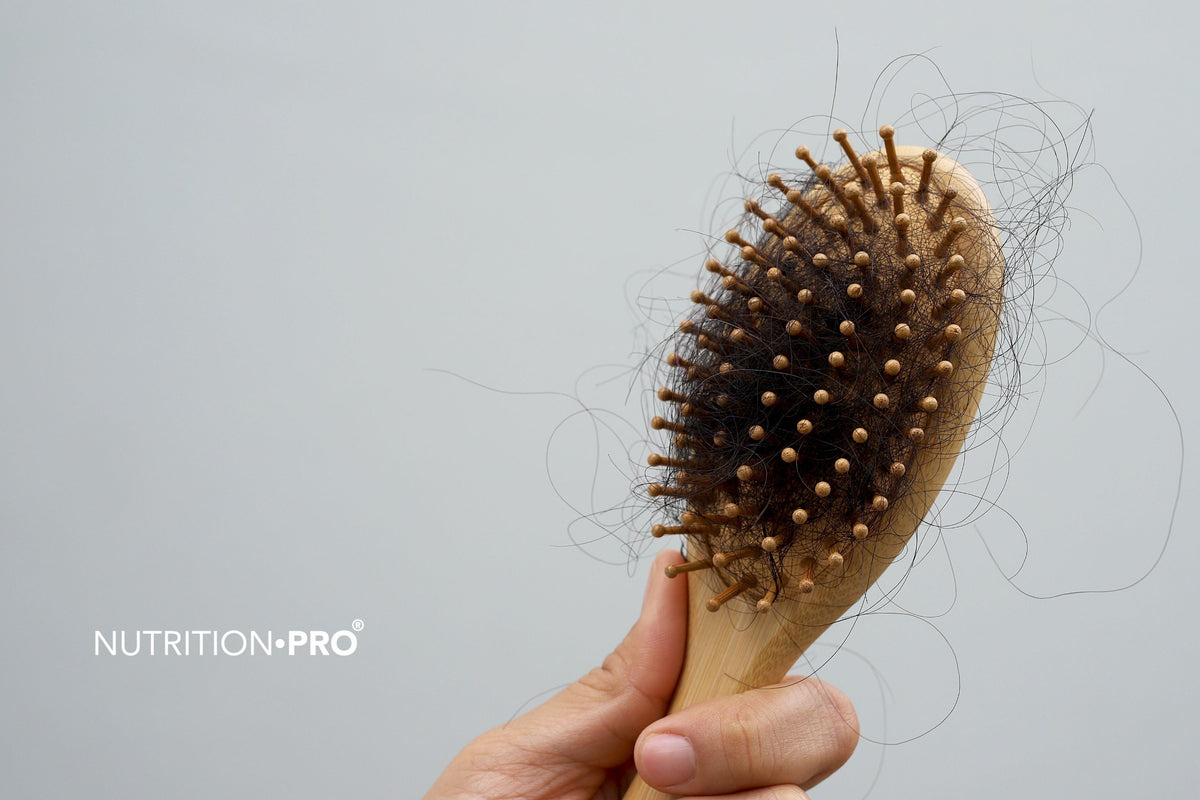
A brush that fills up, a ponytail that thins out, a hair part that widens. When hair loss is diffuse, progressive, and accompanied by fatigue, brittle nails, or heavy periods, iron deficiency is one of the first causes to check, and one of the rare ones that truly corrects itself.
This article explains why hair is the first sacrificed when iron is lacking, what studies show, how to recognize iron-related hair loss, what ferritin level to target, what tests to request, how long to wait for regrowth, and what to combine with iron. To understand the deficiency itself, its stages and causes, the complete iron deficiency guide is the starting point.

14 mg of iron chelated with glycine (100% of NRV), 80 mg of vitamin C for absorption and 200 µg of vitamin B9. One vegetable capsule in the morning, with no digestive discomfort. Manufactured in France.
The hair follicle divides very quickly and consumes iron; when reserves drop, the body deprives it as a priority and more hairs enter the shedding phase. A meta-analysis of 36 studies (10,029 women) shows ferritin 18.5 ng/mL lower in women losing their hair, and one in five below 15. Iron-related hair loss is diffuse, progressive, often associated with fatigue and heavy periods, and is confirmed by low ferritin. Dermatologists generally target 40 to 70 µg/L. Correcting iron (bisglycinate with vitamin C, in the morning, away from tea and dairy) slows hair loss in 2 to 3 months and restarts regrowth in 3 to 6 months. If hair loss persists with adequate ferritin, the cause is elsewhere: thyroid, zinc, vitamin D, hormones, and it's the dermatologist who decides.
1. Why hair is the first casualty when iron is lacking
Hair lives in cycles: a growth phase (anagen) lasting 2 to 6 years, a brief transition phase, then a resting phase (telogen) of 2 to 3 months after which it falls out, pushed by new hair. Under normal conditions, 85 to 90% of hair is growing and we lose 50 to 100 hairs per day. The cells of the matrix, at the base of the bulb, divide every 24 to 72 hours, a rate comparable to that of bone marrow. This division depends on an iron-containing enzyme, ribonucleotide reductase, essential for DNA synthesis.
When ferritin drops, the body prioritizes hemoglobin and vital enzymes. The follicle, a tissue non-essential for survival, goes into standby: the growth phase shortens, an abnormal proportion of hairs enters the resting phase at the same time, and two to three months later they all fall out together. This istelogen effluvium, the form of hair loss most often linked to iron deficiency. The 2 to 3-month delay explains why hair loss often appears after the episode that depleted reserves (very heavy periods, pregnancy, dieting, blood donation) and why it persists for a few months after correction.
2. What the research shows
The link between iron and hair has long been debated, with small contradictory studies. A meta-analysis sorted it out:
Women with non-scarring alopecia (diffuse or androgenetic hair loss) had ferritin levels 18.5 ng/mL lower than women without hair loss, a statistically significant difference. 21% of them had ferritin of 10 to 15 ng/mL or less. The authors' conclusion: women losing hair may benefit from higher ferritin levels.
Treister-Goltzman Y, Yarza S, Peleg R. Skin Appendage Disord 2022;8(2):83-92. DOI: 10.1159/000519952
Micronutrients, including iron, play a role in the follicle cycle and in matrix cell division. Iron deficiency is a modifiable risk factor for telogen effluvium and female alopecia, but large randomized trials remain necessary to measure the effect of supplementation on hair regrowth in deficient individuals.
Almohanna HM, Ahmed AA, Tsatalis JP, Tosti A. Dermatol Ther (Heidelb) 2019;9(1):51-70. DOI: 10.1007/s13555-018-0278-6
Two important caveats to keep in mind. First, these are associations: low ferritin is more common in women who lose hair, which does not mean all hair loss comes from iron. Second, no large randomized trial has measured hair regrowth after correcting isolated low ferritin; what we know is that iron deficiency disrupts the hair cycle, that correcting it is necessary for other reasons (fatigue, performance, immunity), and that dermatological practice recommends it. It's a very reasonable bet, not a guarantee.
3. Recognizing iron-related hair loss
| Type of hair loss | What is observed | Link to iron |
|---|---|---|
| Telogen effluvium | Diffuse shedding across the scalp, large amounts of hair on the brush and in the shower, thinner ponytail, no distinct bare patches | Strong. Primary nutritional cause alongside thyroid. Also triggered by childbirth, fever, surgery, dieting, intense stress (2 to 3-month delay) |
| Female androgenetic alopecia | Part line progressively widening, crown thinning, temples and nape preserved | Moderate. Hormonal and genetic, but low ferritin worsens and hinders treatments; should be corrected in parallel |
| Male androgenetic alopecia | Temporal recessions, crown balding | Low. But low ferritin in a man is a signal to explore for his own health |
| Alopecia areata | Completely smooth round patches, rapid onset | None. Autoimmune, dermatologist |
| Hair loss with irritated scalp | Itching, redness, flaking, pain | None. Dermatitis, psoriasis, infection: dermatologist |
Accompanying signs are very helpful: fatigue that doesn't improve with rest, shortness of breath, brittle or striated nails, sensitivity to cold, heavy periods, vegetarian diet, endurance sports. When several coexist with diffuse hair loss, ferritin is the first test to request. Other signs are detailed in the complete guide.
4. What ferritin level for hair?
This is the question everyone asks, and the honest answer is there is no proven universal threshold. What we know: laboratories often display a "normal range" starting at 10 or 15 µg/L, a value corresponding to bone marrow depleted of iron; the clinical deficiency threshold is 30 µg/L; and dermatologists, observing that hair responds to reserves that the rest of the body tolerates, aim higher.
| Ferritin (µg/L) | For the body | For hair |
|---|---|---|
| Less than 15 | Reserves depleted | Near-systematic hair loss; one in five women with hair loss falls in this range |
| 15 to 30 | Deficiency very likely | Correction necessary before exploring any other cause |
| 30 to 40 | Low reserves | Insufficient according to most dermatologists; correction recommended in case of hair loss |
| 40 to 70 | Adequate reserves | Usual target. If hair loss persists at this level, look for another cause |
| More than 70 | Comfortable reserves | Iron is not the issue; no supplementation needed |
Benchmarks for an adult woman without inflammation (normal CRP). In case of inflammation, ferritin is artificially elevated: request the transferrin saturation coefficient. Detailed breakdown by level in low ferritin: what to do.
5. The tests to request
- Ferritin + CRP : iron reserves, interpreted in light of inflammation. Without CRP, a "normal" ferritin can mask a deficiency.
- Hemoglobin, MCV : to determine if the deficiency has reached the stage of anemia, which requires prescribed treatment.
- TSH : hypothyroidism as well as hyperthyroidism cause hair loss and can be confused with iron deficiency (fatigue, sensitivity to cold).
- Zinc : cofactor of the hair cycle, often low in vegetarians and in cases of heavy menstrual bleeding.
- Vitamin D : low levels are frequently found in telogen effluvium and female alopecia (Almohanna 2019).
- Vitamin B12 : especially if the diet is plant-based; B12 deficiency causes anemia which also leads to hair loss.
In a menstruating woman with diffuse hair loss, this blood work finds an explanation in the majority of cases. In a man, low ferritin should first prompt investigation for bleeding or malabsorption before any supplementation (Pasricha, Lancet, 2021).
6. Correct iron levels and let the cycle work
Two details matter more than you might think. The form: ferrous sulfate irritates and causes one in three people to abandon treatment, whereas iron bisglycinate, chelated with glycine, is absorbed 2 to 4 times better per milligram and causes nearly three times fewer digestive side effects; over 6 months, tolerance makes the difference. The ritual: the same capsule taken with your morning coffee or followed by yogurt is absorbed two to five times less (Hurrell and Egli, 2010). Complete instructions are in when to take iron.
14 mg of iron chelated with glycine, 80 mg of vitamin C already in the capsule, 200 µg of vitamin B9. Absorbed, well-tolerated, without metallic taste, to sustain the 3 to 6 months that hair requires. Made in France.
Discover Iron Bisglycinate →Not recommended in case of hemochromatosis, during pregnancy and breastfeeding without medical advice.
7. What to combine with iron for hair
Zinc
Cofactor of hundreds of enzymes including those of the hair follicle; contributes to the maintenance of normal hair (EFSA claim). Often low in vegetarians and in cases of heavy menstrual bleeding. Take in the evening, never with iron (absorption competition). Zinc Nutrition•pro.
Vitamin D
Vitamin D receptors are present in the hair follicle and low levels are common in telogen effluvium. Deficiency is frequent from October to April in France. Plant-based Vitamin D3.
Sulfur-containing amino acids, B vitamins, silica
Keratin is made of cystine and methionine; B vitamins (B6, B8, B9, B12) and zinc contribute to maintaining normal hair. These active ingredients support fiber quality once iron is corrected; they do not replace correction. This is the territory of the Sublimator and the B Complex Vitamins.
Biotin alone
Biotin regrows hair in people deficient in biotin, which is rare with a varied diet. In others, the evidence is weak (Almohanna 2019). No need to take it at high doses in isolation; note that it distorts certain blood tests (TSH, troponin): mention it before a blood test.
Our article hair loss: the 8 science-proven active ingredients ranks each active ingredient by level of evidence.
Sulfur-containing amino acids (L-cystine, L-methionine), MSM, horsetail and bamboo rich in silica, brewer's yeast and a premix of 19 vitamins and minerals including zinc, biotin and B vitamins. Two capsules daily, once ferritin is on track.
Discover the Sublimator →Not recommended during pregnancy. Also discover our collection hair and nails.
8. When to consult a dermatologist
Hair loss continues while ferritin exceeds 50 µg/L for more than 3 months: the cause is elsewhere (hormones, thyroid, medications, androgenetic alopecia) and requires different treatment.
Hair loss occurs in patches, completely bald, or is accompanied by redness, scaling, pain or itching of the scalp.
Hair loss is sudden and severe, within a few weeks, especially after an illness, surgery or new medication.
You are a man with low ferritin: hair loss is probably due to another cause, but low ferritin itself must be investigated by your doctor (bleeding, malabsorption).
Hair loss is accompanied by general signs : weight loss, sweating, heart palpitations, menstrual irregularities.
Choose the situation that matches yours: the answer appears just below.
Iron deficiency very likely explains the shedding. Iron bisglycinate in the morning with vitamin C, away from tea, coffee, and dairy products; dose to be validated with your doctor if ferritin is below 15. Recheck at 3 months, target 50 to 70. If periods are very heavy, seek gynecological advice: without treating the cause, ferritin will drop again.
For the rest of the body, 35 may be acceptable; for the hair follicle, it's too low according to most dermatologists. Gentle correction (nutritional supplementation with bisglycinate, 3 months) and proper intake rules are often enough to get back above 50. Also ask for TSH, zinc, and vitamin D.
Do not take iron. Check CRP (inflammation can elevate ferritin), TSH, zinc, vitamin D, and review the past 2 to 3 months: childbirth, fever, surgery, dieting, contraceptive change, or new medication are classic triggers for telogen effluvium. If nothing explains it, see a dermatologist.
This pattern is hormonal and genetic, and is treated by a dermatologist. Low ferritin worsens and hinders treatments: check and correct if needed, but don't expect hair regrowth in the temples or along the part line.
This test provides guidance; it does not replace professional medical advice.
Frequently asked questions about iron and hair
Does iron deficiency really cause hair loss?
Yes, especially in women. A meta-analysis of 36 studies involving 10,029 women shows that those suffering from diffuse hair shedding have ferritin levels 18.5 ng/mL lower than women without shedding, and one in five has ferritin of 15 ng/mL or less (Treister-Goltzman, 2022).
What ferritin level is needed for healthy hair?
Below 30 µg/L, deficiency is established and must be corrected. Most dermatologists aim for at least 40 µg/L, often 50 to 70, before concluding that iron is not the cause of diffuse shedding. There is no threshold validated by randomized trial: it's a clinical guideline to be adapted with your doctor.
How do I know if my hair loss is due to iron?
Hair loss linked to iron is diffuse (across the entire scalp, not in patches), progressive, often accompanied by fatigue, brittle nails, and heavy periods, and it is associated with low ferritin. Only a blood test settles it: ferritin, CRP, and ideally TSH, zinc, vitamin D, and B12 to rule out other causes.
How long does it take for hair to regrow after correcting iron levels?
Shedding slows in 2 to 3 months, regrowth becomes visible in 3 to 6 months, and density returns in 6 to 12 months. Hair follows a cycle: follicles that entered the resting phase during deficiency must complete their cycle before launching a new hair. Don't judge results before 3 months.
What iron should I take for hair health?
A well-absorbed and well-tolerated form, such as iron bisglycinate, with vitamin C, in the morning on an empty stomach, away from tea, coffee, and dairy products. The dose depends on starting ferritin levels: nutritional supplementation (14 to 30 mg) for low reserves, corrective dose prescribed for deep deficiency or anemia.
Should I take biotin for hair in addition to iron?
Biotin helps only those who are deficient in it, which is rare on a varied diet. Evidence for benefit in non-deficient people is weak (Almohanna, 2019). Zinc and vitamin D, however, are frequently low in women experiencing hair loss and merit testing.
Can you lose hair with normal ferritin?
Yes. Iron is just one cause among others: thyroid issues, postpartum, stress or recent illness (reactive effluvium), zinc or vitamin D deficiency, androgenetic alopecia, certain medications. If ferritin is above 50 µg/L and shedding persists, consult a dermatologist.
Is postpartum hair loss related to iron?
In part. Postpartum effluvium is mainly hormonal and resolves in 6 to 12 months, but pregnancy and childbirth often deplete iron reserves, prolonging shedding. A ferritin check after delivery is useful; supplementation during breastfeeding is decided with your doctor.
Should men with hair loss have their ferritin tested?
Male hair loss is usually androgenetic, and iron plays a minor role. But low ferritin in a man is always a signal to explore, as it almost always indicates bleeding or malabsorption. Testing is justified if shedding is diffuse and accompanied by fatigue.
Can iron regrow hair in androgenetic alopecia?
No. Androgenetic alopecia is hormonal and genetic; correcting low ferritin may improve overall hair quality and density, but does not treat this form of shedding, which requires a dermatologist.
- Telogen effluvium
- Diffuse hair loss caused by the premature and synchronized passage of many follicles into the resting phase, 2 to 3 months after a trigger (deficiency, childbirth, fever, stress).
- Anagen / telogen phase
- Hair growth phase (2 to 6 years) and resting phase (2 to 3 months) at the end of which it falls out.
- Ferritin
- Iron storage protein; its blood concentration reflects reserves, except in case of inflammation.
- Androgenetic alopecia
- Hormonal and genetic hair loss, localized (part line, crown, temples), which requires dermatological evaluation.
- Keratin
- Fibrous protein of hair and nails, rich in sulfur-containing amino acids (cystine, methionine).
- Treister-Goltzman Y, Yarza S, Peleg R. Iron deficiency and nonscarring alopecia in women: systematic review and meta-analysis. Skin Appendage Disord. 2022;8(2):83-92. doi:10.1159/000519952
- Almohanna HM, Ahmed AA, Tsatalis JP, Tosti A. The role of vitamins and minerals in hair loss: a review. Dermatol Ther (Heidelb). 2019;9(1):51-70. doi:10.1007/s13555-018-0278-6
- Pasricha SR, Tye-Din J, Muckenthaler MU, Swinkels DW. Iron deficiency. Lancet. 2021;397(10270):233-248. doi:10.1016/S0140-6736(20)32594-0
- Camaschella C. Iron deficiency. Blood. 2019;133(1):30-39. doi:10.1182/blood-2018-05-815944
- Vaucher P, Druais PL, Waldvogel S, Favrat B. Effect of iron supplementation on fatigue in nonanemic menstruating women with low ferritin: a randomized controlled trial. CMAJ. 2012;184(11):1247-1254. doi:10.1503/cmaj.110950
- Stoffel NU, Cercamondi CI, Brittenham G, et al. Iron absorption from oral iron supplements given on consecutive versus alternate days and as single morning doses versus twice-daily split dosing in iron-depleted women. Lancet Haematol. 2017;4(11):e524-e533. doi:10.1016/S2352-3026(17)30182-5
- Hurrell R, Egli I. Iron bioavailability and dietary reference values. Am J Clin Nutr. 2010;91(5):1461S-1467S. doi:10.3945/ajcn.2010.28674F


