

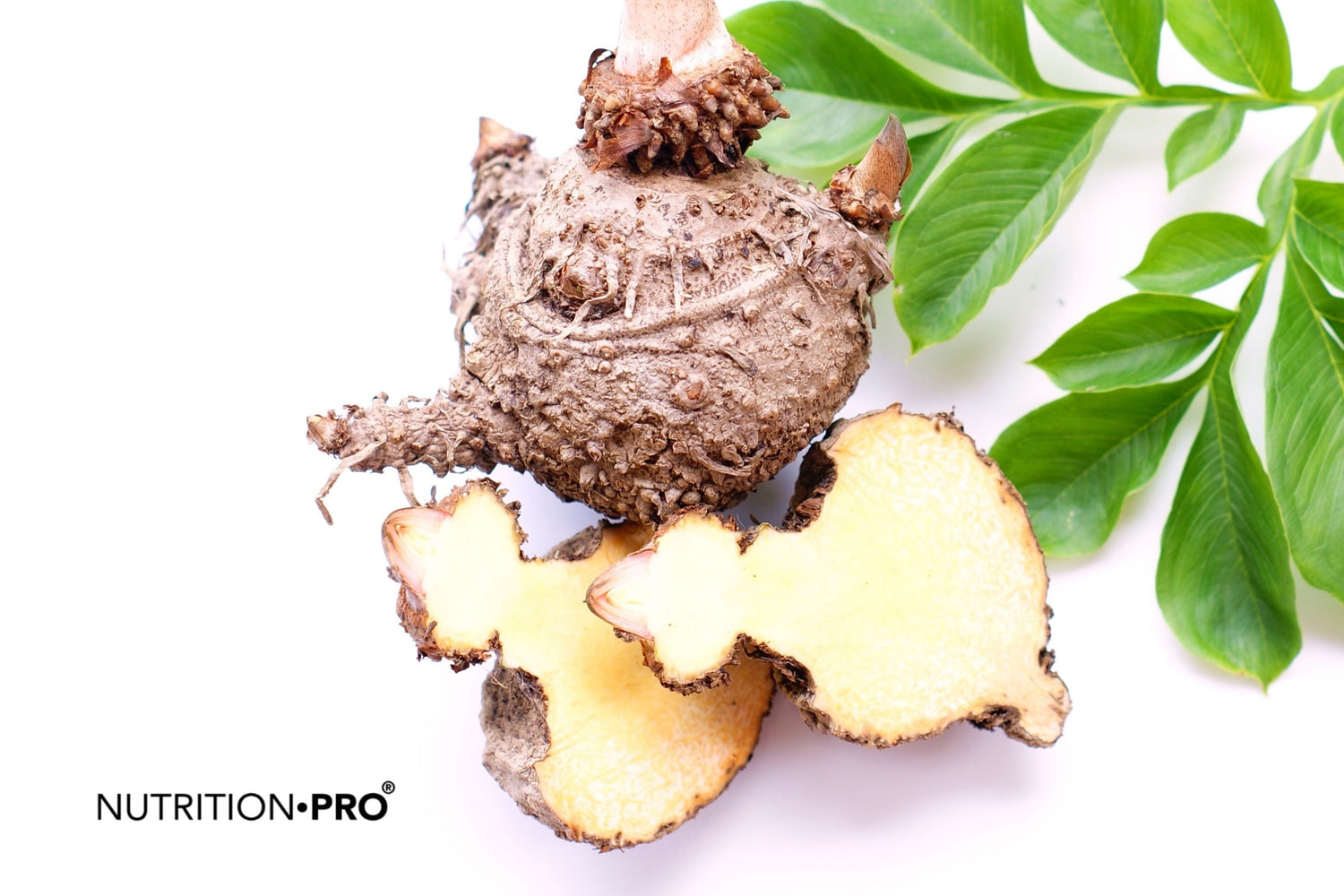
Beyond its role as an appetite suppressant, konjac possesses a cholesterol-lowering effect scientifically documented, validated by EFSA in 2009 via claim Q-2008-280. At a dose of 4 g/day, glucomannan reduces total cholesterol by -19.28 mg/dL and LDL by -15.99 mg/dL according to the Sood 2008 meta-analysis in Am J Clin Nutr (14 studies, n=531). This effect is based on a well-identified mechanism: capture of bile acids in the small intestine, which forces the liver to draw from its circulating cholesterol reserves. Here's how to use it effectively.

EFSA claim Q-2008-280 stipulates that 4 g of glucomannan per day contribute to the maintenance of normal cholesterol levels. Meta-analysis Sood et al. 2008 in Am J Clin Nutr (14 studies, n=531): -19.28 mg/dL total cholesterol, -15.99 mg/dL LDL, -11.08 mg/dL triglycerides. The larger meta-analysis Brown 1999 in Am J Clin Nutr (67 trials on soluble fibers, including konjac, psyllium, oats, pectin) confirms the effect through the bile acid capture mechanism. Not a substitute for statins in cases of severe hypercholesterolemia.
Health Information. Konjac is a dietary supplement, not a medication. In case of severe hypercholesterolemia, established cardiovascular disease, or medical treatment (statins, ezetimibe), do not modify or stop treatment without medical advice. Konjac can be used as a complement after consulting with your healthcare provider.
- Understanding cholesterol in 2 minutes
- The EFSA claim Q-2008-280 explained
- How konjac lowers cholesterol
- Meta-analyses Sood 2008 and Brown 1999
- Dose and dosage for cholesterol (4 g/day)
- Konjac vs psyllium vs oats
- Detailed 12-week protocol
- Limitations and cases where konjac is not enough
- Frequently asked questions
Understanding cholesterol in 2 minutes
Cholesterol is transported in the blood by two lipoproteins: LDL ("bad", which deposits cholesterol in the arteries) and HDL ("good", which returns it to the liver). Cardiovascular risk increases with LDL and decreases with HDL. Glucomannan acts primarily on LDL.
Cholesterol is a molecule essential to the body (hormone synthesis, cell membranes). 70 to 80% is synthesized by the liver, 20 to 30% comes from food. The problem occurs when LDL cholesterol exceeds certain thresholds (generally >1.3 g/L in the absence of risk factors, lower in case of cardiovascular disease).
Soluble fibers, including glucomannan, act on the bile acid reabsorption pathway, independently of hepatic synthesis. This is why they can be used as a complement to a statin (which acts on hepatic cholesterol synthesis).
The EFSA claim Q-2008-280 explained
EFSA validated in 2009 the claim: "Glucomannan contributes to the maintenance of normal blood cholesterol levels." Reference Q-2008-280, incorporated into EU regulation 432/2012. Validated dose: 4 g of glucomannan per day, distributed in 2 to 4 servings with meals.
This claim is one of the rare EFSA-approved claims on cholesterol for an extracted plant ingredient (the others concern oat and barley beta-glucans at 3 g/day, and psyllium at 7 g/day). The EFSA panel determined that the clinical evidence was sufficient to authorize the claim on dietary supplements.
The exact wording, translated from EU Regulation 432/2012: "Glucomannan contributes to the maintenance of normal blood cholesterol levels. The beneficial effect is obtained with a daily dose of 4 g of glucomannan."
How konjac lowers cholesterol
Primary mechanism: capture of bile acids in the small intestine. Glucomannan sequesters bile salts, preventing their reabsorption in the enterohepatic cycle. The liver must then draw on its circulating cholesterol pool to synthesize new bile acids, which lowers blood cholesterol.
The enterohepatic cycle of bile acids
The liver synthesizes approximately 500 mg of bile acids per day from cholesterol. These acids are released into the small intestine to digest dietary fats, then 95% are reabsorbed at the end of the ileum and return to the liver: this is the enterohepatic cycle. This highly efficient recycling explains why the liver only synthesizes 500 mg/day, when approximately 30 g are needed to digest a meal.
The action of glucomannan
In the intestine, glucomannan forms a viscous gel that captures some of the bile acids and prevents them from being reabsorbed. These "lost" acids are eliminated in the stool. The liver must then increase bile acid synthesis to compensate, which consumes circulating cholesterol (captured via hepatic LDL receptors). Result: measurable decrease in plasma LDL.
The role of short-chain fatty acids
Beyond bile acid capture, glucomannan is fermented in the colon by the microbiota. This fermentation produces propionate which enters the portal vein and reaches the liver where it partially inhibits HMG-CoA reductase, the key enzyme in cholesterol synthesis (the same target as statins). This is an additional mechanism to bile acid capture.
Meta-analyses Sood 2008 and Brown 1999
Two major meta-analyses: Sood 2008 in Am J Clin Nutr (14 studies specifically on glucomannan, n=531) shows -19.28 mg/dL total cholesterol and -15.99 mg/dL LDL. Brown 1999 in Am J Clin Nutr (67 trials on all soluble fibers including konjac, oat, psyllium, pectin) confirms the effect regardless of the type of soluble fiber.
Sood et al. 2008
This meta-analysis specific to glucomannan grouped together 14 randomized controlled trials on 531 subjects. Results:
- Total cholesterol: -19.28 mg/dL (95% CI: -24.30 to -14.26)
- LDL cholesterol: -15.99 mg/dL (95% CI: -21.31 to -10.67)
- Triglycerides: -11.08 mg/dL (95% CI: -22.07 to -0.09)
- Fasting blood glucose: -7.44 mg/dL
- HDL cholesterol: no significant effect
More pronounced effect in subjects with initial hypercholesterolemia and with a dose ≥4 g/day.
Brown et al. 1999
Pivotal and largest meta-analysis including 67 controlled trials on all soluble fibers (oat, psyllium, guar gum, pectin, konjac). Conclusion: soluble fibers, at a dose of 2 to 10 g/day, reduce total cholesterol and LDL comparably, regardless of source. Triglycerides and HDL are not significantly modified.
The value of this meta-analysis is to show that the effect is a generic property of viscous soluble fibers, independent of source. Glucomannan stands out for its exceptional viscosity which amplifies the effect per gram.
Dose and dosage for cholesterol (4 g/day)
EFSA cholesterol dose: 4 g of glucomannan per day, which is 1 g more than for weight loss. Divide into 2 to 4 doses with meals (for example 2 g before lunch + 2 g before dinner). Minimum 250 mL of water per dose. Effect visible from 4 weeks, optimal at 8-12 weeks.
With our Pure Konjac dosed at 500 mg of glucomannan per capsule, to reach 4 g/day:
- Option 1: 4 + 4 capsules (4 before lunch, 4 before dinner) = 4 g
- Option 2: 2 + 3 + 3 capsules divided into 3 doses (before each meal) = 4 g
- Option 3: 2 + 2 + 2 + 2 capsules over 4 doses (3 meals + snack) = 4 g
Hydration is essential with each dose: minimum 250 mL of water to allow the gel to form in the stomach and prevent any digestive risk.
Konjac vs psyllium vs oat beta-glucans
All three are effective with a similar mechanism (bile acid capture). Glucomannan has the most potent effect per gram. Oat beta-glucans are the reference at 3 g/day. Psyllium combines cholesterol and digestive transit. No need to combine them if a single fiber is used at an effective dose.
| Soluble fiber | Source | Effective dose | Special feature |
|---|---|---|---|
| Glucomannan | Konjac | 4 g/day (EFSA Q-2008-280) | Strongest effect per gram, bonus satiety |
| Beta-glucans | Oats, barley | 3 g/day (EFSA validated) | Cardio reference, can be incorporated into your diet |
| Psyllium | Plantago ovata | 7 g/day | Cholesterol + digestive transit + satiety |
| Pectin | Apples, citrus fruits | 6-10 g/day | Documented effect, variable bioavailability |
| Guar gum | Guar plant | 5-15 g/day | Highly viscous, with bonus blood sugar benefits |
Detailed 12-week protocol
Week 0: baseline lipid panel
Perform a complete blood test (total cholesterol, LDL, HDL, triglycerides) to establish a baseline and objectively measure the effect of the treatment course.
Weeks 1-2: progressive introduction
Start at 1 g/day before lunch, then increase to 2 g/day in week 2 (1 g before lunch + 1 g before dinner). Assess digestive tolerance.
Weeks 3-4: increase to full dose
Progress to 3 g/day in week 3, then 4 g/day in week 4 (EFSA cholesterol dose). Divide into 2 to 4 doses with meals.
Weeks 5-12: maintenance at 4 g/day
Maintain 4 g/day for 8 weeks. Simultaneously maintain a Mediterranean diet : olive oil, fatty fish (omega 3), vegetables, fruits, legumes, nuts and seeds. Reduce saturated fats (processed meats, high-fat cheeses, fatty meats).
Week 12: follow-up assessment
Repeat blood tests to measure the effect. Depending on results, continue (2-4 week break then new course) or stop if target is reached.
Limitations and cases where konjac is insufficient
Health information. Konjac is a complement to a comprehensive approach, not a substitute for medical treatment in cases of severe hypercholesterolemia, established cardiovascular disease, or high cardiovascular risk. Always consult a physician before modifying or stopping treatment.
Cases where konjac is appropriate
- Moderate hypercholesterolemia without major cardiovascular risk factors
- Primary prevention in subjects with a family history of hypercholesterolemia
- Complement to a Mediterranean diet to optimize the effect
- Adjunct to a statin to enhance the effect (on medical advice)
Cases where konjac is insufficient
- Familial hypercholesterolemia (severe genetic form)
- Severe hypercholesterolemia (LDL >2 g/L)
- History of heart attack, stroke, arteriopathy
- Diabetes associated with poor glycemic control
In these cases, medical treatment (statins, ezetimibe, anti-PCSK9) remains essential. Konjac may be used as a complement after cardiologist consultation.
Frequently asked questions
Does konjac lower cholesterol?
Yes, at sufficient dose. The Sood 2008 meta-analysis in Am J Clin Nutr (14 studies, n=531) shows that glucomannan reduces total cholesterol by -19.28 mg/dL and LDL by -15.99 mg/dL. EFSA validated in 2009 the claim Q-2008-280: 4 g of glucomannan per day contributes to maintaining normal cholesterol levels.
What dose of konjac for cholesterol?
The EFSA-validated dose for cholesterol is 4 g of glucomannan per day, which is 1 g more than for weight loss. Divide into 2 to 4 doses with meals, with 250 mL of water per dose. Visible effect after 4 weeks of regular treatment.
How long does it take for konjac to lower cholesterol?
The first measurable decreases appear after 4 weeks of treatment at 4 g/day. The maximum effect is generally observed between 8 and 12 weeks. The Sood 2008 meta-analysis grouped studies lasting 3 to 16 weeks, with a significant effect already visible at 4 weeks.
Does konjac replace statins?
No. Konjac is useful in cases of moderate hypercholesterolemia or for prevention, but it does not replace medical treatment in severe hypercholesterolemia, high cardiovascular risk, or established coronary disease. Always discuss this with a doctor before stopping or modifying treatment.
How does konjac lower cholesterol?
Glucomannan captures bile acids in the small intestine and prevents their reabsorption in the enterohepatic circulation. The liver must then draw on its circulating cholesterol stock to synthesize new bile acids, mechanically reducing cholesterol levels. This is the same mechanism as soluble fibers from oats or psyllium.
Konjac, psyllium, or oat beta-glucans for cholesterol?
All three soluble fibers are effective (meta-analysis Brown 1999 in Am J Clin Nutr on 67 trials). Oat beta-glucans are the reference at 3 g/day. Glucomannan has a stronger effect per gram (-19 mg/dL at 4 g/day). Psyllium also affects transit. Combining them is possible, but not necessary if you respect the effective dose of a single one.
Does konjac also reduce triglycerides?
Yes, but moderately. The Sood 2008 meta-analysis documents a decrease of -11.08 mg/dL in plasma triglycerides (95% CI: -22.07 to -0.09). The effect is less marked than on LDL. For very high triglycerides, omega-3 EPA/DHA are more effective.
Does konjac increase HDL cholesterol?
No. The Sood 2008 and Brown 1999 meta-analyses show no significant effect of soluble fibers, including glucomannan, on HDL cholesterol. Increasing HDL primarily requires regular physical activity, olive oil, and omega-3s.
How many konjac capsules per day for cholesterol?
To reach the EFSA dose of 4 g/day with 500 mg capsules, count 8 capsules divided into 2 to 4 doses with meals (for example 3+3+2 or 2+2+2+2). Our Pure Konjac 120 capsules allows for a treatment course of approximately 15 days at this dose.
Can konjac be taken with a statin?
Yes in theory, but space doses at least 1 hour before or 4 hours after the statin, as glucomannan can slow medication absorption. Always inform the prescribing doctor, especially in cases of chronic treatment. The cholesterol-lowering effect is cumulative, which may require treatment adjustment after a few weeks.
- LDL Cholesterol
- Low-density lipoprotein, nicknamed "bad cholesterol." Transports cholesterol from the liver to cells. In excess, deposits cholesterol in arteries and promotes atherosclerosis.
- HDL Cholesterol
- High-density lipoprotein, "good cholesterol." Returns cholesterol from tissues to the liver for elimination. Cardiovascular protective.
- Bile Acids
- Molecules synthesized by the liver from cholesterol, secreted into the intestine to digest fats. Their capture by glucomannan is the main mechanism of the cholesterol-lowering effect.
- Enterohepatic Circulation
- Recycling of bile acids between the liver and intestine. Glucomannan partially interrupts this cycle, forcing the liver to draw on cholesterol to resynthsize bile acids.
- HMG-CoA Reductase
- Hepatic enzyme that catalyzes the rate-limiting step of cholesterol synthesis. Pharmacological target of statins. Partially inhibited by propionate produced from glucomannan fermentation.
- Viscous Soluble Fibers
- Dietary fibers that form a gel when in contact with water. Include glucomannan, oat beta-glucans, psyllium, pectin, guar gum. Generic cholesterol-lowering effect.
- Sood N, Baker WL, Coleman CI. Effect of glucomannan on plasma lipid and glucose concentrations, body weight, and blood pressure: systematic review and meta-analysis. Am J Clin Nutr. 2008;88(4):1167-1175. DOI: 10.1093/ajcn/88.4.1167
- Brown L, Rosner B, Willett WW, Sacks FM. Cholesterol-lowering effects of dietary fiber: a meta-analysis. Am J Clin Nutr. 1999;69(1):30-42. DOI: 10.1093/ajcn/69.1.30
- Citarrella R, et al. Effectiveness of a Food Supplement Based on Glucomannan, D-Chiro-Inositol, Cinnamomum zeylanicum Blume and Inulin in Patients with Metabolic Syndrome. Nutrients. 2024;16(2):249. DOI: 10.3390/nu16020249
- EFSA Panel on Dietetic Products, Nutrition and Allergies. Scientific Opinion on the substantiation of health claims related to konjac mannan (glucomannan) and maintenance of normal blood cholesterol concentrations. Q-2008-280. EFSA Journal. 2009;7(9):1258.
- Commission Regulation (EU) No 432/2012 of 16 May 2012 establishing a list of permitted health claims made on foods.
- HAS (French National Authority for Health). Assessment of global cardiovascular risk, 2017 recommendations.


