

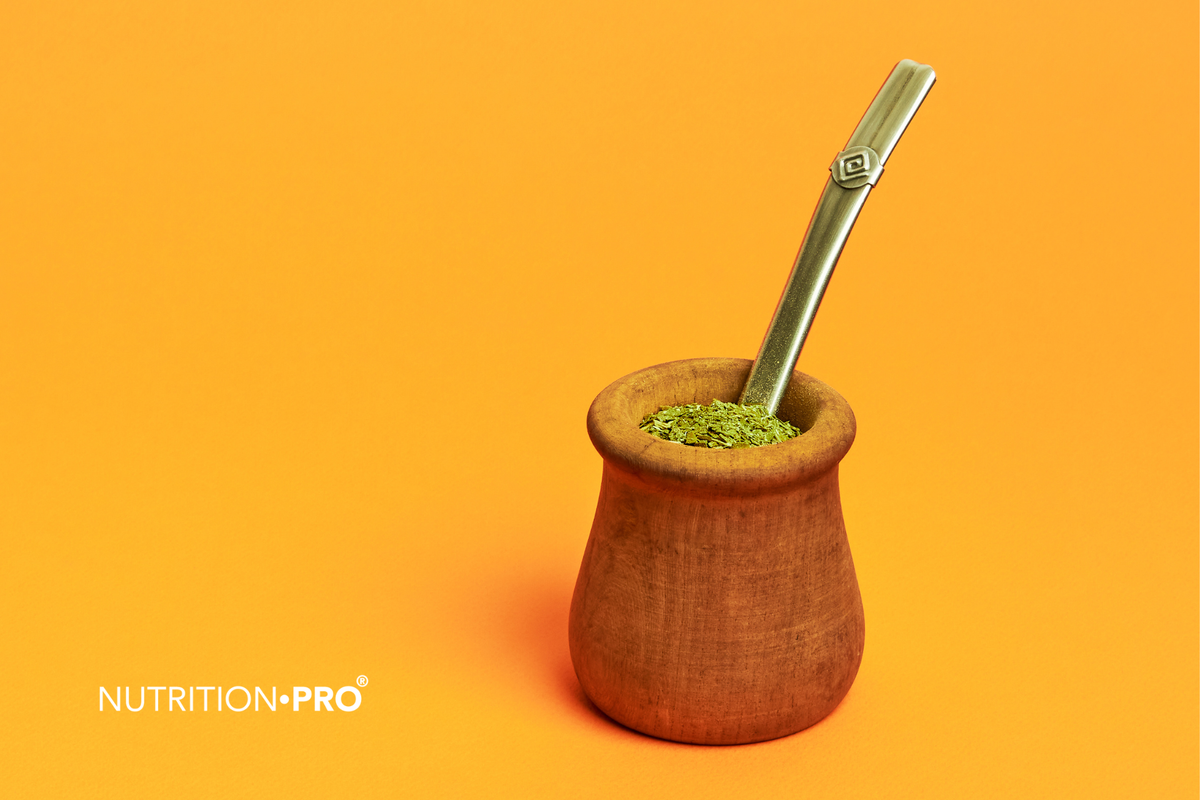
Mate arrives in Europe with a dual reputation. On one hand a convivial and invigorating beverage, an alternative to coffee, popularized by South American footballers and Berlin cafes. On the other hand a persistent concern, often voiced in a single sentence on a forum: mate causes esophageal cancer.
Both deserve to be addressed seriously, and the literature allows us to do so. A 2023 systematic review examined 1,096 publications to retain only 32, and states precisely what can be affirmed and with what degree of confidence. As for the risk, recent studies all converge toward the same parameter, and it is not the plant: it is the temperature at which you drink it. To which is added a manufacturing question, that of leaf drying, whose outcome is more reassuring than one might think.

What is documented. A systematic review of 32 studies reports consistent effects on metabolism, antioxidant and anti-inflammatory activity, with benefits for weight and body composition, exercise performance, mood and appetite, and cardioprotective and neuroprotective effects. Its authors immediately clarify that the risk of bias was high in 22 of the 32 studies and that the certainty of evidence ranges from moderate to very low.
The temperature question. It is the only parameter that appears in all studies on risk. A 2020 review states it this way: very high consumption, especially when very hot, could increase cancer risk, though this has not been confirmed unequivocally. The practical answer comes down to one line: water at 70 or 80°C, lukewarm beverage, or cold version. Drying. Mate dried by wood fire is the tea with the highest level of smoke-derived compounds, but these compounds barely pass into the infusion. Hot air drying addresses the issue upstream.
What maté is, and what it isn't
Maté is prepared from dried leaves ofIlex paraguariensis, a tree from the holly family that grows in the Paraná basin, spanning Brazil, Argentina and Paraguay. Contrary to what the expression "Paraguayan tea" suggests, it is not a tea : the plant has no botanical connection to Camellia sinensis. The two simply share caffeine.
Traditionally, the leaves are placed in a gourd and one drinks through a bombilla, a metal filtering straw. Water is added to the same leaves over the course of hours, and the gourd circulates from hand to hand. It is a social ritual as much as a beverage. In Europe, common usage is simpler: a filtered infusion, in a cup or teapot, like a tea.
This distinction between the two uses is not trivial. A large part of the epidemiological data on maté comes from South American populations who consume several liters per day, very hot, through a bombilla. This is a mode of consumption that has little in common with two filtered and lukewarm cups, and the rest of this article returns to this in detail.
What the systematic review actually found
Research was conducted across six databases and three gray literature databases. Of 1,096 studies identified, 32 were included. The studies showed consistent effects of yerba maté consumption on improved metabolism and antioxidant and anti-inflammatory activities across different populations. Benefits on weight and body composition, exercise performance, mood and appetite were also observed, as well as cardioprotective and neuroprotective effects. The risk of bias was judged high in 22 studies, moderate in 9 and low in 1. The certainty of evidence ranged from moderate to very weak. The available literature indicates that yerba maté can be consumed as part of a balanced and healthy diet, for the prevention and adjuvant treatment of chronic diseases.
José MFB, Machado RP, Araujo PAB, Speretta GF. Nutr Rev 2023;81(9):1163-1179. DOI: 10.1093/nutrit/nuac109
This conclusion should be read in its entirety rather than excerpted. The first half is the one found repeated everywhere: effects on metabolism, antioxidant, anti-inflammatory, weight, performance, mood. The second is the one typically omitted: only one out of thirty-two studies presented a low risk of bias, and the overall certainty of the evidence drops to very low.
This does not mean that maté does nothing. It means that the available literature is extensive but methodologically uneven, and that the authors' conclusion is intentionally cautious: a beverage to incorporate into a balanced diet, not a therapeutic active. This is also the position we adopt in this article.
Energy, vigilance and performance
This is the area where maté is most assured, for a simple reason: its stimulating effect is based on caffeine, the best-studied molecule in all of nutrition. A reference review on caffeine in foods ranks it among the most consumed food ingredients in the world and notes that its natural sources include coffee, cocoa, kola nut, guarana and tea leaves including yerba maté. The performance benefits attributed to it concern physical endurance, fatigue reduction and improved vigilance and concentration, and moderate consumption is considered safe.
A 2007 review in the Journal of Food Science, which remains the reference chemical synthesis on this plant, describes maté as a central nervous system stimulant and a diuretic. The 2023 systematic review confirms benefits for exercise performance and mood.
Not caffeine: it's exactly the same molecule. The difference lies in the matrix. An analysis of Argentine, Brazilian and Paraguayan samples measured in infusions a set of phenolic compounds, namely chlorogenic and caffeoylquinic acids, rutin and astragaline, in addition to caffeine. These are the compounds that carry the antioxidant activity, and the Brazilian samples showed in this study the strongest antioxidant activity as well as the highest levels of phenolic compounds and caffeine.
The same analysis also found magnesium, zinc, copper, iron and manganese, and estimated that approximately one liter of infusion per day partially covers daily requirements for these elements.
Metabolism and lipids
Action on lipids is one of the most anciently described effects. The 2007 review qualifies maté ascholesterol-lowering and hepatoprotective, attributes cardiovascular benefit to it, and reports that it protects DNA from oxidation and LDL from lipoperoxidation in vitro, with high antioxidant capacity. The 2023 systematic review confirms cardioprotective effects, and a 2020 Polish review also concludes a protective effect on hepatic cells, anti-inflammatory action and a positive effect on the cardiovascular system.
Maté is not a weight-loss product, and our product sheet explicitly states this. The described mechanisms are real but essentially cellular and animal: suppression of adipocyte differentiation, reduction of triglyceride accumulation, modulation of signaling pathways related to adipogenesis and insulin. In humans, the data primarily concerns improvement in lipid parameters.
The systematic review does mention benefits on weight and body composition, but this is precisely the area where its reservation about the certainty of evidence applies most. If your goal is weight loss, our fat burner comparison and our appetite suppressant ranking sort through by level of evidence.
The question of temperature, addressed in full
Let's start with what's true. International programs for assessing carcinogenicity, including that of the International Agency for Research on Cancer, examined hundreds of substances and natural products. In a synthesis published in 2007, yerba maté appears among agents classified with a moderate level of evidence, alongside acetaldehyde, polycyclic aromatic hydrocarbons and certain nitrosamines. This is significant and it would be dishonest to omit it.
Now, what subsequent research has clarified. A 2020 review devoted to the properties of maté states it this way: the consumption of maté may exert a beneficial effect on human health, but it must be remembered that consumption very important, especially when it is very hot, could increase the risk of cancer, which has not been unequivocally confirmed by studies conducted to date.
The parameter that appears in all this research is not the plant but the temperature of the beverage at the moment you swallow it, and the volume consumed. The observed association comes from regions where mate is drunk piping hot, through a bombilla, in several liters per day, often for decades. Repeated heat on the esophageal mucosa is the suspected mechanism, and it actually concerns all very hot beverages, not just mate.
The practical consequence is simple and it is entirely within your control: water at 70 or 80 °C, never boiling, and beverage consumed lukewarm. The traditional cold version, tereré, completely eliminates the question while retaining the caffeine and phenolic compounds.
A counterpoint deserves to be noted, in the interest of accuracy. A Uruguayan case-control study involving 572 breast cancer cases and 889 controls found a inverse strong association between high mate consumption and breast cancer risk, particularly in women with a very high-calorie diet. The authors suggest a possible combination of antioxidant and anti-estrogenic effects. A case-control study does not demonstrate causality, but it illustrates that the link between mate and cancer is neither simple nor unequivocal, and that it depends on the type of cancer as much as on the mode of consumption.
Drying the leaves, and what makes it into the cup
Mate is traditionally dried over a wood fire, which gives it part of its characteristic smoky flavor. Smoke deposits polycyclic aromatic hydrocarbons, or PAHs, on the leaves—process contaminants considered carcinogenic and genotoxic. A Brazilian team measured these compounds in ten types of teas.
Mate presented the highest PAH levels, with the sum of the four regulated PAHs ranging from 194 to 1,795 micrograms per kilogram, followed by black tea from 1.8 to 186, white tea from 24 to 119, and green tea from 3.1 to 92. The teas presenting the lowest levels were strawberry, lemongrass, peppermint, and boldo. Only trace levels of PAHs were detected in tea infusions, so apparently this would not affect PAH intake in the Brazilian population.
Tfouni SAV, Reis RM, Kamikata K, Gomes FML, Morgano MA, Furlani RPZ. Food Addit Contam Part B 2018;11(2):146-152. DOI: 10.1080/19393210.2018.1440638
Two lessons, and they must be kept together. The first is that mate is indeed, of all the teas analyzed, the one whose dried leaf is the most contaminated, with variations ranging from single to tenfold depending on the batches. The second, which is the good news, is that these compounds have low solubility in water: they remain largely in the leaf and only traces are found in the infusion, to the point that the authors conclude there is a negligible contribution to population exposure.
The drying method thus remains a real selection criterion, but for a matter of principle rather than immediate danger: when contamination can be avoided at the source, it should be. A hot air drying, without contact with smoke, eliminates the mechanism itself. The flavor is also milder and less smoky, which is a matter of preference.
One last point on supply quality: an analysis of herbal supplements measured higher aluminum and manganese content in products containingIlex paraguariensis of Brazilian origin, and concludes on the need to properly certify suppliers. Organic and traceable is therefore not merely a decorative argument on this plant in particular.
Preparing, dosing, choosing
Green maté leaves 100% organic, origin Brazil, a single ingredient. Drying air-dried rather than wood-fired, which avoids smoke-derived compounds upstream and gives a milder taste. One tablespoon, water at 70 or 80 °C, three to five minutes. Also enjoyed cold.
View Original Organic MatéContains caffeine. Use moderately in case of sensitivity, cardiac arrhythmias, anxiety or insomnia.
Choose what suits you best: the answer appears just below.
This is the most common use of maté in Europe, and the best supported since it's based on caffeine. One to two cups in the morning, water at 70 or 80 °C. If it's the nervousness from coffee you're trying to avoid, know that the molecule is identical to matcha, which contains theanine in addition to caffeine, better meets this specific need.
The systematic review reports benefits on exercise performance, and the effects of caffeine on endurance and fatigue are well-established elsewhere. Take thirty to sixty minutes before your session. Keep in mind that the certainty of evidence specific to mate is judged as moderate to very weak by the authors themselves.
The concern is not unfounded, but it is poorly formulated. The parameter at issue in all studies is the temperature of the beverage and the volume consumed, not the plant itself. The data come from populations that drink several liters per day, scalding hot, through a bombilla. Water at 70 or 80°C, lukewarm beverage, one to two cups: you are in a completely different category. And the tereré, the cold version, eliminates the issue.
Mate is not a weight loss product and we don't market it as such. The mechanisms described on adipocytes are cellular and animal-based; in humans, the data mainly concern blood lipids. Our fat burner comparison ranks active ingredients by level of evidence, and konjac is the only one to benefit from a European claim on weight loss.
This test provides guidance; it does not replace professional health advice.
Frequently asked questions
Understanding
What is mate?
An infusion prepared from the dried leaves ofIlex paraguariensis, a tree from the holly family native to South America. It has been consumed for centuries in Argentina, Brazil, Paraguay, and Uruguay, traditionally in a gourd with a filtering straw called a bombilla, and often shared. It is not a tea: the plant has nothing to do with Camellia sinensis, even though both contain caffeine.
What does research really show about mate?
A systematic review published in 2023 in Nutrition Reviews examined 1,096 publications and selected 32 studies. It reports consistent effects on metabolic improvement and antioxidant and anti-inflammatory activities across different populations, as well as benefits for weight and body composition, exercise performance, mood and appetite, with cardio- and neuroprotective effects. However, it is also very clear on quality: the risk of bias was high in 22 studies, moderate in 9, low in only one, and the certainty of evidence ranges from moderate to very low.
What is tereré?
The cold version of maté, very common in Paraguay and northern Argentina, particularly in summer. The preparation is identical, only the water temperature changes. Beyond the refreshing pleasure, it is the simplest way to completely sidestep the temperature question, while retaining the caffeine and phenolic compounds.
The effects
How much caffeine does maté contain?
The content varies greatly depending on the amount of leaves, temperature, and number of successive infusions. A cup prepared with a tablespoon generally falls within the range of a strong tea, below a filter coffee. Maté is among recognized natural sources of caffeine, alongside coffee, tea, cocoa, guarana, and kola nut, and a reference review notes that moderate caffeine consumption is considered safe.
Does maté give you energy?
Yes, through its caffeine, whose documented benefits relate to physical endurance, fatigue reduction, and improved alertness and concentration. The 2023 systematic review also reports benefits for exercise performance and mood. What distinguishes maté from coffee is more its matrix, rich in phenolic compounds, than a particular form of caffeine: the molecule is the same.
Does maté affect cholesterol?
It is one of the most anciently described effects. A reference review published in 2007 in the Journal of Food Science qualifies maté as hypocholesterolemic, hepatoprotective, a central nervous system stimulant, and diuretic, and attributes cardiovascular benefits to it. The 2023 systematic review is consistent, reporting cardioprotective effects. However, the level of evidence remains that of heterogeneous studies, and maté does not replace any treatment.
Does maté make you lose weight?
No, it is not a weight loss product and should not be purchased for that purpose. Available research shows, essentially on cellular and animal models, that maté inhibits adipocyte differentiation and triglyceride accumulation and modulates signaling pathways related to adipogenesis and insulin. In humans, data focuses mainly on improvement of lipid parameters. The systematic review mentions benefits for weight and body composition, but with a certainty level ranging from moderate to very low.
Does maté provide minerals?
Yes. An analysis of yerba maté from Argentina, Brazil, and Paraguay measured the presence of magnesium, zinc, copper, iron, and manganese in the leaves and in infusions prepared from them, and estimated that approximately one liter of infusion per day partially covers daily needs for these elements and bioactive compounds. Brazilian samples showed the highest antioxidant activity as well as the highest content of phenolic compounds and caffeine.
Safety
Does maté increase the risk of esophageal cancer?
This is the most frequently asked question and deserves a precise answer. International assessment programs have ranked maté among agents with a moderate level of evidence regarding cancer risk. But more recent research all point to the same parameter: temperature. A 2020 review states it this way: very high consumption, especially when very hot, could increase risk, without this having been unequivocally confirmed by studies conducted to date. The observed association comes from regions where maté is drunk scalding hot, in large quantities, through a bombilla, for hours.
At what temperature should maté be drunk?
Between 70 and 80 degrees for the infusion, and warm for consumption. This is the most important step in the entire preparation. Boiling water extracts more bitterness without adding benefit, and most importantly the temperature of the beverage when swallowed is the parameter that literature designates as critical. The traditional cold version, called tereré, completely avoids this issue.
Why does the leaf drying method matter?
Because traditional drying is done over wood fire, and the smoke deposits polycyclic aromatic hydrocarbons on the leaves. A Brazilian study that measured these compounds in ten types of teas found the highest levels in maté, well above black tea, white tea, and green tea. Air drying at high temperature, without contact with smoke, prevents this contamination at the source.
Do these contaminants pass into the cup?
Very little, and that is the reassuring point of this same study. Despite high levels in dry leaves, only traces of polycyclic aromatic hydrocarbons were detected in infusions, which led the authors to conclude that the contribution of teas to Brazilian population exposure apparently was not affected. These compounds are poorly soluble in water and remain largely in the leaf. Air drying at high temperature remains preferable, but the infusion itself is hardly concerned.
Who should avoid maté?
People sensitive to caffeine, those suffering from heart rhythm disorders, anxiety, or insomnia should significantly moderate or refrain. Pregnant or breastfeeding women should limit intake, as caffeine consumption is regulated during pregnancy. In case of regular treatment, the question should be posed to a pharmacist. And like any caffeinated beverage, maté is best drunk in the morning or early afternoon rather than in the evening.
In practice
How to prepare maté without a gourd?
A tablespoon of leaves in a cup or teapot, water at 70 or 80 degrees, an infusion of three to five minutes, then strain. It's as simple as tea. The gourd and bombilla belong to South American social ritual, where water is added to the same leaves for hours; this is not necessary to enjoy the beverage.
How much maté per day?
One to two cups per day is a reasonable benchmark, taking into account all sources of caffeine for the day, including coffee and tea. The very high consumption described in South American epidemiological studies, counted in liters daily, has nothing to do with one to two cups of use.
Glossary
- Ilex paraguariensis
- Tree of the holly family whose dried leaves produce maté; no botanical relation to the tea plant.
- Bombilla
- Metal straw fitted with a filter, used for drinking maté from the gourd.
- Tereré
- Cold version of mate, traditional in Paraguay and northern Argentina.
- PAH
- Polycyclic aromatic hydrocarbons, contaminants formed by incomplete combustion, deposited by smoke during wood-fire drying.
- Chlorogenic acids
- Family of phenolic compounds abundant in mate, which carries most of its antioxidant activity.
- Risk of bias
- Assessment of the methodological reliability of a study; a high risk means that the result may be skewed by the way the study was conducted.
- Certainty of evidence
- Degree of confidence in a result, graded from high to very low; in the case of mate, it ranges from moderate to very low.
- Adipogenesis
- Process of formation and maturation of fat cells.
Sources
The studies cited below were identified via PubMed.
- José MFB, Machado RP, Araujo PAB, Speretta GF. Physiological effects of yerba mate (Ilex paraguariensis): systematic review. Nutrition Reviews, 2023;81(9):1163-1179. DOI
- Heck CI, de Mejia EG. Yerba mate tea (Ilex paraguariensis): comprehensive review on chemistry, health implications and technological considerations. Journal of Food Science, 2007;72(9):R138-151. DOI
- Lutomski P, Goździewska M, Florek-Łuszczki M. Health properties of yerba mate. Annals of Agricultural and Environmental Medicine, 2020;27(2):310-313. DOI
- Tfouni SAV, Reis RM, Kamikata K, Gomes FML, Morgano MA, Furlani RPZ. Polycyclic aromatic hydrocarbons in teas by QuEChERS and HPLC-FLD. Food Additives and Contaminants Part B, 2018;11(2):146-152. DOI
- Abnet CC. Carcinogenic food contaminants. Cancer Investigation, 2007;25(3):189-196. DOI
- Rząsa-Duran E, Kryczyk-Poprawa A, Drabicki D, et al. Yerba mate as a source of elements and bioactive compounds with antioxidant activity. Antioxidants, 2022;11(2):371. DOI
- Gambero A, Ribeiro ML. The positive effects of yerba mate (Ilex paraguariensis) in obesity. Nutrients, 2015;7(2):730-750. DOI
- Ronco AL, Espinosa E, Calderón JM, et al. Mate consumption, hormonal risk factors and breast cancer: a case-control study. Asian Pacific Journal of Cancer Prevention, 2017;18(4):941-948. DOI
- Heckman MA, Weil J, Gonzalez de Mejia E. Caffeine in foods: comprehensive review on consumption, functionality, safety and regulatory aspects. Journal of Food Science, 2010;75(3):R77-87. DOI
- Barrella MV, Heringer OA, Cardoso PMM, et al. Metal content of herbal-based supplements. Biological Trace Element Research, 2017;175(2):488-494. DOI


