

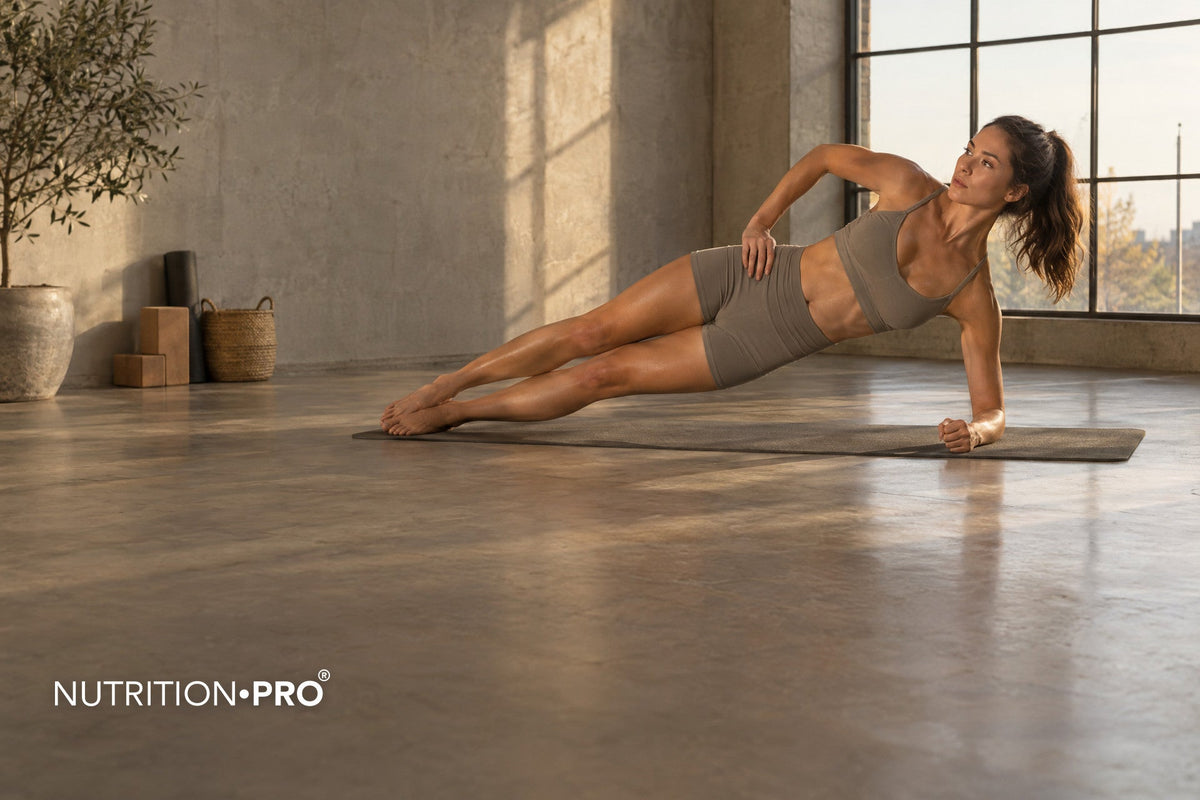
Approximately 174 kcal for one hour: this is the energy expenditure of a typical Pilates session according to the most reliable estimate from a meta-analysis published in 2026, representing light to moderate intensity. However, studies show a modest effect on weight: in overweight or obese adults, 8 to 24 weeks of Pilates resulted in an average weight loss of 2.4 kg more than non-exercise groups, according to a meta-analysis of 11 trials.
This guide details what studies identified via PubMed show, from session energy expenditure to flat abs, then how to combine Pilates with endurance, caloric deficit, sleep and protein, up to a 12-week program.

Pilates and weight : one session corresponds to approximately 3 METs, nearly 174 kcal per hour. In overweight or obese adults, 10 trials found an average weight loss of 2.4 kg, 3.3 kg beyond 10 weeks, with weak to moderate level of evidence; another meta-analysis finds floor Pilates not superior to other exercises, and none finds a significant reduction in waist circumference.
Flat abs and strategy : according to most trials, working a muscle does not melt the fat covering it, but Pilates strengthens the abdominal muscles (25.6% more abdominal endurance in 8 weeks in one trial). Combining diet and activity results in 6.3 kg more weight loss than activity alone at 12 to 18 months; endurance, walking, sleep and protein complement Pilates.
- How many calories does a Pilates session burn?
- Weight and fat mass: what meta-analyses show
- Trial by trial: what Pilates really changes
- Flat abs: abdominal fat and waist circumference
- The myth of localized fat loss
- Abdominal muscles, posture and bloating
- Asian Pilates, Wall Pilates: what we know
- Pilates, yoga or cardio to lose weight?
- Combining Pilates, endurance, walking and caloric deficit
- Protein: preserving muscle during weight loss
- The 12-week program
- Frequently asked questions
How many calories does a Pilates session burn?
Researchers compare activities using MET: 1 MET corresponds to energy expenditure at rest while sitting, and an activity becomes moderate between 3 and 6 MET. The Compendium of Physical Activities classified traditional mat Pilates at 1.8 MET in 2024 and Pilates in general at 2.8 MET, according to a 2026 meta-analysis that gathered 6 studies measuring session energy expenditure in young healthy adults, predominantly women.
A Pilates session mobilized an average of 3.7 MET. Considering only the 4 studies with low risk of bias that measured gas exchange, the estimate drops to 3.0 MET and 2.9 kcal per minute, or approximately 174 kcal for a 60-minute session. The authors considered the intensity light to moderate and the level of evidence very weak to weak.
Vitor GBB, de Oliveira LC, Pessôa RAG, et al. Syst Rev 2026;15(1):42. DOI: 10.1186/s13643-025-03056-y
The duration of rest periods can nearly double energy expenditure: approximately 2.0 MET with more than 60 seconds of rest between exercises, versus 3.4 MET with 60 seconds or less, a finding the authors still consider fragile. Format also matters: in 18 young women of normal weight, a 15-exercise reformer session burned 2.59 kcal per minute, compared to 1.93 kcal on a mat, with no significant increase in lactate, heart rate, or blood pressure compared to rest.
| Format | Measured expenditure | Study |
|---|---|---|
| Mat Pilates, 15 exercises, young women | 1.93 kcal per minute, or approximately 116 kcal per hour | de Souza Andrade, 2021 |
| Reformer Pilates, same participants | 2.59 kcal per minute, or approximately 155 kcal per hour | de Souza Andrade, 2021 |
| Typical session, 4 most reliable studies | 3.0 MET and 2.9 kcal per minute, approximately 174 kcal per hour | Vitor, 2026 |
At 2.9 kcal per minute, three one-hour sessions represent approximately 520 kcal per week: a useful boost, not the primary driver of weight loss. For a more intense session, limit rest periods to 60 seconds. Our guide how many calories per day to lose weight situates this expenditure within your daily intake.
Weight and fat mass: what meta-analyses show
A meta-analysis published in 2021 grouped 11 randomized trials in 393 overweight or obese adults, three-quarters of them women, most often exercising three times per week for 60 minutes over 8 to 24 weeks. Control participants did not exercise and trials with dietary interventions were excluded: the measured effect is that of Pilates alone.
Compared with no exercise, Pilates reduced weight by an average of 2.40 kg, body mass index by 1.17 points, and fat mass percentage by 4.22 points, without changing lean mass. Weight loss reached 3.30 kg in trials lasting more than 10 weeks and 3.81 kg in obese individuals; it was not significant in shorter trials or in those who were merely overweight. Waist circumference, measured in 2 trials, did not decrease significantly.
Wang Y, Chen Z, Wu Z, et al. Front Physiol 2021;12:643455. DOI: 10.3389/fphys.2021.643455
These figures warrant caution: the trials included 20 to 61 participants, the authors judged the level of evidence weak to moderate for weight, very weak to weak for fat mass, and the weight result was no longer significant without one of the trials.
A 2026 meta-analysis limited to adult women, 12 studies of which some were not randomized, found a weight loss of 3.99 kg across 5 studies and body mass index reduction of 1.22 points across 8, with no significant effect on fat mass percentage, lean mass, or waist circumference. A third, devoted to mat Pilates in healthy adults (10 studies), found it no better than traditional exercise or no intervention, including in cases of overweight or obesity; to explain this, the 2021 authors suggest insufficient intensity and uncontrolled diet.
These results are group averages, often in sedentary individuals. The response varies from person to person, and no individual figure can be promised; the effect appears more pronounced in longer programs and in cases of obesity.
Trial by trial: what Pilates really changes
The most instructive trial compares Pilates, mat and apparatus-based, with walking in overweight or obese adults: three 60-minute sessions per week for 8 weeks, without changes in caloric intake.
In 22 overweight or obese adults, 8 weeks of Pilates decreased fat mass from 50.9 to 49.1% of body weight and increased lean mass from 38.4 to 39.7 kg, effects deemed small, whereas weight did not change in either group. Waist circumference decreased by 2.6% with Pilates and 3.3% with walking. After the intervention, body composition did not differ between groups.
Rayes ABR, de Lira CAB, Viana RB, et al. PeerJ 2019;7:e6022. DOI: 10.7717/peerj.6022
The other trials, conducted in women, show modest effects, sometimes none.
| Participants | Program | Result | Study |
|---|---|---|---|
| 28 young obese women with elevated blood pressure | Mat Pilates, 12 weeks | Fat mass decreased by 2 points and systolic pressure by 5 mmHg with Pilates, significant decreases compared to controls | Wong, 2020 |
| 47 overweight or obese women | Pilates on reformer, 3 sessions per week, 8 weeks | Weight from 76.0 to 74.7 kg, fat mass from 39.3 to 37.3%, slightly increased in controls | Gökalp, 2025 |
| 35 obese women on Mediterranean diet | Online Pilates at home, 3 hours per week, 12 weeks | Fat mass decreased and muscle mass increased with Pilates only | Greco, 2024 |
| 58 women with or without obesity | Pilates, 2 sessions per week, 8 weeks | Increase in BMI and fat mass prevented in case of obesity; improved posture | Arslan Kabasakal, 2025 |
| 42 inactive women | Pilates or light group strength training class, 3 months | Improved body composition through group fitness classes; flexibility only with Pilates | Evangelou, 2021 |
The scale doesn't tell the whole story: in several trials, weight changed little while fat mass decreased and muscle mass increased. The most clear results appear in cases of obesity, in longer programs or with structured nutrition; in the trial conducted with 58 women, emotional eating also decreased among obese participants.
Flat belly: abdominal fat and waist circumference
The belly stores two types of fat: subcutaneous fat, which you can pinch, and visceral fat, around the organs, which contributes to cardiometabolic risk and is partly reflected in waist circumference. In a meta-analysis of 25 trials involving 1,686 overweight or obese adults, regular endurance activity reduced waist circumference by 3.2 cm compared to controls, a decrease associated with reduced visceral fat, with 4.2 cm at vigorous intensity versus 2.50 cm at moderate intensity.
Dosage matters: according to a meta-analysis of 116 trials, each additional half-hour of weekly endurance was associated with 0.52 kg and 0.56 cm less waist circumference; weight decreased linearly up to 300 minutes, dropping 2.79 kg at 150 minutes and 4.19 kg at 300 minutes, and waist circumference by 4.21 to 5.34 cm at 300 minutes depending on intensity. Another meta-analysis of 40 trials shows that exercise reduces visceral fat, especially when weekly energy expenditure is higher, with an effect size of 0.28, compared to 0.53 for caloric restriction.
Effect size compares the difference between two groups relative to the spread of measurements: 0.2 corresponds to a small effect, 0.5 to a medium effect, 0.8 to a large effect.
For Pilates alone, waist circumference reduction was not significant in any of the three meta-analyses; in the comparative trial, it reached 2.6% with Pilates and 3.3% with walking.
Measure it midway between your last rib and the top of your hip bone, as in the comparative trial, in the morning and always at the same location, every two to four weeks. Our guide for achieving a flat belly and our 20 tips for losing belly fat detail the other approaches.
The myth of spot fat loss
Doing abdominal exercises to lose belly fat seems logical; most trials don't confirm this. In 24 sedentary adults, 7 abdominal exercises, performed as 2 sets of 10 repetitions 5 days per week for 6 weeks, did not change weight, abdominal fat, waist circumference, or abdominal skin folds. Abdominal endurance, however, improved: 47 sit-ups in the final test, compared to 32 in the control group.
Eleven young adults trained one leg only for 12 weeks, 3 times per week, with 960 to 1,200 leg press repetitions per session at light load (10 to 30% of maximum). Total fat mass decreased by 5.1%, but not on the trained leg: fat decreased on the arms by 10.2% and on the trunk by 6.9%.
Ramírez-Campillo R, Andrade DC, Campos-Jara C, et al. J Strength Cond Res 2013;27(8):2219-2224. DOI: 10.1519/JSC.0b013e31827e8681
Adding abdominal exercises to a diet makes no difference: in 40 overweight or obese women, 12 weeks of abdominal strengthening in addition to a diet did not reduce subcutaneous belly fat, measured by ultrasound, or waist circumference more than diet alone.
The Hundred and abdominal exercise sequences strengthen the core without burning the fat covering it: this decreases with total fat mass, not necessarily where you train. This principle applies to the thighs, as explained in our article for losing thigh fat, and for abdominal muscles, detailed in our guide for getting visible abs.
Abdominal wall, posture, and bloating
Pilates stands out for its effect on abdominal wall muscles. In an MRI study of 9 inactive women, 36 weeks of Pilates, twice per week, increased rectus abdominis volume by 21% and oblique and transverse muscle volume on the dominant side by 8%, correcting an asymmetry present at baseline. The study, without a control group, involved a small sample.
In a randomized trial of 50 active middle-aged adults, 12 weeks of mat Pilates, two one-hour sessions per week, improved abdominal endurance, hamstring flexibility, and upper body endurance, but not posture or balance compared to the control group. On a reformer, in overweight or obese women, trunk flexion hold time increased from 15.3 to 27.4 seconds in 8 weeks.
The transverse, the deep core belt of the belly, activates more after training, but only during the trained exercises. In an 8-week trial of 34 adults, those who practiced mat Pilates alone twice per week saw their transverse thicken during the Hundred, from 3.7 to 4.7 mm, with no change at rest or in sitting or standing position. Practical tip: reproduce the gentle belly draw-in you learned on the mat throughout the day. For this work, our NUTRITION•PRO Pilates Mat, in microsuede on non-slip rubber, anchors every posture.
There remains the belly that bloats after meals, unrelated to fat. In people with functional digestive disorders, it's linked to an inappropriate reflex: the diaphragm contracts while the abdominal wall relaxes. In a 2024 randomized trial of 42 patients, biofeedback training to mobilize the diaphragm, with home exercises three times daily, reduced bloating scores by 66% in 4 weeks, with no effect in the placebo group.
Pilates was tested in a randomized trial of 60 women with irritable bowel syndrome with constipation: added to dietary advice, two sessions per week for 8 weeks reduced overall symptom scores by 67%, compared to 38% with advice alone, and bloating sensation by 69%, compared to 27%. However, the Pilates group started with a higher baseline bloating score, and evaluators knew which groups participants were in. Our article on bloating details other approaches.
Asian Pilates, wall Pilates: what we know
Neither wall Pilates nor Asian Pilates are codified methods, but formats popularized by social media: the first incorporates floor exercises with wall support, the second refers to short, slow routines without jumping, practiced at home, combining core work, leg exercises, and stretching.
A PubMed search in October 2026 found no articles with wall Pilates or Asian Pilates in the title or abstract: nothing specific to these formats can be confirmed. At 2.9 kcal per minute, a 15-minute routine represents approximately 45 kcal, and practiced daily for 1 hour 45 minutes per week, it falls short of the three weekly hours used in most trials that measured weight loss.
In obese women all following a Mediterranean diet, 12 weeks of floor Pilates at home, three one-hour sessions per week including one guided online, reduced body fat percentage and increased muscle mass, unlike diet alone. Weight decreased in both groups. Of 35 participants, 20 completed the study.
Greco F, Tarsitano MG, Cosco LF, et al. Nutrients 2024;16(6):902. DOI: 10.3390/nu16060902
Practiced at home, Pilates can produce measurable effects, with sufficient volume and structured nutrition. Study limitation: 43% dropout rate. Consistency makes the difference.

Block three 45 to 60-minute sessions per week, as in the trials. At the beginning, follow guided sessions with a professional to learn pelvic placement and breathing, and stop any painful exercise.
Pilates, yoga, or cardio for weight loss?
Yoga has similar intensity, 2.9 to 3.3 MET on average according to a review cited by the 2026 meta-analysis. A meta-analysis of 30 trials and 2,173 participants found no overall effect on weight, body mass index, body fat, or waist circumference; in overweight or obese individuals, it reduces body mass index compared to usual care, a result sensitive to selection bias according to the authors.
Endurance maintains the advantage for calorie expenditure: in the comparative trial, heart rate during walking exceeded that of Pilates by 42%. However, in the same trial, abdominal endurance improved by 25.6% with Pilates versus 11.0% with walking, and only the Pilates group improved back muscle endurance and flexibility.
| Activity | Intensity | Effect on weight and belly |
|---|---|---|
| Pilates, on the floor or on a reformer | Approximately 1.8 to 3.4 MET depending on format and breaks | 2.4 kg lost on average in case of overweight or obesity (10 trials); waist circumference not significant |
| Yoga | Approximately 2.9 to 3.3 MET on average | No overall effect on weight; BMI reduced in case of overweight or obesity, fragile result |
| Endurance, brisk walking, cycling, running | Moderate, 3 to 6 MET, or vigorous | 0.52 kg and 0.56 cm less waist circumference per half-hour weekly |
| Group strength training with light weights | Numerous repetitions | Body composition improved in 3 months, more than with Pilates in one trial |
Combine Pilates, endurance, walking, and caloric deficit
The body compensates for part of the energy expended by exercise: 18% on average according to a review of 61 studies, with significant variation from one study to another, and nearly 84% in the longest programs, lasting approximately 80 weeks. This is one of the reasons why activity alone has little impact on the scale.
In 8 trials of at least 12 months of follow-up involving 1,022 overweight or obese adults, mostly women, programs combining diet and physical activity resulted in 5.33 kg more weight loss than activity alone at 3 to 6 months, and 6.29 kg more at 12 to 18 months (5 trials). Compared to diet alone (6 trials), the difference was not significant at 3 to 6 months, but reached 1.72 kg at 12 months.
Johns DJ, Hartmann-Boyce J, Jebb SA, et al. J Acad Nutr Diet 2014;114(10):1557-1568. DOI : 10.1016/j.jand.2014.07.005
Activity also preserves muscle: in a review of 52 studies in middle-aged and older overweight adults, in 81% of diet-only groups, at least 15% of weight lost was lean mass, compared to 39% of groups combining diet and exercise. And according to a meta-analysis of 116 trials, 150 minutes of endurance per week, at least moderate intensity, are associated with clinically meaningful reductions in waist circumference and fat mass: Pilates complements this foundation without replacing it.
Without diet, walking with a pedometer produces minimal weight loss: 1.27 kg over a median duration of 16 weeks, according to a meta-analysis of 9 studies. In programs combining diet and activity, a meta-analysis of 2026 shows that participants increased from approximately 7,500 to 8,450 steps per day, and the more they walked, the better they maintained their weight loss, a simple association; the authors suggest a benchmark of approximately 8,500 steps per day. Our guide walking to lose weight details step targets, and our article why I'm not losing weight despite exercise and diet reviews common obstacles.
Sleep also matters. In a randomized trial of 80 overweight adults sleeping less than 6 hours 30 minutes per night, those who received personalized sleep hygiene advice slept 1.2 hours more and reduced their intake by 270 kcal per day compared to the control group, with a 0.87 kg weight difference in two weeks, mostly from non-fat mass at such short term; limiting screens appeared to be the key measure, and these longer nights were achieved through advice, without supplementation.
Protein: preserving muscle during weight loss
When eating less, the body also draws from muscle. A meta-analysis of 24 trials, 1,063 participants followed for an average of 12 weeks, compared high-protein or standard-protein diets at equal calories: the former resulted in 0.79 kg more weight loss and 0.87 kg more fat loss, preserved 0.43 kg of lean mass, and limited the decrease in resting metabolic rate; 3 out of 5 studies reported better satiety.
An expert review proposes 1.2 to 1.6 g of protein per kilogram per day, with at least 25 to 30 g per meal, or 84 to 112 g per day for 70 kg. In women, a meta-analysis of 13 trials shows that whey modestly increases lean mass by 0.37 kg, and by 0.90 kg during caloric restriction, with no effect on fat mass.
In overweight or obese adults who added three 20 g servings of whey per day to their usual diet, 16 weeks of a mixed program combining strength training, intervals, stretching, yoga or Pilates, and endurance resulted in 3.3 kg weight loss, including 2.8 kg fat loss, compared to 1.1 kg and 0.9 kg with strength training alone. Only the two trained groups lost visceral fat. All groups taking whey, the trial compares training methods, not whey versus its absence.
Arciero PJ, Baur D, Connelly S, Ormsbee MJ. J Appl Physiol 2014;117(1):1-10. DOI : 10.1152/japplphysiol.00152.2014
To approach 25 to 30 g of protein per meal, a 30 g serving of our 100% Whey Isolate provides 22.9 g of protein for 117 kcal, with 1.3 g sugars and 2.0 g fat: enough to complement a protein-poor meal. Our guides on whey, protein during cutting and high-protein foods further elaborate on this point.
The 12-week program
This program assembles the parameters from cited studies, for a healthy adult; have it validated by your doctor if you have significant overweight, pain, or chronic illness.
At home, our NP Pilates Mat rolls up in one motion, and our 100% Whey Isolate is prepared with a shaker in 250 ml of cold water.
Pain : stop any exercise that causes pain in the back, neck, or abdomen. Pregnancy and postpartum : consult your doctor or midwife before abdominal work. Cardiovascular disease, diabetes, significant obesity : have your endurance intensity validated. Kidney disease : consult your doctor before increasing protein intake. Caloric deficit : without activity, it causes greater muscle loss; in case of severe restrictions, seek professional guidance.
A whey protein isolate manufactured in France, without aspartame or artificial dyes, in cocoa or vanilla flavor. One 30 g serving provides 22.9 g of protein for 117 kcal, with very little sugar and fat, to simply complement your intake during the program.
View Whey IsolateFor your home sessions, discover our NP Pilates Mat, in microsuede on non-slip rubber.
Frequently asked questions
Does Pilates help you lose weight?
Somewhat, especially in cases of overweight or obesity. In these adults, a meta-analysis of 11 trials found an average weight loss of 2.4 kg in 8 to 24 weeks compared to no exercise, and 3.3 kg beyond 10 weeks, with weak to moderate level of evidence.
How many calories does a Pilates session burn?
Approximately 2.9 kcal per minute according to the most reliable estimate from a 2026 meta-analysis, or nearly 174 kcal for one hour. In one trial, the treadmill expended 1.93 kcal per minute and the reformer 2.59.
Does Pilates give you a flat stomach?
It strengthens the core muscles, but does not specifically melt belly fat. To reduce waist circumference, studies support combining it with 150 to 300 minutes of cardio per week and a caloric deficit.
How many Pilates sessions per week to lose weight?
Most trials that measured weight loss offered three sessions of 50 to 60 minutes per week, with significant effects after 10 weeks. Ideally add 150 minutes of cardio per week and a moderate caloric deficit.
Pilates or yoga: which one for weight loss?
Both have similar intensity, around 3 MET. A meta-analysis of 30 trials found no overall effect of yoga on weight, whereas Pilates modestly reduces weight in cases of overweight or obesity, with still fragile evidence in both cases.
Does wall Pilates reduce belly fat?
No trial has studied wall Pilates, which uses floor exercises with wall support. Pilates in general expends little and produces minimal weight loss, and most trials show no targeted reduction of belly fat.
Does Asian Pilates help you lose weight?
No study addresses Asian Pilates, a social media trend consisting of short, slow routines. At approximately 2.9 kcal per minute, a 15-minute routine represents nearly 45 kcal, and trials that measured weight loss most often relied on three hours of Pilates per week.
Do abdominal exercises reduce belly fat?
Not in a targeted way, according to most trials. In one trial, 6 weeks of abdominal exercises, 5 days per week, reduced neither abdominal fat nor waist circumference, despite improved endurance. In another, training a single leg for 12 weeks reduced fat in the arms and trunk, not in the trained leg.
Should you take protein when doing Pilates to lose weight?
During a caloric deficit, more protein helps preserve lean mass: 0.43 kg more on average in a meta-analysis of 24 trials. An expert review proposes 1.2 to 1.6 g per kilogram per day, which an isolate whey can help you achieve.
Does Pilates reduce bloating?
In 60 women suffering from irritable bowel syndrome with constipation, 8 weeks of Pilates added to dietary advice reduced the sensation of bloating by 69%, compared to 27% with advice alone, in a group that started with a higher baseline score.
Sources
The studies cited below were identified via PubMed.
- Vitor GBB, de Oliveira LC, Pessôa RAG, et al. Metabolic intensity and energy cost of Pilates exercises: exploratory systematic review and meta-analysis of limited and heterogeneous data. Systematic Reviews, 2026;15(1):42. DOI
- de Souza Andrade L, da Silva Almeida I, Mochizuki L, et al. What is the intensity of Pilates? Analysis of energy expenditure, blood lactate, and intensity of apparatus and floor Pilates sessions. Journal of Bodywork and Movement Therapies, 2021;26:36-42. DOI
- Wang Y, Chen Z, Wu Z, et al. Pilates in overweight and obesity: a meta-analysis. Frontiers in Physiology, 2021;12:643455. DOI
- Bajčetić Č, Rudović V, Novaković M, et al. Effects of Pilates programs on body composition, flexibility, muscle strength, balance, functional performance, and respiratory function in adult women: systematic review and meta-analysis. Sports, 2026;14(9):407. DOI
- Cavina APS, Pizzo Junior E, Machado AF, et al. Effects of the floor Pilates method on body composition: systematic review with meta-analysis. Journal of Physical Activity and Health, 2020;17(6):673-681. DOI
- Rayes ABR, de Lira CAB, Viana RB, et al. Effects of Pilates and aerobic training on cardiorespiratory fitness, isokinetic muscle strength, body composition, and functional tasks in overweight or obese individuals: a clinical trial. PeerJ, 2019;7:e6022. DOI
- Wong A, Figueroa A, Fischer SM, et al. Effects of ground-based Pilates training on vascular function and adiposity in young obese women with elevated blood pressure. American Journal of Hypertension, 2020;33(6):563-569. DOI
- Gökalp Ö, Kirmizigil B. Effects of reformer Pilates on body composition, strength, and psychosomatic factors in overweight or obese women: a randomized controlled trial. Scientific Reports, 2025;15(1):23602. DOI
- Greco F, Tarsitano MG, Cosco LF, et al. Effects of online home-based Pilates combined with diet on body composition in obese women: a preliminary study. Nutrients, 2024;16(6):902. DOI
- Arslan Kabasakal S, Delice B. Effects of Pilates on body composition, posture, and psychosocial parameters in women with and without obesity: a randomized controlled trial. Journal of Physical Activity and Health, 2025;22(12):1557-1567. DOI
- Evangelou C, Sakkas GK, Hadjicharalambous M, et al. Effects of a three-month group program with light loads and numerous repetitions, compared to Pilates, on physical fitness and body composition in inactive women. Journal of Bodywork and Movement Therapies, 2021;26:18-23. DOI
- Armstrong A, Jungbluth Rodriguez K, Sabag A, et al. Effect of aerobic exercise on waist circumference in overweight or obese adults: a systematic review and meta-analysis. Obesity Reviews, 2022;23(8):e13446. DOI
- Jayedi A, Soltani S, Emadi A, et al. Aerobic exercise and weight loss in adults: a systematic review and dose-response meta-analysis. JAMA Network Open, 2024;7(12):e2452185. DOI
- Recchia F, Leung CK, Yu AP, et al. Dose-response effects of exercise and caloric restriction on visceral adiposity in overweight or obese adults: a systematic review and meta-analysis of randomized controlled trials. British Journal of Sports Medicine, 2023;57(16):1035-1041. DOI
- Vispute SS, Smith JD, LeCheminant JD, Hurley KS. Effect of abdominal exercises on abdominal fat. Journal of Strength and Conditioning Research, 2011;25(9):2559-2564. DOI
- Ramírez-Campillo R, Andrade DC, Campos-Jara C, et al. Regional variations in fat mass induced by localized muscular endurance training. Journal of Strength and Conditioning Research, 2013;27(8):2219-2224. DOI
- Kordi R, Dehghani S, Noormohammadpour P, et al. Effect of abdominal strengthening on abdominal subcutaneous fat in obese women: a randomized controlled trial with ultrasound assessment. Journal of Manipulative and Physiological Therapeutics, 2015;38(3):203-209. DOI
- Dorado C, Calbet JA, Lopez-Gordillo A, et al. Marked effects of Pilates on abdominal muscles: a longitudinal magnetic resonance imaging study. Medicine and Science in Sports and Exercise, 2012;44(8):1589-1594. DOI
- Kloubec JA. Pilates for improving muscular endurance, flexibility, balance and posture. Journal of Strength and Conditioning Research, 2010;24(3):661-667. DOI
- Critchley DJ, Pierson Z, Battersby G. Effect of Pilates mat and conventional exercise programs on transverse and internal oblique abdominal muscle activity: a pilot randomized controlled trial. Manual Therapy, 2011;16(2):183-189. DOI
- Barba E, Livovsky DM, Accarino A, Azpiroz F. Treatment of abdominal bloating with biofeedback guided by thoracoabdominal wall movements: a randomized placebo-controlled trial. Gastroenterology, 2024;167(3):538-546.e1. DOI
- Allam DMM, Ali Abdel Ghaffar H, Mostafa Elshamy A, et al. Effect of Pilates exercises on irritable bowel syndrome symptoms in women: a randomized controlled trial. Archives of Physiotherapy, 2024;14:170-181. DOI
- Lauche R, Langhorst J, Lee MS, et al. Systematic review and meta-analysis of the effects of yoga on weight-related parameters. Preventive Medicine, 2016;87:213-232. DOI
- Riou MÈ, Jomphe-Tremblay S, Lamothe G, et al. Predictive factors of energy compensation during exercise programs: a systematic review. Nutrients, 2015;7(5):3677-3704. DOI
- Johns DJ, Hartmann-Boyce J, Jebb SA, et al. Diet or exercise alone compared to combined behavioral weight management programs: a systematic review and meta-analysis of direct comparisons. Journal of the Academy of Nutrition and Dietetics, 2014;114(10):1557-1568. DOI
- Weinheimer EM, Sands LP, Campbell WW. Systematic review of the separate and combined effects of energy restriction and exercise on lean mass in middle-aged and older adults: implications for sarcopenic obesity. Nutrition Reviews, 2010;68(7):375-388. DOI
- Richardson CR, Newton TL, Abraham JJ, et al. Meta-analysis of pedometer-based walking interventions and weight loss. Annals of Family Medicine, 2008;6(1):69-77. DOI
- Saadeddine D, Foglia M, Berri E, et al. Daily steps during lifestyle modification programs for obesity management: systematic review and meta-analysis. International Journal of Environmental Research and Public Health, 2026;23(4):522. DOI
- Tasali E, Wroblewski K, Kahn E, et al. Effect of sleep extension on objectively measured energy intake in overweight adults in free-living conditions: a randomized clinical trial. JAMA Internal Medicine, 2022;182(4):365-374. DOI
- Wycherley TP, Moran LJ, Clifton PM, et al. Effects of energy-restricted high-protein, low-fat compared with standard-protein diets: meta-analysis of randomized controlled trials. The American Journal of Clinical Nutrition, 2012;96(6):1281-1298. DOI
- Leidy HJ, Clifton PM, Astrup A, et al. The role of protein in weight loss and weight maintenance. The American Journal of Clinical Nutrition, 2015;101(6):1320S-1329S. DOI
- Bergia RE, Hudson JL, Campbell WW. Effect of whey supplementation on changes in body composition in women: systematic review and meta-analysis. Nutrition Reviews, 2018;76(7):539-551. DOI
- Arciero PJ, Baur D, Connelly S, Ormsbee MJ. Timed whey protein ingestion with resistance training reduces visceral adipose tissue and improves insulin resistance: the PRISE study. Journal of Applied Physiology, 2014;117(1):1-10. DOI


