

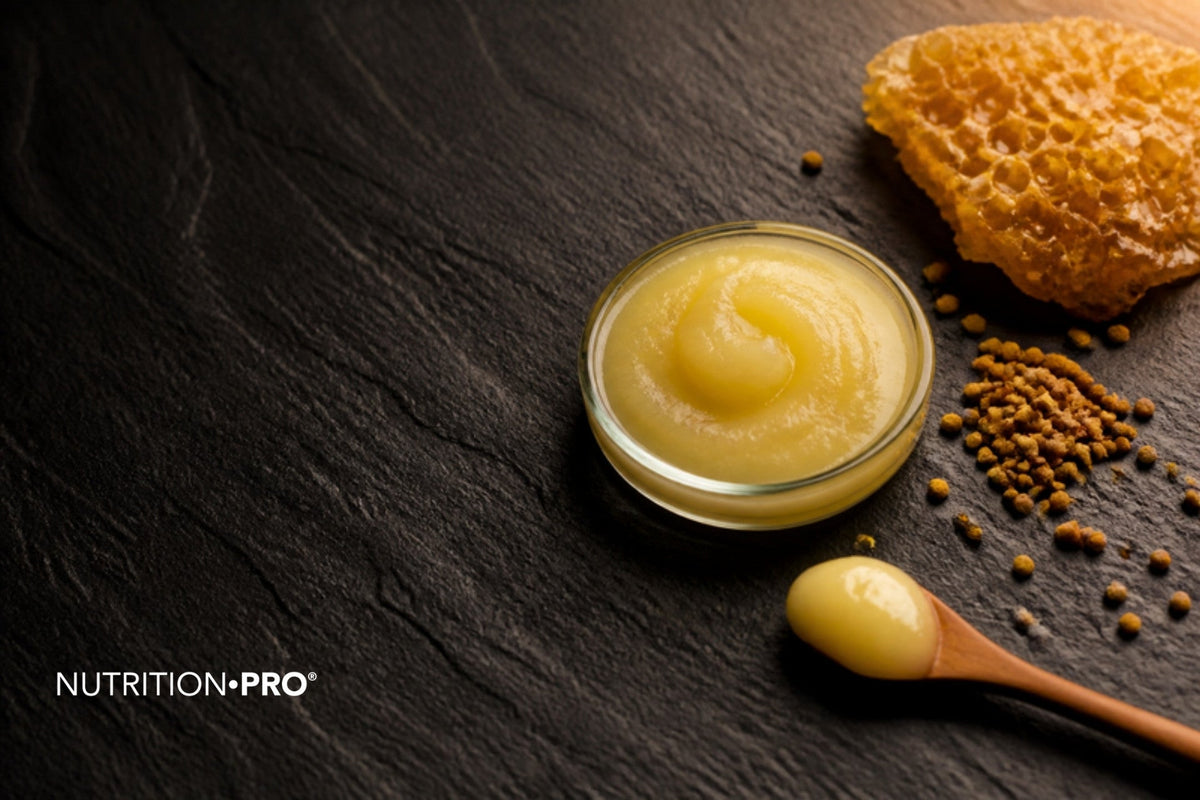
Eight weeks, two capsules of lyophilized royal jelly each morning, and total cholesterol 6.7% lower than placebo: this is the result of a trial conducted in 60 overweight adults. Yet, when researchers pool trials dedicated to blood sugar, the effect of royal jelly on fasting blood sugar and glycated hemoglobin (HbA1c) does not reach significance. Between these two findings, more than a dozen human trials, often small, conducted with very different forms and doses.
This guide compiles meta-analyses and trials identified via PubMed on cholesterol, triglycerides, blood sugar, HbA1c and insulin, in healthy people, overweight individuals, or those with type 2 diabetes. For each trial: form of royal jelly, dose, duration and exact result, including null trials, then animal data, better-studied options and precautions.

Cholesterol : the broadest synthesis, published in 2025, estimates the average drop in total cholesterol at 11 mg/dL (moderate confidence level) and that of triglycerides at 5.26 mg/dL (low level). The effect on LDL is not significant in the main analysis, HDL does not change, and two double-blind trials, 4 weeks and 6 months long, found no effect on lipids.
Blood sugar and precautions : two meta-analyses of 5 and 10 trials find no significant overall effect on fasting blood sugar or HbA1c; a modest decrease appears only in people with diabetes or overweight and in trials of 8 weeks or longer. The main risk is allergic, especially in atopic individuals, and antidiabetic treatment requires medical advice.
- Royal jelly and metabolism: what we measure
- Cholesterol: what meta-analyses say
- Cholesterol: trials one by one
- Triglycerides and HDL cholesterol
- Blood sugar and HbA1c: meta-analyses with no overall effect
- Type 2 diabetes: trials in detail
- Insulin and glucose tolerance without diabetes
- Animals and cells: effects not to be extrapolated
- Blood sugar: the best-studied options
- Precautions: allergy, asthma and treatments
- Try royal jelly methodically
- Frequently Asked Questions
Royal jelly and metabolism: what we measure
Secreted by young worker bees, royal jelly nourishes young larvae and, throughout her life, the future queen. It contains proteins (12 to 15%), sugars (10 to 12%) and lipids (3 to 7%), including fatty acids specific to royal jelly such as 10-HDA. In animals and in cells, some of these constituents act on cholesterol production and glucose utilization: it remains to be seen what occurs in humans.
Trials measure markers from a standard blood panel: total cholesterol, LDL, which transports cholesterol to the arteries, HDL, which returns it to the liver, triglycerides, fasting blood glucose, HbA1c, reflecting blood glucose over the past two to three months, and insulin, sometimes combined with blood glucose in the HOMA-IR index of insulin resistance.
The difficulty lies in the forms tested: fresh jelly in single dose, freeze-dried jelly in capsules, dried jelly tablets, beverage, or capsules whose form is not specified. They cannot be compared gram for gram: in one trial, a capsule containing 333 mg of freeze-dried jelly corresponded, according to its manufacturer, to 1,000 mg of fresh jelly; in another, 690 mg of dried jelly equaled 2,040 mg of fresh jelly according to the authors.
A "before and after" result compares a group to itself and may reflect a change in diet or season. Only comparison with a placebo group, ideally double-blind, isolates the effect of royal jelly. We note each trial that reports only changes within the treated group.
Our Organic Royal Jelly is fresh, non-freeze-dried and unprocessed royal jelly, organic and 100% French production: the form of royal jelly as it leaves the hive. None of the trials presented here studied it.
Cholesterol: what the meta-analyses say
The largest synthesis to date, published in 2025, combined existing meta-analyses and recent trials on three hive products: 69 randomized trials and 3,544 participants, including 13 trials on royal jelly, with an average duration of 8.3 weeks.
In adults, royal jelly lowered total cholesterol by 11.0 mg/dL on average (confidence interval of −18.0 to −3.96), with a moderate confidence level, and triglycerides by 5.26 mg/dL, with a weak confidence level. Publication bias was detected for total cholesterol: small trials without significant results could be missing from the analysis.
Norouzzadeh M, Barazandeh S, Hasan Rashedi M, et al. Nutr Diabetes 2025;15(1):48. DOI: 10.1038/s41387-025-00403-9
The LDL is more fragile: the decrease is not significant in the main analysis and only becomes so (−3.94 mg/dL) when removing the 6-month Japanese trial, which showed no effect. The dose-response analysis estimates a decrease of 1.75 mg/dL of LDL per gram daily, and the authors calculate that approximately 2,200 mg per day would be needed for a clinically perceptible decrease of around 4 mg/dL. An earlier meta-analysis, cited by this synthesis, found no overall effect on lipids, except in trials lasting more than 90 days.
The synthesis finds no effect on liver enzymes or weight, as with a meta-analysis of 10 trials and 512 participants (−0.29 kg, not significant). A 1995 meta-analysis of older controlled trials in patients with elevated lipids reported a decrease in total cholesterol of approximately 14% with 50 to 100 mg of royal jelly per day, form unspecified: data that compare poorly with current trials.
Cholesterol: trial by trial
In a trial published in 2007, the 7 volunteers who took 6 g of royal jelly per day for 4 weeks saw their total cholesterol and LDL decrease more than the 8 in the control group, with no change in HDL or triglycerides; the form is unspecified in the abstract. In Taiwan, 40 adults with slightly elevated cholesterol took 9 capsules of 350 mg per day or placebo for 3 months, in single-blind: in the royal jelly group, total cholesterol decreased from 207.05 to 183.15 mg/dL (−11.5%) and LDL from 126.44 to 120.31 mg/dL (−4.8%), before rising again during the month off. But comparisons were made within each group, and the placebo group started with lower cholesterol (176.35 mg/dL).
In 60 adults aged 25 to 50 years who were overweight, two capsules of 333 mg of organic freeze-dried royal jelly, titrated to at least 4% 10-HDA, taken each morning before breakfast for 8 weeks, lowered total cholesterol by 6.7% compared to placebo. Triglycerides and HDL did not change, and fasting blood glucose did not differ between groups. Two weeks after stopping, total cholesterol and LDL remained 7.8% and 6.2% lower than their baseline values. The capsules were supplied by their manufacturer, two of whose employees are among the authors.
Petelin A, Kenig S, Kopinč R, et al. Evid Based Complement Alternat Med 2019;2019:4969720. DOI: 10.1155/2019/4969720
In 36 postmenopausal women, a study without a control group, using Greek-origin royal jelly at 150 mg per day for 3 months (form unspecified in the abstract), showed HDL increase from 60.2 to 64.7 mg/dL, LDL from 143.9 to 136.2 mg/dL, and total cholesterol from 224.4 to 216.1 mg/dL. A 2025 trial in 23 postmenopausal women with metabolic fatty liver disease combined an exercise program with 500 mg of royal jelly in capsule form on training days, three times a week for 8 weeks: lipids improved more than with exercise and placebo, but this semi-experimental design does not separate the effect of royal jelly from that of training.
Two double-blind trials found nothing on lipids. In Japan, 61 volunteers aged 42 to 83 years drank for 6 months a 100 mL beverage containing 3,000 mg of royal jelly per day: no difference with placebo on cholesterol, LDL (+9 versus +4 mg/dL), HDL, or triglycerides. In another Japanese trial, 100 volunteers of approximately 35 years took 690 mg of dried royal jelly in tablets for 4 weeks: lipid profile identical to placebo, but endothelial function, the inner wall of blood vessels, was improved. This trial was partly funded by a royal jelly producer.
| Trial and population | Form, dose, duration | Result on lipids | Level of evidence |
|---|---|---|---|
| Guo, 2007, 15 volunteers | 6 g per day, form unspecified, 4 weeks | Total cholesterol and LDL decreased versus control | Low (very small sample) |
| Chiu, 2017, 40 adults | 9 capsules of 350 mg per day, 3 months, single-blind | Total cholesterol −11.5% and LDL −4.8% in the treated group | Low (before and after) |
| Petelin, 2019, 60 overweight adults | 666 mg of freeze-dried jelly per day, 8 weeks, double-blind | Total cholesterol −6.7% vs placebo | Moderate for an isolated trial |
| Lambrinoudaki, 2016, 36 postmenopausal women | 150 mg per day, 3 months, no control group | HDL from 60.2 to 64.7 mg/dL; LDL slightly decreased | Very low (no control group) |
| Askari, 2025, 23 women | 500 mg on exercise days, 8 weeks | Improved lipids vs exercise alone | Very low (effect mixed with exercise) |
| Morita, 2012, 61 volunteers | Beverage of 3,000 mg per day, 6 months, double-blind | No effect on lipids | Moderate (null trial) |
| Fujisue, 2022, 100 volunteers | 690 mg dried jelly, 4 weeks, double-blind | No difference in lipids | Moderate (null trial) |
The evidence level is an editorial assessment based on study design, sample size, and presence of placebo. These trials suggest a possible and modest decrease in total cholesterol, but their results diverge: among the three double-blind trials, one is positive and two are null.
Triglycerides and HDL cholesterol
The triglycerides barely change: −5.26 mg/dL on average in the 2025 synthesis (low confidence level), −7.53 mg/dL when removing the 4-week Japanese trial, with a maximum decrease (−10.5 mg/dL) around 500 mg per day in the dose-response analysis. Taken individually, the 6 g trial, the Taiwanese trial, the trial in overweight adults, and the 6-month trial showed no change in triglycerides.
The HDL is not modified in pooled analyses; reported increases come from the study without control group and the trial combined with exercise. In people with type 2 diabetes, however, an 8-week trial with 3 g per day increased apolipoprotein A-I, the main HDL protein, by 34.4 mg/dL, compared to a decrease of 1.08 mg/dL under placebo, and reduced the apolipoprotein B to apolipoprotein A-I ratio.
For very high triglycerides, omega-3s are much better documented: according to a scientific opinion published in Circulation in 2019, 4 g per day of omega-3 based medications, namely more than 3 g of EPA and DHA, lower them by at least 30% from 500 mg/dL. Our Omega 3 provides, per 4 capsules, 1,200 mg of omega-3s including 640 mg of EPA and 440 mg of DHA: a nutritional intake, well below these medical doses. During pregnancy or breastfeeding, medical advice is recommended.
On statins, a meta-analysis of 26 trials and approximately 170,000 participants shows that each 1.0 mmol/L decrease in LDL, approximately 39 mg/dL, reduces the risk of major vascular events by just over one-fifth (hazard ratio of 0.78). The decreases observed with royal jelly are of a different order: high cholesterol should be managed with a physician, according to overall risk.
Blood glucose and HbA1c: meta-analyses with no overall effect
On blood sugar levels, meta-analyses converge toward a null or very modest result. The first, in 2019, bears an unambiguous title: royal jelly does not improve blood sugar markers.
In 205 participants, royal jelly caused fasting blood glucose to vary by −0.95 mg/dL (range −5.83 to 3.87), a non-significant difference; in 130 participants, HbA1c decreased by 0.32 on average, also without significance, with high heterogeneity between trials (69%). The authors conclude there is no beneficial effect and call for better-controlled trials, particularly regarding diet.
Mahboobi S, Jafarnejad S, Eftekhari MH. Complement Ther Med 2019;44:235-241. DOI: 10.1016/j.ctim.2019.04.017
A meta-analysis of 10 randomized trials, in 2023, also finds no overall effect on glycemic indices or liver enzymes; fasting blood glucose decreases by only 4.28 mg/dL in trials of 8 weeks or longer and in people who are not in good health. In the 2025 synthesis, only insulin decreases significantly in the primary analysis (−3.63 µU/mL, very low confidence level), and fasting blood glucose decreases more in people with diabetes or overweight.
Two systematic reviews without pooled analysis are more favorable, but cautious. One, covering 12 clinical and animal studies in diabetic patients, identifies 7 studies with a decrease in fasting blood glucose, only one with a decrease in HbA1c, and contradictory results on insulin. The other, covering 18 human, animal, and cellular studies, sees a favorable trend but judges the quality of evidence as weak over the long term and very weak for immediate effects.
In the trial in diabetic women presented below, baseline fasting blood glucose was 163 mg/dL: a decrease of 4 mg/dL would represent approximately 2.5%. A measurable difference in a trial, but modest compared to treatment objectives.
Type 2 diabetes: trials in detail
Most trials in people with diabetes come from two research teams and lasted 8 weeks. In the first, 50 women with type 2 diabetes took 1,000 mg of freeze-dried royal jelly in soft capsule or placebo each day. In the royal jelly group, fasting blood glucose decreased from 163.05 to 149.68 mg/dL (non-significant decrease according to a later article by the same team), HbA1c from 8.67% to 7.05%, and insulin from 70.28 to 86.46 pmol/L. These are changes within the treated group: a review that recalculated the difference between groups at trial end found an effect size nearly null on HbA1c (0.016). A second publication on this protocol reports a weight loss of 1.45 kg in the royal jelly group.
In 50 people with type 2 diabetes, 1,000 mg of royal jelly three times daily, totaling 3 g per day for 8 weeks, lowered fasting blood glucose by 9.4 mg/dL, compared with an increase of 4 mg/dL under placebo (p = 0.011).
Khoshpey B, Djazayeri S, Amiri F, et al. Can J Diabetes 2016;40(4):324-8. DOI: 10.1016/j.jcjd.2016.01.003
A second publication by the same team describes the same protocol (1,000 mg in capsule three times daily, 8 weeks), 46 participants analyzed out of 50, with HbA1c between 6 and 8%, and exactly the same blood glucose change (−9.4 versus +4 mg/dL): this is very likely the same trial. This publication judges the difference in blood glucose change as non-significant (p = 0.115), but reports, compared with placebo, a decrease in the HOMA-IR index and an increase in serum antioxidant capacity, with no difference in insulin or significant change within the treated group.
The only trial found using fresh royal jelly in people with diabetes involved a single dose: 40 patients received fresh jelly on an empty stomach (10 or 15 g depending on different parts of the article) or placebo. Over 2 hours, blood glucose decreased in both groups with no difference between them (p = 0.77), and no glycemic parameter differed.
| Trial and population | Form, dose, duration | Result on blood glucose | Level of evidence |
|---|---|---|---|
| Pourmoradian, 2014, 50 diabetic women | 1,000 mg of freeze-dried jelly per day, 8 weeks | HbA1c from 8.67 to 7.05% in the treated group; difference between groups nearly null according to a review | Low |
| Khoshpey, 2016, 50 people with diabetes | 3 g per day, 8 weeks, double-blind | Fasting blood glucose −9.4 versus +4 mg/dL under placebo | Low |
| Shidfar, 2015, 46 people with diabetes | 3 g per day in capsules, 8 weeks | Probable same trial as Khoshpey: HOMA-IR decreased versus placebo; blood glucose difference non-significant (p = 0.115) | Low (likely same trial) |
| Mobasseri, 2015, 40 people with diabetes | Fresh royal jelly in single dose | No difference from placebo over 2 hours | Low (null trial) |
| Morita, 2012, 61 volunteers | Beverage of 3,000 mg per day, 6 months | Fasting blood glucose rose less than under placebo; HbA1c unchanged | Moderate |
| Meta-analyses 2019 and 2023 | 5 and 10 trials, various forms | No significant overall effect | Moderate for absence of overall effect |
Overall, favorable trials in people with diabetes are short and small, and their most striking figures are before-and-after comparisons.
Insulin and glucose tolerance without diabetes
In the 6-month Japanese trial at 3,000 mg per day, the longest one, fasting blood glucose rose less than under placebo and the insulinogenic index, reflecting early insulin secretion, increased; HbA1c and insulin resistance remained unchanged. In 20 healthy volunteers, 20 g of royal jelly (fresh according to a review) taken before a second oral glucose tolerance test lowered blood glucose at 2 hours compared to the first test, performed without royal jelly (p = 0.041): each participant was compared to themselves, without placebo.
In overweight adults, fasting blood glucose did not differ from placebo, with participants having normal blood glucose at baseline. In the 4-week Japanese trial of 100 volunteers, fasting blood glucose and HbA1c also did not differ from placebo.
Animals and cells: effects not to be extrapolated
In mice on a high-fat diet for 17 weeks, 5% royal jelly in the diet limited the accumulation of white adipose tissue and triglycerides in the liver, improved hyperglycemia and HOMA-IR index, and increased UCP1 expression in brown adipose tissue, a protein that expends energy as heat. In obese and diabetic mice, 10 mg per kilogram for 4 weeks improved hyperglycemia without reducing insulin resistance. In rats, it improved lipids and insulin resistance in aging animals on a high-fat diet, and glycemic balance in obese rats. In diabetic rats, a mixture of honey and royal jelly (100 mg of royal jelly per kilogram per day) normalized glycemic markers, a result concerning a mixture. The 1995 meta-analysis already reported lower lipids in rats and rabbits.
In cultured human liver cells (HepG2 line), royal jelly reduced the expression of squalene epoxidase, a key enzyme in cholesterol production; the active fraction was small and water-soluble, and the effect varied depending on the source of the jelly. In overweight adults from the 2019 trial, the expression of two genes involved in cholesterol synthesis decreased in lymphocytes, but the authors note that these cells are not the liver.
A diet with 5% royal jelly has no practical equivalent in humans, and, according to a systematic review, the absorption and metabolism of royal jelly fatty acids may differ between rodents and humans. These studies illuminate mechanisms; only human trials tell you what happens in your body.
Blood glucose: the best-studied options
For blood glucose, the best-proven lever remains lifestyle.
In 3,234 non-diabetic people with elevated blood glucose, followed for an average of 2.8 years, a program targeting weight loss of at least 7% and at least 150 minutes of physical activity per week reduced the onset of diabetes by 58%, compared to 31% with metformin, an antidiabetic medication.
Knowler WC, Barrett-Connor E, Fowler SE, et al. N Engl J Med 2002;346(6):393-403. DOI: 10.1056/NEJMoa012512
Among supplements, berberine, an alkaloid extracted from several plants, is one of the most studied. A meta-analysis of 28 trials in 2,313 people with type 2 diabetes found a decrease in fasting blood glucose of 0.54 mmol/L (approximately 10 mg/dL), postprandial blood glucose of 0.94 mmol/L, and HbA1c (−0.54) compared to control groups; the effect diminished beyond 90 days, at 2 g per day and over 60 years of age, and combination with antidiabetic drugs performed better than each alone. Another meta-analysis of 27 trials and 2,569 patients points in the same direction, with no serious adverse effects, while highlighting the limited quality of the trials.
In a placebo-controlled trial, 116 people with type 2 diabetes and elevated lipids took 1.0 g of berberine per day for 3 months: fasting blood glucose decreased from 7.0 to 5.6 mmol/L, HbA1c from 7.5% to 6.6%, triglycerides from 2.51 to 1.61 mmol/L, and LDL from 3.23 to 2.55 mmol/L, all differences significant compared to placebo; mild to moderate constipation affected 5 participants in the berberine group. Our Berberine provides 1 g daily of a berberine extract standardized to 97%, a dose that is not strictly that of this trial; no trial has tested this product itself.

Berberine is not recommended for pregnant or breastfeeding women and, without medical advice, for people on treatment, particularly antidiabetic medications: in trials, its effect was additive to that of antidiabetics. Our article on side effects and interactions of berberine details these precautions.
Among bee products, propolis has more data: 40 trials in the 2025 synthesis, with a decrease in fasting blood glucose of 10.9 mg/dL (moderate confidence level) and HbA1c of 0.49 (low confidence level), for 660 to 7,200 mg per day. Our Organic Propolis provides 1.4 g of propolis daily, with the same precaution as royal jelly for people allergic to bee products.
Precautions: allergies, asthma, and treatments
In metabolic trials, royal jelly was well tolerated: in the 6-month trial, 3 people on royal jelly and 5 on placebo stopped due to bloating, diarrhea, or taste issues. But such small sample sizes do not detect rare reactions.
However, the main risk is allergic. In 1996, researchers described 7 people who had asthma attacks, sometimes with anaphylactic shock, after ingesting royal jelly, through a mechanism involving IgE antibodies; these antibodies were also present in 52% of 75 people allergic to other substances, with no known clinical significance. In Hong Kong, a survey of 1,472 hospital employees, of whom 31.3% had previously taken royal jelly, found a positive skin test in 7.4% of 176 people tested and 7.3% of 300 patients followed for asthma; 35 of 36 people with a positive test were atopic. A case published in 2021 describes a 56-year-old woman who had two anaphylactic shocks within an hour of ingestion, within one month.
A 2025 review reports IgE antibodies against royal jelly in up to 17% of asthmatic adults and one-third of people with atopic eczema, and recommends that atopic individuals avoid it. It mentions the death of an 11-year-old atopic girl after ingestion, the only documented child death, and hemorrhagic colitis after 25 days of use. A review on blood glucose finally signals an association between royal jelly intake combined with warfarin, an anticoagulant, and the presence of blood in the urine. Our article on dangers and side effects of royal jelly details these cases.
Abstain : allergy to bee products (royal jelly, honey, propolis, pollen) or bee venom; asthma, atopic eczema, or allergic rhinitis without prior medical advice. Medical advice : treated diabetes, as trials in people with diabetes lasted 8 weeks at most in a few dozen patients; anticoagulant treatment; pregnancy or breastfeeding; children. Emergency : hives, facial swelling, wheezing, or discomfort after ingestion, call 15 or 112.
Trying royal jelly methodically
To try royal jelly as a complement to your lifestyle, here is a practical approach; only the durations are based on the trials cited.
Diet and physical activity remain the foundation: our guide on elevated blood sugar reviews the studied plants and nutrients.
Fresh royal jelly, not freeze-dried or processed, from organic farming and 100% French production, certified French Royal Jelly for its controlled origin and traceability, harvested without overproduction. In a 10 g jar with its measuring spoon, it keeps between 2 and 6 °C and is enjoyed in the morning on an empty stomach, melted under the tongue.
View the Organic Royal JellyOur complete guide to royal jelly details its composition, 10-HDA and the French Royal Jelly label.
Frequently asked questions
Does royal jelly lower cholesterol?
Perhaps slightly. The broadest review, published in 2025, estimates the average total cholesterol reduction at 11 mg/dL with moderate confidence level, and an 8-week trial in 60 overweight adults measured 6.7% lower than placebo. Two trials, one 4 weeks and one 6 months long, however found no effect on lipids.
Does royal jelly lower blood sugar?
Meta-analyses do not find a significant overall effect on fasting blood sugar or HbA1c. In one meta-analysis, a reduction of 4.28 mg/dL appears only in trials of 8 weeks or longer and in people who are not in good health.
Is royal jelly useful in type 2 diabetes?
A few 8-week trials, with 1 to 3 g per day, reported a reduction in fasting blood sugar or insulin resistance, but they are small and from the same research teams, and meta-analyses do not confirm an overall effect. Royal jelly is neither a replacement for lifestyle changes nor for medical treatment.
What dose of royal jelly has been studied for cholesterol?
From 150 mg to 6 g per day depending on the trials, in different forms: 666 mg of freeze-dried jelly in the trial with overweight adults, 9 capsules of 350 mg in Taiwan, 6 g per day in a 4-week trial. These doses are not comparable from one form to another.
How long should you take royal jelly to see an effect on cholesterol?
Reductions in total cholesterol were measured after 4 weeks to 3 months. In one trial, cholesterol rose in the month following discontinuation, and the 6-month trial found no effect.
Does royal jelly lower triglycerides?
Very little: 5.26 mg/dL on average in the 2025 review, with a low confidence level, and most trials taken individually show no change.
Does royal jelly increase good HDL cholesterol?
Not in pooled analyses. An increase from 60.2 to 64.7 mg/dL was observed in 36 postmenopausal women, but without a control group. In diabetic individuals, apolipoprotein A-I, the main HDL protein, increased in an 8-week trial.
Can you take royal jelly while on diabetes medication?
Only after discussing it with your doctor. Clinical trials in diabetic individuals lasted a maximum of 8 weeks and involved only a few dozen patients. Never modify a treatment on your own initiative.
Fresh or freeze-dried royal jelly: which has been studied?
Both, rarely in a comparable way. Multi-week trials primarily used freeze-dried or dried royal jelly in capsules and tablets, or as a beverage; fresh royal jelly was mainly tested in single doses of 10 to 20 g. A capsule containing 333 mg of freeze-dried royal jelly corresponded to 1,000 mg of fresh royal jelly according to its manufacturer.
Who should not take royal jelly?
People allergic to bee products or bee venom. Asthma, atopic eczema, pregnancy, breastfeeding, childhood, and antidiabetic or anticoagulant treatment require medical consultation, as asthma attacks and anaphylactic shock have been reported.
Sources
The studies cited below were identified via PubMed.
- Petelin A, Kenig S, Kopinč R, et al. Effects of royal jelly on lipid profile, satiety, inflammation and antioxidant capacity in asymptomatic overweight adults. Evidence-Based Complementary and Alternative Medicine, 2019;2019:4969720. DOI
- Mahboobi S, Jafarnejad S, Eftekhari MH. Royal jelly does not improve blood glucose markers: systematic review and meta-analysis of randomized clinical trials. Complementary Therapies in Medicine, 2019;44:235-241. DOI
- Bahari H, Taheri S, Rashidmayvan M, et al. Effect of royal jelly on liver enzymes and glycemic indices: systematic review and meta-analysis of randomized clinical trials. Complementary Therapies in Medicine, 2023;77:102974. DOI
- Norouzzadeh M, Barazandeh S, Hasan Rashedi M, et al. Exploring doses of honey and its derivatives on cardiometabolic markers: synthesis of systematic reviews and updated meta-analysis evaluated by GRADE. Nutrition and Diabetes, 2025;15(1):48. DOI
- Fujisue K, Yamamoto E, Sueta D, et al. Double-blind randomized trial of royal jelly and vascular endothelial function in healthy volunteers. Journal of Atherosclerosis and Thrombosis, 2022;29(9):1285-1294. DOI
- Morita H, Ikeda T, Kajita K, et al. Effects of royal jelly supplementation for six months in healthy volunteers. Nutrition Journal, 2012;11:77. DOI
- Matuszewska-Mach E, Borysewicz P, Królak J, et al. Ensuring safe use of bee products: review of allergic risks and their management. International Journal of Molecular Sciences, 2025;26(24):12074. DOI
- Vajdi M, Musazadeh V, Khajeh M, et al. Effects of royal jelly on anthropometric indices: systematic review and dose-response meta-analysis of randomized trials, evaluated by GRADE. Frontiers in Nutrition, 2023;10:1196258. DOI
- Vittek J. Effect of royal jelly on serum lipids in laboratory animals and in humans with atherosclerosis. Experientia, 1995;51(9-10):927-935. DOI
- Guo H, Saiga A, Sato M, et al. Royal jelly supplementation improves lipoprotein metabolism in humans. Journal of Nutritional Science and Vitaminology, 2007;53(4):345-348. DOI
- Chiu HF, Chen BK, Lu YY, et al. Cholesterol-lowering efficacy of royal jelly in healthy adults with mild hypercholesterolemia. Pharmaceutical Biology, 2017;55(1):497-502. DOI
- Lambrinoudaki I, Augoulea A, Rizos D, et al. Greek-origin royal jelly improves the lipid profile of menopausal women. Gynecological Endocrinology, 2016;32(10):835-839. DOI
- Askari R, Rabani N, Marefati H, et al. Aerobic and resistance training combined with royal jelly has a synergistic effect on paraoxonase 1 and liver function in women with metabolic fatty liver disease. Medicina (Kaunas), 2025;61(2):349. DOI
- Khoshpey B, Djazayeri S, Amiri F, et al. Effect of royal jelly on blood glucose, apolipoprotein A-I, apolipoprotein B, and ApoB/ApoA-I ratio in type 2 diabetic patients: a double-blind randomized clinical trial. Canadian Journal of Diabetes, 2016;40(4):324-328. DOI
- Skulas-Ray AC, Wilson PWF, Harris WS, et al. Omega-3 fatty acids in the management of hypertriglyceridemia: scientific statement from the American Heart Association. Circulation, 2019;140(12):e673-e691. DOI
- Cholesterol Treatment Trialists Collaboration, Baigent C, Blackwell L, et al. Efficacy and safety of more intensive LDL cholesterol reduction: meta-analysis of data from 170,000 participants in 26 randomized trials. The Lancet, 2010;376(9753):1670-1681. DOI
- Maleki V, Jafari-Vayghan H, Saleh-Ghadimi S, et al. Effects of royal jelly on metabolic variables in diabetes: a systematic review. Complementary Therapies in Medicine, 2019;43:20-27. DOI
- Omer K, Gelkopf MJ, Newton G. Efficacy of royal jelly supplementation on blood glucose regulation: a systematic review. World Journal of Diabetes, 2019;10(2):96-113. DOI
- Pourmoradian S, Mahdavi R, Mobasseri M, et al. Effects of royal jelly on glycemic balance and oxidative stress in women with type 2 diabetes: a randomized clinical trial. Chinese Journal of Integrative Medicine, 2014;20(5):347-352. DOI
- Pourmoradian S, Mahdavi R, Mobasseri M, et al. Effects of royal jelly on weight and dietary intake in women with type 2 diabetes. Health Promotion Perspectives, 2012;2(2):231-235. DOI
- Shidfar F, Jazayeri S, Mousavi SN, et al. Does royal jelly improve oxidative stress and insulin resistance in patients with type 2 diabetes? Iranian Journal of Public Health, 2015;44(6):797-803. DOI
- Mobasseri M, Ghiyasvand S, Ostadrahimi A, et al. Effect of fresh royal jelly intake on glycemic response in patients with type 2 diabetes. Iranian Red Crescent Medical Journal, 2015;17(9):e20074. DOI
- Münstedt K, Bargello M, Hauenschild A. Royal jelly lowers blood glucose in healthy subjects. Journal of Medicinal Food, 2009;12(5):1170-1172. DOI
- Yoneshiro T, Kaede R, Nagaya K, et al. Royal jelly attenuates diet-induced obesity and glucose intolerance by stimulating brown adipose tissue thermogenesis in mice. Obesity Research and Clinical Practice, 2018;12(Suppl 2):127-137. DOI
- Yoshida M, Hayashi K, Watadani R, et al. Royal jelly improves hyperglycemia in obese and diabetic KK-Ay mice. The Journal of Veterinary Medical Science, 2017;79(2):299-307. DOI
- Metwally Ibrahim SEL, Kosba AA. Royal jelly reduces muscle lipotoxicity and insulin resistance in aged obese rats. Pathophysiology, 2018;25(4):307-315. DOI
- Irandoost P, Mesri Alamdari N, Saidpour A, et al. Effects of royal jelly and a tocotrienol-rich fraction on glycemic balance and inflammation, via irisin, in obese rats. Journal of Food Biochemistry, 2020;44(12):e13493. DOI
- Nohair SFA. Antidiabetic efficacy of a honey and royal jelly mixture: a biochemical study in rats. International Journal of Health Sciences (Qassim), 2021;15(4):4-9. DOI
- Wang C, Jiang ZY, Wang J, et al. A small water-soluble constituent of royal jelly lowers cholesterol in liver cells by inhibiting squalene epoxidase. Heliyon, 2022;8(12):e12286. DOI
- Knowler WC, Barrett-Connor E, Fowler SE, et al. Reduction in the incidence of type 2 diabetes through lifestyle intervention or metformin. The New England Journal of Medicine, 2002;346(6):393-403. DOI
- Liang Y, Xu X, Yin M, et al. Effects of berberine on blood glucose in patients with type 2 diabetes: systematic literature review and meta-analysis. Endocrine Journal, 2019;66(1):51-63. DOI
- Lan J, Zhao Y, Dong F, et al. Meta-analysis of the efficacy and safety of berberine in type 2 diabetes, hyperlipidemia, and hypertension. Journal of Ethnopharmacology, 2015;161:69-81. DOI
- Zhang Y, Li X, Zou D, et al. Treatment of type 2 diabetes and dyslipidemia with berberine, a natural plant alkaloid. The Journal of Clinical Endocrinology and Metabolism, 2008;93(7):2559-2565. DOI
- Thien FC, Leung R, Baldo BA, et al. Asthma and anaphylaxis induced by royal jelly. Clinical and Experimental Allergy, 1996;26(2):216-222. DOI
- Li JD, Cui L, Xu YY, Guan K. A case of anaphylaxis due to royal jelly major protein 3 and its cross-reactivity with honeycomb. Journal of Asthma and Allergy, 2021;14:1555-1557. DOI


