Spirulina is among the most popular food supplements in the world, often described as a "miraculous algae" or "the most nutritious superfood on the planet". Beyond the marketing talk, what do recent clinical studies really say? Meta-analyses published between 2021 and 2023 in Nutrients and Pharmacological Research have consolidated a body of evidence on three axes: lipid profile, blood pressure and nutrition. This article breaks down the 10 truly documented benefits, with effective dosages, precautions and quality criteria for making a good choice.

Four key findings from recent meta-analyses. (1) On the lipid profile, Rahnama et al. 2023 in Pharmacological Research (20 studies, 1076 participants, GRADE) documented a significant reduction in LDL, total cholesterol and triglycerides, with a moderate increase in HDL. (2) On blood pressure, Machowiec et al. 2021 in Nutrients showed an average reduction of -4.59 mmHg systolic and -7.02 mmHg diastolic. (3) Spirulina is a valuable source of bioavailable iron, complete proteins and antioxidant phycocyanin. (4) Important warning: spirulina contains an inactive pseudo-B12 in humans: it does not replace a real source of B12 for vegetarians and vegans.
- What is spirulina? Origin and real composition
- Nutritional composition: what science says
- The 10 benefits supported by research
- Cardio and lipids: effect documented in meta-analysis
- Blood pressure: -4.59 mmHg systolic
- Sport, energy, immunity: more modest indications
- Dosage, duration and precautions
- How to choose quality spirulina
What is spirulina? Origin and real composition
Spirulina versus microalga: a semantic clarification
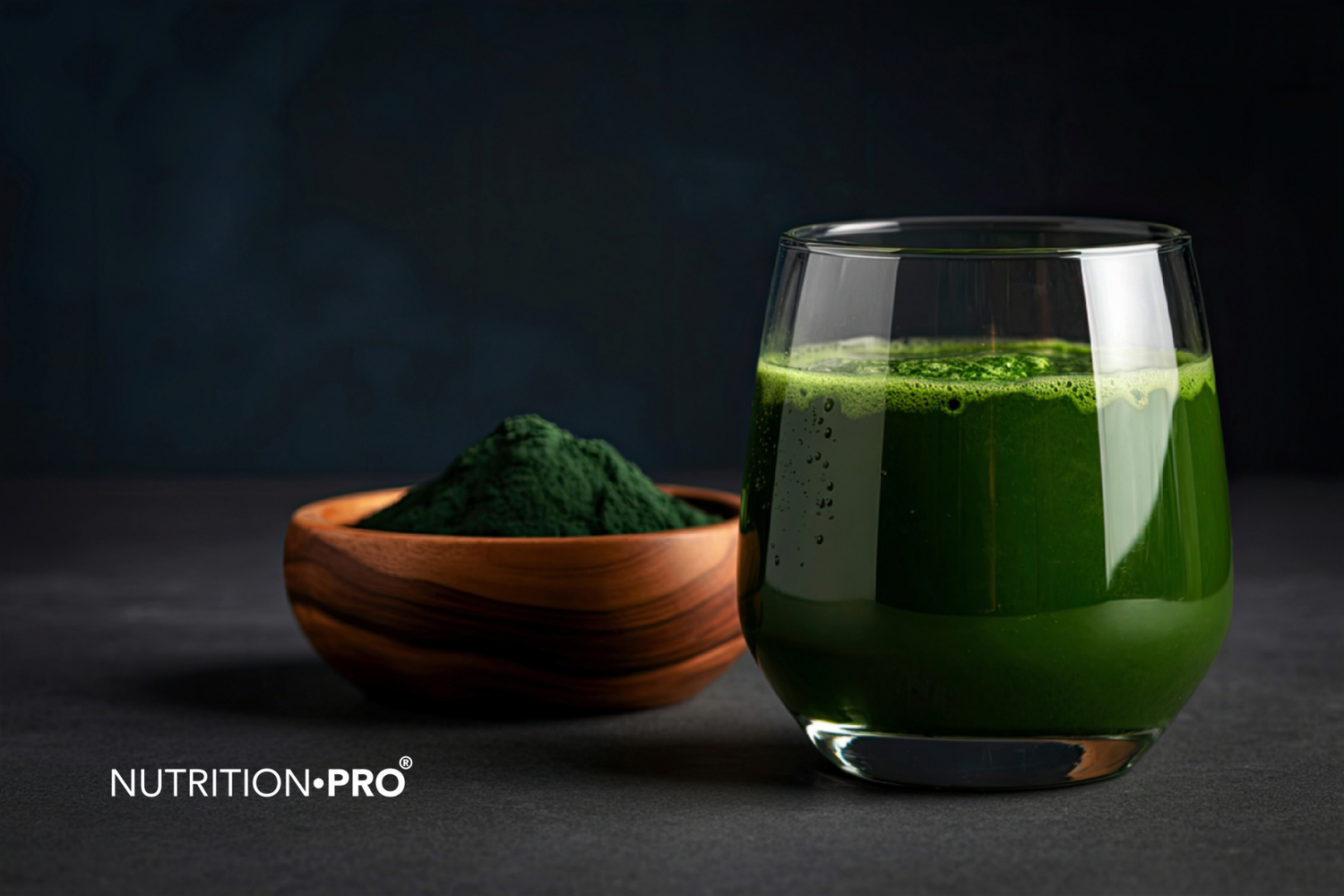
Although commercially presented as a "microalga", spirulina belongs to the kingdom of bacteria (prokaryote), not to that of true algae (eukaryotes). This distinction has no nutritional importance, but it explains certain particularities: absence of a cellulose cell wall, which makes its digestion easier than that of chlorella. Its close cousin, blue spirulina, is not a separate variety but the isolated extract of the phycocyanin pigment, sold separately for its concentrated antioxidant action.
Nutritional composition: what science says
| Nutrient | Per 100 g dry | Per 3 g (1 tsp) | % RDA per 3 g |
|---|---|---|---|
| Protein | 60-70 g | 1.8-2.1 g | 3-4% |
| Iron | 28-35 mg | ~1 mg | 7-14% |
| Vitamin B1 (thiamine) | 2.4 mg | 0.07 mg | 6% |
| Vitamin B2 (riboflavin) | 3.7 mg | 0.11 mg | 8% |
| Copper | 6.1 mg | 0.18 mg | 18% |
| Phycocyanin | 12-18 g | 360-540 mg | Antioxidant action |
| Pseudo-B12 (inactive analogue) | Present | Present | ⚠️ NOT bioactive |
Contrary to a widespread myth, spirulina essentially contains B12 structural analogues (pseudo-vitamin B12), which are not bioactive in humans. For vegetarians and especially vegans, spirulina does not replace a real source of B12 (eggs, cheese, fish) or a specific B12 supplement. Monitor your B12 level through blood tests if your diet is without animal products.
The 10 benefits supported by research
Cardio and lipids: effect documented in meta-analysis
Blood pressure: -4.59 mmHg systolic
Sport, energy, immunity: more modest indications
Endurance and recovery: several trials (though small) have shown an improvement in time to exhaustion and a reduction in exercise-induced oxidative stress. The mechanism combines the antioxidant effect of phycocyanin and the supply of bioavailable iron. Recommendation: 3 to 6 g per day during periods of intensive training.
Immunity and allergic rhinitis: a few studies (notably a 2008 study on 127 people) reported a reduction in allergic rhinitis symptoms with 2 g of spirulina per day. Promising data requiring confirmation by recent meta-analyses.
Anaemia and fatigue: the supply of bioavailable iron can support needs in case of limited dietary intake. Never replaces medical management of established anaemia (blood test, cause to identify, suitable iron supplementation if necessary).
Dosage, duration and precautions
Self-assessment: is spirulina relevant for you?
3 boxes or more: spirulina is clearly of interest for your profile. Favour Organic spirulina 120 tablets in an 8 to 12 week course, dosage 2 to 3 g/day for daily use, up to 5 g/day for a more pronounced effect on lipids or blood pressure. 1 to 2 boxes: moderate relevance. Spirulina can fit into an overall routine, but won't be the priority. 0 boxes: spirulina does not provide targeted benefit for your profile. Favour a diversified diet.
Absolute contraindications: phenylketonuria (spirulina contains phenylalanine), known allergy to cyanobacteria or algae.
To avoid or ask for medical advice: autoimmune diseases in active flare (lupus, multiple sclerosis, rheumatoid arthritis), spirulina can stimulate immunity; uncontrolled hyperthyroidism; anticoagulant or immunosuppressant treatments (possible interactions); pregnancy and breastfeeding (insufficient data, precautionary principle); gout or kidney failure (purine content).
Possible side effects: mild digestive disorders at the start of intake (bloating, nausea), transient headaches, darker urine (linked to phycocyanin, harmless). These effects generally fade after a few days.
Important: spirulina NEVER replaces prescribed medical treatment (antihypertensive, statin, antidiabetic). In case of chronic disease, seek medical advice before supplementation.
How to choose quality spirulina
Profile and choice by goal
(energy, iron, protein)
2-3 g/day continuously
or blood pressure
4-6 g/day for 8-12 weeks
muscle recovery
during training cycles
(oxidative stress, skin)
concentrated in pigment
1/3 teaspoon to 1 tsp
or drug treatment
before supplementation
Frequently asked questions
What are the real proven benefits of spirulina?
According to recent meta-analyses, three main areas. Lipid profile: Rahnama et al. 2023 demonstrated a significant reduction in LDL, total cholesterol and triglycerides, with an increase in HDL. Blood pressure: Machowiec et al. 2021 documented -4.59 mmHg systolic and -7.02 mmHg diastolic. Nutrition: complete proteins, bioavailable iron, B vitamins and antioxidant phycocyanin.
Is spirulina a good source of vitamin B12?
No, an important misconception to clarify. Spirulina essentially contains pseudo-vitamin B12 (structural analogues) which is NOT bioactive in humans. For vegetarians and vegans, spirulina does not replace a real source of B12 (animal products or specific supplement). Monitor your level through blood tests if eating without animal products.
What is the right daily dosage of spirulina?
Depends on the goal. Daily nutritional use: 1-3 g/day. Effect on lipids/blood pressure: 2-8 g/day for 4-12 weeks. Sport: 3-5 g/day. Start gradually (1 g/day the first week) to assess digestive tolerance.
Does spirulina lower cholesterol?
Yes, this is the best-documented effect. According to Rahnama et al. 2023 in Pharmacological Research (meta-analysis 20 studies, 1076 participants), significant reduction in LDL, total cholesterol and triglycerides, with increased HDL. Modest but clinically relevant effects as a complement to a balanced diet. Does not replace medical treatment for severe dyslipidemia.
Does spirulina really lower blood pressure?
Yes at suitable dosages. According to Machowiec et al. 2021 in Nutrients, meta-analysis documenting -4.59 mmHg systolic and -7.02 mmHg diastolic. Effect more pronounced in hypertensive people. Dosages: 1 to 8 g/day for 2 to 12 weeks. Natural support, not a substitute for prescribed antihypertensive treatments.
Is spirulina rich in absorbable iron?
Yes. 28-35 mg/100 g dry, or ~1 mg per teaspoon (3 g), 7-14% of RDA. Bioavailability higher than most plants. Combine with vitamin C (lemon, parsley, kiwi) to optimise absorption. Useful in vegetarians, women of childbearing age, athletes.
Can spirulina replace a real balanced diet?
No, it is a supplement, not a substitute. 3 g of spirulina provides only ~2 g of protein (3-4% of needs). It usefully complements an already balanced diet for nutrients in which it is dense (iron, B1, B2, copper, antioxidants). It replaces neither quality proteins nor dietary fibre from a diversified diet.
What are the side effects of spirulina?
Generally well tolerated. Possible effects: mild digestive disorders at the start of intake, transient headaches, darker urine (phycocyanin, harmless). Main risk: contamination with heavy metals or microcystins if of dubious origin. Hence the importance of certified organic spirulina.
Who should not take spirulina?
Contraindications: phenylketonuria, autoimmune diseases in flare (lupus, MS, RA), uncontrolled hyperthyroidism, anticoagulant/immunosuppressant treatments (medical advice), pregnancy and breastfeeding (precautionary principle), gout (purines). In case of chronic disease or treatment, seek medical advice.
Does spirulina really help with sport and endurance?
Promising studies but less solid than those on blood pressure/lipids. Improvement in time to exhaustion, reduction in exercise-induced oxidative stress, support for recovery. Mechanisms: phycocyanin antioxidant effect + bioavailable iron intake. Dosages: 3-6 g/day during training.
How to recognise quality spirulina?
Key criteria: organic certification, precise geographic origin, dark blue-green colour (not khaki green or brown), no additives, available microcystin and heavy metal analyses. Favour brands that publish their analyses. Be wary of abnormally low prices.
Spirulina in tablets or powder, what to choose?
Equivalent in effectiveness. Tablets: practical, precise dosage, no strong taste, ideal for daily use and mobility. Powder: dosage flexibility, lower cost per gram, but strong taste (to incorporate into a smoothie, juice, yoghurt). Start with tablets to assess tolerance, then switch to powder for more advanced uses.
Glossary
- Spirulina (Arthrospira)
- Photosynthetic cyanobacterium living in warm alkaline lakes. Main species: Arthrospira platensis and Arthrospira maxima. Cultivated and consumed dried in powder or tablet form. Contains 60-70% protein, iron, B vitamins, phycocyanin.
- Phycocyanin
- Signature blue pigment-protein of spirulina (12-18% of dry weight). Powerful antioxidant that scavenges free radicals and inhibits certain inflammatory pathways. Also available in isolated form (blue spirulina) for targeted concentrated action.
- Cyanobacterium
- Photosynthetic bacterium capable of producing energy from sunlight, like plants. Spirulina is a cyanobacterium, not a true alga in the strict botanical sense, but this distinction has no nutritional importance.
- Pseudo-vitamin B12
- Structural analogues of vitamin B12 (cobalamin) present in spirulina. Are not bioactive in humans. Do not replace a real source of B12 for vegetarians and vegans. Source of frequent confusion in communication about spirulina.
- Meta-analysis
- Statistical study combining the results of several clinical trials to estimate an effect more precisely with an enlarged sample. Highest level of scientific evidence in evidence-based medicine. GRADE is a method for evaluating the quality of this evidence.
- Microcystins
- Toxins produced by certain cyanobacteria under unfavourable culture conditions or by contamination by other cyanobacteria species. Microcystin testing essential to guarantee spirulina safety. To be monitored when choosing a quality product.
Scientific sources
- Rahnama I, Arabi SM, Chambari M, et al. The effect of Spirulina supplementation on lipid profile: GRADE-assessed systematic review and dose-response meta-analysis of data from randomized controlled trials. Pharmacol Res 2023;193:106802. DOI: 10.1016/j.phrs.2023.106802
- Machowiec P, Reka G, Maksymowicz M, Piecewicz-Szczesna H, Smolen A. Effect of Spirulina Supplementation on Systolic and Diastolic Blood Pressure: Systematic Review and Meta-Analysis of Randomized Controlled Trials. Nutrients 2021;13(9):3054. DOI: 10.3390/nu13093054
- Osadnik T, Golawski M, Lewandowski P, et al. A network meta-analysis on the comparative effect of nutraceuticals on lipid profile in adults. Pharmacol Res 2022;183:106402. DOI: 10.1016/j.phrs.2022.106402
- ANSES. Opinion on the risks associated with the consumption of food supplements containing spirulina. Anses.fr