

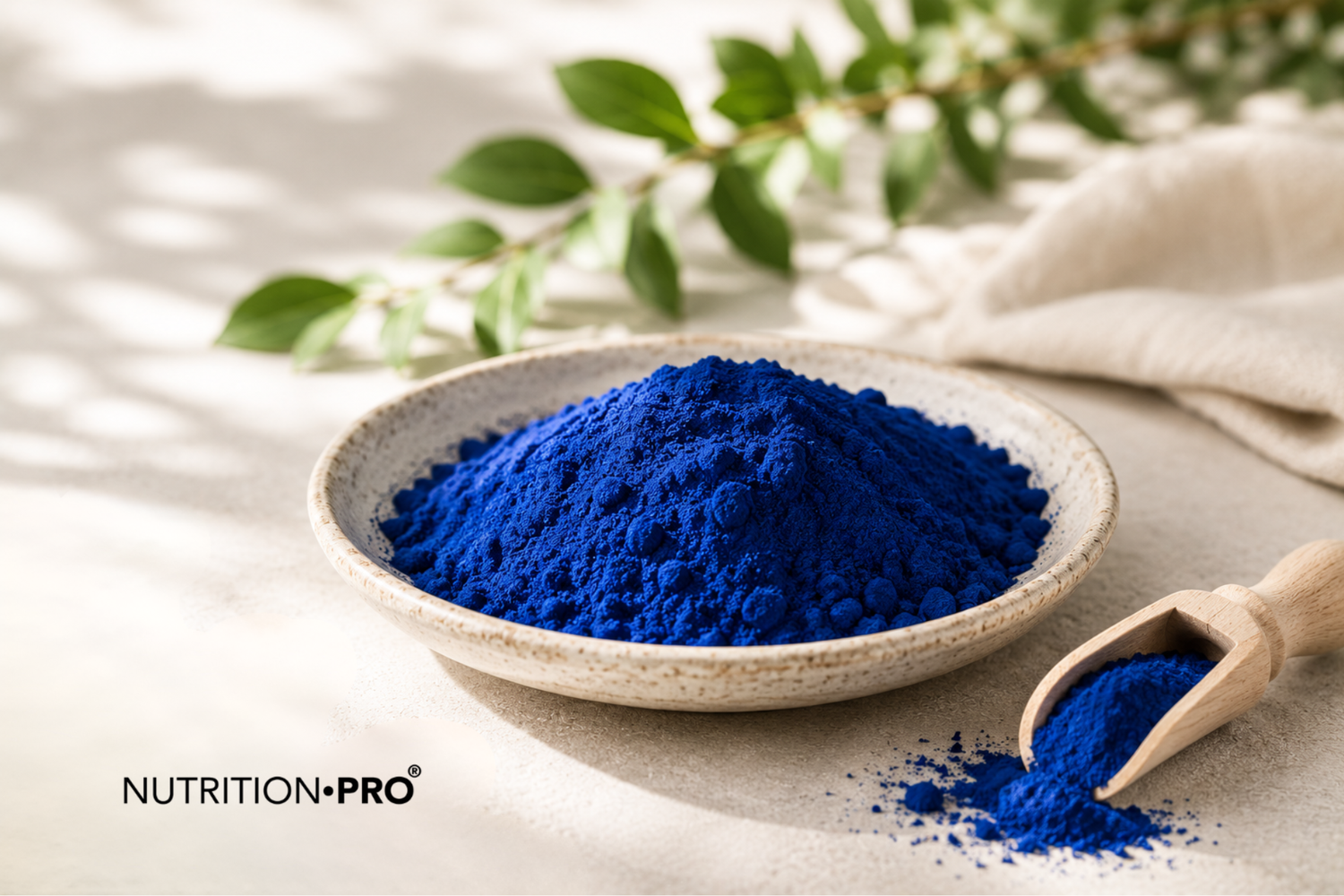
Known for its intense blue color and its unique properties, blue spirulina is actually a specific extract of spirulina: phycocyanin. This natural pigment, responsible for its characteristic hue, attracts attention as much for its antioxidant benefits as for its varied uses in nutrition, cosmetics and creative cooking.
In recent years, it has become a flagship ingredient of superfoods, combining visual appeal and nutritional value. It can be found in health smoothies as well as in premium formulations, symbolizing a trend that associates color, health and innovation.
But behind this enthusiasm lie essential questions: what exactly is blue spirulina? How is phycocyanin extracted? And how does it differ from traditional spirulina? Understanding its origins and composition is the first step to fully appreciating this exceptional pigment.

1. What is blue spirulina?
Blue spirulina is an extract highly concentrated in phycocyanin, a natural blue pigment found in spirulina, a freshwater microalga belonging to the cyanobacteria family. This pigment, which represents approximately 15 to 20% of the dry weight of whole spirulina, is water-soluble and plays a central role in the alga's photosynthesis, capturing light energy at wavelengths that chlorophyll cannot absorb effectively.
A distinctive identity
It is important to understand that blue spirulina is not a complete species in itself, but rather a purified extract obtained after separation of other components of the alga, particularly chlorophyll, lipids, and some proteins. This concentration of phycocyanin makes it possible to obtain a more potent product in terms of antioxidant activity, but which does not necessarily retain all the nutrients of whole spirulina (such as amino acids or certain minerals).
Nutritional value and uses
Even when isolated, phycocyanin still contains:
- essential amino acids involved in cellular repair
- trace elements (iron, magnesium, potassium)
- bioactive enzymes and peptides participating in anti-inflammatory mechanisms
Blue spirulina is today incorporated into:
- dietary supplements in powder or concentrated liquid form
- health-conscious recipes (smoothies, juices, yogurts, lattes) for their natural color
- certain cosmetic treatments for their ability to protect skin cells from oxidative stress
Phycocyanin is not found exclusively in spirulina, but also in other cyanobacteria. However, spirulina is by far the richest and most easily exploitable source, making it the reference standard for obtaining this intense blue pigment.
2. Origin and history
Blue spirulina finds its roots in the ancient history of green spirulina, from which it is extracted. Spirulina is considered one of the oldest foods consumed by mankind. Traces of its harvesting and use date back to the time of the Aztecs, who harvested it from the alkaline lakes of the Valley of Mexico. Dried into cakes, it served as a concentrated source of proteins and micronutrients to support energy in an environment where food availability could vary.
In Africa, around Lake Chad, some communities still use traditional methods today to harvest and dry spirulina, obtaining a local product known as dihe. These ancestral uses bear witness to the resilience and exceptional nutritional value of this microalgae.
From Green Spirulina to Blue Spirulina
The green color of spirulina is due to the combination of chlorophyll and phycocyanin. It was during the second half of the 20th century that phycocyanin began to attract researchers' attention, particularly for its powerful antioxidant effect and its anti-inflammatory properties. The idea of isolating this blue pigment aimed to harness these benefits in a more concentrated and specific manner.
Evolution of Extraction Techniques
The first extraction attempts, carried out in the 1980s, were costly, inefficient, and required complex processes. Today, modern methods favor cold aqueoustechniques, without aggressive solvents, in order to preserve the biochemical integrity of the pigment. Typical steps include:
- The cultivation of spirulina in controlled freshwater basins
- The harvesting and concentration of biomass
- The gentle rupture of cells to release phycocyanin
- The filtration and purification to obtain a pure pigment
- The low-temperature drying to produce a stable and concentrated powder
Current Production Zones
The main blue spirulina producing countries are:
- France and Spain : artisanal production, high level of traceability
- California : large-scale operations with advanced technologies
- Southeast Asia (Thailand, Vietnam): massive production, often destined for the global market
These regions combine optimal sunlight, controlled water quality and technical expertise enabling the production of an extract that is both stable, pure, and rich in active pigments.
3. Why this enthusiasm for blue spirulina?
If blue spirulina has gained in popularity in recent years, it is partly due to a subtle blend of its nutritional benefits, its unique visual impact and the current trend toward seeking natural alternatives to processed products.
Growing interest in its health properties
Scientific research surrounding phycocyanin — the active pigment of blue spirulina — has highlighted several interesting mechanisms of action:
- Powerful antioxidant effect : neutralization of free radicals responsible for cellular aging.
- Immune system support : stimulation of certain immune responses, particularly during periods of fatigue or prolonged stress.
- Anti-inflammatory action : modulation of mild inflammatory processes, useful from a general wellness perspective.
These potential effects appeal to consumers seeking natural solutions to maintain their health, as part of a balanced lifestyle.
Visual and culinary appeal
One of the most visible reasons for the enthusiasm surrounding blue spirulina is… its color. This natural blue pigment, difficult to find in other foods, makes it possible to create:
- stunning smoothies radiant
- blue lattes (blue lattes) prized on social media
- original desserts without artificial colorants
- fresh pasta or pastries with vibrant hues
The ability to add this spectacular color while maintaining a "100% natural" label is a considerable marketing asset, particularly for brands committed to a clean label.
approach
A product at the intersection of trends
- Superfoods : integration of nutritious ingredients into everyday cooking.
- Culinary photogeneity : dishes and beverages designed to be shared on Instagram or Pinterest.
- Holistic wellness : pursuit of balance between nutrition, aesthetics, and health.
- Responsible consumption : interest in products from controlled and traceable supply chains.
By combining visual pleasure, potential benefits and natural origin, blue spirulina establishes itself as an ingredient that checks all the boxes for the modern consumer.
4. Quality and traceability
The popularity of blue spirulina has led to a multiplication of products on the market, but they are not all equal. The quality and traceability are the two major criteria to examine before purchasing.
Guarantee purity and phycocyanin concentration
The quality of blue spirulina is measured largely by its actual phycocyanin content. This can vary considerably from one product to another, ranging from 10% to over 30% concentration. A premium product will clearly indicate on its label:
- the phycocyanin level expressed as a percentage or in mg/g
- the extraction methods used (preferably aqueous and cold)
- the presence or absence of additives or preservatives
The higher the phycocyanin concentration, the more intense the pigment and the more pronounced its potential effects.
Importance of analysis and certifications
To guarantee a safe product, it is essential that the manufacturer provide:
- <<<15>>> microbiological analyses analyses microbiologiques attesting to the absence of pathogenic bacteria
- <<<18>>> heavy metal testing tests de métaux lourds (lead, mercury, arsenic)
- certificates stating the non-use of chemical solvents during extraction
- labels or certifications (organic, sustainable agriculture, HACCP, etc.) according to origin and target market
Origin and complete traceability
Traceability concerns not only the cultivation location, but also theorigin of the strain, the water quality, and the harvesting method. Blue spirulina from cultivation in controlled water, in a protected environment, generally offers better assurance than production in open environments exposed to pollution.
Serious producers do not hesitate to provide a complete technical file enabling the consumer or professional to verify each step:
- source of raw spirulina
- exact extraction process
- results of independent laboratory analyses
Choose a blue spirulina with a phycocyanin level exceeding 30%. This guarantees optimal concentration in active pigments and maximizes the desired antioxidant and anti-inflammatory effects.
5. Traditional and modern uses
Spirulina spirulina, in its original form, has always been used as a concentrated food source by ancient civilizations, but blue spirulina — a phycocyanin concentrate — opens unprecedented possibilities, both in nutrition, gastronomy, cosmetics, and even industry.
Traditional uses linked to spirulina
Historically, whole spirulina was consumed primarily to:
- Provide protein in areas where animal resources were limited.
- Enhance endurance of Aztec warriors and messengers during long-distance journeys.
- Prevent nutritional deficiencies in environments with poor dietary diversity.
Blue spirulina, although more recent, remains connected to these roots through its goal of nutritional support, but it also provides a sensory advantage thanks to its unique color.
Modern uses of blue spirulina
Today, blue spirulina is integrated into many fields:
In nutrition and dietetics
- Dietary supplements : powders, capsules, or liquids to provide a concentrated dose of phycocyanin.
- Functional food : incorporation into energy bars, sports drinks, superfood blends.
- Health-conscious cuisine : smoothies, juices, lattes, sauces, desserts — offering both color and potential benefits.
In cosmetics
- Anti-aging skincare : creams or serums leveraging its antioxidant properties to protect skin from oxidative stress.
- Hair care products : shampoos or masks aimed at revitalizing the scalp.
In the food industry
- Natural colorant : alternative to synthetic dyes in ice cream, confectionery, soft drinks, and baked goods.
- Dairy products : yogurts and fresh cheeses with a bluish tint, intended for the gourmet market.
Toward progressive democratization
If blue spirulina was initially reserved for a niche market (specialty shops, premium products), it is now beginning to appear in:
- major supermarkets through functional beverages or enriched snacks
- trendy cafés offering "blue lattes"
- homemade recipes shared on social media
Its democratization, however, requires educational efforts with consumers so they understand that its color does not automatically equate to high concentration or optimal quality.
Conclusion
Blue spirulina represents far more than a simple food trend. Carefully extracted from green spirulina, it concentrates phycocyanin, a natural pigment with remarkable antioxidant properties, offering both nutritional benefits and a unique visual impact.
Its current place in nutrition, cosmetics, and the food industry testifies to its versatile potential. However, this popularity demands increased vigilance regarding the quality and traceability of products offered on the market. Choosing blue spirulina from a controlled source, with clearly indicated concentration validated by testing, remains the key to fully enjoying its benefits.
Whether integrated into health recipes, used as a natural colorant, or taken as a supplement, blue spirulina perfectly illustrates the meeting of innovation, nature and wellness.
Is blue spirulina identical to green spirulina?
What are the main benefits of blue spirulina?
Can you cook with blue spirulina?
Can blue spirulina be organic?
Does blue spirulina contain proteins like regular spirulina?
- Romay, C., Armesto, J., Remirez, D., Gonzalez, R., Ledon, N., & García, I. (2003). Antioxidant and anti-inflammatory properties of C-phycocyanin from blue-green algae. Inflammation Research, 52(12), 561–566. - Patel, A., Mishra, S., Pawar, R., & Ghosh, P.K. (2020). Therapeutic potential of phycocyanin: Mechanisms and applications. Journal of Applied Phycology, 32(6), 3291–3310. - Benedetti, S., Benvenuti, F., Pagliarani, S., Francogli, S., Scoglio, S., & Canestrari, F. (2004). Antioxidant properties of phycocyanin in humans. Life Sciences, 75(21), 2353–2362. - Eriksen, N.T. (2008). Production of phycocyanin — a pigment with applications in biology, biotechnology, foods and medicine. Applied Microbiology and Biotechnology, 80(1), 1–14.


