

In the longest trial we identified, 120 heart failure patients received 20 g of black garlic daily or placebo for 6 months, with no notable adverse effects reported. Yet in 2018, a published case describes a 60-year-old woman who underwent emergency surgery for a hematoma compressing the spinal cord, and had been taking a herbal remedy containing black garlic for 8 weeks. Here's what the studies really say.
Tolerance, bleeding, interactions, surgery, allergy, pregnancy, compounds formed during heating: each risk is classified as established, rare, theoretical, or misconception, followed by safety rules and warning signs that require stopping.

What is established : in the five trials on black garlic we identified, ranging from 250 mg of extract to 20 g of black garlic daily for 6 weeks to 6 months, adverse effects are rare and mild, mainly digestive. With garlic supplements in general, digestive disturbances and odor predominate, and in one trial in 10 volunteers, garlic capsules reduced saquinavir exposure by 51%, an HIV medication; black garlic has not been tested.
What is rare or theoretical : published bleeding cases concern mainly high doses of garlic, and only one case involves a remedy containing black garlic, without proof of causality. Under warfarin, an aged garlic extract did not increase bleeding, but black garlic has never been tested with an anticoagulant: caution advised. Blood pressure, blood sugar, 5-HMF, and acrylamide fall under theoretical risk.
- Black garlic: what aging changes
- Tolerance in black garlic trials
- Digestion and odor: the most frequent effects
- Bleeding: platelets and published cases
- Black garlic and anticoagulants
- Before surgery or dental work
- Blood pressure and blood sugar: effects that add up
- Heart and circulation: black garlic and omega-3
- Antiretrovirals, chemotherapy: the interactions table
- Allergy, pregnancy and breastfeeding
- 5-HMF and acrylamide: what studies measure
- The assessment and safety rules
- Frequently asked questions
Black garlic: what aging changes
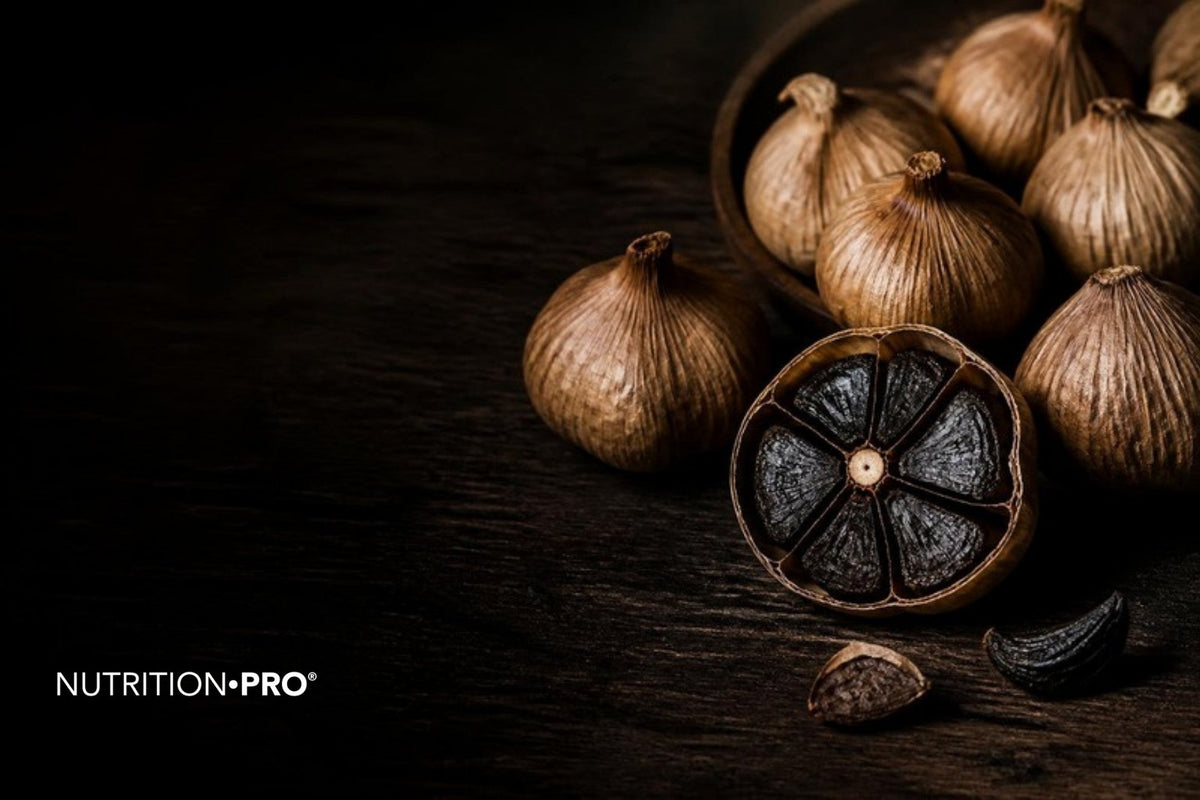
Black garlic is not a variety: it is ordinary garlic, Allium sativum, aged in heat and humidity: according to a 2017 review, generally between 40 and 90 °C and 60 to 90% relative humidity, for more than 10 days. The freed sugars, mainly fructose, react with amino acids: this is the Maillard reaction, which gives the black color and sweet taste. Our article on thehistory and properties of black garlic details this process.
Alliinase, the enzyme that transforms alliinase into allicin when you crush a raw clove, is inactivated by heat, and allicin degrades. S-allyl-cysteine (SAC) accumulates instead: the 2017 review places it at 4 to 8 times the content of fresh garlic. Free sugars, polyphenols and Maillard products, including 5-HMF discussed below, also increase.
In 13 volunteers total (7 to 13 depending on the product tested), the bioavailability of allicin was measured over 32 hours from its main metabolite in breath. Compared to crushed raw garlic, taken as the 100% reference, black garlic gave only a 5% equivalent, versus 16% for boiled garlic, 19% for pickled garlic and 30% for roasted garlic.
Lawson LD, Hunsaker SM. Nutrients 2018;10(7):812. DOI: 10.3390/nu10070812
According to the 2017 review, the odorous, pungent and irritating compounds of raw garlic are largely transformed during aging, and black garlic shows in the laboratory, especially in cells and animals, weaker anticoagulant, anti-inflammatory and antiallergic effects than raw garlic, which does not prove it has no effect in humans.
Much safety data concerns raw garlic, garlic powder or garlic oil, or aged garlic extract, garlic slices macerated in diluted ethanol for up to 20 months, which is not black garlic. We therefore specify form, dose and population for each study.
Tolerance in black garlic trials
We identified five trials on black garlic, all small-sized, which report tolerance, published between 2014 and 2023: two with an extract standardized to 250 mg per day, two with black garlic at 12 and 20 g per day, one with an aged black garlic preparation at 6 g per day.
| Trial | Product and dose | Duration and population | Reported adverse effects |
|---|---|---|---|
| Jung, 2014, versus placebo | Aged black garlic preparation, 6 g per day | 12 weeks, 60 adults with slightly elevated cholesterol | No adverse effects reported |
| Liu, 2018, versus placebo | Black garlic, 20 g per day | 6 months, 120 heart failure patients treated | No notable adverse effects |
| Valls, 2022, crossover versus placebo | Black garlic extract, 250 mg per day | 2 periods of 6 weeks, 67 adults with moderately elevated cholesterol | No difference from placebo, well tolerated |
| Serrano, 2023, versus placebo | Black garlic extract, 250 mg per day | 12 weeks, 81 hypertensive patients treated | Mild gastric discomfort: 2 versus 1 on placebo; discontinuations due to intolerance, mainly reflux |
| Villaño, 2023, without placebo | 4 cloves of black garlic, 12 g per day | 12 weeks, 62 adults aged 40 to 65 years | Adverse effects not detailed; blood count, liver enzymes and thyroid within normal ranges |
In 81 grade I hypertensive patients already treated, 250 mg per day of a black garlic extract for 12 weeks was well tolerated: 2 participants on the extract and 1 on placebo reported mild gastric discomfort, and discontinuations due to intolerance, mainly reflux, all occurred in the extract group. Home blood pressure decreased by approximately 1.8 and 1.5 mmHg, with no significant change in office measurements.
Serrano JCE, Castro-Boqué E, García-Carrasco A, et al. Nutrients 2023;15(17):3691. DOI: 10.3390/nu15173691
Limitations: fewer than 400 participants overall, sufficient to detect frequent effects but not rare ones. The two trials on the extract excluded pregnancy, breastfeeding and chronic digestive diseases, one excluded garlic-allergic individuals, the other those on antihypertensives; they were co-signed by employees of the extract manufacturer, and the 2014 trial by an author affiliated with an agricultural company.
Our Black garlic (extract) provides 560 mg of black garlic extract per 2 capsules. It was not tested in these trials, whose products differ from ours: their data provide an indication, not a guarantee that applies directly.
Digestion and odor: the most frequent effects
Verdict: established, usually mild. The most detailed figures come from a trial with an aged garlic extract, not black garlic, in 79 treated hypertensive patients averaging 70 years old. With 240, 480 or 960 mg per day for 12 weeks, bloating, flatulence or reflux were reported by 32% of participants at the highest dose, 15% at the two lower doses and 5% on placebo, mainly in the first week; the difference between doses was not significant. Three participants discontinued due to digestive disorders: two at the highest dose, one on placebo.
Not everything is attributable to garlic: in another 12-week trial in 88 hypertensive patients, with 1.2 g per day of aged garlic extract, approximately 40% of participants in both groups reported minor effects, including reflux (8%), belching (5%) and bloating (3%), with no difference from placebo.
The odor is the other established effect. In the only trial retained by a Cochrane review on pregnancy, dried garlic tablets increased the risk of complaining about odor by 8.5-fold compared to placebo (95% confidence interval 2.07 to 34.88). This odor comes mainly from allyl methyl sulfide, derived from allicin, expelled through breath, urine and even breast milk. With 5% allicin equivalent, black garlic produces much less, and the 2017 review describes it as having no strong odor: attributing raw garlic breath to it is a misconception.
In the aged garlic extract trial, some participants reduced their symptoms by taking the capsules in the morning rather than the evening; taking them with a meal is another practical tip. Our Black garlic (extract) is taken at 2 capsules per day with a large glass of water. If persistent reflux occurs, it is better to stop; our guide on bloated belly details other causes of bloating.
Bleeding: platelets and published cases
Verdict: rare, causality never demonstrated. Several garlic compounds inhibit platelet aggregation in laboratory settings, much less clearly in humans. In 18 healthy volunteers, a tzatziki containing 4.2 g of raw garlic did not alter platelet function in any of the three tests used, neither in a single dose nor in 5 volunteers who consumed it daily for a week. In the trial with 1.2 g per day of aged garlic extract, where 25% of participants were taking a blood-thinning medication, platelet occlusion time did not increase further in those for whom it was already prolonged.
Isolated clinical cases remain. In 1990, a spontaneous epidural hematoma, a pocket of blood compressing the spinal cord, was described in a nonagenarian patient rendered paraplegic by the hematoma, with a platelet disorder attributed to excessive garlic consumption; he recovered well. In 2016, excessive bleeding during spinal column surgery was reported in a man consuming the equivalent of 12 g of garlic per day and taking sertraline, an antidepressant. In 2023, a 65-year-old man presented with severe hematuria, blood in the urine, after laser prostate surgery: he had been taking 1 to 6 garlic capsules of 300 to 900 mg per day for 3 to 4 years, up until the day of surgery, with a diet very rich in garlic.
A 60-year-old woman, with no medical history or anticoagulant treatment, presented with a thoracic epidural hematoma, from T3 to T5, with paralysis of both legs. Operated on urgently, she recovered completely and returned to work in one month. She had been taking a herbal remedy containing black garlic for 8 weeks. Coagulation tests were normal, bleeding time slightly prolonged: 8 minutes compared to a normal range of 2 to 6. The authors suggest a possible link, without being able to establish it.
Kim EJ, Ahn J, Kim SJ. BMC Complement Altern Med 2018;18(1):291. DOI: 10.1186/s12906-018-2354-y
This is the only bleeding found with a product containing black garlic. The composition of the remedy is not detailed, other plants may have played a role, and this type of hematoma also occurs without any plant, at a rate of 0.1 cases per 100,000 people per year according to the authors. The 2017 review suggests that prolonged use of black garlic could impair surgical hemostasis: an argument for caution, not proof.
No human study has evaluated it; in laboratory settings, black garlic proves to be less anticoagulant than raw garlic, though not inactive. It never replaces prescribed treatment, and caution is precisely warranted in people taking one.
Black garlic and anticoagulants
Verdict: theoretical, not demonstrated, but plausible enough to justify caution. Two studies provide partial answers, using forms of garlic other than black garlic.
In 48 patients on warfarin, 30 men and 18 women averaging 56 years old, 5 mL of aged garlic extract or placebo twice daily for 12 weeks resulted in no increase in hemorrhages. Minor effects—headaches, fatigue, colds, and dizziness—did not differ significantly from placebo. The authors consider the extract relatively safe in closely monitored patients.
Macan H, Uykimpang R, Alconcel M, et al. J Nutr 2006;136(3 Suppl):793S-795S. DOI: 10.1093/jn/136.3.793S
In 12 healthy men, two weeks of a garlic supplement before a single 25 mg dose of warfarin did not significantly alter either the drug's fate, nor the INR, the coagulation time index, nor platelet aggregation; in the same study, cranberry increased the INR area under the curve by 30%. These data remain limited (a few dozen people, other forms of garlic) and say nothing about direct oral anticoagulants or antiplatelets such as aspirin or clopidogrel, with which an additive effect remains plausible.
Our Black garlic (extract) is not recommended for people on anticoagulant therapy. On antiplatelet therapy, in case of coagulation disorder, bleeding ulcer, or regular use of anti-inflammatory drugs, discuss any garlic supplement with your doctor beforehand, and never modify your treatment on your own. The same caution applies to other plants, as shown in our articles on ginkgo biloba and turmeric.
Before surgery or dental work
Verdict: rare risk, precaution recommended. A 2001 JAMA review of eight common plants that can cause problems around surgery, including garlic, ginkgo, and ginseng, lists bleeding among the direct effects of garlic and asks doctors to explicitly note herbal use before the procedure. The authors of the 2018 hematoma case recall, citing a previous study, that it seems prudent to stop high doses of garlic 7 to 10 days before surgery.
Garlic from meals is not the issue: according to the authors of the tzatziki study, usual amounts of raw garlic have little chance of increasing surgical bleeding; the precaution targets long-term supplements.
Report your black garlic supplement to your surgeon, anesthesiologist, and dentist, especially before an extraction or implant; stopping it about 7 days before is practical advice, not based on a comparative trial.
Blood pressure and blood sugar: effects that add up
Verdict: theoretical. A meta-analysis of 9 double-blind trials in 482 hypertensive patients followed for 8 to 26 weeks found a decrease of 9.1 mmHg in systolic and 3.8 mmHg in diastolic pressure with garlic preparations; the authors consider this evidence still fragile, and the effect on systolic pressure is weaker in better-quality trials. A synthesis of 9 reviews concludes that garlic lowers blood pressure in hypertensives, not in people with normal blood pressure.
With aged garlic extract at 250 mg per day, diastolic pressure decreased by 5.85 mmHg compared to placebo in adults with high cholesterol not on antihypertensive medication, and home blood pressure by approximately 1.8 and 1.5 mmHg in treated hypertensives, without any hypotension appearing among reported adverse effects. The idea that black garlic lowers blood pressure in everyone is therefore a misconception. Our article onfermented black garlic and blood pressure details the 2022 trial, and our guide blood pressure at 14/9, 15/9 or 16/10 reminds when to consult a doctor.
For blood sugar, a 2026 meta-analysis of 27 trials involving 1,619 participants found an average decrease of 2.76 mg/dL in fasting blood sugar and 0.53 points in hemoglobin A1c with garlic supplements, with no effect on insulin. Our research found no published cases of hypoglycemia attributed to garlic, but the two trials on black garlic extract excluded elevated fasting blood sugar levels: we have no data on the risk of hypoglycemia in treated diabetic patients. Our article on high blood sugar reviews the plants studied.
Discuss it with your doctor before starting, then monitor your blood pressure or blood sugar during the first few weeks. Dizziness when standing up or discomfort should prompt a medical consultation.
Heart and circulation: black garlic and omega-3
Black garlic is often combined with omega-3, which also acts on platelets in the laboratory; to our knowledge, no study has evaluated this combination.
For omega-3, a large trial was conducted in cardiac surgery. In 1,516 patients, a fish oil in 1 g capsules containing at least 840 mg of omega-3, given at 8 to 10 g over 2 to 5 days before surgery then 2 g per day, showed no signs of increased bleeding or serious adverse effects. Conversely, a meta-analysis of 7 large trials in 81,210 patients at cardiovascular risk, averaging 65 years old and followed for nearly 5 years, associates omega-3 with a 25% increased risk of atrial fibrillation: 12% in trials at 1 g per day or less, 49% above that.

At 4 capsules per day, our Omega 3 Omegavie provide 1,200 mg of omega-3, including 1,080 mg of EPA and DHA: slightly above the 1 g threshold of major trials, well below the loading doses of the surgical trial. On bleeding, the surgical trial is reassuring, but it covered only a few days of use; we have not analyzed long-term data, nor in combination with an anticoagulant or with black garlic; the slight excess of atrial fibrillation, more marked above 1 g per day, deserves to be known. On anticoagulation, in case of atrial fibrillation or palpitations, during pregnancy or breastfeeding, your doctor's advice comes before any supplementation. Our article omega-3: proven effects and myths details the rest of the data.
Antiretrovirals, chemotherapy: the interaction table
The best documented interaction in humans concerns saquinavir, and it is significant.
In 10 healthy volunteers taking saquinavir, an antiretroviral used against HIV, garlic capsules taken twice daily for 3 weeks reduced drug exposure by 51%, its residual concentration by 49%, and its maximum concentration by 54%. After 10 days of stopping garlic, levels had only returned to 60 to 70% of their baseline level.
Piscitelli SC, Burstein AH, Welden N, et al. Clin Infect Dis 2002;34(2):234-238. DOI: 10.1086/324351
Elsewhere, signals are weak. With ritonavir in a single dose, 4 days of odorless garlic extract in 10 volunteers reduced its exposure by 17%, a non-significant decrease. In 10 women treated with docetaxel for metastatic breast cancer, 600 mg of garlic twice daily for 12 days did not significantly modify drug elimination, but in 3 patients with CYP3A5*1A/*1A genotype, who express the CYP3A5 enzyme, the area under the curve was multiplied by 3.74, versus 1.02 in 6 patients with *3C/*3C genotype.
| Medication | What studies show | Level of evidence |
|---|---|---|
| Warfarin and other anticoagulants | No excess bleeding with aged garlic extract in 48 patients; INR unchanged in 12 volunteers; nothing with black garlic | Theoretical, caution |
| Aspirin, clopidogrel | No dedicated study; plausible additive effect on platelets | Theoretical, caution |
| Antihypertensives | Reduction of 1.8 and 1.5 mmHg at home with black garlic extract in treated hypertensive patients | Modest effect, to be monitored |
| Antidiabetics | Fasting blood glucose lowered by 2.76 mg/dL on average with garlic supplements | Theoretical |
| Saquinavir | Reduced exposure of 51% with garlic capsules | Demonstrated in one trial (10 volunteers) |
| Ritonavir | Non-significant decrease of 17% after 4 days of garlic extract | Not demonstrated |
| Docetaxel | No overall effect; exposure multiplied by 3.74 in 3 patients with CYP3A5*1A/*1A genotype | Theoretical |
| Alprazolam, dextromethorphan | No change after 14 days of garlic extract in 14 volunteers | No measured interaction |
In 14 volunteers, a garlic extract taken for 14 days did not modify the elimination of either alprazolam (CYP3A4 enzyme) or dextromethorphan (CYP2D6), two pathways used by many medications. These studies tested garlic supplements, not black garlic: with antiretroviral, chemotherapy, or narrow therapeutic margin medications, medical advice remains essential.
Allergy, pregnancy and breastfeeding
Allergy: rare. In an allergology clinic, among 8,109 patients tested in 2018, food hypersensitivity was detected in 924, of which 27 were due to garlic or onion, or 2.92%. No study has verified whether black garlic is tolerated by allergic individuals: in case of garlic or onion allergy, it is best to abstain.
Pneumopathy: isolated case. A pneumopathy attributed to black garlic was published in 2016 in a 77-year-old woman. According to the 2017 review reporting it, a lymphocyte stimulation test was positive for black garlic, suggesting a delayed immune reaction. Unusual cough, fever, or shortness of breath while taking the supplement require stopping and consulting a physician.
Pregnancy: insufficient data. A Cochrane review found only one trial, in 100 pregnant women, comparing dried garlic tablets to placebo: no clear difference in pregnancy hypertension (relative risk 0.50, 0.25 to 1.00) or preeclampsia (0.78), more complaints related to odor, no other significant adverse effects. This is too limited to conclude, and the two trials on black garlic extract excluded pregnant or breastfeeding women.
Breastfeeding. In 4 mothers, odorous compounds from garlic passed into milk after a meal of roasted or cooked garlic, with a peak 1 to 2 hours afterward, and perceptible garlic odor. No study has evaluated black garlic supplements during breastfeeding, nor in infants. When pregnant or breastfeeding, the practical rule is not to take them without advice from a physician or midwife.
5-HMF and acrylamide: what studies measure
Verdict: theoretical. The Maillard reaction also produces compounds monitored in food safety. In a 2025 study on single-bulb black garlic, 5-hydroxymethylfurfural, or 5-HMF, and acrylamide increased exponentially over 12 days of aging. The authors note that acrylamide content exceeded that of certain common foods, which concerns them for daily consumption. Another study measures 1.81 mg of 5-HMF per gram of dry matter after 30 days, and 3.04 mg after 40 days of aging. However, contents vary enormously: the black garlic extract from the 2022 trial contained only 0.03 µg of furfurals, expressed as 5-HMF, per tablet.
For 5-HMF, a toxicology review estimates habitual dietary intakes between 4 and 30 mg per day, up to 350 mg with certain prune-based beverages. The genotoxicity observed in cells was not confirmed in living animals; in the only long-term carcinogenicity study in rats and mice, only liver adenomas appeared in female mice, with questionable relevance. No-observed-adverse-effect levels in animals are between 80 and 100 mg per kilogram per day, and the authors consider safety margins generally sufficient. Acrylamide is carcinogenic in animals at high doses: according to a 2020 review, in rodents, at more than 100 times the estimated human dietary exposure. In humans, a meta-analysis of 32 publications finds no link with most cancers, only borderline associations with kidney cancer (relative risk 1.20, 1.00 to 1.45) and, in non-smokers, endometrial and ovarian cancer.
Established presence, harmful effect at supplement quantities not demonstrated: the risk depends on the process and has not been evaluated in any black garlic consumer.
The assessment and safety rules
The level of evidence for each risk:
| Risk | Verdict | What it is based on |
|---|---|---|
| Digestive troubles | Established, generally mild | 15 to 32% of complaints depending on the dose of aged garlic extract, 5% under placebo; few complaints in small trials on black garlic, without direct comparison |
| Odor | Established for garlic, reduced for black garlic | Complaints multiplied by 8.5 with dried garlic; 5% allicin equivalent for black garlic |
| Bleeding without treatment | Rare | Isolated cases, mainly at high doses of garlic; only one with a remedy containing black garlic |
| Bleeding on anticoagulant | Theoretical, caution advised | No excess on warfarin with aged garlic extract; nothing with black garlic |
| Saquinavir reduction | Demonstrated in one trial (10 volunteers) | Exposure reduced by 51% with garlic capsules |
| Low blood pressure, low blood sugar | Theoretical | Modest reductions, limited to hypertensive patients for blood pressure |
| Allergy, pneumopathy | Rare | Garlic or onion implicated in 2.92% of food hypersensitivities at a consultation; one case of pneumopathy |
| 5-HMF, acrylamide | Theoretical | Formed by heating; acrylamide carcinogenic in animals at high dose, limited association with kidney cancer in humans; no studies in black garlic consumers |
| A natural anticoagulant | Not demonstrated | No platelet effect measured with 4.2 g of raw garlic; no human studies on black garlic |
The rules below are practical advice, not trial results. Our Black garlic (extract) is used within this framework, in adults without contraindications.
Bleeding : unexplained bleeding gums or nosebleeds, bruises without impact, red urine, black stools, unusually heavy periods. Emergency : sudden back pain with leg weakness or numbness, call 15. Allergy : hives, swelling of lips or face, breathing difficulty. Lungs : unusual cough, fever, and shortness of breath. Discomfort : dizziness upon standing in a person being treated for high blood pressure or diabetes.
Black garlic extract (Allium sativum, bulb) in vegetable capsules, with acacia fiber. Two capsules per day with a large glass of water provide 560 mg of black garlic extract; one bottle covers one month, and use is possible year-round. Not recommended for people on anticoagulant therapy.
View Black GarlicOur article on thehistory, properties, and benefits of black garlic presents its studied benefits.
Frequently asked questions
Is black garlic dangerous?
Not for most adults. In the five trials identified, adverse effects were rare and mild, mostly digestive. The risk to be aware of is bleeding, which is rare but requires caution with anticoagulants and before surgery.
What are the side effects of black garlic?
Mostly digestive: stomach discomfort, reflux, bloating. In a 12-week trial with black garlic extract, 2 out of 39 participants reported mild stomach discomfort, compared to 1 under placebo. Bleeding, allergy, or lung infection were described only in isolated cases.
What are the contraindications for black garlic?
Medical consultation is essential before taking any black garlic supplement if you are on anticoagulants or antiplatelet agents, antiretrovirals such as saquinavir, chemotherapy, or in cases of coagulation disorders, planned surgery, allergy to garlic or onion, pregnancy or breastfeeding, and in children. If taking antihypertensives or antidiabetics, discuss it with your doctor and monitor blood pressure or blood sugar levels.
Can you take black garlic while on anticoagulants?
Not without medical advice. A trial in 48 patients on warfarin showed no increased hemorrhages with aged garlic extract over 12 weeks, but black garlic has never been tested with an anticoagulant. Black garlic supplements are therefore not recommended during anticoagulant treatment.
Does black garlic thin the blood?
No human study has evaluated this for black garlic, and 4.2 g of raw garlic did not alter platelet function in healthy volunteers. It should never replace an anticoagulant, but bleeding reported with high garlic doses warrants caution.
Does black garlic lower blood pressure?
Slightly, especially in those with high blood pressure. Black garlic extract reduced diastolic pressure by 5.85 mmHg compared to placebo over 6 weeks in adults with elevated cholesterol, and home blood pressure by 1.8 and 1.5 mmHg in treated hypertensive patients. Garlic does not lower blood pressure in people with normal pressure: hypotension remains theoretical.
Should you stop black garlic before surgery?
Yes, as a precaution. Surgical bleeding has been reported with high garlic doses, and the authors of a case published in 2018 recommend stopping 7 to 10 days before. Inform your surgeon, anesthetist, and dentist about your supplement.
Is black garlic compatible with pregnancy and breastfeeding?
Data are insufficient. Only one trial in 100 pregnant women tested dried garlic tablets with no serious adverse effects reported, and garlic compounds pass into breast milk. Do not take supplements without medical or midwife advice.
Does black garlic cause bad breath?
Much less than raw garlic. Aging reduces allicin, the source of odor: in 13 volunteers, black garlic produced only the equivalent of 5% of the allicin from crushed raw garlic, measured in breath.
How much black garlic per day is safe?
No maximum dose has been established. Trials used 250 mg of extract, or 6 to 20 g of black garlic daily, for 6 weeks to 6 months, with few adverse effects. For a supplement, follow the indicated dose.
Does black garlic lower blood sugar?
Slightly. A meta-analysis of 27 trials finds an average decrease of 2.76 mg/dL in fasting blood sugar with garlic supplements. Trials of black garlic extract excluded high fasting blood sugars: if taking treatment, discuss with your doctor and monitor your blood sugar.
Does black garlic contain toxic substances?
Heating forms 5-HMF and acrylamide, whose levels increase with aging duration and vary greatly depending on the process. Acrylamide is carcinogenic in animals at high doses; in humans, observational studies find no link with most cancers, with a borderline association for kidney cancer. No study has evaluated this risk in black garlic consumers.
Sources
The studies cited below were identified via PubMed.
- Liu J, Zhang G, Cong X, Wen C. Black garlic improves cardiac function in coronary patients by increasing circulating antioxidants. Frontiers in Physiology, 2018;9:1435. DOI
- Kim EJ, Ahn J, Kim SJ. Spontaneous epidural hematoma of the thoracic spine following a herbal preparation: a case report. BMC Complementary and Alternative Medicine, 2018;18(1):291. DOI
- Piscitelli SC, Burstein AH, Welden N, et al. Effect of garlic supplements on saquinavir pharmacokinetics. Clinical Infectious Diseases, 2002;34(2):234-238. DOI
- Macan H, Uykimpang R, Alconcel M, et al. Aged garlic extract may be safe in patients on warfarin. The Journal of Nutrition, 2006;136(3 Suppl):793S-795S. DOI
- Ryu JH, Kang D. Physicochemical properties, biological activity, benefits and limitations of aged black garlic: a review. Molecules, 2017;22(6):919. DOI
- Lawson LD, Hunsaker SM. Bioavailability and bioequivalence of allicin from garlic supplements and foods. Nutrients, 2018;10(7):812. DOI
- Valls RM, Companys J, Calderón-Pérez L, et al. Effects of an optimized aged garlic extract on cardiovascular risk factors in moderately hypercholesterolemic subjects: a randomized, crossover, double-blind, placebo-controlled study. Nutrients, 2022;14(3):405. DOI
- Jung ES, Park SH, Choi EK, et al. Reduction in blood lipid parameters after 12 weeks of aged black garlic supplementation: a randomized controlled trial. Nutrition, 2014;30(9):1034-1039. DOI
- Serrano JCE, Castro-Boqué E, García-Carrasco A, et al. Antihypertensive effects of an optimized aged garlic extract in Grade I hypertensive patients on treatment: a triple-blind randomized trial. Nutrients, 2023;15(17):3691. DOI
- Villaño D, Marhuenda J, Arcusa R, et al. Effect of black garlic consumption on endothelial function and lipid profile: a before-after study in hypercholesterolemic and non-hypercholesterolemic subjects. Nutrients, 2023;15(14):3138. DOI
- Ried K, Frank OR, Stocks NP. Aged garlic extract reduces blood pressure in hypertensives: a dose-response trial. European Journal of Clinical Nutrition, 2013;67(1):64-70. DOI
- Ried K, Travica N, Sali A. Effect of aged garlic extract on blood pressure and other cardiovascular risk factors in uncontrolled hypertensives: the AGE at Heart trial. Integrated Blood Pressure Control, 2016;9:9-21. DOI
- Meher S, Duley L. Garlic for preventing pre-eclampsia and its complications. The Cochrane Database of Systematic Reviews, 2006;2006(3):CD006065. DOI
- Qin W, Huber K, Popp M, et al. Quantification of allyl methyl sulfide, allyl methyl sulfoxide, and allyl methyl sulfone in breast milk and urine after ingestion of cooked and roasted garlic. Frontiers in Nutrition, 2020;7:565496. DOI
- Scharbert G, Kalb ML, Duris M, et al. Garlic at dietary doses does not alter platelet function. Anesthesia and Analgesia, 2007;105(5):1214-1218. DOI
- Rose KD, Croissant PD, Parliament CF, Levin MB. Spontaneous spinal epidural hematoma associated with a platelet disorder due to excessive garlic consumption: a case report. Neurosurgery, 1990;26(5):880-882. DOI
- Woodbury A, Sniecinski R. Surgical bleeding induced by garlic: at what quantity? A & A Case Reports, 2016;7(12):266-269. DOI
- Nair A, Abdelqader B, Sureshkumar S, Katmawai-Sabbagh S. Hematuria and dietary supplements: marked bleeding after minimally invasive urologic procedure in a patient on long-term garlic supplementation. Urology Case Reports, 2023;50:102493. DOI
- Mohammed Abdul MI, Jiang X, Williams KM, et al. Pharmacodynamic interaction of warfarin with cranberry but not garlic in healthy subjects. British Journal of Pharmacology, 2008;154(8):1691-1700. DOI
- Ang-Lee MK, Moss J, Yuan CS. Herbal medicines and perioperative care. JAMA, 2001;286(2):208-216. DOI
- Rohner A, Ried K, Sobenin IA, et al. Systematic review and meta-analysis of the effects of garlic preparations on blood pressure in hypertensive individuals. American Journal of Hypertension, 2015;28(3):414-423. DOI
- Li L, Sun T, Tian J, et al. Garlic in clinical practice: an evidence-based synthesis. Critical Reviews in Food Science and Nutrition, 2013;53(7):670-681. DOI
- Alsanie SA, Alblaji M, Almutairi SM, et al. Effects of garlic supplementation on glycemic indices in adults: systematic review and dose-response meta-analysis of randomized trials with GRADE assessment. Diabetes Research and Clinical Practice, 2026;239:113407. DOI
- Mozaffarian D, Marchioli R, Macchia A, et al. Fish oil and postoperative atrial fibrillation: the OPERA randomized trial. JAMA, 2012;308(19):2001-2011. DOI
- Gencer B, Djousse L, Al-Ramady OT, et al. Effect of prolonged marine omega-3 supplementation on the risk of atrial fibrillation in randomized trials of cardiovascular events: systematic review and meta-analysis. Circulation, 2021;144(25):1981-1990. DOI
- Gallicano K, Foster B, Choudhri S. Effect of short-term garlic supplementation on the pharmacokinetics of a single dose of ritonavir in healthy volunteers. British Journal of Clinical Pharmacology, 2003;55(2):199-202. DOI
- Cox MC, Low J, Lee J, et al. Influence of garlic (Allium sativum) on the pharmacokinetics of docetaxel. Clinical Cancer Research, 2006;12(15):4636-4640. DOI
- Markowitz JS, Devane CL, Chavin KD, et al. Effects of garlic supplementation (Allium sativum L.) on cytochrome P450 2D6 and 3A4 activity in healthy volunteers. Clinical Pharmacology and Therapeutics, 2003;74(2):170-177. DOI
- Armentia A, Martín-Armentia S, Pineda F, et al. Allergic hypersensitivity to garlic and onion in children and adults. Allergologia et Immunopathologia, 2020;48(3):232-236. DOI
- Suzuki Y, Saito J, Misa K, et al. A case of black garlic-induced pneumopathy reported as an adverse effect. Allergology International, 2016;65(3):353-355. DOI
- Ma S, Shi Z, Yang Y, et al. Formation of 5-hydroxymethyl-2-furfural and acrylamide in black garlic during aging, and correlations with browning degree. Journal of Food Science and Technology, 2025;62(11):2183-2190. DOI
- Chang WC, Lin WC, Wu SC. Optimization of black garlic manufacturing process and development of black garlic jam through high-pressure treatment. Foods, 2023;12(8):1584. DOI
- Abraham K, Gürtler R, Berg K, et al. Toxicology and risk assessment of 5-hydroxymethylfurfural in food. Molecular Nutrition & Food Research, 2011;55(5):667-678. DOI
- Nehlig A, Cunha RA. The apparent coffee-acrylamide paradox: a single compound from a complex mixture should not be evaluated in isolation. Nutrients, 2020;12(10):3141. DOI
- Pelucchi C, Bosetti C, Galeone C, La Vecchia C. Dietary acrylamide and cancer risk: an updated meta-analysis. International Journal of Cancer, 2015;136(12):2912-2922. DOI


