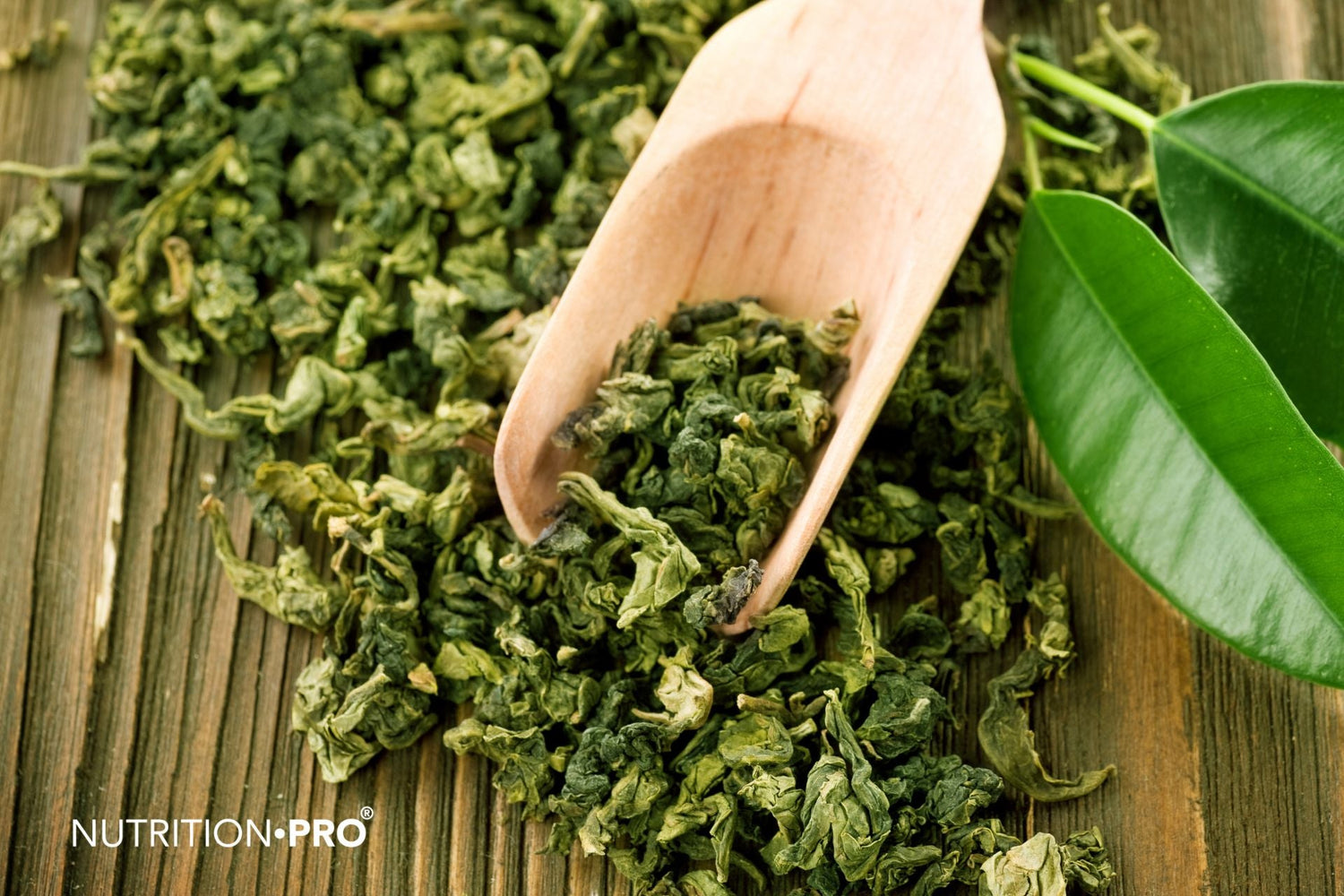
Green tea is one of the most popular weight management actives in the world, often presented as a "natural fat burner." Before believing it, one question must be asked: what does science really say? The honest answer can be summed up in one sentence: green tea is not a miracle pill, but its catechins and caffeine can support a weight loss approach, provided you understand what it does and what it doesn't do.
This comprehensive guide sorts through it all: what green tea is, how it actually works on weight, what studies show (and don't show), why EFSA has validated no "fat-burning" claims, how a good weight management formula is composed, at what dose, and with what precautions (caffeine, liver, iron). Without exaggerated promises, and without a single made-up testimonial.

Green tea and its EGCG, combined with five other weight management actives: guarana, L-carnitine, piperine, capsaicin and chromium. A concentrated and convenient form, to integrate into a structured weight management approach (diet and physical activity).
Green tea (Camellia sinensis) is rich in antioxidant catechins, including EGCG, and contains caffeine. Its weight management benefit works through the catechins + caffeine duo, which slightly increases thermogenesis: a meta-analysis reports 24-hour energy expenditure increased by approximately 4.7% and fat oxidation by approximately 16% (Hursel, Obesity Reviews, 2011). But the effect on weight remains modest (Jurgens, Cochrane, 2012) and EFSA has validated no "fat-burning" claim. Conclusion: a possible boost, never a substitute for caloric deficit. Caution with caffeine, highly dosed EGCG extracts (liver) and away from meals (iron).
- What is green tea?
- Green tea and weight loss: myth or reality?
- How green tea actually works on weight
- What science says (and its limitations)
- ACTIFMINCEUR: green tea in a 6-in-1 formula
- Energy and concentration during a diet
- Health bonus: heart and cholesterol
- Dosage: dose, EGCG and caffeine
- Incorporating it into a real weight management strategy
- Infusion or extract in capsules?
- Choosing your green tea well
- Safety, contraindications and caffeine
- Frequently Asked Questions
1. What is green tea?
All teas (green, black, oolong) come from the same plant, Camellia sinensis. What distinguishes green tea is that it is lightly oxidized after harvest: its fragile compounds, particularly catechins, are thus preserved. This richness is what founded its reputation, including in weight management.
Three families of active compounds interest us here: the catechins, of whichEGCG is the star; caffeine (sometimes called theine), a natural stimulant; and L-theanine, which tempers caffeine's effect. It is especially the catechins + caffeine duo that is studied for its effects on energy expenditure, as we will see.
2. Green tea and weight loss: myth or reality?
This is the heart of the matter, and where most commercial pages exaggerate. A "fat burner" implies a product that would melt fat on its own. However, an important point to judge based on evidence: the European Food Safety Authority (EFSA) examined weight management claims associated with green tea and has authorized none, deeming the causal link insufficient.
This does not mean it is useless. It means you must see it for what it is: a source of catechins and caffeine, whose effect on weight is real but modest, and only within the framework of controlled eating and physical activity. The reference Cochrane review confirms it: green tea induces low and clinically non-significant weight loss (Jurgens, Cochrane, 2012).
3. How green tea really acts on weight
Three mechanisms are proposed, to be honestly weighed:
- Thermogenesis and energy expenditure. The catechins-caffeine blend slightly stimulates thermogenesis. A meta-analysis reports 24-hour energy expenditure increased by approximately 4.7% (Hursel, Obesity Reviews, 2011).
- Fat oxidation. The same work observes fat oxidation increased by approximately 16% with a catechins-caffeine blend, especially when coupled with physical activity.
- Energy and appetite. Caffeine supports alertness during a diet and can slightly reduce appetite in the short term, without being a reliable appetite suppressant.
The logic is therefore that of a metabolic boost, not autonomous fat burning. The real driver of weight loss remains the energy balance: spending more than you consume (Hall, Gastroenterology, 2017).
4. What science says (and its limitations)
The data exists, but it calls for caution. At high doses of EGCG (approximately 857 mg/day), a randomized trial in overweight women showed significant but modest weight loss (approximately 1 kg over 12 weeks), accompanied by a decrease in total and LDL cholesterol and good tolerability (Chen, Clinical Nutrition, 2015). On the caffeine side, a meta-analysis of 13 trials associates higher intake with weight and fat mass loss, the effect increasing with dose but remaining overall modest (Tabrizi, Crit Rev Food Sci Nutr, 2018).
12 weeks of high-dose EGCG green tea extract led to significant but modest weight loss and a decrease in cholesterol, with no notable adverse effects, in overweight women.
Chen IJ, et al. Clin Nutr 2016;35(3):592-599. DOI: 10.1016/j.clnu.2015.05.003
However, we must remain clear-eyed: at the level of a systematic review pooling all trials, the effect of green tea on weight is weak and not clinically significant (Jurgens, Cochrane, 2012). In other words, real support but one that must not be overstated, and which never replaces a healthy lifestyle.
ACTIFMINCEUR delivers green tea in concentrated form, combined with five other active ingredients, to support a weight management approach alongside diet and exercise.
Discover ACTIFMINCEUR →5. ACTIFMINCEUR: green tea in a 6-in-1 formula
Rather than green tea alone, ACTIFMINCEUR relies on a combination of complementary active ingredients. Here's what each one provides, without overpromising:
Green tea and its EGCG
The heart of the formula: catechins and caffeine to support thermogenesis and fat oxidation, as detailed above (Hursel, Obesity Reviews, 2011).
Guarana and kola nut
Two additional sources of caffeine, for the stimulating and thermogenic effect, with progressive release thanks to tannins. To learn more, read our guide on guarana and weight loss.
L-carnitine
An amino acid involved in the transport of fats to the mitochondria to be burned there. Its effect on weight remains modest and depends on lifestyle habits.
Capsaicin
The spicy compound in chili peppers, with thermogenic properties: it can slightly increase energy expenditure and contribute to satiety.
Piperine
Extracted from black pepper, it is mainly known for improving the absorption of other compounds, optimizing the bioavailability of the formula.
Chromium (picolinate)
The only ingredient here to benefit from authorized EFSA health claims: chromium contributes to normal macronutrient metabolism and to maintenance of normal blood glucose levels, an asset for limiting cravings related to blood sugar fluctuations. See our collection on blood glucose.
6. Energy and concentration during a diet
A diet is tiring, demotivating, and puts concentration to the test. Green tea has a card to play here: it contains both caffeine, which increases alertness, and L-theanine, an amino acid that promotes a state of calm focus and smooths the energy curve. A systematic review concludes that the caffeine + L-theanine combination improves attention and cognitive performance (Sohail, Cureus, 2021).
Concretely, this gentle boost helps you stay active, train better, and avoid energy slumps. This is often where green tea delivers the most daily value. To support your fitness, also see our collections vitality and energy and energy and performance.
7. Health Bonus: Heart and Cholesterol
Green tea is one of the rare "pleasure" actives with solid cardiovascular data. A meta-analysis of controlled trials found that its consumption lowered systolic blood pressure by approximately 2.1 mmHg and diastolic by approximately 1.7 mmHg, with also a reduction in total cholesterol and LDL (Khalesi, Eur J Nutr, 2014).
The effect remains modest and does not replace any treatment, but it fits well within a comprehensive approach to weight loss and cardiovascular health, alongside diet and physical activity.
8. Dosage: Dose, EGCG and Caffeine
The right approach is not to count grams of tea, but the total caffeine for the day. Safety guidelines converge around a maximum of 400 mg of caffeine per day in healthy adults, from all sources combined, coffee included (Heckman, J Food Sci, 2010).
9. Integrating It Into a Real Weight Management Strategy
The hierarchy is clear. What causes weight loss is a negative energy balance maintained over time, supported by a diet rich in protein and fiber, physical activity, and good sleep (Hall, Gastroenterology, 2017). Supplements come after, to make daily life easier.
In this context, each product has a specific function: green tea (and ACTIFMINCEUR) provides the energy and thermogenesis angle; an appetite suppressant like konjac acts on satiety; a draining agent targets water retention. Green tea also combines well with guarana, another source of caffeine. To structure your approach, our guides lose weight sustainably and why am I always hungry complement this article. Also see our collections weight loss, fat loss and appetite control.
Combine ACTIFMINCEUR with controlled eating and physical activity: it's the combination that makes the difference.
Discover ACTIFMINCEUR →10. Infusion or capsule extract?
The choice depends on your objective. For pleasure and a gentle boost, infusion is sufficient. For a targeted dose of EGCG in a weight loss approach, concentrated extract is more relevant, provided you respect the dosages.
| Criterion | Infusion (leaves) | Capsule extract |
|---|---|---|
| EGCG content | Moderate, variable | Concentrated and dosed |
| Caffeine | Moderate | Depending on the formula |
| Convenience | Ritual, to prepare | Convenient, portable |
| Weight loss use | Gentle support | Targeted dose |
| Precautions | Low | Respect dosage (liver) |
This is the logic ofACTIFMINCEUR : delivering green tea in concentrated and convenient form, combined with other active ingredients, as part of a structured weight management approach.
11. Choosing your green tea wisely
A few concrete criteria to choose wisely:
- Transparency on EGCG and caffeine : levels must be indicated so you can manage your intake and avoid overdosing.
- Complementary formula : active ingredients that work on different mechanisms (thermogenesis, metabolism, blood sugar, energy) rather than an isolated ingredient.
- Quality and traceability : serious manufacturing, without excess stimulants.
- Honest messaging : a credible product doesn't promise weight loss without effort and doesn't rely on unverifiable testimonials.
This is the standard ofACTIFMINCEUR : a 6-in-1 formula designed as support, to integrate into a comprehensive approach.
12. Safety, contraindications and caffeine
Green tea as a beverage is very well tolerated. Precautions mainly concern caffeine and concentrated extracts:
Caffeine : excess can cause nervousness, heart palpitations, anxiety, headaches and insomnia. Don't combine tea, coffee and energy drinks, and stay under 400 mg of caffeine per day. Avoid intake late in the day.
EGCG-concentrated extracts : highly dosed supplements have been rarely associated with elevated liver enzymes (Filippini, Cochrane, 2020). Respect dosages and don't take them on an empty stomach for prolonged periods. Iron : green tea reduces iron absorption; keep it away from meals if you have anemia. Pregnancy and breastfeeding, treatments (particularly anticoagulants or cardiovascular medications): seek medical advice before any concentrated supplement (Seifert, Pediatrics, 2011).
In summary: green tea as a beverage is a healthy pleasure; it's mainly with highly concentrated extracts that moderation is needed.
Select what applies best to you: your pathway will appear immediately. This is a guide, not medical advice.
That's its strength: supporting energy and thermogenesis during a diet. TheACTIFMINCEUR provides concentrated green tea, to be combined with your diet and activity.
For hunger, an appetite suppressant like konjac is more suitable than green tea. Our guides why am I always hungry and the collection appetite control will help you.
In your situation, favor green tea as a light beverage rather than concentrated extracts, and discuss it with your doctor before starting any treatment. That's the priority.
Frequently Asked Questions
Does green tea really help you lose weight?
Not by itself. Green tea is not a magic fat burner: EFSA has validated no weight loss claims for green tea. Its catechins and caffeine can modestly support energy expenditure, but weight loss depends primarily on calorie deficit and physical activity (Jurgens, Cochrane, 2012).
How does green tea work on weight?
Mainly through the duo of catechins (EGCG) and caffeine, which slightly increases thermogenesis and fat oxidation: approximately +4.7% energy expenditure over 24 hours and +16% fat oxidation with a catechin-caffeine blend (Hursel, Obesity Reviews, 2011). The effect remains modest.
How much green tea per day for weight loss?
There is no official weight loss dose. As a beverage, 1 to 3 cups per day is suitable for most adults. Consider total caffeine intake: stay under 400 mg of caffeine per day, including coffee, and avoid green tea late in the day.
Is green tea extract more effective than infusion for weight loss?
Extract is more concentrated in EGCG, which is why weight loss trials often use high doses (Chen, Clinical Nutrition, 2015). But higher doses also mean more precautions, particularly for the liver. Infusion is gentler and safer for daily use.
Can you drink green tea in the evening?
It's not recommended. Green tea contains caffeine, which can disrupt falling asleep. L-theanine softens its effect, but as a precaution prefer morning or early afternoon.
Is green tea an appetite suppressant?
Moderately. Caffeine can slightly reduce appetite in the short term in some people, but it's not a reliable appetite suppressant. For satiety, fibers like konjac are more relevant.
What is ACTIFMINCEUR and what does it have to do with green tea?
ACTIFMINCEUR is a 6-in-1 weight loss formula of which green tea is one of the active ingredients, alongside guarana, L-carnitine, piperine, capsaicin, kola nut, and chromium. Chromium contributes to normal macronutrient metabolism and maintenance of normal blood glucose levels (claims authorized by EFSA).
Does green tea have side effects or contraindications?
As a beverage, it is well tolerated. Excess caffeine causes nervousness and insomnia. Most importantly, extracts with high EGCG doses have been associated with elevated liver enzymes (Filippini, Cochrane, 2020). Avoid during pregnancy, and keep away from meals if you're monitoring your iron.
Is green tea effective without exercise or dieting?
No. No supplement can compensate for excess calories. Green tea is only useful as a complement to controlled eating and regular physical activity (Hall, Gastroenterology, 2017).
Should you drink green tea during meals?
Preferably not. Green tea compounds reduce the absorption of non-heme iron: if you're monitoring your iron or prone to anemia, drink it between meals rather than during.
- Camellia sinensis
- The tea plant, a shrub whose leaves produce green tea, black tea, and oolong.
- Catechins
- Major antioxidant polyphenols in green tea, involved in its effects on thermogenesis.
- EGCG
- Epigallocatechin-3-gallate, the most active and most studied catechin in green tea.
- Thermogenesis
- Heat production by the body, which consumes energy; slightly increased by catechins and caffeine.
- L-theanine
- An amino acid found in tea that promotes a state of calm focus and moderates the effect of caffeine.
- Caloric deficit
- Consuming less energy than you expend: the true driver of weight loss.
- Caffeine (theine)
- Same molecule: the stimulant in tea is chemically identical to the caffeine in coffee.
- Hursel R, et al. The effects of catechin rich teas and caffeine on energy expenditure and fat oxidation: a meta-analysis. Obes Rev 2011;12(7):e573-581. DOI : 10.1111/j.1467-789X.2011.00862.x
- Tabrizi R, et al. The effects of caffeine intake on weight loss: a systematic review and dose-response meta-analysis of randomized controlled trials. Crit Rev Food Sci Nutr 2019;59(16):2688-2696. DOI : 10.1080/10408398.2018.1507996
- Jurgens TM, et al. Green tea for weight loss and weight maintenance in overweight or obese adults. Cochrane Database Syst Rev 2012;12:CD008650. DOI : 10.1002/14651858.CD008650.pub2
- Chen IJ, et al. Therapeutic effect of high-dose green tea extract on weight reduction: a randomized, double-blind, placebo-controlled clinical trial. Clin Nutr 2016;35(3):592-599. DOI : 10.1016/j.clnu.2015.05.003
- Khalesi S, et al. Green tea catechins and blood pressure: a systematic review and meta-analysis of randomised controlled trials. Eur J Nutr 2014;53(6):1299-1311. DOI : 10.1007/s00394-014-0720-1
- Anas Sohail A, et al. The cognitive-enhancing outcomes of caffeine and L-theanine: a systematic review. Cureus 2021;13(12):e20828. DOI : 10.7759/cureus.20828
- Filippini T, et al. Green tea (Camellia sinensis) for the prevention of cancer. Cochrane Database Syst Rev 2020;3:CD005004. DOI : 10.1002/14651858.CD005004.pub3
- Heckman MA, et al. Caffeine in foods: a comprehensive review on consumption, functionality, safety, and regulatory matters. J Food Sci 2010;75(3):R77-87. DOI : 10.1111/j.1750-3841.2010.01561.x
- Hall KD, Guo J. Obesity energetics: body weight regulation and the effects of diet composition. Gastroenterology 2017;152(7):1718-1727. DOI : 10.1053/j.gastro.2017.01.052
- Seifert SM, et al. Health effects of energy drinks on children, adolescents, and young adults. Pediatrics 2011;127(3):511-528. DOI : 10.1542/peds.2009-3592