

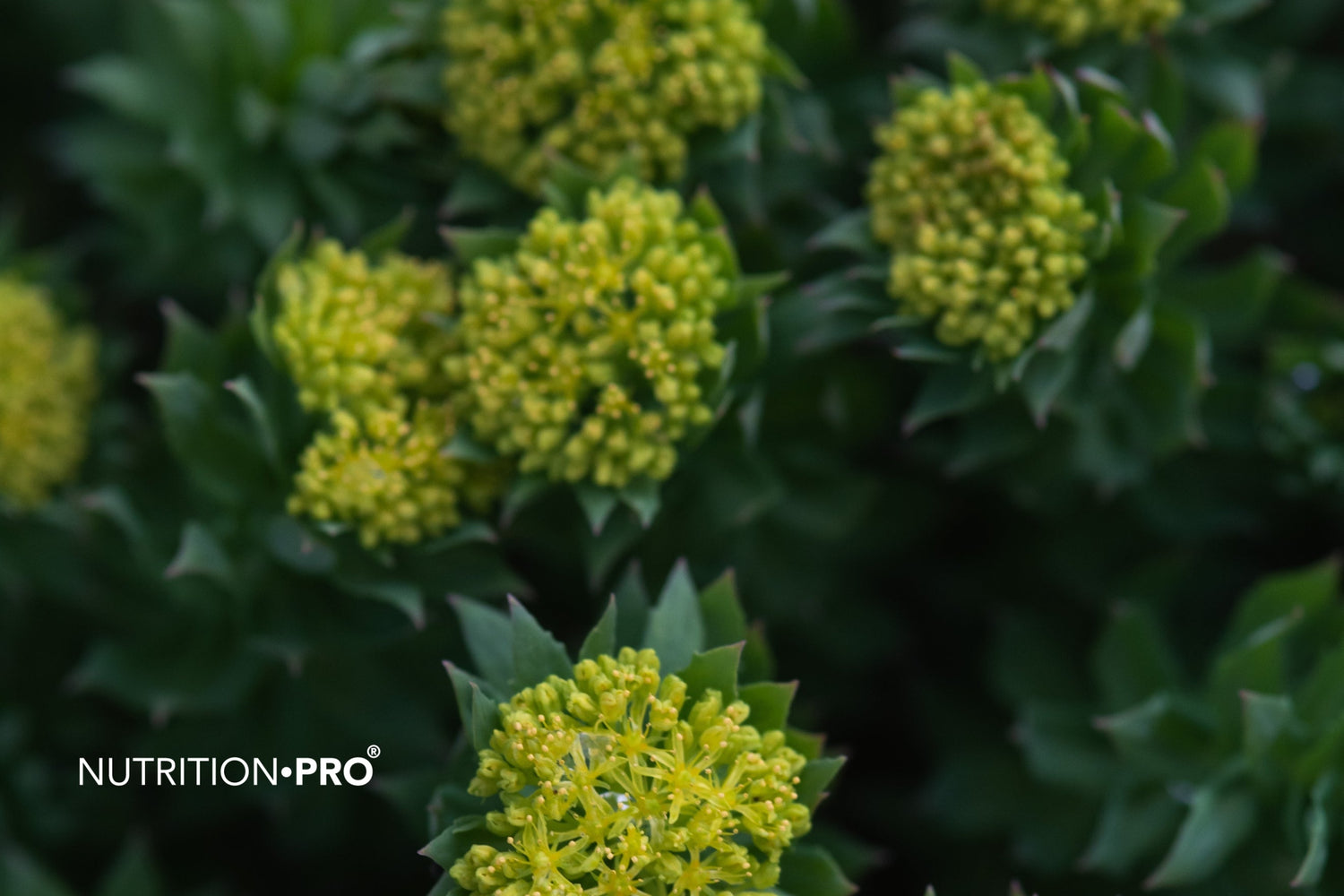
The rhodiola rosea, also called "golden root" or "arctic root," is an adaptogenic plant adaptogenic native to the cold regions of Siberia, Scandinavia, and the mountains of Central Asia. Used for centuries in traditional Russian, Tibetan, and Scandinavian medicine to resist cold, fatigue, and stress, it is today one of the most studied natural supplements worldwide for mental fatigue, chronic stress, and cognitive performance. What do recent clinical trials really say? This comprehensive guide breaks down the scientifically documented benefits, optimal dosage, responder profiles, and precautions to observe.

Four key findings from recent clinical trials. (1) On chronic stress, Noah et al. 2022 in Nutrients demonstrated a significant reduction in DASS-42 score in 28 days with a combination of magnesium + rhodiola + theanine. (2) On sports performance, Sanz-Barrio et al. 2023 in Phytotherapy Research (systematic review of 13 RCTs) confirms a positive effect on endurance, anaerobic performance, and muscle recovery. (3) On mild depression, Urata et al. 2025 in Neuropsychopharmacology Reports identifies rhodiola as a therapeutic option with significant improvement vs. placebo. (4) On cognitive function, Koozehchian et al. 2025 documents a significant improvement in the Stroop test (executive function) in the short term.
- What is rhodiola? Origin and composition
- Adaptogenic mechanism: HPA axis and neurotransmitters
- The 7 research-backed benefits
- Chronic stress and mental fatigue: documented effect
- Sports performance and endurance: 2023 review
- Mild depression and mood: recent data
- Responder profiles: who benefits the most
- Dosage, duration and quality criteria
- Precautions, contraindications and interactions
What is rhodiola? Origin and composition
Geographic and historical origin
Rhodiola grows naturally in the cold regions of the Northern Hemisphere : Siberia, Scandinavia, Alaska, the Carpathian Mountains, Tibet, Mongolia. Adapted to extreme conditions (low temperatures, high altitude, poor soil), it develops particularly concentrated active principles. The Vikings consumed it to gain physical and mental strength before battles. In traditional Russian medicine, it was used to support the endurance of workers in hostile environments. From the 1960s onward, Soviet researchers began systematic studies on its adaptogenic properties, paving the way for over 200 modern scientific publications.
Active composition: salidrosides and rosavines
Rhodiola contains more than 140 identified bioactive compounds, but two groups are considered essential for efficacy.
| Compound | Target percentage | Main action |
|---|---|---|
| Salidrosides | 1% minimum (reference) | Efficacy marker, stress and mental fatigue |
| Rosavines (rosavine, rosin, rosarine) | 3% minimum | Specific to Rhodiola rosea, neurotransmitters |
| Tyrosol | Variable | Antioxidant, cardioprotection |
| Flavonoids | Variable | Polyphenolic antioxidants |
| Organic acids | Variable | Support of mitochondrial function |
The ratio considered optimal in scientific literature is 3% rosavins to 1% salidrosides, which corresponds to the natural ratio in the plant. Prioritize an extract standardized to at least 1% salidrosides . Non-standardized or low-concentration extracts (raw powder, unclear blends) offer highly variable and unpredictable efficacy. Exercise caution also regarding other rhodiola species (R. crenulata, R. sacra) which do not contain<<<18>>> the rosavins, specific markers of R. rosea. pas Adaptogenic mechanism: HPA axis and neurotransmitters
KEY TAKEAWAYS
The adaptogen concept explained
The term adaptogen was defined by Soviet researchers Lazarev (1947) and then Brekhman and Dardymov (1969) according to three strict criteria: (1) non-specific action against various stressors (physical, mental, chemical), (2) normalizing effect (corrects imbalances in both directions), (3) safety at therapeutic doses. Rhodiola meets these three criteria, unlike many plants marketed as "adaptogens" without scientific validation.
The 3 axes of action of rhodiola
Axis 1: Modulation of the HPA axis and cortisol. In response to prolonged stress, the body secretes cortisol chronically, which exhausts the adrenals and disrupts sleep, mood, weight and immunity. Rhodiola normalizes the HPA axis response: it reduces cortisol spikes in stressed subjects while avoiding excessive collapse (unlike post-burnout hypocortisolemia). This is precisely the "bidirectional" mechanism that defines a true adaptogen.
Axis 2: Neurotransmitter regulation. Salidrosides and rosavins modulate the activity of brain monoamines: serotonin (mood, sleep, anxiety), dopamine (motivation, focus, pleasure) and noradrenaline (energy, alertness). This "multi-target" action explains why rhodiola can simultaneously support mild depressed mood AND improve cognitive performance, without producing either euphoria or excessive nervousness.
Axis 3: Mitochondrial support and ATP production. Mitochondria are the "energy powerhouses" of cells. Chronic stress and overwork impair their function, leading to fatigue that resists rest. Rhodiola improves the efficiency of oxidative phosphorylation (ATP production), supports cellular antioxidant defenses (glutathione, SOD), and improvesATP), supports cellular antioxidant defenses (glutathione, SOD), and improvesphysical and mental endurance.
The 7 research-backed benefits
Chronic stress and mental fatigue: documented effect
The primary mechanism of this anti-stress effect is HPA axis modulation. During acute stress, cortisol plays a protective role by mobilizing energy. But in chronic stress situations (3 months or longer), the system becomes dysregulated: excessive peaks in the morning, nocturnal elevation, loss of circadian rhythm. These disruptions explain the triad chronic fatigue + nocturnal ruminations + non-restorative sleep. Rhodiola progressively restores more regular cortisol levels, which explains why its effects on mood and sleep appear in parallel with the anti-fatigue effect.
To explore this use in greater detail, see our dedicated article: Rhodiola, chronic stress and burnout: what the science says.
Sports performance and endurance: 2023 review
The protocols used in trials vary: acute supplementation (1 to 4 days before exercise, 200 to 680 mg/day) or chronic (4 to 12 weeks, 200 to 600 mg/day). According to Koozehchian et al. 2025, a recent study of 27 adults trained in resistance exercise showed that rhodiola at both low and high doses significantly increased 1RM in bench press (+5.6 kg LDRR) and leg press (+35.7 to +47.7 kg vs. control), as well as the number of repetitions at 60% 1RM. For more on this use, see our article: Rhodiola and sport: performance, energy and endurance.
Mild depression and mood: recent data
According to Gao et al. 2020 in Journal of Affective Disorders, a double-blind RCT evaluated rhodiola as an adjunct to sertraline (SSRI) in 100 patients with mild to moderate major depression for 12 weeks. The combination of sertraline + rhodiola 0.6 g/day showed greater reductions in HAM-D, BDI, and CGI scores than sertraline alone. Important context : this combination should NEVER be undertaken through self-medication. The SSRI + rhodiola combination carries a theoretical risk of serotonin syndrome and must be discussed with the prescribing physician.
Responder profiles: who benefits most from rhodiola?
mental fatigue + rumination
8-week course
exam period, concentration
4-6 weeks before and during
endurance, recovery
30-60 min before exercise
Exhaustion + resistance
12-week course + follow-up
Need for calm
Different profile
Low mood + loss of energy
Never self-medicate
Self-assessment: Is rhodiola right for you?
3 boxes or more: rhodiola shows clear interest for your profile. Prioritize Rhodiola Standardized Extract 1% salidrosides in an 8-week course, 1 to 2 capsules per day in the morning. 1 to 2 boxes: Moderate relevance. Rhodiola can be used occasionally (intense periods). 0 boxes: rhodiola provides no targeted benefit. Prioritize lifestyle habits (sleep, diet, physical activity).
Dosage, duration and quality criteria
Optimal dosage protocol over 12 weeks
| Week | Daily dose | Guidelines |
|---|---|---|
| Week 1 | 100-200 mg | 1 dose in the morning to test tolerance |
| Weeks 2-8 | 200-400 mg | 1 dose in the morning (or 1 morning + 1 midday) |
| Weeks 9-12 (if continuing) | 300-600 mg | Adjust according to goal and tolerance |
| Mandatory break | 0 | Minimum 2 weeks between 2 courses |
| Next course | 200-400 mg | Renewable 3-4 times per year |
The 4 quality criteria for rhodiola
Criterion 1: Species certified Rhodiola rosea. It is the only species recognized for its content in salidrosides AND rosavines. Other commercialized species (R. crenulata, R. sacra) do not contain rosavines and do not have the same documented efficacy. Check for the mention " Rhodiola rosea " on the label.
Criterion 2: Standardization to a minimum of 1% salidrosides. It is the reference marker in clinical trials. Ideally with a rosavines/salidrosides ratio of 3:1 (natural ratio). Be cautious of products advertising "extract" without precise percentage or non-standardized "root powder" (random concentration).
Criterion 3: Traceable origin and extraction quality. Favor rhodiolas from their regions of origin (Siberia, Scandinavia, Carpathians) with gentle hydroalcoholic extraction that preserves the integrity of active compounds. Serious manufacturers provide laboratory analyses (presence of active compounds, absence of heavy metals, contaminants).
Criterion 4: Dosage per capsule clearly indicated. Transparent label displaying the exact quantity of extract and the concentration of active compounds. Allows for precise dosage adjustment (200, 300, 400 mg depending on the profile).
Precautions, contraindications and interactions
Possible side effects (rare at standard doses)
Rhodiola is well tolerated in the vast majority of clinical trials. The possible adverse effects, generally related to overdosage or individual sensitivity, are: sensation of agitation or nervousness (especially if taken late or dose > 600 mg), insomnia if taken after 4 PM, mild headaches, dry mouth, occasional dizziness. Rhodiola is not hypoglycemic nor significantly hypotensive at standard doses, unlike other adaptogenic plants.
Absolute and relative contraindications
Absolute contraindications : pregnancy and breastfeeding (insufficient data), children and adolescents under 18 years of age, unstabilized bipolar disorder (theoretical risk of manic episode), known allergy to plants in the Crassulaceae family.
Relative contraindications requiring prior medical advice: treatment with SSRI antidepressants (theoretical risk of serotonin syndrome), MAOI treatment, treatment with stimulants or amphetamines (risk of overstimulation), severe hypotension or cardiac arrhythmias, active liver disease, scheduled surgery (discontinue 2 weeks before due to theoretical effects on coagulation).
| Drug class | Type of interaction | Course of action |
|---|---|---|
| SSRI antidepressants (sertraline, fluoxetine, paroxetine) | Theoretical risk of serotonin syndrome | Medical advice imperative |
| MAOI and tricyclic antidepressants | Hypertensive and serotonergic risk | Avoid or specialist advice |
| Stimulants (methylphenidate, amphetamines) | Possible overstimulation | Avoid without medical advice |
| Antihypertensives and beta-blockers | Possible modification of blood pressure | Blood pressure monitoring |
| Anticoagulants (warfarin, DOACs) | Theoretical additive effect on coagulation | Medical advice, INR monitoring |
| Antidiabetic agents | Possible additive effect on blood glucose | Blood glucose monitoring |
Stop immediately and consult a healthcare provider if: marked and persistent agitation or anxiety, heart palpitations, severe sleep disturbances, sensations of overstimulation, intense headaches, significant dizziness. In case of antidepressant treatment, NEVER start rhodiola without medical advice. Rhodiola is not a foundational treatment for depression or severe anxiety disorders: if symptoms persist or worsen despite appropriate lifestyle habits, consult a healthcare professional.
To explore these aspects in detail, see our dedicated article: Rhodiola: precise dosing, side effects and contraindications.
Frequently asked questions about rhodiola
What are the true proven benefits of rhodiola?
Seven documented benefits: (1) resistance to chronic stress (Noah 2022), (2) reduction of mental fatigue (Todorova 2021), (3) cognitive performance and Stroop test (Koozehchian 2025), (4) support for mild depression (Urata 2025), (5) athletic performance and endurance (Sanz-Barrio 2023, 13 RCT), (6) muscle recovery, (7) sleep regulation in case of mental hyperactivity.
What is the proper daily dosage of rhodiola?
Clinical trials: 200 to 680 mg per day of extract standardized to 1% salidrosides. Anti-stress and anti-fatigue: 200-400 mg/day in 1-2 doses in the morning and midday. Athletic performance: 200-600 mg/day, 30-60 minutes before exercise. Course of 4 to 12 weeks, minimum 2-week break.
How does rhodiola work against stress?
Adaptogenic plant that modulates theHPA axis and regulates cortisol. Active constituents (salidrosides, rosavines) act on serotonin, dopamine and noradrenaline, and support mitochondrial function. According to Noah et al. 2022, the DASS-42 stress score significantly decreased in 28 days.
Is rhodiola effective against mental fatigue?
Yes, it is one of its best documented effects. According to Todorova et al. 2021, meta-analysis of adaptogens: significant effect. According to Koozehchian et al. 2025, significant improvement in Stroop test. Particularly well-suited for overworked executives, students during exams, remote workers and early stages of burnout.
How long does it take to see effects?
First effects on energy and mental clarity: 3 to 7 days. Effects on chronic stress and mood: 4 to 8 weeks. According to Noah et al. 2022, DASS-42 stress decreases from Day 14, significant at Day 28 and Day 56.
Rhodiola or ashwagandha: which to choose?
Different profiles. Rhodiola : tonic, energizing, ideal in the morning for concentration and mental fatigue (profile tired but nervous). Ashwagandha : calming, balancing, ideal in the evening for chronic stress and sleep (profile stressed but exhausted). Possible combination of rhodiola in the morning + ashwagandha in the evening. See our full article: Rhodiola vs Ashwagandha: differences and how to choose.
What are the side effects of rhodiola?
Generally well tolerated. Possible effects: agitation (especially if excessive dose or taken late), insomnia if taken after 4 p.m., mild headaches, dry mouth. No significant hypoglycemic or hypotensive effect at standard doses.
Who should not take rhodiola?
Contraindications: pregnancy and breastfeeding, children and adolescents, bipolar disorder, treatment with SSRI antidepressants, MAOIs, stimulants, severe hypotension, allergy to Crassulaceae. In case of chronic condition or medication, consult your physician.
Can you take rhodiola continuously year-round?
No, cyclic approach recommended. Courses of 4 to 12 weeks + minimum 2-week break between each. Standard schedule: 8 weeks + 2 weeks off, to be repeated 3-4 times per year as needed. Ideal periods: fall-winter, exams, intensive projects, post-stress recovery.
What is the difference between salidrosides and rosavines?
Salidrosides : primary efficacy marker, present only in Rhodiola rosea, action on mental fatigue and stress. Rosavines : compounds specific to R. rosea, complementary action on neurotransmitters. Optimal ratio: 3% rosavines for 1% salidrosides. Prioritize a standardized extract containing at least 1% salidrosides.
Should rhodiola be taken on an empty stomach or with meals?
Preferably on an empty stomach or at the beginning of meals, in the morning and/or midday. Ideal intake: 30 minutes before breakfast or before physical exercise. Avoid after 4 p.m. due to its tonic effect which may disrupt sleep.
Can rhodiola help with mild depression?
Yes, according to recent data. According to Urata et al. 2025, a meta-analysis showing significant improvements versus placebo on mild depression. According to Gao et al. 2020, the combination rhodiola + sertraline was superior to sertraline alone. Important : does NEVER replace an antidepressant treatment prescribed by a doctor. Any intake in case of depression must be medically supervised (SSRI interactions).
Glossary
- Adaptogen
- A substance that helps the body better manage various stressors (physical, mental, environmental) without disrupting its functions. Strict definition according to Brekhman: non-specific action, bidirectional normalizing effect, safety at therapeutic dosages.
- Salidrosides
- A glucosidic compound present exclusively in Rhodiola rosea, the main marker of efficacy in clinical trials. Action on mental fatigue and stress through neurotransmitter modulation. Target concentration: minimum 1% in standardized extracts.
- Rosavines
- Group of compounds (rosavine, rosine, rosarine) specific to Rhodiola rosea, absent from other rhodiola species. Complementary action to salidrosides on neurotransmitters. Target concentration: minimum 3%.
- HPA Axis (hypothalamic-pituitary-adrenal)
- The hormonal stress pathway that regulates the release of cortisol by the adrenal glands. Dysregulated in cases of chronic stress. Rhodiola modulates this axis in a bidirectional manner.
- Cortisol
- Stress hormone secreted by the adrenal glands under the control of the HPA axis. Physiological morning peak, progressive decline throughout the day. Chronic elevation is deleterious (sleep, immunity, metabolism, mood).
- Stroop Test
- A cognitive test assessing executive function and selective attention. Measures the ability to inhibit an automatic response in favor of a controlled response. Used in rhodiola trials to evaluate cognitive performance.
- DASS-42
- Depression, Anxiety and Stress Scale (Depression Anxiety Stress Scale, 42 items). A validated tool used in clinical trials to quantify psychological states. Used in Noah et al. 2022 to assess the effect of rhodiola on chronic stress.
Scientific sources
- Todorova V, Ivanov K, Delattre C, et al. Plant Adaptogens - History and Future Perspectives. Nutrients 2021;13(8):2861. DOI : 10.3390/nu13082861
- Sanz-Barrio PM, Noreen EE, Gilsanz-Estebaranz L, et al. Rhodiola rosea supplementation on sports performance: A systematic review of randomized controlled trials. Phytother Res 2023;37(10):4414-4428. DOI : 10.1002/ptr.7950
- Noah L, Morel V, Bertin C, et al. Effect of a Combination of Magnesium, B Vitamins, Rhodiola, and Green Tea (L-Theanine) on Chronically Stressed Healthy Individuals - A Randomized, Placebo-Controlled Study. Nutrients 2022;14(9):1863. DOI : 10.3390/nu14091863
- Urata M, Sakurai H, Ueno F, et al. Efficacy of Pharmacological Interventions in Milder Depression: A Systematic Review and Meta-Analysis. Neuropsychopharmacol Rep 2025;45(1):e70008. DOI : 10.1002/npr2.70008
- Koozehchian MS, Newton AT, Mabrey G, et al. Dose-Response Effects of Short-Term Rhodiola Rosea Supplementation on Anaerobic Exercise Performance and Cognitive Function in Resistance-Trained Athletes. Nutrients 2025;17(23):3736. DOI : 10.3390/nu17233736
- Marcos-Frutos D, Leban Z, Li Z, et al. The Impact of Rhodiola Rosea Extract on Strength Performance in Bench-Press and Bench-Pull Exercises Under Resting and Mental Fatigue Conditions. Nutrients 2025;17(6):940. DOI : 10.3390/nu17060940
- Gao L, Wu C, Liao Y, Wang J. Antidepressants effects of Rhodiola capsule combined with sertraline for major depressive disorder: A randomized double-blind placebo-controlled clinical trial. J Affect Disord 2020;265:99-103. DOI : 10.1016/j.jad.2020.01.065


