

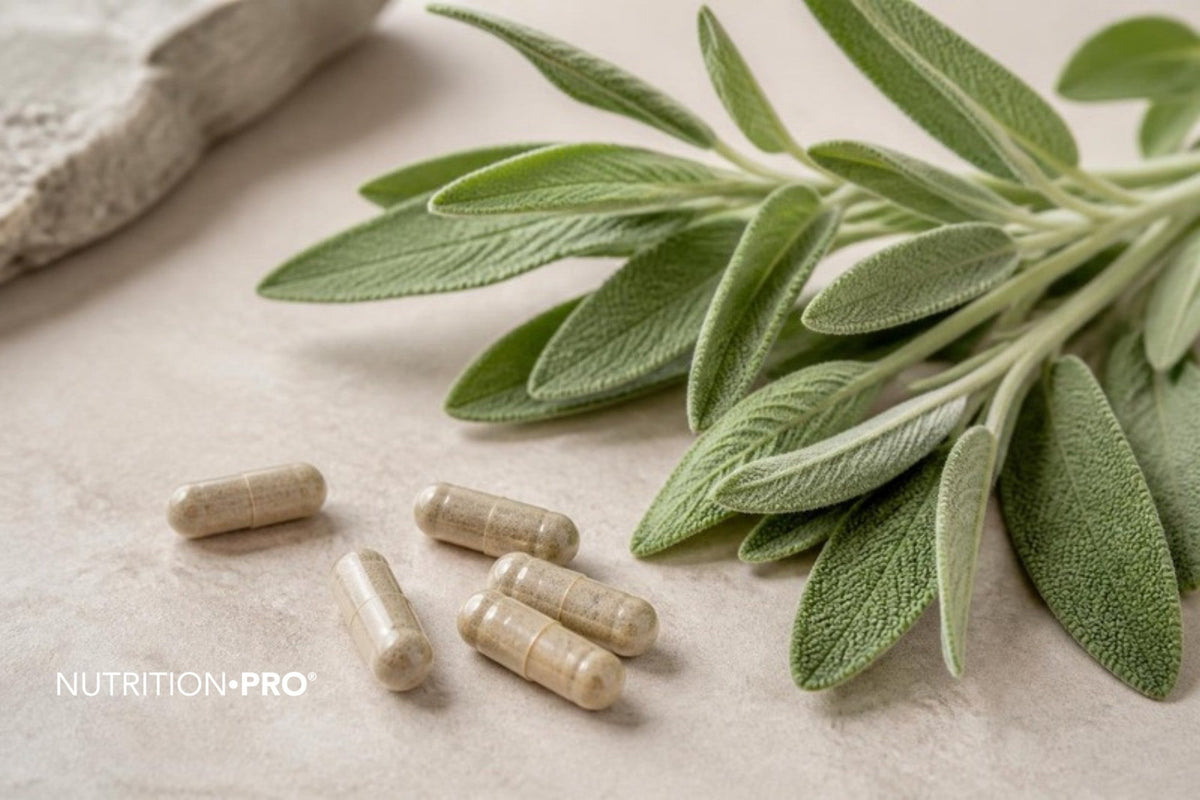
A heat flash during a meeting, a night interrupted by sweats: hot flashes are the best-known symptom of menopause, and common sage is one of the plants most anciently associated with this transition. Research has begun testing it. In a 4-week controlled trial, 59% of women taking a fresh sage extract saw their hot flash score decrease by at least half, compared to 27% under placebo.
This guide brings together what studies identified via PubMed show: trials in menopausal women, meta-analysis, night sweats and sleep, thujone and safety, different forms of sage, the other plants in our Menopause Bio formula and medical options. A practical 12-week plan concludes the article.

Effectiveness : three placebo-controlled trials and one open trial tested common sage in menopausal women, with favorable results on the frequency and intensity of hot flashes. They remain small (66 to 84 participants), short (4 weeks to 3 months) and used different preparations; the most rigorous was funded by the extract manufacturer. The only meta-analysis (4 trials, 310 women) finds a favorable trend on frequency, statistically weak.
Safety : the leaf and its extracts were well tolerated in trials, from 4 weeks to 3 months. Risk concentrates on thujone and camphor from essential oil, responsible for seizures in published cases; 3 to 6 cups of herbal tea per day remain on average below toxicological thresholds. Hormone therapy remains the most effective treatment, and non-hormonal options have proven themselves: the choice should be discussed with your doctor.
- Hot flashes: what happens in the body
- Common sage, one plant and several preparations
- Clinical trials on hot flashes
- Meta-analysis and placebo effect
- Night sweats and sleep
- Mood, memory and intimate life
- How sage might work: leads, not certainties
- Thujone and safety: what you need to know
- Herbal tea, extract, capsule or essential oil
- Menopause Bio: sage and its four partners
- Medical and non-medical options
- The practical 12-week plan
- Frequently Asked Questions
Hot flashes: what happens in the body
Up to 87% of women report hot flashes during or after the menopausal transition. The drop in estrogen narrows the temperature range in which the body feels comfortable. Even a minor temperature variation then triggers a cooling response: dilated blood vessels in the skin, flushing, sweating, sometimes palpitations. At the heart of this disruption are neurons in the hypothalamus, called KNDy neurons, which produce neurokinin B among other substances; this discovery led to the most recent non-hormonal treatments.
Duration often comes as a surprise. In the American SWAN cohort, which followed 1,449 women experiencing frequent hot flashes, the median total duration was 7.4 years, and symptoms persisted for a median of 4.5 years after the last menstrual period. Women in whom symptoms appeared early, before menopause or at the beginning of perimenopause, experienced them longer, more than 11.8 years on average; those in whom they began after menopause, 3.4 years. Higher perceived stress and anxious or depressive symptoms were also associated with more persistent symptoms: associations, not proven causes.
Our menopause guide details all symptoms and their duration, and our article on hot flashes reviews their triggers. If your cycles are changing without your periods having stopped, our article on perimenopause is more relevant for you.
Hot flashes vary from week to week and tend to decrease over the years. This is a major reason why only trials comparing a product to placebo, without participants knowing what they are taking, allow for judgment of a real effect.
Common sage, one plant and several preparations
Common sage, Salvia officinalis, is an aromatic plant from the Lamiaceae family, native to the Middle East and the Mediterranean region. Its leaves contain two major families of compounds: polyphenols, such as rosmarinic acid and flavonoids, and volatile terpenes, including thujone and camphor, concentrated in the essential oil.
This dual composition explains why the preparation matters so much. A team of chemists analyzed 108 sage-based products: infusions contained an average of 9.2 mg of thujone per liter (from undetectable to 37.5 mg), alcoholic tinctures 107 mg per liter on average, up to 409 mg.
Trials on menopause used specific preparations (fresh leaves, thick extract without thujone, 100 mg extract tablets), and a result obtained with one cannot be transposed to another. Our Organic Menopause provides 390 mg of sage per three capsules, combined with four other plants; as the plant part, the form (powder or extract) and any possible standardization are not specified, these amounts cannot be compared to those of the extracts tested in trials.
Clinical trials on hot flashes
The first trial, published in 2011, included 71 menopausal women in eight Swiss clinics, experiencing at least five hot flashes per day. They took one tablet of fresh sage leaves daily for 8 weeks. The score combining number and intensity of hot flashes decreased by 50% at 4 weeks and 64% at 8 weeks. However, this trial was open, without a placebo group, and one of the authors worked for the manufacturer: it does not allow for distinguishing the effect of the plant from that of time and expectation.
In 80 women aged 48 to 65, menopausal for at least one year, a tablet containing 280 mg of thick extract (spissum) of fresh sage tips, stripped of its thujone, was compared to placebo for 4 weeks. In the main analysis (48 women aged 48 to 56), the hot flash severity score decreased by 55%, from 15.9 to 7.1, compared to 27% under placebo, with a significant difference from week 3 onward. A reduction of at least half was observed in 59.1% of women taking sage, compared to 26.9% under placebo. The trial was funded by the extract manufacturer.
Dimpfel W, Chiegoua Dipah GN, Bommer S. Heliyon 2021;7(2):e05910. DOI : 10.1016/j.heliyon.2021.e05910
The overall menopause symptom score (MRS scale) decreased by 39.2%, compared to approximately 10% under placebo. The urogenital subscore, which includes vaginal dryness, did not differ significantly from placebo. When including all participants, the effect remained significant but more modest: 55% of women had a reduction of at least half, compared to 32.5% under placebo.
In Shiraz, Iran, 66 postmenopausal women received three tablets per day of 100 mg of sage extract or placebo for 3 months; 59 completed the study. The frequency and severity of hot flashes and night sweats did not differ between groups at weeks 2, 4, 6, and 8. The difference became significant at weeks 10 and 12, in favor of sage.
Zeidabadi A, Yazdanpanahi Z, Dabbaghmanesh MH, et al. J Family Med Prim Care 2020;9(2):1086-1092. DOI : 10.4103/jfmpc.jfmpc_913_19
These two trials differ: an effect at 3 weeks for one, at 10 weeks for the other, with different preparations and doses. Two other Iranian trials, cited by the meta-analysis presented below, used 100 mg of extract per day for 8 weeks: one against placebo in 84 women, the other comparing sage to another plant, without placebo.
| Trial | Preparation and duration | Result |
|---|---|---|
| Switzerland, 2011, 71 women, open-label, no placebo | 1 tablet of fresh leaves per day, 8 weeks | Hot flash score −50% at 4 weeks, −64% at 8 weeks |
| Germany, 2021, 80 women, double-blind | 280 mg of thick extract of fresh shoots thujone-free, 4 weeks | Severity score −55% vs −27% under placebo, significant from week 3 |
| Iran, 2020, 66 women, double-blind | 3 tablets of 100 mg extract per day, 3 months | No difference up to 8 weeks, significant difference at weeks 10 and 12 |
| Meta-analysis, 2023, 4 trials, 310 women | Sage extracts, 4 weeks to 3 months | Frequency: −1.12, confidence interval −2.37 to 0.14; intensity: no net effect |
| Oral hormone therapy, 24 trials, 3,329 women | Estrogen alone or combined with progestin, 3 months to 3 years | −75% hot flashes per week compared to placebo |
The meta-analysis and the placebo effect
In 2023, a team from Mashhad compiled randomized trials on sage and hot flashes. They selected only four, totaling 310 women. All four reported improvement. Once the data were combined, the effect on hot flash frequency reached −1.12, a mean difference favoring sage. But the 95% confidence interval ranges from −2.37 to 0.14: it includes the zero value, meaning no effect, while the authors qualify the result as significant. Heterogeneity between trials is high (71%). On intensity, the effect is not significant.
The authors themselves emphasize the small number of trials and participants. In other words: the data point in the right direction, but are insufficient to measure the true magnitude of the effect.
In 3,329 women, oral hormone therapy reduced the weekly frequency of hot flashes by 75% compared to placebo. But in the placebo groups themselves, hot flashes decreased by 57.7% between the beginning and end of the trials. The authors emphasize: any treatment must be evaluated blind against placebo, because symptoms fluctuate and often decrease over time.
MacLennan AH, Broadbent JL, Lester S, Moore V. Cochrane Database Syst Rev 2004;(4):CD002978. DOI: 10.1002/14651858.CD002978.pub2
This figure of 57.7% sheds light on the Swiss open trial: a reduction of 50 to 64% without a comparison group remains consistent with the natural evolution of symptoms and the placebo effect.
Night sweats and sleep
Sage has traditionally been used against excessive perspiration. In the 3-month Iranian trial, the severity of night sweats did not differ from placebo until week 8, then the difference became significant at weeks 10 and 12. The Pittsburgh Sleep Quality Index score, where a lower number indicates better sleep, decreased from 9.4 to 5.6 in the sage group and remained unchanged in the placebo group (from 10.6 to 10.6).
In the 4-week German trial, the sleep questionnaire showed improvement in sleep quality and nocturnal psychosomatic disturbances compared to placebo; the authors are unsure whether this benefit stems from the reduction in night sweats or another effect.
Other plants have been tested for sleep in menopausal women. In 100 women aged 50 to 60 suffering from sleep disorders, a combination of valerian and lemon balm improved the Pittsburgh score more than placebo; doses are not listed in the study abstract. In 184 adults with mild insomnia, valerian and hops extracts had a modest effect. For melatonin, a meta-analysis of 19 studies and 1,683 participants measured faster sleep onset of 7 minutes and 8 additional minutes of sleep: a modest effect that does not diminish over time.

No trial has tested Optimal Sleep as such, and its quantities do not compare directly to the extracts from the cited studies, whose preparations differ. If you combine it with Menopause Bio, know that hops and lemon balm are additive : 580 mg of hops and 400 mg of lemon balm per day total. The capsule is not recommended before age 12. Our articles on saffron and sleep and glycine present other avenues.
Mood, memory and intimate life
Mood. In the German trial, the psychological sub-score of the MRS scale decreased more under sage than under placebo, as did dissatisfaction and fatigue measured by a mood questionnaire. In the Iranian trial, scores for depressed mood, nervousness and anxiety also decreased more than in the placebo group. These are secondary endpoints in small trials requiring confirmation.
Memory. The Iranian trial also measured a forgetfulness score: it decreased in the sage group, but with no significant difference from placebo. Other memory data come from trials conducted outside the menopause setting. In 20 volunteers over age 65, a single dose of 333 mg of a standardized Salvia officinalis extract improved secondary memory at all measurement timepoints over 6 hours compared to placebo.
Intimate life. In 64 menopausal women, inhalation of 2 drops of sage essential oil twice daily, 5 days per week for 6 weeks, yielded a sexual function score of 28.8 at study end compared to 17.9 with almond oil. This is inhalation exposure: this result says nothing about a capsule or herbal tea, and in no way justifies ingesting essential oil. For libido, our article on maca, tribulus and ginseng compiles the available trials.
How sage might work: leads, not certainties
The mechanism remains hypothetical; two avenues are being studied, in laboratory or animal models.
Estrogenic-type activity. A London team tested a sage tincture on cells: the whole tincture showed no estrogenic activity, but one of its fractions did, attributed to common flavonoids, luteolin derivatives. In female rats whose ovaries had been removed, an ethanolic extract of aerial parts, given for one week at 50 to 200 mg per kilogram, increased uterine weight and lowered FSH and LH hormones, signs of estrogenic activity. These doses and models are very far removed from human use.
An action on neurotransmitters. A hydroalcoholic extract of fresh leaves without thujone binds, in vitro, to several receptors involved in temperature regulation: alpha 2 adrenergic, serotonergic, muscarinic, opioid and GABA receptors. Fresh leaf extracts were two to four times more active than those from dried plants. This study involved a researcher from the manufacturer, and the London team had found no serotonin reuptake inhibition with their tincture.
If sage acts partly as a phytoestrogen, caution is warranted for women with a history of hormone-dependent cancer. Human data are lacking to decide; when in doubt, these women should refrain and discuss it with their oncologist.
Thujone and safety: what you need to know
Thujone is a terpenic ketone found in sage, absinthe, and thuja. A landmark study showed that it inhibits the type A GABA receptor, which restrains neuronal excitation, explaining its convulsive effect at high doses; in mice, the liver rapidly transforms it into less toxic derivatives. Camphor, another component of sage, is also convulsive.
Published poisonings concern essential oils. A clinical and experimental study published in 1981 described eight human poisonings from essences of sage, hyssop, thuja, and cedar, dominated by tonic-clonic convulsions; in rats, sage essential oil caused convulsions from 0.5 g per kilogram. Geneva neurologists list sage among eleven convulsive essential oils. In Turkey, a newborn and a young child had convulsions after accidental exposure to sage oil, with a favorable outcome.
For herbal tea, the figures are reassuring. Based on toxicological data in rats, chemists set a daily limit of approximately 6 mg of thujone: according to their measurements, this corresponds to up to 6 cups per day of herbal tea containing on average 4.4 mg of thujone per liter, or 3 cups of a more concentrated herbal tea (11.3 mg per liter on average), and they see no risk for occasional use. Hot water extracts only approximately 30% of the thujone released by a water and alcohol mixture.
Essential oil : never by oral route, keep out of reach of children, and avoid in case of epilepsy. Epilepsy and nervous system treatments : the German trial excluded epileptic women and those taking medications acting on the brain; ask your doctor's advice. Diabetes : in 80 people with type 2 diabetes who also had elevated blood lipids, 500 mg of leaf extract three times daily for 3 months lowered fasting blood glucose by 32.2% and glycated hemoglobin by 22.7% compared to placebo; if you are being treated for diabetes, blood glucose monitoring and medical advice are essential before adding sage. Pregnancy and breastfeeding : excluded from trials, so no data; refrain from use. History of hormone-dependent cancer : oncologist's advice is essential.
In menopause trials, lasting 4 weeks to 3 months, no adverse effects were attributed to sage, but the 3-month Iranian trial does not report tolerance data. These durations remain short compared to the 7 years that hot flashes can last: prolonged use has not been evaluated.
Herbal tea, extract, capsule, or essential oil
| Form | What studies show | Thujone and safety |
|---|---|---|
| Leaf herbal tea | No controlled trial on hot flashes; a small uncontrolled study in 6 women on lipids | Average thujone of 4.4 to 11.3 mg per liter; 3 to 6 cups per day below toxicological thresholds |
| Extract in tablet or capsule | Three controlled trials, 100 to 300 mg per day or 280 mg thujone-free, 4 weeks to 3 months | Well tolerated in trials; thujone content variable depending on the process |
| Alcoholic tincture | No trial on menopause; a tincture tested on cells with no estrogenic activity | Average thujone of 107 mg per liter, up to 409 mg: dosage must be strictly followed |
| Essential oil | One study by inhalation on sexual life; none by oral route | Convulsions in published cases: never by oral route |
Preparing a sage herbal tea. An analysis showed that thujone and camphor pass into water during the first 5 minutes of infusion, then plateau, with or without a lid. In practice, a 5-minute infusion is sufficient, and prolonging it beyond that adds nothing. Limit yourself to a few cups per day, over a limited duration: practical advice that is not based on a clinical trial.
Capsule or tablet. This is the form tested in controlled trials, with extracts of precise composition. Capsules of Menopause Bio offer regular intake, easy to integrate into meals; this formula has not been evaluated in a trial and does not directly compare to the studied extracts.
Menopause Bio: sage and its four partners
Our Menopause Bio combines, for three vegetable capsules per day, 480 mg of hops, 390 mg of sage, 300 mg of lemon balm, 300 mg of maca and 100 mg of blackcurrant, all from organic farming. No trial has tested this formula: the studies below concern each plant, under specific preparations, and their results cannot be attributed to it.
Hops. Hops contain 8-prenylnaringenin, described as the most potent known phytoestrogen. In a 12-week trial with 67 menopausal women, a standardized extract providing 100 µg of 8-prenylnaringenin per day performed better than placebo at 6 weeks, but not at 12 weeks; the 250 µg dose was less active, and placebo also improved symptoms. A second, crossover trial with 36 women showed no significant overall effect; a review judges these results contradictory. A hops extract did not alter sex hormones or coagulation in menopausal women, but its compounds have half-lives exceeding 20 hours, and toxicologists call for better evaluation of their potential for hormonal disruption. Since the 8-prenylnaringenin content of Menopause Bio's hops is not indicated, no comparison with these extracts is possible.
Lemon balm. In 60 menopausal women suffering from sleep disorders, one daily capsule of 500 mg combining lemon balm leaf and fennel fruit, taken for 8 weeks, improved the vasomotor score of the quality of life questionnaire by 38%, compared to 11.4% with an antidepressant, citalopram, and 5.7% under placebo. The trial is small, Iranian, and tests a combination of two plants.
Maca. A systematic review identified 4 placebo-controlled trials in perimenopausal or menopausal women: all showed favorable effects on symptom scales, but the authors judge this evidence limited, due to lack of numerous and rigorous trials, and consider that safety remains to be established. Our article on maca details these data. If you also take our Organic Maca, of which 4 capsules provide 1.28 g of root, the maca from both products adds up.
Blackcurrant. We identified no trials on blackcurrant and menopause symptoms.
Long-term use not recommended. Not recommended for women with a personal or family history of breast cancer. Do not exceed three capsules per day. The hops in this formula add to those in Optimal Sleep if you take both.
Another plant-based approach, based on isoflavones from kudzu root, is presented in our article on kudzu and menopause ; our Kudzu provides 750 mg of root for 2 capsules and is not recommended in case of personal history of breast cancer, pregnancy, breastfeeding or hormone-dependent disorder. Its precautions are detailed in our article on side effects of kudzu.
Medical and non-pharmacological options
Menopause hormone therapy. According to the 2022 position of the North American Menopause Society, it remains the most effective treatment for hot flashes and genitourinary syndrome, and prevents bone loss. Its risks depend on the type of hormones, dose, duration, route of administration and when it begins. In women under 60 years old or menopausal for less than 10 years, without contraindication, the benefit-risk balance is judged favorable for treating bothersome hot flashes; beyond that, it appears less favorable. This choice is made with your doctor and reassessed regularly.
Non-hormonal treatments. The 2023 position of the same society recommends, with the highest level of evidence, cognitive behavioral therapy, clinical hypnosis, certain antidepressants (serotonin or serotonin-norepinephrine reuptake inhibitors), gabapentin and fezolinetant, a neurokinin 3 receptor antagonist. Weight loss is also among the recommended options. Conversely, this same position does not recommend herbal supplements and remedies for hot flashes, based on level I to II evidence: a finding worth knowing.
In 527 women aged 40 to 65 with at least seven moderate to severe hot flashes per day, fezolinetant at 30 or 45 mg per day reduced their frequency by approximately 2.4 to 2.6 episodes daily more than placebo after 12 weeks, with an effect visible from the first week and maintained over 52 weeks. The trial was funded by the laboratory developing the molecule.
Lederman S, Ottery FD, Cano A, et al. Lancet 2023;401(10382):1091-1102. DOI: 10.1016/S0140-6736(23)00085-5
Psychological approaches. A review of 28 randomized trials (2,887 women, with 24 trials in meta-analysis) associates psychosocial interventions, particularly cognitive-behavioral therapy, with a marked reduction in discomfort caused by hot flashes and night sweats (effect sizes of −0.60 to −0.87 in the short term), with weaker effects on their frequency and intensity, and improved sleep quality (−0.77 to −1.04). If stress is a burden, our article on cortisol and stress provides an update, and our guide to losing weight after 50 details a realistic method.
The practical 12-week plan
This plan is inspired by the duration of the trials, the longest of which showed a difference from placebo starting at week 10. It is intended for a healthy menopausal woman with no history of breast cancer or epilepsy; its practical advice is not the result of studies.
Our article onevening primrose and borage oil presents another option often mentioned at menopause.
Five plants from organic farming, including common sage, in vegetable capsules. Three capsules per day, taken with meals with a large glass of water, provide 480 mg of hops, 390 mg of sage, 300 mg of lemon balm, 300 mg of maca and 100 mg of blackcurrant, for easy daily integration.
See Menopause BioFor sleep, also discover Optimal Sleep, taking into account the hops and lemon balm common to both formulas.
Frequently asked questions
Is sage effective against hot flashes?
Three small controlled trials in menopausal women point in that direction. In the most rigorous one, a fresh sage extract reduced hot flash severity scores by 55% in 4 weeks, compared to 27% under placebo. However, trials are few in number, small in size, and the only available meta-analysis gives a fragile result: efficacy remains to be confirmed.
What dose of sage for menopause?
Controlled trials used 100 mg of extract per day for 8 weeks (Iranian trial known through the 2023 meta-analysis), three 100 mg tablets per day for 3 months, or one 280 mg tablet of fresh sage thick extract without thujone for 4 weeks. These doses apply to these specific extracts and do not transfer to plant powder or herbal tea.
How to prepare sage herbal tea for menopause?
Let the leaves steep for approximately 5 minutes in simmering water: sage compounds pass into the water during these minutes, then plateau. According to an analysis of commercial herbal teas, 3 to 6 cups per day remain on average below thujone toxicological thresholds. No controlled trial has tested herbal tea on hot flashes.
Is sage dangerous?
At the doses used in trials, from 4 weeks to 3 months, the leaf and its extracts were well tolerated. The danger comes from thujone and camphor concentrated in essential oil, responsible for convulsions in published cases, including in young children. Essential oil should never be ingested, and caution is necessary in case of epilepsy, pregnancy, breastfeeding, or treated diabetes.
Does sage work on night sweats?
In a 3-month Iranian trial, the severity of night sweats decreased more under sage extract than under placebo at weeks 10 and 12, not before. Sleep quality score also improved in the sage group.
How long does sage take to work?
This depends on the trial: with fresh sage thick extract, the difference from placebo appeared as early as week 3; with three 100 mg tablets of extract per day, it only appeared at weeks 10 and 12. Plan for at least 12 weeks before judging.
Does sage contain phytoestrogens?
A fraction of a sage tincture showed estrogenic-type activity on cells, attributed to flavonoids, and an extract increased uterine weight in ovariectomized female rats. In women, this activity has not been measured.
Can you take sage after breast cancer?
Human data are lacking, and sage showed estrogenic-type activity in laboratory studies. In case of personal or family history of breast cancer, Menopause Bio is not recommended, and any plant use should be discussed with your oncologist.
Does sage essential oil help with menopause?
A trial in 64 menopausal women studied its inhalation, 2 drops twice daily for 6 weeks, and reports better sexual function than with almond oil. No study supports its oral intake, which exposes to convulsions.
Can you combine Menopause Bio and Optimal Sleep?
Both formulas contain hops and lemon balm, which add together: 580 mg of hops and 400 mg of lemon balm per day total. Menopause Bio is not recommended for prolonged use and in case of personal or family history of breast cancer; if in doubt, consult your doctor.
Sources
The studies cited below were identified via PubMed.
- Dimpfel W, Chiegoua Dipah GN, Bommer S. Efficacy of fresh sage extract in the treatment of a wide range of menopause complaints: randomized, double-blind, placebo-controlled clinical trial. Heliyon, 2021;7(2):e05910. DOI
- Bommer S, Klein P, Suter A. First demonstration of tolerance and efficacy of sage in menopausal women suffering from hot flashes. Advances in Therapy, 2011;28(6):490-500. DOI
- Zeidabadi A, Yazdanpanahi Z, Dabbaghmanesh MH, et al. Effect of Salvia officinalis extract on hot flashes, night sweats, sleep disorders, and forgetfulness score in menopausal women. Journal of Family Medicine and Primary Care, 2020;9(2):1086-1092. DOI
- Moradi M, Ghavami V, Niazi A, et al. Effect of Salvia officinalis on hot flashes in menopausal women: systematic review and meta-analysis. International Journal of Community Based Nursing and Midwifery, 2023;11(3):169-178. DOI
- Millet Y, Jouglard J, Steinmetz MD, et al. Toxicity of certain essential oils of plants: clinical and experimental study. Clinical Toxicology, 1981;18(12):1485-1498. DOI
- Walch SG, Kuballa T, Stühlinger W, Lachenmeier DW. Quantification of thujone and camphor, biologically active aromatic substances, in foods and medicines containing sage (Salvia officinalis L.). Chemistry Central Journal, 2011;5:44. DOI
- The North American Menopause Society. 2022 Position Statement of the North American Menopause Society on Hormone Therapy. Menopause, 2022;29(7):767-794. DOI
- The North American Menopause Society. 2023 Position Statement of the North American Menopause Society on Non-Hormonal Treatments. Menopause, 2023;30(6):573-590. DOI
- Avis NE, Crawford SL, Greendale G, et al. Duration of vasomotor symptoms during the menopausal transition. JAMA Internal Medicine, 2015;175(4):531-539. DOI
- MacLennan AH, Broadbent JL, Lester S, Moore V. Oral estrogens and estrogen-progestin combinations versus placebo for hot flashes. Cochrane Database of Systematic Reviews, 2004;2004(4):CD002978. DOI
- Conklin M, Santoro N. Neurokinin receptor antagonists, potential non-hormonal treatments for menopausal vasomotor symptoms. Therapeutic Advances in Reproductive Health, 2023;17:26334941231177611. DOI
- Ghorbani A, Esmaeilizadeh M. Pharmacological properties of Salvia officinalis and its components. Journal of Traditional and Complementary Medicine, 2017;7(4):433-440. DOI
- Walch SG, Lachenmeier DW, Kuballa T, et al. Comprehensive profiling of sage herbal teas and tinctures (Salvia officinalis L.) for their beneficial and undesirable compounds by NMR spectroscopy. Analytical Chemistry Insights, 2012;7:1-12. DOI
- Walch SG, Tinzoh LN, Zimmermann BF, et al. Antioxidant capacity and polyphenolic composition, quality indicators of Salvia officinalis L. infusions (sage herbal tea). Frontiers in Pharmacology, 2011;2:79. DOI
- Taavoni S, Nazem Ekbatani N, Haghani H. Valerian and lemon balm for sleep disorders during menopause. Complementary Therapies in Clinical Practice, 2013;19(4):193-196. DOI
- Morin CM, Koetter U, Bastien C, et al. Valerian and hops combination and diphenhydramine in the treatment of insomnia: a randomized controlled clinical trial versus placebo. Sleep, 2005;28(11):1465-1471. DOI
- Ferracioli-Oda E, Qawasmi A, Bloch MH. Meta-analysis: melatonin in the treatment of primary sleep disorders. PLoS One, 2013;8(5):e63773. DOI
- Scholey AB, Tildesley NTJ, Ballard CG, et al. A sage extract with anticholinesterase properties improves memory and attention in healthy elderly volunteers. Psychopharmacology, 2008;198(1):127-139. DOI
- Heydarpour S, Sharifipour F, Heydarpour F. Effect of Salvia officinalis aroma on sexual function and satisfaction in menopausal women: a randomized controlled trial. BMC Women's Health, 2023;23(1):442. DOI
- Rahte S, Evans R, Eugster PJ, et al. Salvia officinalis and hot flashes: toward identification of the mechanism of action and active principles. Planta Medica, 2013;79(9):753-760. DOI
- Sabry MM, Abdel-Rahman RF, El-Shenawy SM, et al. Estrogenic activity of sage (Salvia officinalis L.) aerial parts and isolated ferulic acid in immature ovariectomized female rats. Journal of Ethnopharmacology, 2022;282:114579. DOI
- Tober C, Schoop R. Modulation of neurological pathways by Salvia officinalis according to manufacturing process and plant parts used. BMC Complementary and Alternative Medicine, 2019;19(1):128. DOI
- Höld KM, Sirisoma NS, Ikeda T, et al. Alpha-thujone, active component of absinthe: modulation of type A GABA receptor and metabolic detoxification. Proceedings of the National Academy of Sciences of the United States of America, 2000;97(8):3826-3831. DOI
- Burkhard PR, Burkhardt K, Haenggeli CA, Landis T. Seizures induced by plants: the reemergence of an old problem. Journal of Neurology, 1999;246(8):667-670. DOI
- Halicioglu O, Astarcioglu G, Yaprak I, Aydinlioglu H. Toxicity of Salvia officinalis in a newborn and a child: an alarming case report. Pediatric Neurology, 2011;45(4):259-260. DOI
- Kianbakht S, Dabaghian FH. Improvement of glycemic control and lipid profile in type 2 diabetic patients with hyperlipidemia taking Salvia officinalis L. leaf extract: a randomized, placebo-controlled clinical trial. Complementary Therapies in Medicine, 2013;21(5):441-446. DOI
- Sá CM, Ramos AA, Azevedo MF, et al. Drinking sage tea improves lipid profile and antioxidant defenses in humans. International Journal of Molecular Sciences, 2009;10(9):3937-3950. DOI
- Heyerick A, Vervarcke S, Depypere H, et al. First prospective, randomized, double-blind, placebo-controlled study of a standardized hop extract for menopausal disorders. Maturitas, 2006;54(2):164-175. DOI
- Erkkola R, Vervarcke S, Vansteelandt S, et al. Randomized, double-blind, crossover, placebo-controlled pilot study of a standardized hop extract for menopausal disorders. Phytomedicine, 2010;17(6):389-396. DOI
- Depypere HT, Comhaire FH. Herbal preparations for menopause: beyond isoflavones and black cohosh. Maturitas, 2014;77(2):191-194. DOI
- van Breemen RB, Yuan Y, Banuvar S, et al. Pharmacokinetics of prenylated phenols from hops in women following oral administration of a standardized extract. Molecular Nutrition and Food Research, 2014;58(10):1962-1969. DOI
- Stevanoska M, Beekmann K, Punt A, et al. Predicting body concentrations of dietary phytoestrogens from hops through physiologically-based kinetic modeling. Food and Chemical Toxicology, 2025;196:115247. DOI
- Shirazi M, Jalalian MN, Abed M, Ghaemi M. Efficacy of Melissa officinalis L. compared to citalopram on quality of life in menopausal women with sleep disorders: a randomized, double-blind clinical trial. Revista Brasileira de Ginecologia e Obstetrícia, 2021;43(2):126-130. DOI
- Lee MS, Shin BC, Yang EJ, et al. Maca (Lepidium meyenii) for the treatment of menopausal symptoms: a systematic review. Maturitas, 2011;70(3):227-233. DOI
- Lederman S, Ottery FD, Cano A, et al. Fezolinetant for the treatment of moderate to severe vasomotor symptoms of menopause (SKYLIGHT 1): a phase 3 randomized controlled trial. The Lancet, 2023;401(10382):1091-1102. DOI
- Robinson K, Hardy R, Melville M, et al. Efficacy of psychosocial interventions on physiological symptoms of menopause: systematic review and meta-analysis. BMC Women's Health, 2026;26(1). DOI


