

As soon as your throat feels scratchy and your nose starts running, zinc comes up in every conversation. This trace mineral has become the "cold-fighting" reflex for many people, to the point where it's sometimes credited with powers it doesn't actually have. So, myth or reality?
This article sets the record straight, backed by evidence, about what zinc really does for your immunity, what it can (and cannot) do against the common cold, at what dosage, in what form, and with what precautions. We rely notably on the most recent Cochrane review (2024), still absent from most French-language articles. For a complete overview of this mineral, see our complete zinc guide.

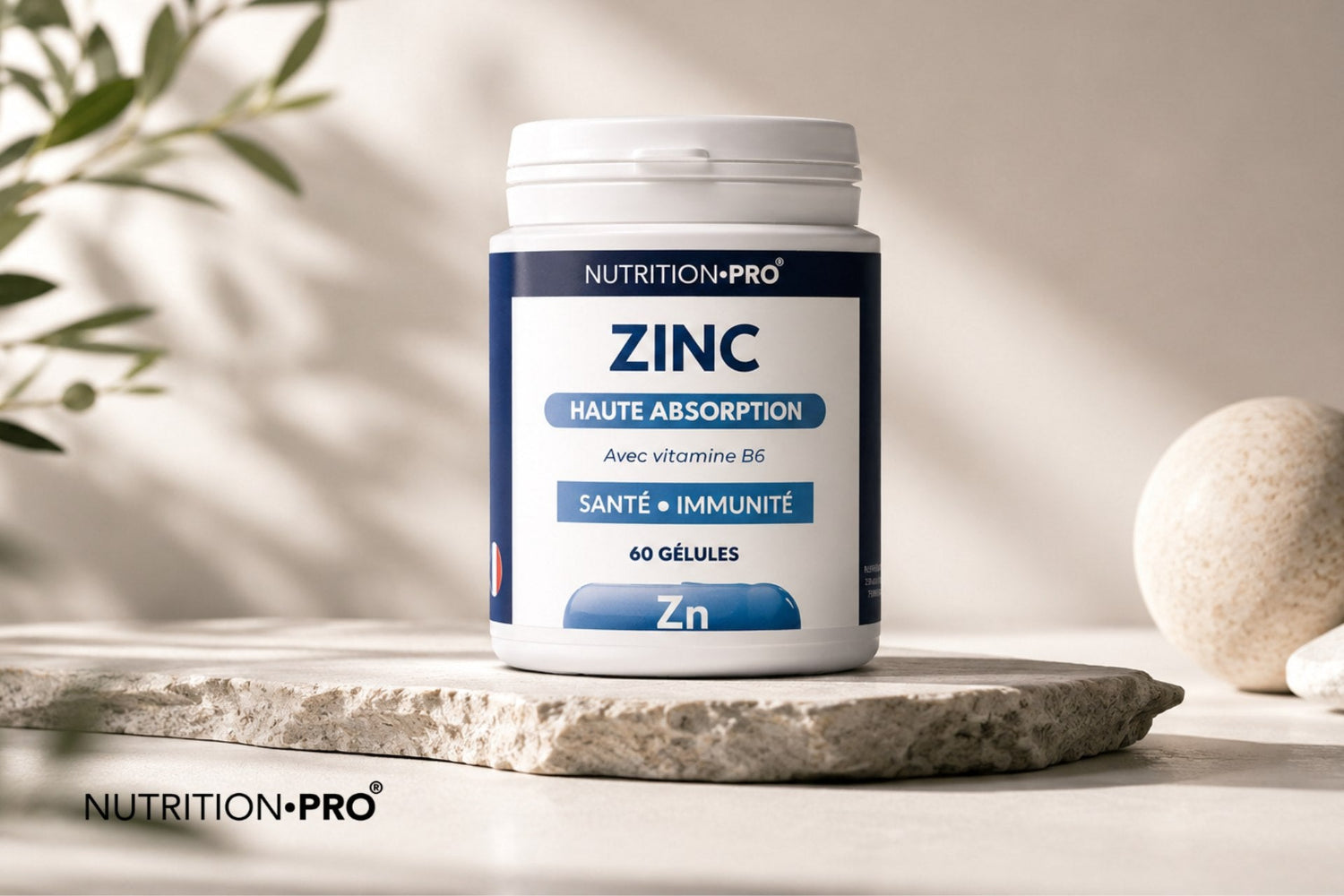
Well-absorbed zinc gluconate, combined with vitamin B6. Contributes to normal immune system function. One capsule per day.
Zinc contributes to normal immune system function (claim recognized by EFSA). For the common cold, high-dose zinc acetate lozenges shortened episodes by approximately 2.73 days (Hemilä, Br J Clin Pharmacol, 2016), but the most recent Cochrane review significantly tempers this: possible effect on the duration of an established cold, but low certainty of evidence, and little to no preventive effect (Nault, Cochrane Database Syst Rev, 2024). Maintaining adequate zinc reserves remains an asset, especially since 17 to 20% of the population is at risk of deficiency (Devarshi, Nutrients, 2024).
- Zinc and immunity: why this mineral is essential
- Does zinc really shorten the common cold?
- Prevention or treatment: two distinct uses
- Which symptoms does zinc affect?
- Dosage, form and timing: how to use it properly
- Safety: excess, copper and intranasal zinc
- Who is most at risk of zinc deficiency?
- Other immunity allies
- Frequently asked questions
1. Zinc and immunity: why this mineral is central to your defenses
Zinc is not a simple seasonal "boost": it is a fundamental component of your defense system. It plays a role in the maturation and activation of immune cells, particularly T lymphocytes, and it has anti-inflammatory and antioxidant properties. A landmark review published in Nutrients describes zinc as a true regulator of immunity, whose deficiency promotes a pro-inflammatory environment and reduced resistance to pathogens (Wessels, Nutrients, 2017).
In practical terms, a deficit weakens the first line of defense (innate immunity) as well as the more targeted response that develops afterward (adaptive immunity). This is one of the reasons why people with deficiencies get sick more often. A synthesis on micronutrients even classifies zinc, alongside vitamins C and D, among the nutrients whose immune support is best established (Gombart, Nutrients, 2020).
Zinc acts as a regulator of immune function; its deficiency impairs innate and adaptive immunity and promotes inflammation.
Wessels I, Maywald M, Rink L. Nutrients 2017;9(12):1286. DOI : 10.3390/nu9121286
2. Does zinc really shorten a cold?
This is the subject where marketing and science diverge the most. On the optimistic side, a meta-analysis of individual data estimated that zinc acetate lozenges, sucked at the first symptoms, shortened colds by approximately 2.73 days compared to placebo, over an average duration of 7 days (Hemilä, Br J Clin Pharmacol, 2016). The hypothesis: by dissolving in the throat, zinc releases ions that would interfere with the attachment and multiplication of rhinovirus on the mucous membranes.
On the cautious side, the most recent and rigorous review significantly tempers this enthusiasm. By analyzing 34 trials and more than 8,500 participants, the 2024 Cochrane review concludes that zinc, used as a treatment, might reduce the duration of an established cold (on the order of 2.37 days), but with low certainty of evidence and significant variability between studies. Most importantly, in prevention, it finds no convincing effect, and reports more mild adverse effects (bad taste, nausea) with zinc (Nault, Cochrane Database Syst Rev, 2024). In other words: zinc is not an antiviral, and it does not "stop" a cold.
As a treatment, zinc might reduce cold duration (approximately 2.37 days), with low certainty of evidence; little to no effect in prevention, and more mild adverse effects.
Nault D, et al. Cochrane Database Syst Rev 2024;5(5):CD014914. DOI : 10.1002/14651858.CD014914.pub2
Rather than waiting for a cold, the main benefit of zinc is tomaintain good status throughout winter. Our zinc gluconate, well absorbed, contributes to the normal functioning of the immune system.
Discover Zinc →3. Prevention or treatment: two uses not to be confused
Most misunderstandings come from this. On one hand, daily nutritional intake (around 15 mg per day) serves to prevent a deficiency and support normal immune function over time: this is the role of a zinc capsule taken as a winter course. On the other hand, "anti-cold" studies used very high-dose lozenges (often 75 to 90 mg per day), sucked every 2 hours, over just a few days: a short, occasional use, set apart.
On prevention, the data are modest. A rapid review observed that supplementation could prevent a few respiratory infections (approximately 5 per 100 person-months, meaning a number needed to treat of around 20), with symptom duration shortened by about 2 days, but imperfect tolerability (Hunter, BMJ Open, 2021). The 2024 Cochrane review, meanwhile, does not find a net preventive effect. The reasonable message: zinc works primarily by correcting a deficiency, not by "boosting" already sufficient immunity.
4. Which symptoms does zinc act on?
An analysis detailed, symptom by symptom, the effect of high-dose zinc acetate lozenges (approximately 80 to 90 mg per day) on the duration of cold symptoms (Hemilä & Chalker, BMC Fam Pract, 2015). The figures below correspond to this specific use in lozenges, not to a typical daily capsule.
| Symptom | Duration reduction | Details |
|---|---|---|
| Cough | -46% | One of the most clear-cut effects |
| Hoarse voice | -43% | Significant |
| Nasal congestion | -37% | Significant |
| Runny nose | -34% | Significant |
| Sore throat | -33% | Significant |
| Sneezing | -22% | Trend, not significant |
| Headaches, fever | No effect | No difference |
Key takeaway: even in the most favorable scenario, zinc acts mainly on upper respiratory symptoms and is far from being a fever reducer. For fever or marked muscle aches, other measures take priority (rest, hydration, medical advice if needed).
5. Dose, form and timing: how to use it correctly
As for form, there's no need to seek out the most exotic: zinc gluconate shows an absorption rate of approximately 60.9%, at the same level as citrate and well above oxide (Wegmüller, J Nutr, 2014). It's a reliable form and well-tolerated for daily use. As for dose, the reference nutrient intake is around 15 mg per day; beyond that, EFSA sets a safety limit of 25 mg per day, including food intake.
6. Safety: excess, copper and the intranasal zinc trap
More is not better. Prolonged excess zinc can cause digestive problems and, especially, disrupt the absorption of copper (and iron), two minerals with which it competes. For long-term treatments at high doses, this balance deserves to be monitored (Stiles, Clin Exp Med, 2024).
EFSA sets a safety limit of 25 mg of zinc per day (including food intake). Prolonged high intake can lead to nausea and copper deficiency (Stiles, Clin Exp Med, 2024).
High-dose lozenge uses are for a short episode and should not be prolonged. In case of medication or doubt, seek advice from a healthcare professional.
Avoid zinc gels and sprays administered intranasally : cases of loss of smell, sometimes lasting, have been reported, which led to product withdrawals and health warnings (D'Cruze, J Prim Health Care, 2009). For comfort, stick to oral administration: capsules for the base regimen, lozenges to suck for short-term use.
One capsule per day, a well-absorbed form, respecting dosages: the essentials to support your defenses without going overboard.
Discover Zinc →7. Who is most at risk of zinc deficiency?
A significant portion of the population does not meet their zinc requirements: approximately 17 to 20% according to a recent analysis (Devarshi, Nutrients, 2024). Certain profiles are more at risk, either because their intakes are limited or because their needs increase. And it's often the same people who complain of weak defenses in winter.
To identify an established deficiency and its signs, our complete zinc guide details the symptoms and self-assessment. Persistent fatigue may also have other causes: see our plants and nutrients proven against fatigue.
8. Zinc and other immunity allies
Zinc does not work alone. A meta-analysis on micronutrients shows that vitamin D and vitamin C modestly reduce the risk of respiratory infections, while zinc acts mainly on symptom duration (Abioye, BMJ Glob Health, 2021). Lifestyle habits remain the foundation: sufficient sleep, varied diet, and stress management carry as much weight as any supplement.
To broaden the approach, several documented options can be found in our immunity section and our vitamins & minerals resources: including propolis and its flavonoids, royal jelly, ginseng, moringa, and functional mushrooms. The gut axis also matters greatly for immunity: see our microbiota guide. Finally, to understand the antioxidant role of zinc, explore our selection of the most powerful natural antioxidants.
Select the situation that fits you best: your pathway will display immediately. This is a guide, not a diagnosis.
You probably don't have a deficiency. A varied plate rich in zinc sources is enough; a short-term course can be discussed in the depths of winter, with no daily necessity.
Support your status with a zinc course at nutritional dose may be relevant during the cold season. Also think about vitamin D and sleep, and explore our immunity.
Status to monitor closely Your profile combines high needs and sometimes insufficient intake. Supplementation with zinc
Only a blood test confirms a deficiency. This test is a guide; it does not replace medical advice.
Frequently asked questions
Does zinc cure a cold?
No. Zinc is not an antiviral and does not "stop" a cold. At best, taken at the first signs in high-dose lozenges, it may shorten its duration slightly, but the 2024 Cochrane review judges this evidence to be of low certainty (Nault, Cochrane Database Syst Rev, 2024). Its recognized role is to contribute to the normal functioning of the immune system.
What dose of zinc for immunity?
For daily maintenance, a nutritional dose of around 15 mg is sufficient, without exceeding 25 mg per day (EFSA safety threshold, including diet). High doses from cold studies (75 to 90 mg) correspond to short-term, distinct use in lozenges.
When to take zinc, morning or evening?
The time of day matters little. The main thing: take it during or just after a meal to limit nausea, and away from tea, coffee and iron or calcium supplements, which reduce its absorption. For a cold, what matters is acting early.
Should you take zinc all winter?
A sustained course at nutritional dose may be justified over the cold season, especially if your intake is limited. High doses, however, should not be prolonged, to preserve balance with copper.
Zinc or vitamin C against a cold?
Both have modest and complementary effects: vitamin C acts more on risk and duration, zinc especially on symptom duration (Abioye, BMJ Glob Health, 2021). Neither is a miracle cure; they are part of a holistic approach.
Which form of zinc to choose?
For a daily course, gluconate is a good choice: it is well absorbed (approximately 60.9%, comparable to citrate) and well tolerated (Wegmüller, J Nutr, 2014). Whatever the form, prioritize oral administration and avoid intranasal zinc.
Does zinc have side effects?
At reasonable doses, it is well tolerated. At high doses or over the long term, it can cause nausea and an imbalance with copper (Stiles, Clin Exp Med, 2024). Zinc nasal sprays should be avoided due to risk of loss of smell.
Does zinc protect against flu or Covid?
- Trace element
- Mineral present in very small quantities in the body but essential for its functioning, such as zinc, iron, or copper.
- Rhinovirus
- Family of viruses responsible for the majority of colds, which infects cells of the upper respiratory tract.
- Innate immunity
- First line of defense, immediate and non-specific: barriers, natural killer cells, phagocytes.
- Adaptive immunity
- Slower but targeted and lasting response, carried notably by lymphocytes and antibodies.
- Lozenge
- Form that slowly releases zinc in the mouth and throat; used at high dose and over a few days in cold prevention studies.
- Phytates
- Compounds present in cereals and legumes that bind to zinc and reduce its absorption, which impacts plant-based diets.
- Nault D, et al. Zinc for prevention and treatment of the common cold. Cochrane Database Syst Rev 2024;5(5):CD014914. DOI: 10.1002/14651858.CD014914.pub2
- Hemilä H, Petrus EJ, Fitzgerald JT, Prasad A. Zinc acetate lozenges for treating the common cold: an individual patient data meta-analysis. Br J Clin Pharmacol 2016;82(5):1393-1398. DOI: 10.1111/bcp.13057
- Hemilä H, Chalker E. The effectiveness of high dose zinc acetate lozenges on various common cold symptoms: a meta-analysis. BMC Fam Pract 2015;16:24. DOI: 10.1186/s12875-015-0237-6
- Hunter J, et al. Zinc for the prevention or treatment of acute viral respiratory tract infections in adults. BMJ Open 2021;11(11):e047474. DOI: 10.1136/bmjopen-2020-047474
- Abioye AI, Bromage S, Fawzi W. Effect of micronutrient supplements on influenza and other respiratory tract infections among adults. BMJ Glob Health 2021;6(1):e003176. DOI: 10.1136/bmjgh-2020-003176
- Wessels I, Maywald M, Rink L. Zinc as a gatekeeper of immune function. Nutrients 2017;9(12):1286. DOI: 10.3390/nu9121286
- Gombart AF, Pierre A, Maggini S. A review of micronutrients and the immune system. Nutrients 2020;12(1):236. DOI: 10.3390/nu12010236
- Stiles LI, Ferrao K, Mehta KJ. Role of zinc in health and disease. Clin Exp Med 2024;24(1):38. DOI: 10.1007/s10238-024-01302-6
- Wegmüller R, et al. Zinc absorption by young adults from supplemental zinc citrate, gluconate and oxide. J Nutr 2014;144(2):132-136. DOI: 10.3945/jn.113.181487
- Devarshi PP, et al. Total zinc intake and risk of inadequacy. Nutrients 2024;16(24):4269. DOI: 10.3390/nu16244269
- D'Cruze H, Arroll B, Kenealy T. Is intranasal zinc effective and safe for the common cold? J Prim Health Care 2009;1(2):134-139.
- Jackson JL, Lesho E, Peterson C. Zinc and the common cold: a controlled clinical evaluation. Arch Intern Med 1997 (historical review).


