

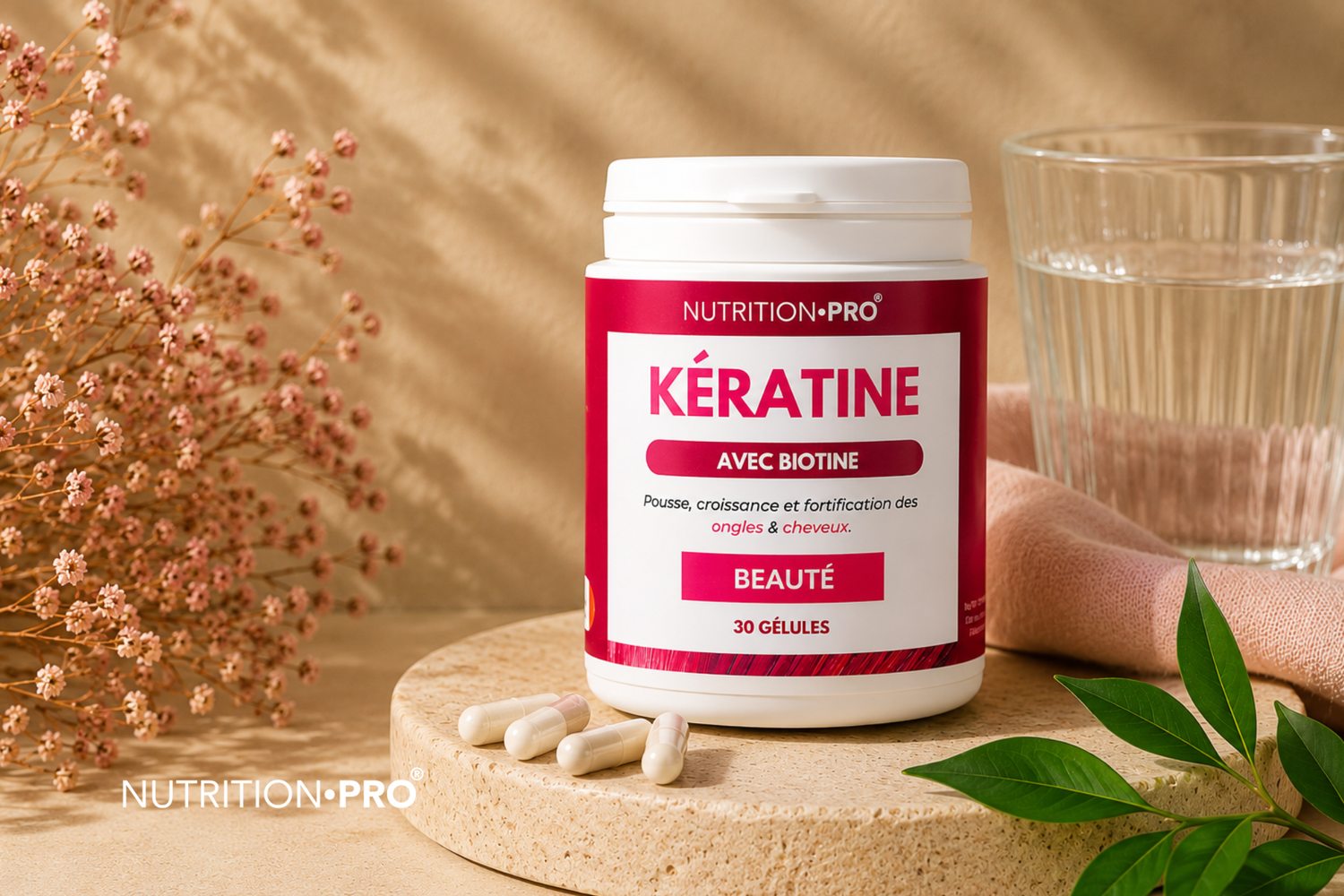
The keratin is the structural protein that gives strength to your hair, nails and skin. Contrary to popular belief, no food contains assimilable keratin. However, certain foods provide the nutrients your body needs to synthesize it: complete proteins, sulfur-containing amino acids (cysteine, methionine), biotin, zinc, iron, vitamins. This article reviews the 9 truly beneficial foods, with precise content from the Ciqual database (ANSES) and recommendations validated by scientific dermatology.

Four key findings. (1) No food contains bioavailable dietary keratin. The term "keratin foods" refers to foods rich in nutrients necessary for its endogenous synthesis. (2) The 3 nutritional pillars: complete proteins (sulfur-containing amino acids), biotin and zinc. According to Almohanna et al. 2018 in Dermatology and Therapy, these nutrients are essential to the hair follicle cycle. (3) Liver is the most nutrient-dense food (30 to 100 µg of biotin per 100 g), followed by eggs and oysters. (4) According to Patel et al. 2017 in Skin Appendage Disorders, biotin supplementation has proven benefits only in cases of confirmed deficiency. Prioritize food first, supplementation as a second option.
- Keratin: what it is and why your body needs it
- How keratin is synthesized: the key nutrients
- The 9 foods that support keratin synthesis
- Proteins and sulfur amino acids: the skeleton of keratin
- Essential vitamins: biotin, A, C, D
- Key minerals: zinc, iron, selenium
- Limitations: when diet alone is not enough
- Complementary solutions: Keratin • Biotin and synergies
Keratin: what it is and why your body needs it
A common misconception: we sometimes hear about "keratin-containing foods" as if they contained this ready-to-use protein.
That is not the case . Dietary keratin from animal sources (hair, fur, feathers, hooves) is poorly digested and has very low bioavailability. What matters is providing thebuilding blocks : amino acids (particularly cysteine and methionine), vitamin cofactors (biotin, vitamins A, C, D), minerals (zinc, iron, selenium, copper). How keratin is synthesized: the key nutrients
KEY TAKEAWAY
The 9 foods that support keratin synthesis
Protein and sulfur-containing amino acids: the keratin framework
| Food | Protein / serving | Sulfur-containing amino acids |
|---|---|---|
| Eggs (2) | 13 g | Excellent cysteine + methionine profile |
| Salmon fillet (100 g) | 22 g | Excellent methionine |
| Chicken breast (100 g) | 25 g | Excellent complete profile |
| Cooked lentils (200 g) | 18 g | Moderate methionine (combine with cereals) |
| Firm tofu (100 g) | 14 g | Moderate methionine |
| Almonds (30 g) | 6 g | Interesting methionine content |
Essential vitamins: biotin, A, C, D
Key minerals: zinc, iron, selenium
Limitations: when diet alone is not enough
Hormonal causes: post-partum (3 to 6 months after childbirth), perimenopause and menopause (estrogen decline), thyroid dysfunction (hypo or hyperthyroidism). TSH testing recommended if hair loss persists.
Medication-related causes: certain antidepressants, anticoagulants, hormone treatments, chemotherapy. Discuss with your prescriber; never stop a treatment without medical advice.
Stress-related causes: major acute stress (bereavement, emotional shock, surgery) can trigger telogen effluvium 2 to 4 months later. Usually reversible within 6 to 12 months.
Confirmed deficiencies: low ferritin (very common in women), insufficient vitamin D, sometimes zinc or biotin deficiency. Blood work necessary before supplementation.
Self-assessment: Does your diet support keratin?
6 boxes or more: your diet supports keratin synthesis well. If you still experience persistent hair loss, consider blood work (ferritin, vitamin D, zinc, TSH). 3 to 5 boxes: adequate but improvable diet. Prioritize protein, nuts and seeds, and leafy greens. Fewer than 3 boxes: clearly insufficient intake. Prioritize restructuring protein at each meal. A supplement like Keratin • Biotin may be relevant as a complement, not a replacement for dietary diversification.
Complementary solutions: Keratin • Biotin and synergies
Profile and choice by profile
healthy hair and nails
no supplement needed
or post-pregnancy
2 to 3 months
or prolonged restrictive diet
+ Keratin • Biotin supplement if needed
dry skin, first fine lines
+ Marine collagen
hair loss and dry skin
+ Keratin • Biotin
+ fatigue, systemic signs
before any supplementation
Frequently Asked Questions
What are the best foods to support keratin synthesis?
No food contains assimilable keratin, but some provide the nutrients necessary for its endogenous synthesis. Top 3: beef/poultry liver (30-100 µg biotin/100g, #1), whole eggs (10 µg biotin + complete proteins), oysters (best source of zinc). According to Almohanna 2018, adequate intake of biotin, zinc, iron, vitamin D, and complete proteins is essential for hair health.
Does eating "keratin foods" really increase the body's keratin?
The term "keratin foods" is a marketing shortcut. No food contains bioavailable keratin. Keratin is synthesized by your body from amino acids (cysteine, methionine). Foods provide the building blocks: complete proteins, sulfur-containing amino acids, biotin, zinc, vitamins. It's an indirect pathway.
Does biotin really make hair grow?
According to Patel et al. 2017 in Skin Appendage Disorders, biotin improves hair health only in cases of proven deficiency. In individuals without deficiency, the evidence is limited. Prioritize a biotin-rich diet (liver, eggs, nuts, legumes) rather than blind supplementation. For diagnosis, request a blood test.
What is zinc's role in hair health?
Zinc is an enzymatic cofactor in hair follicle cell division, participates in hair protein synthesis, and has antioxidant action. According to Durusu Turkoglu 2024, patients with chronic telogen effluvium have significantly lower zinc levels. Major sources: oysters (best), liver, red meat, legumes, pumpkin seeds.
Why are sulfur-containing amino acids important?
Keratin contains an exceptionally high proportion of cysteine, a sulfur-containing amino acid. Sulfur forms the disulfide bonds between keratin chains, which give hair its strength. Sources: eggs, fish, meat, legumes, broccoli, cabbage, garlic, onions. Without dietary sulfur, no strong keratin.
Can vegetarians get enough nutrients for keratin?
Yes with a varied diet. Pay attention to: complete proteins (legumes + cereals), B12 (supplementation if strict vegan), iron (plant-based sources + vitamin C), zinc (legumes, nuts and seeds, seeds), biotin (legumes, nuts and seeds, nutritional yeast). Annual blood test recommended.
How long does it take to see effects on hair?
Long hair growth cycle: 1 to 1.5 cm/month. Visible effects on newly grown hair: 3 to 6 months minimum. On nails: 2 to 4 months. On skin: 4 to 8 weeks (skin turnover). Patience required—no product produces results in just a few days.
Which deficiencies cause hair loss?
According to Almohanna 2018 in Dermatology and Therapy, the deficiencies most frequently associated with alopecia are: iron (anemia), vitamin D, zinc, protein, sometimes biotin or selenium. Blood test (CBC, ferritin, vitamin D, zinc, TSH) recommended before any supplementation.
How much protein per day for keratin?
ANSES: 0.83 g/kg/day, or 50-70 g for an adult weighing 60-80 kg. Target 20-30 g per main meal. Prioritize diversity: animal sources (complete amino acid profile) + plant-based sources (fiber and minerals). Insufficient intake is one of the most common nutritional causes of hair loss.
Should I take a keratin supplement if I eat well?
Not necessarily. If your diet is diverse and you have neither biological deficiency nor abnormal hair loss, food is sufficient. A supplement is appropriate if: confirmed deficiency, seasonal shedding, post-pregnancy, significant oxidative stress, unbalanced diet, after chemotherapy. Prefer formulas combining patented keratin (Cynatine® HNS) + biotin + zinc.
Is liver really the best food for keratin?
In terms of nutrient density, yes. 30-100 µg biotin/100 g (60 to 200% RDA), plus heme iron, B12, vitamin A, complete proteins. Limitation: consume maximum 1-2 times per month due to vitamin A concentration. Avoid during pregnancy. For regular intake, alternate with eggs and nuts and seeds.
When to consult for hair loss?
Consult if: hair loss > 100-150 hairs/day persistent, localized thinning (frontal receding hairline, crown), hair loss + other signs (fatigue, weight loss, feeling cold easily, cycle disorders), duration > 6 months without improvement. Blood work to identify treatable causes: iron deficiency, thyroid, hormonal, or vitamin deficiencies.
Glossary
- Keratin
- Fibrous structural protein, main constituent of hair (> 90%), nails, and the superficial layer of skin. Synthesized by skin cells, hair follicles, and the nail matrix from dietary amino acids.
- Biotin (vitamin B8)
- Water-soluble B vitamin, cofactor of several enzymes involved in protein synthesis, amino acid and fatty acid metabolism. Deficiency is rare in normal diet, more frequent after prolonged antibiotic therapy or excessive consumption of raw egg whites.
- Sulfur-containing amino acids
- Amino acids containing a sulfur atom in their structure: methionine (essential, provided by diet) and cysteine (synthesizable from methionine). Precursors of disulfide bonds in keratin.
- Cysteine
- Non-essential sulfur-containing amino acid (synthesizable by the body from methionine). Constitutes a very important part of keratin chains. Its disulfide bonds explain the rigidity and resistance of hair and nails.
- Methionine
- Essential sulfur-containing amino acid (provided only through diet). Sources: eggs, fish, meat, cheese, sesame seeds, Brazil nuts. Converted to cysteine according to the body's needs.
- Deficiency-related alopecia
- Hair loss linked to deficiency in one or more essential nutrients (iron, vitamin D, zinc, proteins, biotin, etc.). Reversible with correction of the deficiency. Different from androgenetic alopecia (genetic, hormonal).
Scientific sources
- Almohanna HM, Ahmed AA, Tsatalis JP, Tosti A. The Role of Vitamins and Minerals in Hair Loss: A Review. Dermatol Ther (Heidelb) 2018;9(1):51-70. DOI: 10.1007/s13555-018-0278-6
- Patel DP, Swink SM, Castelo-Soccio L. A Review of the Use of Biotin for Hair Loss. Skin Appendage Disord 2017;3(3):166-169. DOI: 10.1159/000462981
- Durusu Turkoglu IN, Turkoglu AK, Soylu S, et al. A comprehensive investigation of biochemical status in patients with telogen effluvium. J Cosmet Dermatol 2024;23(12):4277-4284. DOI: 10.1111/jocd.16512
- ANSES. Ciqual Table of Nutritional Composition of Foods. ciqual.anses.fr


