

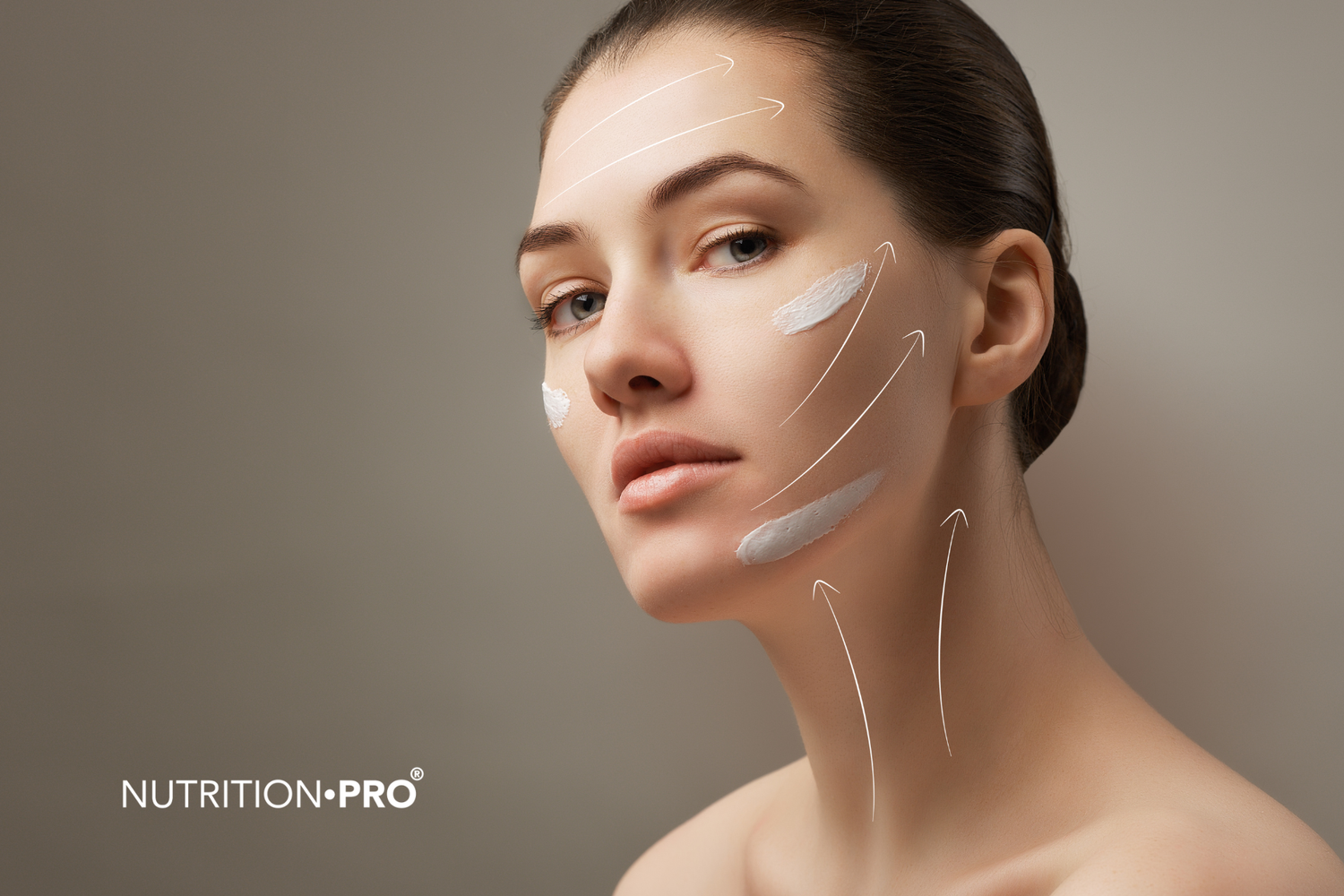
Puffy cheeks, stubborn double chin, round face despite all your efforts. Marketing around facial slimming is built on broken promises: miracle facial exercises, "targeted" workouts, "face-slimming" creams.
What science actually says: it is impossible to lose weight from the face alone. But it's also one of the areas where weight loss becomes visible fastest when the overall protocol is sound. In this guide: 5 proven real levers, 2 debunked myths, an honest 3-month protocol backed by recent meta-analyses.

ActifMinceur® — 120 capsules
Natural fat-burning complex to support overall weight loss, the first step to seeing your face slim down.
See ActifMinceur® →
Cellulip® — 120 capsules
Natural drainage support to aid elimination and combat water retention that puffs cheeks and face.
See Cellulip® →Localized fat loss impossible: it is physiologically impossible to lose weight from the face alone. The body draws from overall reserves. The good news: according to clinical observations, a loss of just 4 to 5% of total body weight is generally noticeable on the face in 6 to 10 weeks.
Collagen and firmness: according to Pu et al. 2023 in Nutrients, a meta-analysis of 26 randomized trials on 1,721 patients demonstrated that hydrolyzed collagen significantly improves skin hydration and elasticity (p<0.00001) — key support during weight loss to limit sagging.
- Why fat accumulates (and leaves) the face
- Myth #1: losing weight from the face alone
- Water retention: the underestimated cause of puffy cheeks
- The 5 proven levers: overview
- Lever #1 — Moderate caloric deficit
- Lever #2 — Reduce sodium and ultra-processed foods
- Lever #3 — Cardio and resistance training
- Lever #4 — Hydration and sleep
- Lever #5 — Collagen support and firmness
- Myth #2: facial exercises (Alam 2018)
- Self-assessment: is your face shape round?
- 3-month protocol to refine your face
- Personalized decision chart
- FAQ — All your questions
Why fat accumulates (and depletes) on the face
The face contains fat deposits subcutaneous in the cheeks, double chin, and jawline-neck contours. These deposits vary according to genetics, age, hormones, and overall weight. When you gain or lose weight, the face is one of the first areas where it shows.
Three factors determine a round face
First subcutaneous fat (true fat) that stores and depletes like anywhere else. Next water retention (edema) — often confused with fat — which appears especially in the morning and fluctuates based on sodium, alcohol, hormones, and sleep. Finally anatomical structure (jawline shape) which cannot be modified without surgery.
Distinguishing these three factors is the first step. Many people think they have a "fatty face" when they actually have a face puffy from water retention — good news, it resolves in a few days.
Myth #1: losing weight only from the face
"How can I lose cheek fat without losing weight everywhere?" The honest answer: you can't. The body doesn't work in "target zones". No exercise, supplement, or cream burns fat locally.
Why "losing weight from one specific area" is impossible
When the body taps into its reserves, it releases fatty acids from adipose cells (adipocytes) everywhere in the body simultaneously, under hormonal influence. Doing "targeted" cheek exercises doesn't burn cheek fat — it builds a little facial muscle, that's all.
The good news: the face often slims down first
A loss of just 4 to 5% of total body weight is generally sufficient to see a noticeable change in the face. For 70 kg, that's only 2.8 to 3.5 kg. Why? Because the subcutaneous fat in the face is thin and the skin is smooth — so even a small loss is very visible.
What should you do then?
Drop the idea of "losing face fat" and adopt a moderate and sustainable overall weight loss approach. The face will follow. The 5 levers below cover exactly that.
Water retention: the underestimated cause of puffy cheeks
Is your face rounder in the morning than in the evening ? If so, you probably have more water retention than fat. Facial water retention is massively underestimated in weight loss advice — yet it resolves in just a few days.
The 6 main causes of facial water retention
1. Excess sodium. The WHO recommends not exceeding 5 g of salt/day. The French average is 8-10 g. Processed foods, cured meats, cheeses, bread account for 70-80% of our intake.
2. Alcohol. Dehydrating + inflammatory. The face puffs up especially the day after a night of drinking.
3. Dehydration. Paradoxical: the less you drink, the more your body retains water. Minimum threshold: 1.5 to 2 L/day.
4. Hormones. Menstrual cycle, pregnancy, contraception, menopause can cause facial water retention. If your face is rounder in the 7 days before your period, it's probably hormonal.
5. Lack of sleep. Less than 6 hours increases cortisol and promotes water retention, particularly visible around the eyelids and cheeks.
6. An underlying condition. Persistent water retention with fatigue, unexplained weight gain, swollen ankles: rule out thyroid, kidney, liver, heart issues. Medical consultation recommended.
The simple 3-day test
For 3 days: sodium <5 g/day, zero alcohol, 2 L of water, 8 hours of sleep. If the face thins in 72 hours, it was water retention. If not, it's probably fat. To support drainage, Cellulip® and cherry stem infusions are natural supplements for short-term use.
The 5 proven levers: overview
Here are the 5 best-documented levers for melting away cheeks and double chin. They work through complementary mechanisms: overall energy deficit, reduction of water retention, fat-burning + muscle maintenance, hormonal recovery, and skin support during weight loss. They should be used together, not in isolation.
Moderate caloric deficit: the non-negotiable foundation
The only physiological way to lose fat (face included).
No supplement, cream, or massage burns fat without a caloric deficit. This is the fundamental principle: to use its reserves, the body must need more energy than it receives. Everything else is secondary.
How many calories to cut per day
The common mistake: going too low. Excessive deficit (-1,000 kcal) causes muscle loss, fatigue, slowed metabolism, yo-yo effect. The optimal deficit is 300 to 500 kcal/day, without dropping below 1,600 kcal for women or 1,800 kcal for men. Allows for 0.5 to 1 kg/week loss without compromising muscle mass or skin.
What to eat to achieve this deficit
Three key levers: increase protein (satiety and muscle preservation), increase fiber and water in foods (vegetables, fruits, legumes), reduce simple sugars and ultra-processed foods. Pure Konjac taken 30 minutes before meals increases satiety and regulates blood sugar.
To support metabolism during a caloric deficit, theActifMinceur® is a coherent supplement (1-3 month course). Apple cider vinegar in capsules supports postprandial blood sugar (see our apple cider vinegar guide).
Reduce sodium and ultra-processed foods
The fastest action to reduce facial bloating (3 to 7 days).
The World Health Organization recommends less than 5 g of salt per day (or 2 g of sodium). French people consume on average 8 to 10 g. This excess sodium retains water in tissues, particularly in the face (eyelids, cheeks, jawline). Reducing sodium is the fastest and most visible action to refine the face.
The real culprits (not the salt shaker)
Contrary to popular belief, table salt accounts for less than 20% of our intake. The remaining 70 to 80% comes from ultra-processed foods : industrial bread, processed meats, cheeses, ready-made meals, packet soups, pre-made sauces, salty crackers, canned foods, bouillon cubes. That's where the salt hides — not in the salt shaker.
The simple reflex
Read the labels: any product containing more than 1.5 g of salt per 100 g is high in salt. Prioritize: home cooking, fresh or frozen plain vegetables, unprocessed meats and fish, legumes, unsalted nuts and seeds. And use spices, herbs, lemon, vinegar, garlic to flavor — it's better, and with no added sodium. Our sugar reduction guide details this approach of processed foods vs whole foods.
Cardio + resistance: the winning combination
Burn fat without losing the muscles that structure the face.
The classic mistake: doing cardio only thinking that's enough. Cardio burns calories during exercise, but doesn't preserve muscle mass. Now, lose 10 kg while losing significant muscle creates a thin, hollow, aged-looking face. The combination cardio + resistance training burns fat while preserving muscle structure — including neck and jawline definition.
The right weekly dosage
WHO recommendations for adults: 150 minutes of moderate-intensity activity (brisk walking, cycling, swimming) or 75 minutes of vigorous activity (running, HIIT) per week. + 2 muscle-strengthening sessions targeting major muscle groups (legs, glutes, back, abs). A typical routine: 3 × 30-45 min of cardio + 2 × 30 min of resistance = 3 to 4 hours of exercise weekly. It's achievable even with a busy schedule.
The myth of "targeted facial exercises"
No need to chew gum for 2 hours a day or do the "fish face" — these exercises work facial muscles (slightly) but don't burn any fat locally. You'll see significantly more results on your face with 3 cardio sessions + 2 strength sessions per week than with any facial gym exercise.
Hydration and sleep: the two forgotten pillars
Stabilize hormones that control water retention and fat storage.
A hydrated, drained, and well-rested face is visibly slimmer than a dehydrated and tired face — at the same weight. The two most underutilized and least costly levers.
Hydration: 1.5 to 2 L per day
Paradox: the less you drink, the more you retain water. In chronic dehydration, the body triggers a retention mechanism viaADH. Result: puffy face, heavy eyelids. Conversely, 1.5-2 L spread throughout the day (not all at once in the evening) signals the body it can release its reserves. Cherry stem herbal tea is a good gentle drainage supplement.
Sleep: 7 to 8 hours to regulate cortisol
Less than 6 hours per night increases cortisol, a hormone that promotes facial fat storage and triggers sugar cravings. Sleeping 5 hours vs 8 hours increases daily caloric appetite by 300-500 kcal — the opposite of your deficit.
3 rules: bed before 11:30 pm, no screens 30-60 minutes before, room temperature 18-19°C. If stress prevents sleep, Magnesium+ bisglycinate at dinner supports sleep onset.
Collagen: supporting firmness during weight loss
Limit facial sagging on a thinning face.
Losing weight — and thus refining the face — carries a secondary risk: skin sagging. When fat decreases, skin must contract. If it lacks elasticity (age, dryness, lack of collagen), it sags and the face appears more aged than refined. This is the classic pitfall of too-rapid or delayed weight loss. Collagen support makes perfect sense here.
What recent meta-analyses say
According to Pu et al. 2023 in Nutrients, a meta-analysis of 26 randomized trials on 1,721 patients demonstrated that hydrolyzed collagen supplementation significantly improves skin hydration (Z = 4.94, p<0.00001) and skin elasticity (Z = 4.49, p<0.00001), with high level of evidence (DOI: 10.3390/nu15092080). Before it, de Miranda et al. 2021 in International Journal of Dermatology had confirmed on 19 RCTs and 1,125 participants that 90 days of hydrolyzed collagen is sufficient to reduce wrinkles and improve firmness (DOI: 10.1111/ijd.15518).
Effective dose and format
Studies generally use 2.5 to 10 g/day of hydrolyzed collagen peptides for at least 90 days. The powder format makes it easy to reach the higher dose (spoonful in a glass of water or smoothie). The Naticol® marine collagen powder 300 g provides bioactive type I peptides (the predominant type in skin) + hyaluronic acid for a "hydration and firmness" effect particularly suited during weight loss. See our complete marine collagen dosage guide to adjust.
As external support, a hyaluronic acid serum with daily application can support surface hydration — "inside + outside" combination particularly effective for facial skin.
Myth #2: facial gymnastics
"100 minutes of face yoga per week for firm cheeks!" Facial gymnastics is sold as a miracle solution. Let's see what the most-cited study actually says — and why we must nuance this.
The Alam 2018 Study: What We Should Know — and What We Overlook
According to Alam et al. 2018 in JAMA Dermatology, a pilot study on 27 women evaluated the effect of 30 min/day of facial exercises over 20 weeks. Positive result: slight improvement in cheek appearance according to photographic evaluation by dermatologists (DOI: 10.1001/jamadermatol.2017.5142).
What's omitted: the study measured no reduction in fat or circumference. Only a subjective perception of rejuvenation. The suggested mechanism: muscle toning (lifting effect), not fat burning — which is impossible locally.
Why it doesn't really slim down your face
Facial muscles represent minimal mass. Even when highly toned, they burn no significant calories. 30 min of facial exercises burn fewer than 5 kcal. 30 min of cycling, 200-300 kcal. The effort-to-result ratio is clear-cut.
Should you abandon it?
Not necessarily. As a complement to a comprehensive protocol that works, 5 min/day of facial massage can contribute to a slight lifting effect and boost microcirculation. As a primary solution for weight loss: no evidence. Your time is better invested in the 5 key levers.
Self-assessment: what is your round face profile?
Check the statements that apply to you. Your dominant profile will guide you toward the approach best suited to your situation.
3-month protocol to refine facial features
A structured 3-month protocol combines moderate caloric deficit, sodium reduction, cardio + resistance training, hydration/sleep, and collagen support. The face typically begins to refine by the 3rd-4th week. At 3 months, results are clear and lasting — provided habits are maintained.
Month 1 — Nutritional audit + sodium
- Caloric deficit 300-500 kcal/day (not dropping below 1,600 for women / 1,800 for men)
- Sodium <5 g/day : eliminate ultra-processed foods, read labels
- 1.5 to 2 L of water/day
- ActifMinceur® 2 capsules before lunch
- Reference photos front and profile in neutral lighting
Month 2 — Cardio + drainage
- Continue diet and hydration
- Add 3 sessions of moderate cardio (30-45 min)
- Cellulip® 4 capsules/day for drainage
- Cherry stem infusion 1-2 times/day
- Sleep 7-8 hours with Magnesium+ at dinner if needed
Month 3 — Skin firmness + maintenance
- Continue entire protocol
- Add Naticol® marine collagen 10 g/day in powder form
- Add 2 resistance training sessions/week (muscle preservation)
- Hyaluronic acid serum apply morning and evening
- Comparative photos front and profile
Evaluation and follow-up
3-month assessment: total weight loss, before/after photos, neck circumference measurement. If clear improvement : switch to collagen maintenance course (5 g/day) + maintain lifestyle habits. If stagnation at 3 months without improvement: consult a doctor or nutritionist for hormonal/metabolic assessment. If face significantly changed but sagging : continue collagen, add hyaluronic acid serum, or consider medical aesthetic protocols.
Personalized decision table
IF / THEN summary to quickly decide on the approach suited to your situation.
FAQ — All your questions
Can you really lose weight only from your face?
No. It is physiologically impossible to target fat loss to one area. The body draws from all areas based on your genetics. The good news: by losing 4 to 5% of your total weight, the effect is generally visible on the face within 6 to 10 weeks.
Does facial exercise really slim down the face?
According to Alam et al. 2018 (JAMA Dermatology), a pilot study on 27 women practicing 20 weeks of facial exercises showed slight improvement in cheek appearance. However, the study did not measure fat reduction — only subjective perception of rejuvenation. Facial exercise tones muscles, it does not burn subcutaneous fat.
Why are my cheeks puffy in the morning?
It is most often due to water retention. Causes: salty food the previous day, alcohol, lying position, dehydration, hormones. Reducing sodium below 5 g/day (WHO) and drinking 1.5-2 L of water help see results in 3 to 7 days.
How much weight do I need to lose to see my face thin out?
A loss of 4 to 5% of total weight generally becomes visible on the face. For a 70 kg person, this represents 2.8 to 3.5 kg. For 80 kg, 3.2 to 4 kg. This estimate varies depending on genetics.
Can collagen help you lose face fat?
Collagen doesn't reduce face fat, but it limits skin sagging during weight loss. According to Pu et al. 2023 (meta-analysis in Nutrients, 26 RCT, 1,721 patients), hydrolyzed collagen significantly improves skin firmness and elasticity.
Can a double chin be genetic?
Yes, in part. The distribution of submental fat is largely determined by genetics and jaw anatomy. If a 5-10% loss doesn't reduce it, it's probably structural. In this case, aesthetic medical solutions to discuss with a specialist.
What are the first signs I will lose face fat?
Between the 3rd and 6th week of a serious protocol: slight hollowing under the cheekbones, more visible jawline, redefined contours, double chin fading. Photos in neutral lighting every 2 weeks = best way to track progress objectively.
- Subcutaneous fat
- Fat located just beneath the skin, visible and palpable. Distinguished from visceral fat (around organs, invisible). The face primarily stores subcutaneous fat, which is why weight gain or loss becomes visible there quickly.
- Adipocytes
- Specialized cells that store fat. When the body needs energy, they release their reserves into the bloodstream (lipolysis) in the form of fatty acids. This release occurs systemically, never locally — hence the impossibility of targeting a specific area.
- Water retention (edema)
- Abnormal accumulation of fluid in tissues. Common causes in the face: excess sodium, alcohol, hormones, dehydration, insufficient sleep. Generally resolves within a few days with an appropriate protocol — unlike true fat, which takes weeks.
- Sodium
- Mineral found mainly in table salt (NaCl) and processed foods. The WHO recommends less than 2 g of sodium/day (equivalent to 5 g of salt). Sodium retains water in tissues, causing particular puffiness in the face, eyelids, and ankles.
- Caloric deficit
- A state where dietary energy intake is lower than daily energy expenditure. The only proven mechanism for losing fat. The optimal deficit is moderate (300-500 kcal/day) to preserve muscle and skin quality.
- Cortisol
- Stress hormone secreted by the adrenal glands. Chronically elevated cortisol (stress, lack of sleep) promotes abdominal and facial fat storage, increases water retention, and stimulates appetite for sugar.
- Hydrolyzed collagen
- Collagen peptides obtained through enzymatic hydrolysis, small enough to be absorbed by the intestine. Supports skin elasticity and hydration according to meta-analyses (Pu 2023, de Miranda 2021). Particularly useful during weight loss to limit skin sagging.
- de Miranda RB, Weimer P, Rossi RC. Effects of hydrolyzed collagen supplementation on skin aging: a systematic review and meta-analysis. International Journal of Dermatology 2021;60(12):1449-1461. DOI: 10.1111/ijd.15518
- Pu SY, Huang YL, Pu CM, Kang YN, Hoang KD, Chen KH, Chen C. Effects of Oral Collagen for Skin Anti-Aging: A Systematic Review and Meta-Analysis. Nutrients 2023;15(9):2080. DOI: 10.3390/nu15092080
- Alam M, Walter AJ, Geisler A, Roongpisuthipong W, Sikorski G, Tung R, Poon E. Association of Facial Exercise With the Appearance of Aging. JAMA Dermatology 2018;154(3):365-367. DOI: 10.1001/jamadermatol.2017.5142
- World Health Organization (WHO). Sodium Intake in Adults and Children — Recommendations. Geneva, 2012. Recommends limiting salt consumption to less than 5 g/day for adults.
- World Health Organization (WHO). Physical Activity — Recommendations for Adults. Geneva, 2020. 150 min of moderate-intensity aerobic activity + 2 sessions of resistance training/week for adults 18-64 years old.


