

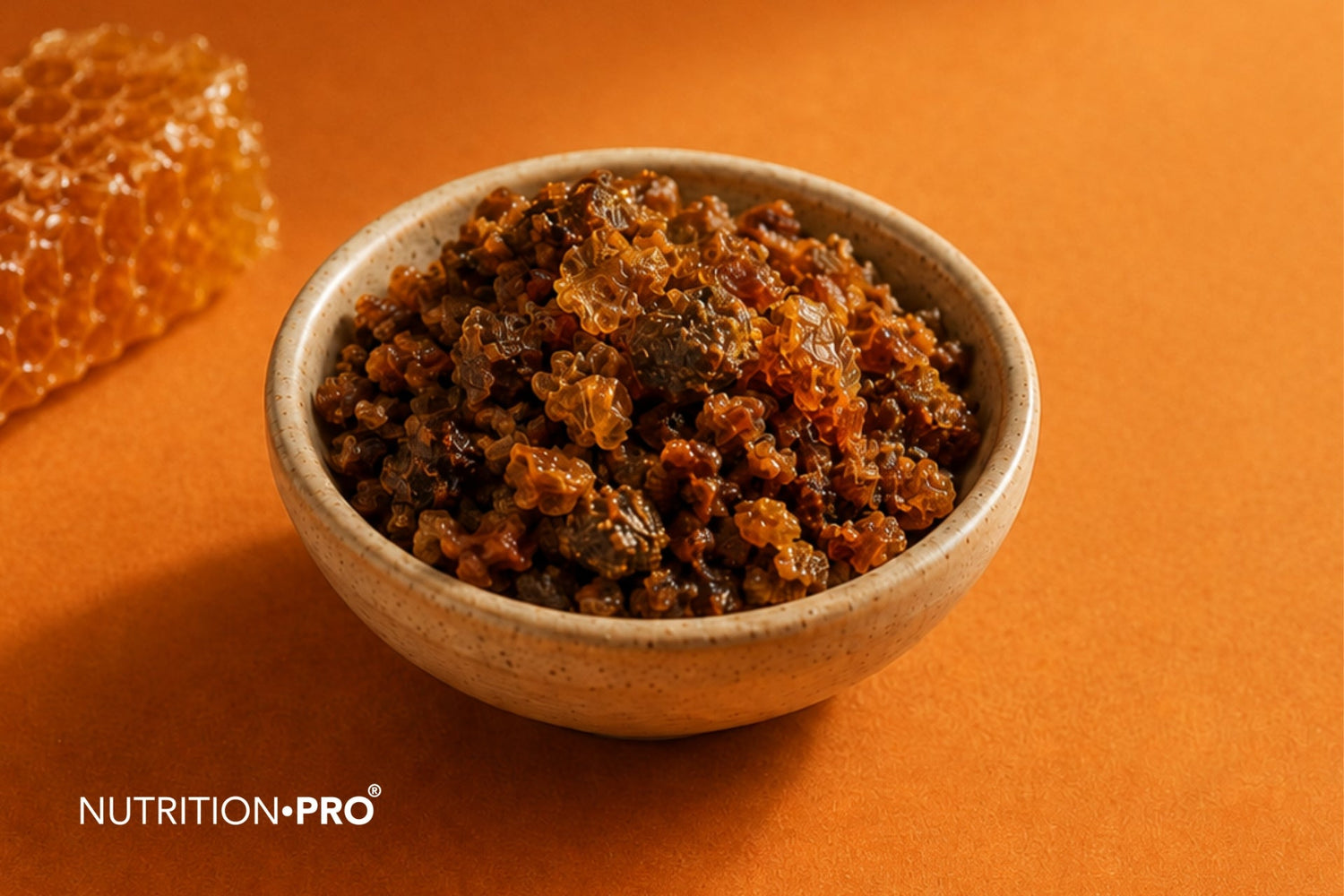
The propolis is one of the most consumed hive products in France for supporting natural immunity. Its growing popularity comes with legitimate questions about its safety : allergy risks, side effects, contraindications, compatibility with pregnancy or ongoing treatments.
This article takes an honest look without alarmism at the real risks of propolis, drawing on the most recent scientific studies (2019-2025) and recommendations from health authorities. Good news: for the majority of healthy adults, propolis has a favorable safety profile.

Organic Propolis Powder: 100 g
Purified and micronized organic propolis, free from nanoparticles, GMOs, and gluten. Start a course of treatment with confidence using a controlled and traceable raw material.
View Organic Propolis →The propolis is generally well tolerated by the majority of healthy adults. According to Esposito et al. 2020 in Phytomedicine, no adverse effects were reported in a randomized clinical trial involving 122 adults treated with a propolis spray for 5 days.
The only truly documented risk is allergy to hive products, which affects a minority of the population but requires particular vigilance. According to Parkinson et al. 2025 in Dermatitis, allergic reactions to propolis have been increasing in recent years, notably linked to changes in composition depending on geographic origins.
The main contraindications are known allergy to hive products, pregnancy, breastfeeding, and age under 3 years (as a precaution). Other profiles can generally consume propolis without risk, provided usage guidelines are followed and an initial low-dose test is performed.
- Is propolis dangerous? The honest answer
- Allergy to hive products: the only real risk
- Possible side effects (rare and mild)
- Absolute contraindications
- Drug interactions: what we actually know
- Why propolis allergies are on the rise
- Practical precautions for starting a course with peace of mind
- Decision chart: can you take propolis?
- FAQ
Is propolis dangerous? The honest answer
Propolis has been used for millennia in traditional medicine. This long history of use, combined with modern studies, forms a solid body of reassuring data supporting its use as a dietary supplement. That said, we must not confuse general good tolerability and complete absence of risk : like any biologically active product, propolis comes with a few precautions worth knowing.
For a comprehensive analysis of the benefits and properties of propolis, consult our dedicated pillar guide.
Allergy to hive products: the only real risk
Who is affected by propolis allergy
Propolis allergy primarily concerns two populations:
- People already allergic to other hive products (honey, royal jelly, pollen, bee stings): there is a cross-reactivity frequently observed between these products.
- People who are occupationally exposed: beekeepers, veterinarians, natural cosmetics professionals. Repeated contact can sensitize the immune system over time.
A recent study by Grau-Pérez et al. published in 2025 in Contact Dermatitis, based on 18,291 patients who underwent patch tests in Spain between 2019 and 2024 (REIDAC registry), identified propolis as an emerging new sensitizer, alongside benzisothiazolinone and sodium metabisulfite. This finding does not mean that propolis is becoming more dangerous, but that it is increasingly being identified among the causes of contact dermatitis in the general population.
Parkinson et al. documented in 2025 an increase in positive allergic reactions to patch tests with propolis in recent years. The authors attribute this trend in part to compositional changes depending on geographical origins (Brazilian vs. Chinese propolis), which present very different molecular profiles and therefore distinct allergenic potential. This observation underscores the importance of traceability and raw material quality in anticipating individual tolerance.
Parkinson SR, Eckembrecher FJ, Toledo Machin LA, et al. Dermatitis. 2025;36(5):477-487. DOI: 10.1089/derm.2025.0023
Symptoms of an allergic reaction to propolis
Possible manifestations range from mild skin discomfort to severe systemic reactions :
- Mild skin reactions : itching, redness, contact eczema, localized hives
- Mucosal reactions : lip swelling, oral tingling, throat irritation
- Respiratory reactions : sneezing, coughing, breathing discomfort
- Severe reactions (rare but possible) : Quincke's edema, anaphylactic shock (life-threatening emergency)
Any abnormal reaction after taking propolis should lead to an immediate discontinuation of the product. If you experience respiratory symptoms or general discomfort, immediately call emergency services.
Possible side effects (rare and mild)
Occasional mild effects
- Oral irritation with intensive local use (spray, chewing gum, prolonged gargles)
- Persistent resinous taste or pronounced bitterness, especially with propolis powder (more a sign of authenticity than an adverse effect)
- Mild digestive discomfort at the start of a course (slight nausea, gastric sensation)
- Dry mouth sensation in some individuals
- Yellowish tooth discoloration with very prolonged local use (reversible)
These effects are generally mild, transient and reversible upon discontinuation of the product. They do not systematically require interruption of the course, but may justify an adjustment (dose reduction, taking with a meal, different format).
Formal contraindications
Absolute contraindication: allergy to bee products
If you are already allergic to honey, royal jelly, pollen or bee stings, consider propolis contraindicated until an allergology consultation has been obtained. Cross-reactivity between these products is common and can lead to severe reactions.
Pregnancy and breastfeeding
Propolis is not recommended during pregnancy and breastfeeding, not due to any documented harmful effects, but due to the absence of specific clinical safety studies in these populations. This precaution applies to most dietary supplements with notable biological activity, in accordance with the precautionary principle.
Children under 3 years of age
The immune system of very young children is not yet fully developed, which increases the risk of sensitization to new allergens. Propolis is therefore not recommended under 3 years of age. Between 3 and 12 years of age, use is possible but should be supervised by a pediatrician, starting at a low dose and with particular vigilance for allergic signs.
Uncontrolled allergic asthma
In people suffering fromuncontrolled allergic asthma, propolis can theoretically trigger a respiratory flare-up in the event of an underlying allergic reaction. Prior medical advice is recommended.
Active gastroduodenal ulcer
The mildly irritating properties of certain propolis components (aromatic essential oils, resins) may aggravate pre-existing gastric irritation. In the case of an active ulcer, it is best to delay the course or opt for less irritating formats (capsules vs. loose powder).
Drug interactions: what we really know
Theoretical interactions to be aware of
- Oral anticoagulants and antiplatelet agents (warfarin, VKAs, DOACs, aspirin): flavonoids may theoretically enhance the anticoagulant effect. Monitoring and medical advice recommended.
- Immunomodulators and immunosuppressants : as propolis modulates immunity, a theoretical interaction with these treatments is possible. To be discussed with the prescribing physician.
- Narrow therapeutic index medications : as a precautionary measure, space propolis intake 1 to 2 hours apart from sensitive medications.
Please note: the scientific literature on drug interactions with propolis remains less extensive than for other well-studied plants (St. John's wort, ginkgo). This uncertainty further justifies caution and open dialogue with your doctor in the case of long-term treatment.
Why propolis allergies are on the rise
A rapid democratization
Propolis, long confined to traditional medicine, is today a mainstream product found in cosmetics, ENT care products, toothpastes, lip balms, dietary supplements. This widespread use mechanically increases population exposure, and therefore the risk of sensitization in predisposed individuals.
Highly variable compositions depending on origin
The 2025 Parkinson study showed that Brazilian propolis and Chinese propolis have very different molecular compositions, with low overlap (8% to 27% depending on the databases used). This botanical and geographical diversity explains why a person may tolerate one type of propolis while reacting to another. The switch by certain brands from Chinese to Brazilian propolis (or vice versa) can therefore alter the allergenic profile perceived across the population.
Better-structured allergy screening
European dermatological registries (REIDAC in Spain, IVDK in Germany, French registries) enable increasingly high-quality epidemiological monitoring of contact dermatitis. The detection of an increase in propolis reactions also reflects this improvement in screening and data collection, and not solely a genuine rise in incidence.
Practical precautions for starting a course with peace of mind
Step 1: check for any known allergy
Before first use, review your personal history:
- Have you ever had a reaction to honey, royal jelly, or pollen ?
- Have you ever been stung by a bee with an excessive reaction (extensive swelling, feeling faint)?
- Do you suffer fromallergic asthma, chronic eczema, or severe allergic rhinitis ?
If you answered yes to any of the above, seek medical advice before starting a propolis course.
Step 2: carry out a low-dose test
For first use, start with a minimal dose (approximately 1/4 of the normal dose recommended by the manufacturer). This precaution helps detect any potential allergic reaction while limiting the risk involved.
Step 3: monitor tolerance for 24–48 hours
After this first intake, carefully observe your body for 24 to 48 hours :
- Onset of itching, redness, or hives
- Swelling of the lips, tongue, or face
- Breathing difficulties, unusual cough
- Significant digestive disorders
In the absence of any abnormal reaction after 48 hours, you can gradually increase the dose toward the level recommended by the manufacturer.
Step 4: gradually increase to the standard dose
Increase the dose in increments over 3–4 days, for example by going from 1/4 to 1/2 and then to the full dose. This gradual approach remains a sound general practice in herbal medicine, allowing the body to adapt and the immune system to react to a potential allergen before reaching a maximum dose.
Decision table: can you take propolis?
FAQ: all your questions about the risks of propolis
Is propolis really dangerous?
No, not for the majority of healthy adults. Propolis is generally well tolerated, as confirmed by Esposito et al. 2020 in Phytomedicine where no adverse effects were reported in a 5-day clinical trial. The only genuinely documented risk is an allergy to bee products, which affects a minority of the population but requires particular vigilance.
What are the side effects of propolis?
Reported side effects are rare and generally mild: oral irritation with intensive local use, minor digestive discomfort at the start of a course, persistent resinous taste. The only significant documented adverse effect remains allergic reactions in individuals sensitized to bee products.
Can propolis trigger a severe allergic reaction?
Yes, this is the primary documented risk. In individuals sensitized to bee products, propolis can trigger reactions ranging from simple hives to severe anaphylactic reactions. According to Grau-Pérez et al. 2025 in Contact Dermatitis (REIDAC study of 18,291 patients), propolis is now identified as an emerging sensitizer in the European population.
Can propolis be taken during pregnancy?
As a precaution, propolis is not recommended during pregnancy and breastfeeding. This precaution is based on the absence of specific clinical safety studies in these populations, and not on any documented harmful effects. This is a recommendation common to most dietary supplements with notable biological activity.
What are the contraindications for propolis?
The main contraindications are: known allergy to bee products (honey, royal jelly, pollen, bee venom), pregnancy and breastfeeding as a precaution, children under 3 years of age, uncontrolled allergic asthma. Caution is also advised in cases of anticoagulant treatment or active gastroduodenal ulcer.
Does propolis interact with medications?
Documented data on drug interactions are limited. Standard precautions relate to oral anticoagulants (theoretical additive effect of flavonoids on hemostasis), although clinical evidence remains modest. If you are on long-term medication, always seek the advice of your doctor or pharmacist before undertaking any prolonged course.
How do I know if I am allergic to propolis?
If you are already allergic to a bee product (honey, royal jelly, pollen, bee stings), consider an allergy to propolis as possible. For first-time use, always start with a minimum dose (1/4 of the standard dose) and monitor your tolerance for 24-48h. If in doubt, an allergy test (patch test) can be performed by a dermatologist.
What should I do if I have an allergic reaction to propolis?
Stop taking it immediately. In the event of a mild skin reaction (hives, itching), rinse the area and consult your doctor. If symptoms are more severe (swelling of the lips or eyelids, difficulty breathing, feeling faint), this could potentially be an anaphylactic reaction: call emergency services immediately.
Is propolis harmful to the liver or kidneys?
No hepatic or renal toxicity has been documented with propolis at doses used as a dietary supplement. According to Braakhuis 2019 in Nutrients, the overall safety profile of propolis is considered favorable in available studies. As with any supplement, a prolonged course at very high doses is not recommended as a precautionary measure.
Can propolis be given to children?
With caution and according to age. Under 3 years: not recommended (immature immune system, increased allergic risk). From 3 to 12 years: use possible at an adjusted dose and under pediatric guidance, with a very gradual introduction. Teenagers: adult dosage applicable. Always start with a minimal test dose to detect any potential allergic reaction.
Is Chinese propolis riskier than European propolis?
According to Parkinson 2025 in Dermatitis, the chemical compositions of Chinese and Brazilian propolis differ significantly, with potentially distinct allergenic profiles. A certified organic European propolis offers better traceability, controlled foraging areas free from pesticides, and a molecular profile that is better scientifically documented, which constitutes an additional safety argument.
How to minimize allergic risk on first use?
Three precautions: (1) check for any history of allergy to bee products, (2) start with a minimal dose (1/4 of the normal dose) to test tolerance, (3) observe carefully for 24-48h before increasing the dose. If in doubt, the capsule format allows for standardized dosing that is easy to split for the first trial.
- Anaphylaxis
- A severe and potentially life-threatening allergic reaction affecting multiple body systems (skin, airways, cardiovascular system). An absolute medical emergency requiring an immediate call to emergency services.
- Allergic contact dermatitis
- Skin inflammation triggered by an immune reaction to a substance that has come into contact with the skin. Symptoms include: redness, itching, blisters, and sometimes chronic eczema.
- Patch test
- An allergological test involving the application of a small amount of a potential allergen to the skin for 48 hours to identify possible sensitization. Performed in a specialist dermatology consultation.
- Cross-reactivity
- A phenomenon whereby the immune system of a person allergic to one substance also reacts to other similar substances. Common among bee hive products.
- REIDAC
- Spanish research registry on contact dermatitis, which collects epidemiological data on allergens responsible for contact dermatitis in the general population.
- Sensitization
- The process by which the immune system becomes capable of specifically reacting to a substance following one or more exposures. A prerequisite for any overt allergic reaction.
- Parkinson SR, Eckembrecher FJ, Toledo Machin LA, Ehrmann BM, Lugo-Somolinos A. Compositional Differences Between Brazilian and Chinese Propolis. Dermatitis. 2025;36(5):477-487. DOI : 10.1089/derm.2025.0023
- Grau-Pérez M, Mercader-García P, Giménez-Arnau AM, et al. Anogenital Contact Dermatitis in Spain: A REIDAC Study of Patients Undergoing Patch Testing in 2019-2024. Contact Dermatitis. 2025;94(3):272-285. DOI : 10.1111/cod.70048
- Esposito C, Garzarella EU, Bocchino B, et al. A standardized polyphenol mixture extracted from poplar-type propolis for remission of symptoms of uncomplicated upper respiratory tract infection. Phytomedicine. 2020;80:153368. DOI : 10.1016/j.phymed.2020.153368
- Braakhuis A. Evidence on the Health Benefits of Supplemental Propolis. Nutrients. 2019;11(11):2705. DOI : 10.3390/nu11112705


