

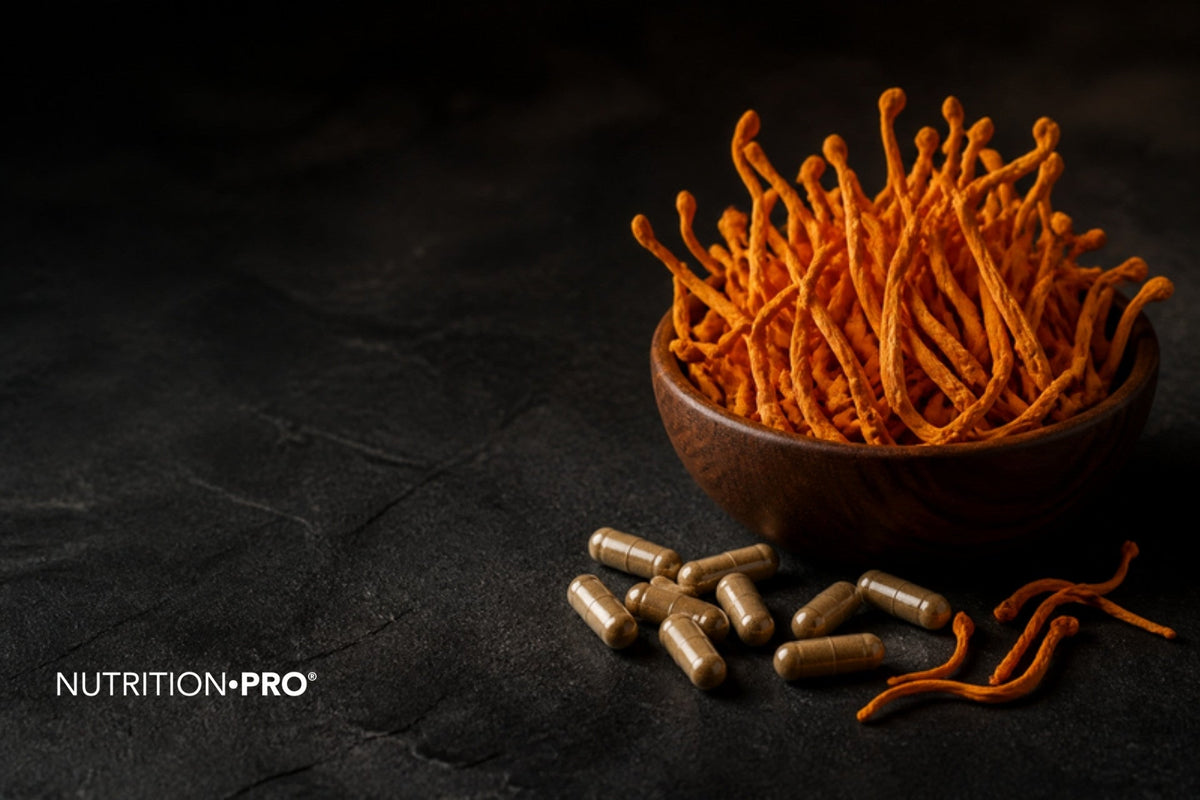
Cordyceps has carried a reputation as a sexual tonic for centuries, and online retailers readily echo this claim. What is found in PubMed is much thinner. The only human trial found reporting a testosterone increase with cordyceps involved 7 amateur cyclists, without randomization, using a mixture of two mushrooms. The rest relies on mouse cells, diabetic rats, and a few reviews.
This guide sorts through it all. It reviews each human trial, including those showing nothing, separates in vitro and animal data, then details safety, the most studied alternative in humans—ginseng—and what actually helps with reduced libido or erectile dysfunction, along with warning signs that should prompt a doctor's visit.

In humans : the data is very limited. No randomized placebo-controlled trial testing cordyceps alone for libido, erectile function, or testosterone was identified via PubMed. A small non-randomized trial in 7 cyclists, using a mixture of Cordyceps sinensis mycelium and reishi, reported higher salivary testosterone; a 14-week controlled trial in 21 active men, with a formula combining rhodiola and cordyceps, found no hormonal changes compared to placebo. A Chinese trial on male fertility had no placebo group.
In animals and laboratory : cordyceps and cordycepin increase testosterone in mouse Leydig cells, and sometimes sperm quality and sexual behavior in rats, often diabetic or aged. Opposite effects are also reported. For erectile function, red ginseng shows a weak to modest effect in human meta-analyses; physical activity and medical treatments have much stronger evidence.
- Where cordyceps' reputation comes from
- In humans: a very short inventory
- Hormones: the two human trials in detail
- Male fertility: a trial without placebo and sperm in vitro
- Leydig cells: what the laboratory shows
- In animals: testosterone, sperm, and sexual behavior
- What cannot be concluded
- Safety, prostate, and interactions
- Ginseng, the most studied alternative in humans
- What really helps: physical activity and treatments
- When to consult, and how to proceed
- Frequently asked questions
Where does cordyceps' reputation come from
Cordyceps is first and foremost a parasitic fungus. In its wild form, Ophiocordyceps sinensis, long called Cordyceps sinensis, colonizes a caterpillar on the Himalayan highlands and grows out of its head in spring. A review by the laboratory team that has most extensively studied the subject notes that it has long been presented in Asia as a tonic for sexual and reproductive disorders.
The most cited source in the West is a 1998 review compiling Chinese and English literature: open or blinded trials, more than 2,000 patients across all indications, and activities "restoring sexual function." These older trials are not available in PubMed and their methodology cannot be verified: they explain the reputation, without confirming it.
The 2017 laboratory review acknowledges it: very few studies have examined the effect of cordyceps on the reproductive system, and, for traditional remedies in general, evidence on reproduction is rare and "too often unconvincing."
Studies refer to "cordyceps" for very different products: the wild mushroom O. sinensis, which has become rare and very expensive; mycelia cultured in bioreactors, such as the fermented strain Cs-4, Hirsutella sinensis or Paecilomyces hepiali; and Cordyceps militaris, another species, cultivated, from which the fruiting body or mycelium is harvested. The cordycepin content, one of the most studied compounds, varies from one preparation to another. A result obtained with one does not apply to the others, and this article therefore specifies each time the species and preparation. Our complete cordyceps guide details these differences.
In humans: a very short inventory
We searched PubMed by crossing cordyceps, cordycepin, Ophiocordyceps, Cs-4, Hirsutella sinensis and Paecilomyces hepiali with libido, sexual function, erectile function, testosterone, sperm and fertility. Over a hundred references came up, almost all on cells, animals or mushroom genetics.
The finding is clear: no randomized placebo-controlled trial was identified testing cordyceps alone on libido, erectile function or testosterone. We found no trials in women on sexual desire. The rare human data concern blends, athletes or infertile men, without a placebo group for some.
| Study | Preparation and population | Result | Level of evidence |
|---|---|---|---|
| Rossi, 2014 | Extract of O. sinensis mycelium (1,335 mg per day) combined with reishi extract, 3 months, 7 amateur cyclists | Salivary testosterone higher than after placebo phase | Very weak: 7 subjects, no randomization, two different races, blend |
| Kreipke, 2021 | Multi-ingredient formula with rhodiola and C. sinensis, 14 weeks, 21 active men | No change in hormonal profile compared to placebo | Weak: small trial, blend, null result |
| Chinese trial, 2021 | C. sinensis, 1 g twice daily, 12 weeks, 90 infertile men | Improved sperm quality, especially when combined with a traditional preparation | Very low: no placebo, publication in Chinese |
| Xu, 2014 | C. sinensis mycelium "C4" used as control group, 8 weeks, 218 men suffering from premature ejaculation | Cordyceps' specific effect not evaluated | Not informative for cordyceps |
The level of evidence is an assessment by the editorial team (size, randomization, placebo, cordyceps alone or in combination). In the premature ejaculation trial, C. sinensis "C4" mycelium served as a comparison against sertraline, an antidepressant, with no cordyceps-specific effect in the abstract.
Hormones: the two human trials in detail
The most cited trial was conducted in Italy with cyclists. It did not measure libido, but the testosterone-to-cortisol ratio in saliva, a marker of overtraining, around two races.
Seven amateur cyclists aged 30 to 40 took a placebo for one month, then for three months 1,335 mg per day of a standardized extract of Ophiocordyceps sinensis mycelium combined with 1,170 mg of Ganoderma lucidum extract. In the five judged at risk of overtraining, salivary testosterone before the race increased from 0.052 to 0.08 ng/mL, and the decrease in the testosterone-to-cortisol ratio after exercise was limited to 8.7%, compared to 69.3% during the placebo phase. No adverse effects were reported.
Rossi P, Buonocore D, Altobelli E, et al. Evid Based Complement Alternat Med 2014;2014:979613. DOI: 10.1155/2014/979613
This result warrants strong reservations. The placebo and mushroom phases succeeded each other in the same subjects without randomization, and measurements were taken during two different races, with different distances, elevation gains, and difficulty levels. With 7 people and two mushrooms taken together, it is impossible to attribute the effect to cordyceps rather than to reishi or training. And salivary testosterone tells us nothing about libido or erectile function.
The other trial is better designed and finds nothing on hormones. In 21 young active men followed for 14 weeks of training combining strength and interval work, a formula combining Rhodiola rosea and Cordyceps sinensis with other ingredients modified neither body composition, strength, nor blood markers compared to placebo. Cortisol decreased by 11% in both groups, and the authors report no other changes in hormonal profile. The abstract does not detail the cordyceps dose, and the combination again prevents isolating its role.
One would need to compare cordyceps alone, of known preparation, to placebo in randomly selected men, with testosterone measured in the fasting morning state and a validated questionnaire on sexuality. No trial of this type has been identified.
Male fertility: a trial without placebo and sperm in vitro
A trial published in Chinese in 2021 divided 90 infertile men into three groups of 30 over 12 weeks: a traditional Chinese medicine preparation in pills, Cordyceps sinensis at 1 g twice daily, or both. The overall efficacy rate reached 96.42% with the combination, 78.57% with cordyceps alone, and 63.33% with the pills, and the proportion of progressively motile sperm increased by 30.05%, 24.74%, and 22.71%. The trial had no placebo group, and the abstract specifies neither the cordyceps preparation nor the definition of "efficacy rate." Lacking a DOI, it is cited without a number.
Other data on human sperm come from the laboratory, with cordycepin at 20, 100, and 500 µM added to sperm from healthy donors. The authors see potential for assisted reproductive technology; this result says nothing about a supplement taken orally.
During in vitro capacitation, cordycepin improved hyperactivated motility and the acrosome reaction of human sperm, through adenosine receptors, with no notable effect on oxidative stress or DNA fragmentation.
Shan L, Gao L, Chai Y, et al. Reprod Biol Endocrinol 2024;22(1):143. DOI: 10.1186/s12958-024-01318-3
In case of difficulty conceiving, couple assessment, with a semen analysis, remains the first step, before any supplement.
Leydig cells: what the laboratory shows
Testosterone is produced by Leydig cells of the testes, under the command of the luteinizing hormone. A Taiwanese team studied the effect of cordyceps on these mouse cells for over ten years.
In purified mouse Leydig cells, an extract of C. sinensis increased testosterone production in a dose-dependent manner, with a maximum at 3 mg/mL after 3 hours. Two of its fractions did the same, but not the soluble polysaccharide fraction. Pure cordycepin, tested from 10 µM to 5 mM, tripled testosterone production at a concentration of 1 mM, via adenosine receptors and the cyclic AMP pathway.
Cordycepin increased plasma testosterone in mice and testosterone production in cultured Leydig cells, in a dose- and duration-dependent manner. Adenosine receptor antagonists reduced this production by 20 to 50%, designating these receptors as the entry point.
Leu SF, Poon SL, Pao HY, Huang BM. Biosci Biotechnol Biochem 2011;75(4):723-731. DOI: 10.1271/bbb.100853
These results have their limitations, which the same team emphasizes. In normal Leydig cells, cordyceps inhibited testosterone production stimulated by human chorionic gonadotropin, a hormone that mimics luteinizing hormone, and, according to unpublished data from the team, plasma testosterone decreases in mice receiving both. The authors conclude that cordyceps could have an unfavorable effect in individuals whose hormonal axis functions normally, and that its use should first take into account each person's testosterone level.
The only data found are in vitro, and they contradict each other. In human granulosa cells, a mycelium of C. sinensis increased estradiol production in 2004. In 2024, another team showed that pure cordycepin instead reduced the expression of the StAR protein, the rate-limiting step in steroid production, in these same cells taken from patients undergoing in vitro fertilization. No trials on female sexual desire were identified.
In animals: testosterone, sperm, and sexual behavior
Animal studies are more numerous and generally point in the same direction. In mice, a mycelium of C. sinensis increased plasma testosterone in 3 to 7 days, with no notable effect on the weight of reproductive organs. In 90 rats, a diet containing 1% or 5% of C. militaris mycelium for 6 weeks increased sperm count and motility, testosterone and estradiol, without changing luteinizing hormone or prolactin.
In rats made diabetic, fruiting bodies of Cordyceps militaris cultivated on rice and silkworm pupae, given at 0.1, 0.5, or 1.0 g per kilogram per day for 3 weeks, corrected mating behavior disorders and decreased intracavernous pressure, while increasing testosterone and sperm count. One group received sildenafil for comparison.
Pohsa S, Hanchang W, Singpoonga N, et al. Biomed Res Int 2020;2020:4198397. DOI: 10.1155/2020/4198397
| Model | Preparation and dose | Result | Study |
|---|---|---|---|
| Young adult mice | C. sinensis mycelium, 0.02 to 0.2 mg per gram, 1 to 7 days | Increased plasma testosterone | Huang, 2004 |
| Young adult rats | C. militaris mycelium, 1% or 5% of diet, 6 weeks | More sperm, increased motility, increased testosterone and estradiol | Chang, 2008 |
| Diabetic rats | C. militaris mycelium, 100 mg per kilogram, 21 days | Improved sperm, testosterone, and mating | Nguyen, 2021 |
| Diabetic rats | C. militaris fruiting bodies, 0.1 to 1.0 g per kilogram, 3 weeks | Corrected mating and intracavernous pressure | Pohsa, 2020 |
| Middle-aged rats | Pure cordycepin, 5 to 20 mg per kilogram, 4 months | Increased sperm motility | Sohn, 2012 |
| Aged rats | Pure cordycepin, 20 mg per kilogram, 6 months | Reduced testicular oxidative stress and apoptosis | Kopalli, 2022 |
| Young male mice | C. militaris fermentation products, 5% of diet, 28 days | Androgenic-type effect on reproductive development | Lin, 2022 |
| Castrated rats or rats receiving testosterone | Aqueous extract of C. militaris carpophore, 20 mg per rat | Testosterone maintained, prostate growth inhibited | Kusama, 2021 |
Their scope is limited: animals are often sick or weakened (induced diabetes, aging, castration), the doses and preparations do not translate directly to humans, and none have been reproduced in humans.
What cannot be concluded
Several common claims therefore do not hold up. One cannot say that cordyceps increases testosterone in humans : the only human signal comes from a trial of 7 cyclists without randomization, with a mixture, and the available controlled trial finds no hormonal change. One cannot say that it improves libido or erectile function : no human trial measuring these parameters with cordyceps alone has been identified. One cannot say that it improves fertility : the only trial in infertile men had no placebo.
The direction of the effect is not even assured. The team that has studied Leydig cells most extensively observes that cordyceps inhibits the response to human chorionic gonadotropin in normal cells, and cordycepin reduces a key protein in steroid production in human ovarian cells. A review in the Singapore Medical Journal on the supposed hormonal activity of Chinese remedies concludes that ginseng and cordyceps show some glucocorticoid-type activities in vitro, but that clinical data to confirm them are lacking.
This also applies to our Cordyceps, a 4:1 concentrated extract of C. militaris carpophore of which two capsules provide 1,800 mg of extract: none of the cited trials addressed this product, and none of the studied doses match it. It can find its place within a mycotherapy approach, provided that no effect on sexuality is expected that human studies have not demonstrated. For athletic performance, human data are more abundant, as shown in our article on cordyceps and athletic performance.
Safety, prostate and interactions
If cordyceps acts on hormones, this is not necessarily good news for everyone, particularly for the prostate, an organ sensitive to testosterone. In rats, cordycepin at 5 and 10 mg per kilogram prevented testosterone-induced prostate enlargement, as did an extract of C. militaris carpophore. These animal results do not translate to humans, and, as Leydig cells demonstrate, the direction of cordyceps' hormonal effect is not assured: caution is warranted. In case of prostate disease, hormonal treatment, or elevated prostate-specific antigen levels, cordyceps should be discussed with your doctor.
Other precautions stem from its known effects. An extract of C. militaris mycelium enriched in cordycepin inhibited platelet aggregation and clot formation in rats and mice: a reason to seek medical advice when taking anticoagulants or antiplatelet agents. It is used in China as an adjunct to immunosuppression after kidney transplantation (5 trials, 447 patients, uncertain quality): a reason not to combine it without medical advice with an immunosuppressant or in case of autoimmune disease. Finally, contaminations have been published: two lead poisonings in Taiwan, with up to 20,000 ppm of lead in a cordyceps powder, and a thyroid crisis in a 70-year-old man taking cordyceps and another preparation containing levothyroxine.
Pregnancy and breastfeeding : not recommended; reserved for adults. Anticoagulants and antiplatelet agents : medical advice. Antidiabetic drugs : medical advice. Prostate disease, hormone treatment : medical advice. Prostate disease, hormone treatment : medical advice. Mushroom allergy : caution. Athletes subject to testing : verify the composition with their federation, as explained in our guide on doping and banned substances.
Ginseng, the most studied alternative in humans
Ginseng, Panax ginseng, is the most studied plant against placebo for erectile dysfunction. Several meta-analyses converge on a weak effect, of limited certainty, with often small trials.
Nine trials compared ginseng to placebo in 587 men aged 20 to 70 years with mild to moderate erectile dysfunction, over a maximum of 12 weeks. Ginseng improved the erectile function score by 3.52 points out of 30 (clinical relevance threshold set at 4), and by 2.39 points out of 25 with the short questionnaire (threshold set at 5), an effect the authors consider minimal. It did, however, multiply by 2.55 the proportion of men reporting ability to have intercourse, with no significant increase in adverse effects. The level of certainty is low for most criteria.
Lee HW, Lee MS, Kim TH, et al. Cochrane Database Syst Rev 2021;4(4):CD012654. DOI: 10.1002/14651858.CD012654.pub2
Eight of these nine trials used Korean red ginseng, from 800 to 3,000 mg per day, most often 1,800 mg. A 2008 review found already, in 349 men, a favorable effect (relative risk of 2.40), with low-quality trials. A meta-analysis of 24 trials on plant-based supplements, published in Drugs in 2018, found for ginseng, from 5 trials and 399 men, an improvement in erectile function score (effect size of 0.43, i.e., a small to medium effect). A meta-analysis of 14 trials on various plants, published in 2026, found for ginseng, from only 4 trials, small improvements in erectile function, orgasm and desire, and blood testosterone barely higher.

Red Ginseng , a standardized extract in rare ginsenosides provided at 200 mg per day. Their results cannot therefore be attributed to it. It is reserved for adults and not recommended during pregnancy, breastfeeding and under antidiabetic treatment; under any other treatment, medical advice is essential. Ourcomplete ginseng guide details its other uses. For tribulus, the two trials in the 2018 meta-analysis were mixed; an analysis published in Nutrients in 2023 identifies ginseng, tribulus and L-arginine among the ingredients capable of improving male sexual function, but judges that 80% of the 25 supplements analyzed showed no expected efficacy. Our article on
tribulus and libido details these trials. Our Male Libido combines tribulus and ginseng: if you take it with Red Ginseng, account for the cumulative ginseng. associe tribulus et ginseng : si vous le prenez avec le Ginseng rouge, tenez compte du cumul de ginseng.
What really helps: physical activity and treatments
For erectile function, the strongest evidence does not come from mushrooms. A meta-analysis of 11 randomized trials shows thataerobic physical activity improves erectile function score by 2.8 points out of 30 on average compared to no exercise, and even more so when dysfunction is marked: 2.3 points for mild dysfunction, 3.3 for moderate dysfunction, and 4.9 for severe dysfunction. Our guide tofoundational endurance explains how to structure these sessions.
Type 5 phosphodiesterase inhibitors, such as sildenafil or tadalafil, remain the reference medication treatment. A network meta-analysis of 82 trials and 47,626 patients compared their efficacy and tolerability: sildenafil at 50 mg was most effective, tadalafil at 10 mg best tolerated. These medications are dispensed by medical prescription.
In 790 men aged 65 and older whose testosterone was below 275 ng/dL and who presented symptoms, a testosterone gel for one year brought levels to the average of young men and increased sexual activity, desire, and erectile function compared to placebo—a benefit the authors describe as moderate. It did not improve vitality.
Snyder PJ, Bhasin S, Cunningham GR, et al. N Engl J Med 2016;374(7):611-624. DOI: 10.1056/NEJMoa1506119
This trial only included men whose testosterone was genuinely low and symptomatic: it does not justify taking testosterone without prescription, nor seeking to "boost" a normal level. Desire also depends on sleep, stress, mood, and relationships: our article on cortisol and stress and the one on vitamin D deficiency address two factors often checked during an assessment.
A meta-analysis of antidepressants finds sexual dysfunction occurring under treatment in 25.8% to 80.3% of patients depending on the drug, and several antidepressants performed no worse than placebo on this point: switching medications can be discussed with your doctor, without ever stopping treatment on your own.
When to consult, and how to proceed
A meta-analysis of 12 prospective cohorts and 36,744 men finds in those who suffer from it a cardiovascular disease risk multiplied by 1.48, coronary disease by 1.46, stroke by 1.35, and death from all causes by 1.19, even after accounting for classical risk factors. Another meta-analysis of 14 studies and 92,757 participants finds a cardiovascular event risk multiplied by 1.44, more pronounced in younger men. These are associations, not a demonstrated cause-and-effect relationship, but they make persistent dysfunction a good reason to have your heart checked.
For testosterone, clinical practice guidelines published in 2018 in The Journal of Clinical Endocrinology and Metabolism only retain a diagnosis of deficiency in a man who presents symptoms and whose testosterone is clearly and persistently low, based on a total testosterone test done in the morning while fasting, then repeated. They advise against testosterone treatment in men seeking to conceive in the short term.
If you wish to try cordyceps as part of a mycotherapy approach, as practical advice and not as a study result: our Cordyceps is taken at a rate of two capsules per day, in the morning or 30 to 60 minutes before exercise, in a course of at least 30 days, respecting the precautions detailed above.
A 4:1 concentrated extract of Cordyceps militaris, derived from the fruiting body, in vegetable capsules. Two capsules per day provide 1,800 mg of extract, in a course of at least 30 days, in the morning or before exercise. Non-GMO, gluten-free, lactose-free and vegan, reserved for adults.
View CordycepsOur Red Ginseng provides 200 mg of Panax ginseng root extract standardized for rare ginsenosides.
Frequently asked questions
Does cordyceps increase testosterone?
In men, this is not demonstrated. The only signal comes from a non-randomized trial of 7 cyclists taking a blend of Cordyceps sinensis mycelium and reishi, and a 14-week controlled trial in 21 active men found no hormonal changes. Testosterone increases come from animal and cellular studies.
Is cordyceps an aphrodisiac?
It has this reputation in Chinese medicine, but no placebo-controlled trial testing cordyceps alone on libido has been identified. Effects on sexual behavior come from diabetic rats.
What do studies show about cordyceps and libido in men?
Almost nothing direct. The four human studies found examined salivary testosterone in 7 cyclists, hormones in 21 active men, sperm in 90 infertile men without placebo, and one trial where cordyceps served as a comparison. None measured libido.
Does cordyceps help with erectile dysfunction?
No human data show this. In diabetic rats, Cordyceps militaris fruiting bodies corrected decreased intracavernosal pressure in 3 weeks. In men, physical activity, medical treatments, and red ginseng have been evaluated in controlled trials.
Does cordyceps improve male fertility?
A 12-week Chinese trial in 90 infertile men reported improved sperm motility with Cordyceps sinensis, especially combined with a traditional preparation, but without a placebo group. This data is insufficient to conclude; a couple's evaluation remains the first step.
Does cordyceps affect female libido?
No trial in women has been identified. The only data are in vitro and contradictory: a Cordyceps sinensis mycelium increased estradiol in human ovarian cells, while pure cordycepin reduced a key protein in hormone production in these same cells.
Is cordyceps dangerous for the prostate?
No human study has been identified on this point. In rats, cordycepin and a Cordyceps militaris fruiting body extract slowed testosterone-induced prostate enlargement, but these results do not translate to men. In case of prostate disease or hormone treatment, medical advice is necessary.
Can cordyceps and ginseng be combined?
No study has evaluated this combination for sexual function. Both are not recommended during pregnancy and breastfeeding; red ginseng is not recommended with antidiabetic drugs, and cordyceps requires medical advice with antidiabetic, anticoagulant, or immunosuppressant drugs. Be cautious about cumulative effects if another supplement already contains ginseng.
How long should you take cordyceps?
The human studies found lasted 8 to 14 weeks, with no established results on sexual function. As a practical matter, our Cordyceps is taken in a course of at least 30 days, at a rate of two capsules per day, in the morning or 30 to 60 minutes before exercise.
Does cordyceps pose a problem for tested athletes?
Cordyceps is not a hormone, but an athlete subject to testing should verify the composition of any supplement with their federation before taking it, as a product may be contaminated or contain other ingredients.
When to see a doctor for low libido or erectile dysfunction?
As soon as the problems persist or worsen. Erectile dysfunction is associated with a 48% increased cardiovascular risk in a meta-analysis of 12 cohorts, and decreased desire may reveal a hormonal deficiency, depression, or medication side effect.
Sources
The studies cited below were identified via PubMed.
- Rossi P, Buonocore D, Altobelli E, et al. Improving the assessment of training status in endurance cyclists: effects of supplementation with Ganoderma lucidum and Ophiocordyceps sinensis. Evidence-Based Complementary and Alternative Medicine, 2014;2014:979613. DOI
- Chen YC, Chen YH, Pan BS, et al. Functional study of Cordyceps sinensis and cordycepin in male reproduction: a review. Journal of Food and Drug Analysis, 2017;25(1):197-205. DOI
- Zhu JS, Halpern GM, Jones K. The scientific rediscovery of an ancient Chinese medicine: Cordyceps sinensis, Part I. Journal of Alternative and Complementary Medicine, 1998;4(3):289-303. DOI
- Kreipke VC, Moffatt RJ, Tanner CJ, Ormsbee MJ. Effects of combined training and a multi-ingredient supplement containing Rhodiola rosea and Cordyceps sinensis on body composition, performance, and health in active men. Journal of Dietary Supplements, 2021;18(6):597-613. DOI
- Xu G, Jiang HW, Fang J, et al. An improved dosing regimen of sertraline in the treatment of premature ejaculation: an 8-week randomized single-blind trial followed by a 4-week open extension. Journal of Clinical Pharmacy and Therapeutics, 2014;39(1):84-90. DOI
- Shan L, Gao L, Chai Y, et al. Cordycepin improves hyperactivation and acrosome reaction via adenosine receptors during in vitro capacitation of human sperm. Reproductive Biology and Endocrinology, 2024;22(1):143. DOI
- Hsu CC, Huang YL, Tsai SJ, et al. In vivo and in vitro stimulating effects of Cordyceps sinensis on testosterone production by mouse Leydig cells. Life Sciences, 2003;73(16):2127-2136. DOI
- Leu SF, Poon SL, Pao HY, Huang BM. In vivo and in vitro stimulating effects of cordycepin on steroidogenesis in mouse Leydig cells. Bioscience, Biotechnology, and Biochemistry, 2011;75(4):723-731. DOI
- Huang BM, Hsiao KY, Chuang PC, et al. Increased steroidogenic enzymes and ovarian estradiol in human granulosa cells by Cordyceps sinensis mycelium. Biology of Reproduction, 2004;70(5):1358-1364. DOI
- Zhang L, Zhou S, Bi B, et al. Cordycepin reduces StAR protein expression by decreasing SP1 in human granulosa cells. Reproduction, 2024;168(5):e240240. DOI
- Huang YL, Leu SF, Liu BC, et al. In vivo stimulatory effect of Cordyceps sinensis mycelium and its fractions on reproductive functions in male mice. Life Sciences, 2004;75(9):1051-1062. DOI
- Chang Y, Jeng KC, Huang KF, et al. Effect of Cordyceps militaris supplementation on sperm production and motility and hormones in Sprague-Dawley rats. The American Journal of Chinese Medicine, 2008;36(5):849-859. DOI
- Pohsa S, Hanchang W, Singpoonga N, et al. Effects of cultivated Cordyceps militaris on sexual performance and erectile function in streptozotocin-induced diabetic male rats. BioMed Research International, 2020;2020:4198397. DOI
- Nguyen TV, Chumnanpuen P, Parunyakul K, et al. Study of the aphrodisiac properties of Cordyceps militaris in streptozotocin-induced diabetic male rats. Veterinary World, 2021;14(2):537-544. DOI
- Sohn SH, Lee SC, Hwang SY, et al. Effect of prolonged administration of cordycepin from Cordyceps militaris on testicular function in middle-aged rats. Planta Medica, 2012;78(15):1620-1625. DOI
- Kopalli SR, Cha KM, Cho JY, et al. Cordycepin attenuates spermatogenic and redox alterations of Leydig cells exposed to hydrogen peroxide and regulates oxidative and apoptotic signaling in testicular tissue of aged rats. Pharmaceutical Biology, 2022;60(1):404-416. DOI
- Lin S, Hsu WK, Tsai MS, et al. Effects of Cordyceps militaris fermentation products on reproductive development in young male mice. Scientific Reports, 2022;12(1):13720. DOI
- Kusama K, Miyagawa M, Ota K, et al. A Cordyceps militaris fruiting body extract reduces testosterone catabolism and testosterone-induced prostatic hypertrophy. Nutrients, 2021;13(1):50. DOI
- Fung FY, Linn YC. Steroids in traditional Chinese medicine: what does the evidence say? Singapore Medical Journal, 2017;58(3):115-120. DOI
- Alamoudi AJ, Alessi SA, Rizg WY, et al. Cordycepin attenuates testosterone-induced benign prostatic hyperplasia in rats through modulation of AMPK and AKT activation. Pharmaceutics, 2022;14(8):1652. DOI
- Kwon HW, Shin JH, Lim DH, et al. Ex vivo, in vivo and in vitro antiplatelet and antithrombotic effects of a cordycepin-enriched Cordyceps militaris extract. BMC Complementary and Alternative Medicine, 2016;16(1):508. DOI
- Hong T, Zhang M, Fan J. Cordyceps sinensis (traditional Chinese medicine) in kidney transplant recipients. Cochrane Database of Systematic Reviews, 2015;2015(10):CD009698. DOI
- Wu TN, Yang KC, Wang CM, et al. Lead intoxication from contaminated cordyceps, a Chinese medicine: two cases. Science of the Total Environment, 1996;182(1-3):193-195. DOI
- St-Onge M, Vandenberghe H, Thompson M. Thyroid crisis caused by a Chinese herb contaminated with thyroid hormones. American Journal of Case Reports, 2015;16:57-59. DOI
- Lee HW, Lee MS, Kim TH, et al. Ginseng in erectile dysfunction. Cochrane Database of Systematic Reviews, 2021;4(4):CD012654. DOI
- Jang DJ, Lee MS, Shin BC, et al. Red ginseng in the treatment of erectile dysfunction: a systematic review. British Journal of Clinical Pharmacology, 2008;66(4):444-450. DOI
- Borrelli F, Colalto C, Delfino DV, et al. Herbal dietary supplements in erectile dysfunction: systematic review and meta-analysis. Drugs, 2018;78(6):643-673. DOI
- Ho CY, Hsu CH, Chien TJ. Herbal dietary supplements in erectile dysfunction: systematic review and meta-analysis of randomized controlled trials. Journal of Traditional and Complementary Medicine, 2026;16(1):109-120. DOI
- Petre GC, Francini-Pesenti F, Vitagliano A, et al. Dietary supplements for erectile dysfunction: analysis of marketed products, systematic review, meta-analysis and rational use. Nutrients, 2023;15(17):3677. DOI
- Khera M, Bhattacharyya S, Miller LE. Effect of aerobic exercise on erectile function: systematic review and meta-analysis of randomized controlled trials. The Journal of Sexual Medicine, 2023;20(12):1369-1375. DOI
- Chen L, Staubli SE, Schneider MP, et al. Phosphodiesterase 5 inhibitors in the treatment of erectile dysfunction: network meta-analysis of trade-offs. European Urology, 2015;68(4):674-680. DOI
- Snyder PJ, Bhasin S, Cunningham GR, et al. Effects of testosterone treatment in older men. The New England Journal of Medicine, 2016;374(7):611-624. DOI
- Serretti A, Chiesa A. Sexual dysfunction emerging under antidepressants: a meta-analysis. Journal of Clinical Psychopharmacology, 2009;29(3):259-266. DOI
- Dong JY, Zhang YH, Qin LQ. Erectile dysfunction and risk of cardiovascular disease: meta-analysis of prospective cohort studies. Journal of the American College of Cardiology, 2011;58(13):1378-1385. DOI
- Vlachopoulos CV, Terentes-Printzios DG, Ioakeimidis NK, et al. Prediction of cardiovascular events and all-cause mortality by erectile dysfunction: systematic review and meta-analysis of cohort studies. Circulation: Cardiovascular Quality and Outcomes, 2013;6(1):99-109. DOI
- Bhasin S, Brito JP, Cunningham GR, et al. Testosterone treatment in hypogonadal men: clinical practice recommendations. The Journal of Clinical Endocrinology and Metabolism, 2018;103(5):1715-1744. DOI


