

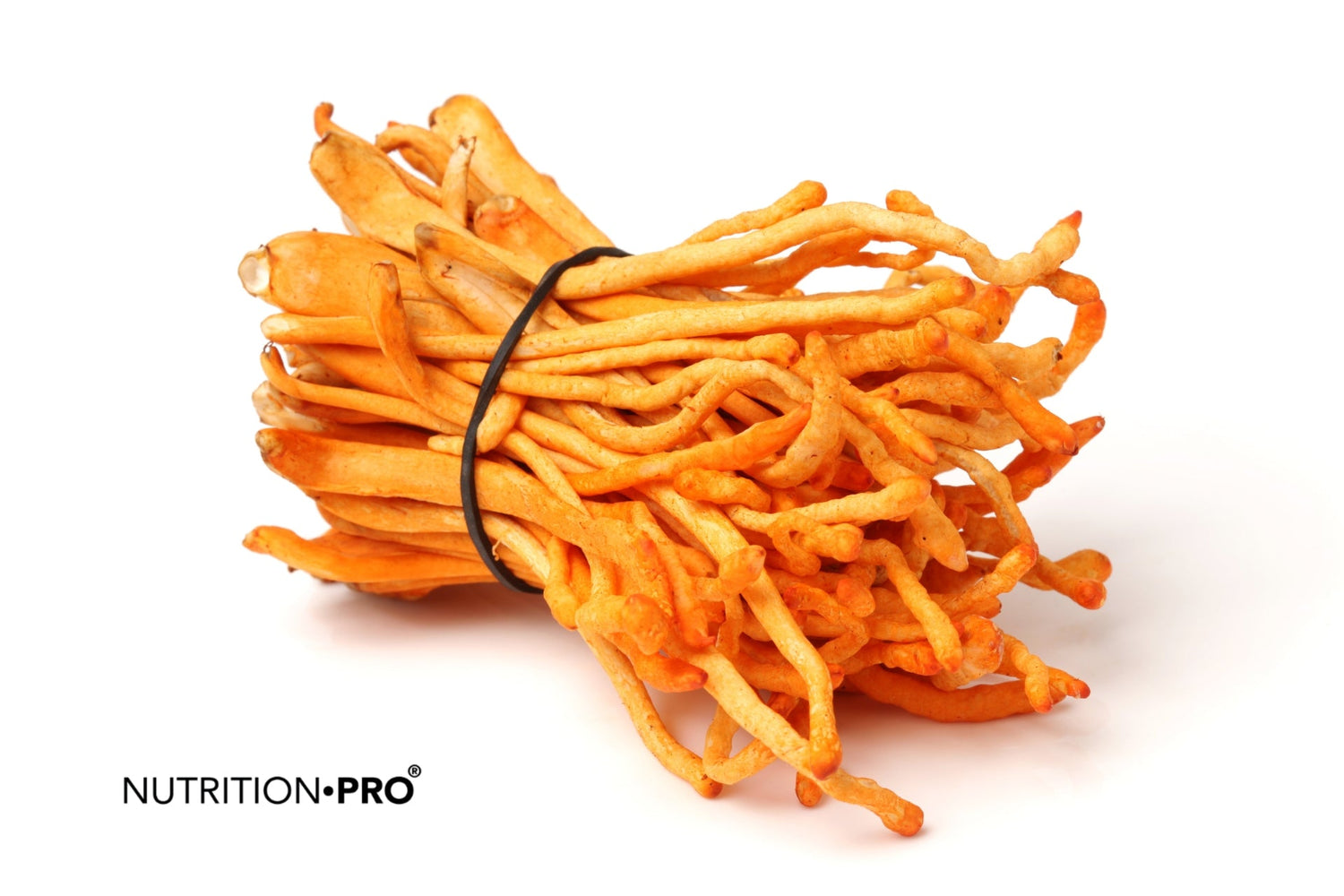
The Cordyceps became in 2024-2026 one of the most sought-after supplements by endurance athletes and biohacking enthusiasts. Presented as "the mushroom of records," "the viagra of effort," or "the natural pre-workout," it is subject to often exaggerated marketing claims — and major technical confusions (militaris vs sinensis, fruiting body vs mycélium).
What science really says: according to an RCT published in 2017 in the Journal of Dietary Supplements, a 3-week supplementation of Cordyceps militaris significantly improves VO2max (+4.8 ml/kg/min), the time to exhaustion (+69.8 seconds) and the ventilatory threshold in healthy adults. The 2026 narrative review by Jędrejko et al. confirms these effects while highlighting methodological limitations that we will detail honestly. In this guide: the 6 documented benefits, the crucial difference militaris vs sinensis (the €10,000/kg fraud), WADA anti-doping approval, and the 3 to 8-week protocol depending on your athletic goal.

Pivot study: according to Hirsch et al. 2017 in Journal of Dietary Supplements, a double-blind RCT in 28 adults demonstrated that a course of 4 g/day of Cordyceps militaris-based blend for 3 weeks significantly improves VO2max (+4.8 ml/kg/min), time to exhaustion (+69.8 seconds) and ventilatory threshold (+0.7 L/min). After only 1 week, the effects were not yet significant — chronic supplementation is essential.
2026 review: according to Jędrejko et al. 2026 in Nutrients, a narrative review analyzing 5 clinical studies (321 participants, 2017-2024) confirms ergogenic effects on VO2max, TTE and power output, while noting methodological limitations (small samples, heterogeneity, multi-ingredient formulations) that call for more rigorous RCTs.
- Cordyceps: Why So Much Sports Buzz?
- Cordycepin, CS-4 Polysaccharide, AMPK: The Science
- The 6 Proven Benefits on Performance: Overview
- Benefit #1 — VO2max and Aerobic Capacity (Hirsch 2017)
- Benefit #2 — Endurance and Time to Exhaustion
- Benefit #3 — Mitochondrial ATP and Energy Efficiency
- Benefit #4 — Post-Exercise Recovery (Nuanced)
- Benefit #5 — Immune Support in Intense Athletes
- Benefit #6 — Daily Energy and Fighting Fatigue
- Myth: "Cordyceps = Immediate Adrenaline Boost"
- Militaris vs Sinensis: The €10,000/kg Fraud
- WADA Anti-Doping: Authorized, but Watch for Contamination
- Precautions and Contraindications
- Self-Test: Is Cordyceps Right for You?
- Protocol 3 to 8 Weeks Depending on Athletic Goal
- Personalized Decision Table
- FAQ — All Your Questions
Cordyceps: Why So Much Sports Buzz?
The Cordyceps is a genus of parasitic fungi particularly fascinating to biology. Over 600 species have been identified, but two dominate the pharmacopeia and the market: Cordyceps sinensis (Tibetan wild form, ultra-rare) and Cordyceps militaris (cultivable, and it is on this species that all modern clinical studies focus).
The Story That Built Its Reputation: Chinese Athletes in 1993
In 1993, at the Chinese national track and field championships, the women's running team coached by Ma Junren defeated 9 world records in one week in middle-distance and long-distance events. When asked about their preparation, the athletes mentioned a traditional Chinese cocktail based on Cordyceps sinensis and turtle soup.
This spectacular performance triggered worldwide interest in Cordyceps as a natural ergogenic aid. Decades later, several athletes from this team were involved in doping scandals, which tainted the strictly scientific value of this episode — but the media buzz around Cordyceps had been launched.
A parasitic fungus with a fascinating history
Cordyceps sinensis (renamed Ophiocordyceps sinensis) is an entomopathogenic fungus: it parasitizes caterpillars of ghost moths of the genus Thitarodes, living on the high plateaus of Tibet, Bhutan, and Nepal between 3,500 and 5,000 meters altitude. The fungus develops inside the caterpillar during winter, mummifies it, and emerges in spring as a vertical stroma from its head. Tibetans harvest it in spring during snowmelt — hence its nickname "yarsagumba" (summer herb, winter worm).
The modern revolution: cultivated Cordyceps militaris
Since wild Cordyceps sinensis is practically impossible to cultivate in the laboratory, the scientific community turned to a closely related species, Cordyceps militaris, which parasitizes butterfly chrysalides but can be cultivated in bioreactors. This species contains a higher concentration of cordycepin (the signature active compound) than wild sinensis, and allows rigorous standardization. All modern human clinical studies (Hirsch 2017, and the 5 studies analyzed in the Jędrejko 2026 review) focus on cultivated militaris .
This is the form we use in Cordyceps Nutrition•pro : extract from fruiting body of cultivated Cordyceps militaris, dosed at 500 mg per capsule.
Cordycepin, polysaccharide CS-4, AMPK: the science of Cordyceps
Cordyceps owes its ergogenic effects to two families of major active compounds acting in synergy: the cordycepin (nucleoside regulating energy metabolism) and the CS-4 polysaccharide (modulating oxygen utilization). Together, they stimulate mitochondrial ATP production and improve oxidative efficiency during exercise.
Cordycepin: the Nobel-adjacent nucleoside
<<<33>>> Cordycepin cordycépine (3'-deoxyadenosine) was isolated as early as 1950 by British researcher Cunningham. It is a nucleoside — a molecule from the same family as adenosine, the building blocks of our DNA and RNA — but with a subtle structural modification (removal of the hydroxyl group at position 3').
This slight difference changes everything. Cordycepin exhibits several unique documented biological effects:
- AMPK activation (AMP-activated protein kinase) — the central regulator of cellular energy metabolism
- Stimulation of mitochondrial ATP production — energetic base of aerobic effort
- Anti-inflammatory effect in preclinical studies (modulation of NF-κB pathways)
- Modulation of muscle protein synthesis via mTOR pathways (cellular studies)
Concentration in cultivated Cordyceps militaris: typically 1 to 7 mg of cordycepin per gram of dry fruiting body — approximately 10 to 100 times higher than in wild Cordyceps sinensis. This is one of the technical reasons why modern research favors militaris.
The CS-4 polysaccharide: peripheral oxygenation
The CS-4 polysaccharide is a polysaccharide complex extracted from Cordyceps mycelium. Although less publicized than cordycepin, it plays an important role in the cardiovascular and respiratory effects of Cordyceps:
- Improved peripheral oxygen utilization at the muscular level
- Mild vasodilatory effect documented in several preclinical studies
- Immune modulation via Dectin-1 receptors (like all fungal beta-glucans)
The cordycepin + CS-4 combination mechanistically explains why Cordyceps improves both VO2max (maximum aerobic capacity, measuring oxygen utilization) AND time to exhaustion (endurance, dependent on energy efficiency).
AMPK: the "metabolic switch" explained
AMPKis one of the most important enzymes in human energy metabolism. Nicknamed "the cellular energy sensor," it activates when the cell lacks ATP and triggers cascades that: Stimulate
- mitochondrial biogenesis (production of new mitochondria) Increase
- fatty acid oxidation(use of fats as fuel) Improve
- muscle glucose uptake Cordycepin moderately activates AMPK, which mimics certain effects of endurance training — without replacing training itself. It is an
amplifier of exercise adaptation, not a substitute. The 6 proven benefits for performance: overview
Here are the
6 areas for which clinical research has documented an effect of Cordyceps militaris on sports performance and vitality. We have deliberately limited the list to 6 genuinely defensible benefits — the 2026 Jędrejko review reminds us that evidence remains limited, and we prefer rigor to marketing over-promise. rappelle que les preuves restent limitées, et nous préférons la rigueur à la sur-promesse marketing.
VO2max and aerobic capacity: +4.8 ml/kg/min in 3 weeks
Hirsch 2017 pivotal RCT — Cordyceps militaris vs placebo in 28 adults.
The VO2max is the maximum oxygen consumption measurable during progressive intense exercise. It is the reference marker of aerobic capacity — used by exercise physiologists, coaches, and sports physicians to assess an athlete's endurance potential. A significant improvement in VO2max means a direct improvement in endurance performance.
The Hirsch 2017 RCT — rigorous protocol
According to Hirsch et al. 2017 in the Journal of Dietary Supplements, the trial recruited 28 healthy participants (mean age 22.7 ± 4.1 years, height 175.4 cm, weight 71.6 kg). The design: randomized, repeated measures, double-blind, placebo-controlled — one of the most rigorous protocols possible for a dietary supplement study.
Subjects consumed either 4 g/day of a mushroom blend based on Cordyceps militaris, or placebo (maltodextrin), for 1 then 3 weeks. Tests were performed on a maximal incremental cycle ergometer, measuring:
- VO2max (maximum oxygen consumption)
- TTE (Time To Exhaustion) — time to exhaustion
- VT (Ventilatory Threshold) — ventilatory threshold
- RPP (Relative Peak Power) — relative maximum power
- AvgP (Average Power) — average power
The results — patience rewarded
After 1 week of supplementation, no significant effect was measured on ergogenic parameters. The placebo and Cordyceps were indistinguishable (DOI : 10.1080/19390211.2016.1203386).
But after 3 weeks of supplementation, the results become significant in the Cordyceps militaris group (and only in this group) :
- VO2max : +4.8 ml/kg/min (Cordyceps group) vs +0.9 ml/kg/min (placebo) — p = 0.042
- TTE : +69.8 seconds after 3 weeks (+28.1 s already after 1 week)
- VT : +0.7 L/min ventilatory threshold (Cordyceps group only)
Putting it in perspective : what is +4.8 ml/kg/min worth ?
For an amateur athlete, a VO2max of 40-45 ml/kg/min is typical. For a trained runner, 50-55 ml/kg/min. For a professional cyclist, 70-80 ml/kg/min. An improvement of +4.8 ml/kg/min in 3 weeks is comparable to 4 to 6 weeks of moderate endurance training in an untrained subject.
This is not a radical transformation nor a placebo effect, but a measurable and significant physiological improvement. To put this in sports perspective : an amateur runner going from 45 to 50 ml/kg/min can gain approximately 30 seconds to 1 minute on a 10 km run, or 3 to 5 minutes on a half-marathon, all else being equal.
The main takeaway : patience
The most important result of the Hirsch 2017 RCT is not the magnitude of the effect, but its timeline. Cordyceps is not a pre-workout — it does not provide a same-day boost. A minimum of 3 weeks of daily supplementation is required for metabolic adaptations to establish themselves. This rules out "occasional use before competition" and points toward structured preparatory supplementation.
See also our complete guide to functional mushrooms (parent pillar) to situate Cordyceps within the medicinal mushroom ecosystem.
Endurance and time to exhaustion: +69.8 seconds
TTE is the ergogenic marker most directly translatable into sports performance.
The TTE (Time To Exhaustion) measures how long an athlete can sustain intense effort before complete exhaustion. Unlike VO2max, which is a "one-time" maximal capacity, TTE reflects the ability to maintain effort over time — that is, endurance in the sports sense of the term.
The documented figures in RCT
According to Hirsch et al. 2017, improvements in TTE in the Cordyceps militaris group were significant at 2 measured timepoints:
- After 1 week of supplementation: +28.1 seconds of TTE
- After 3 weeks of supplementation: +69.8 seconds of TTE
Statistical analysis confirmed that these gains were significant (95% confidence intervals excluding zero), and that no equivalent improvement was observed in the placebo group. TTE therefore has an improvement mechanism faster than VO2max — first positive signal as early as week 1, amplification thereafter.
What does +69.8 seconds mean for an athlete?
The test was a maximal incremental cycle ergometer. On this type of test, an improvement of 70 seconds represents:
- For a 10 km runner: potentially 20 to 40 seconds time gain
- For a cyclist on a 40 km time trial: 1 to 2 minutes of potential gain
- For a triathlete: better endurance on the final running portion
- For an amateur athlete: ability to "finish strong" intense efforts without collapsing
These transpositions are indicative — sports performance depends on many other factors (technique, mental strength, pre-effort nutrition, hydration, weather conditions). But the physiological trend is positive and reproducible in the RCT.
The mechanism: optimized peripheral oxygenation
Faster TTE improvement than VO2max improvement suggests that the main mechanism isimproved peripheral oxygen utilization (at the muscular level), rather than central capacity (heart-lungs). The CS-4 polysaccharide from Cordyceps has been documented for this effect in preclinical studies — muscles become more efficient at extracting oxygen from capillary blood and converting it into usable ATP.
Coherent synergy to amplify this effect: Organic spirulina (rich in iron and phycocyanin, hematological support), Multivitamins (essential B9, B12 cofactors for erythropoiesis).
Mitochondrial ATP and cellular energy efficiency
Cordycepin activating AMPK and mitochondrial biogenesis — mechanistic basis of ergogenic effects.
Beyond external markers (VO2max, TTE), Cordyceps acts on cellular energy metabolism at a more fundamental level. Mitochondria are the "power plants" of muscle cells — they convert glucose and fatty acids into ATP, the energy currency of muscle. More mitochondria, the better they function, and the more the athlete sustains effort.
AMPK and mitochondrial biogenesis
Cordycepin moderately activatesAMPK, the cell's "energy sensor" enzyme. This activation triggers a cascade that includes stimulation of PGC-1α, a transcriptional coactivator considered the "master conductor" of mitochondrial biogenesis. Concretely: more activated PGC-1α = more mitochondria produced = greater muscle oxidative capacity = better endurance.
This mechanism is exactly the same as that activated by endurance training itself. Prolonged endurance exercise naturally activates PGC-1α and stimulates mitochondrial biogenesis — this is why long-distance runners have 2 to 3 times more muscle mitochondria than sedentary individuals. Cordyceps amplifies this adaptation without replacing it.
Optimized ATP production
Beyond the quantity of mitochondria, Cordyceps also influences their functional quality. Preclinical studies have shown that Cordyceps supplementation:
- Increases expression of Krebs cycle (ATP-producing cycle) enzymes
- Improves oxidative coupling of the mitochondrial respiratory chain
- Reduces production of mitochondrial free radicals (oxidative stress during exercise)
These effects are documented primarily in cellular and animal studies. No human RCT has directly measured muscle ATP after Cordyceps supplementation (a technically complex measurement requiring biopsies). But the improvement in external markers (VO2max, TTE) in Hirsch 2017 is consistent with this underlying mitochondrial mechanism.
Editorial honesty: what we know and don't know
According to the Jędrejko et al. 2026 review, the mechanistic evidence on ATP and mitochondria remains essentially preclinicalExisting human RCTs measure performance markers (VO2max, TTE, lactate) that are compatible with a mitochondrial effect, but do not demonstrate it directly. This is one of the reasons why the review authors call for more rigorous RCTs directly measuring muscle mitochondrial parameters.
Relevant synergy: the Creapure® creatine monohydrate acts on the phosphocreatine system (explosive energy 10-30 seconds), while Cordyceps supports aerobic metabolism (>2 minutes). See our ultimate creatine guide to understand this complementarity.
Post-exercise recovery: promising but nuanced effects
According to the Jędrejko 2026 review, effects on CK and inflammation are documented but inconsistent across studies.
Post-exercise recovery is one of the most publicized topics in sports nutrition — and one of the most complex to evaluate scientifically. Cordyceps is among the frequently cited supplements, but the 2026 review calls for nuance: the effects exist but vary depending on protocols.
The markers studied
According to Jędrejko et al. 2026 in Nutrients, several studies analyzed evaluated the effect of Cordyceps on biochemical markers of post-exercise recovery:
- Creatine kinase (CK) — enzyme released by damaged muscles, classic marker of muscle breakdown after intense exercise
- Blood urea nitrogen (BUN) — marker of protein catabolism and nitrogen fatigue
- White blood cell count — marker of the inflammatory response to exercise
- Inflammatory cytokines (IL-6, TNF-α) — mediators of post-exercise inflammation
What the 2026 review honestly says
The Jędrejko 2026 review concludes that "some studies reported improvements in performance and recovery parameters, but results were inconsistent". The certainty of evidence is limited by:
- Small sample sizes (often fewer than 30 participants)
- Theheterogeneity of participants and training protocols
- The lack of standardization of preparations (multi-ingredient vs Cordyceps alone)
- The absence of trial registration (pre-publication registry)
The plausible mechanism
Even if clinical evidence is mixed, the mechanism of action is plausible and consistent:
- The cordycepin has documented anti-inflammatory activity in preclinical studies (NF-κB modulation)
- The beta-glucans from Cordyceps modulate the immune response post-intense effort (which can be excessive and harmful after very prolonged exertion)
- The improvement ofmuscle oxygenation can reduce free radical formation during exercise, thus less damage to repair afterward
Pragmatic Recommendation
For an amateur athlete, don't expect Cordyceps to be a "magical anti-soreness effect." To optimize recovery, prioritize: quality sleep 8h, hydration, post-effort protein intake (1.2-1.6 g/kg/day depending on training volume), and carbohydrate nutrition to replenish glycogen. Cordyceps can be a plus in the recovery ecosystem, not the cornerstone.
For pure muscle recovery: Whey 100% Isolate (fast post-effort proteins), BCAA 2.1.1 (branched-chain amino acids), Magnesium+ (nervous-muscular balance).
Immune support in intense athletes
Beta-glucans and Dectin-1 activation for athletes facing the post-effort immune "open window."
Intense and prolonged physical exercise (marathon, ultra-trail, high training volume) temporarily creates an "open window" of immunosuppression in the hours that follow. It is during this period that athletes are more susceptible to catching respiratory infections. Cordyceps, like other functional mushrooms, can provide support in this context.
The immune "open window" explained
The open window is an established concept in exercise physiology since the 1990s. After intense prolonged exertion (>1h30 at high intensity), several immune parameters are temporarily lowered:
- NK lymphocytes (Natural Killer) — transient decrease of 30-50%
- Salivary IgA — reduced mucosal immune barrier
- Cortisol — increased, temporary immunosuppressive action
This period typically lasts 3 to 72 hours depending on the intensity and duration of the effort. This is why marathoners and ultra-trail runners show increased incidence of upper respiratory infections in the days following a major race.
The beta-glucan mechanism
The beta-glucans from Cordyceps (like all functional mushrooms) are recognized by receptors Dectin-1 on innate immune cells (macrophages, neutrophils, dendritic cells). This recognition activates a modulation (and not an overactivation) of the immune system — particularly useful during the post-exercise open window.
Note: clinical evidence in athletes specifically is still limited. Available data is mainly mechanistic and preclinical. But the concept is coherent and biological plausibility is high.
For whom it's relevant
Post-exercise immune support is particularly useful for: marathon and trail runners in preparation, cyclists in high-volume training blocks, IronMan triathletes, athletes in competition season with close races, or any athlete experiencing repeated upper respiratory infections after intense training sessions.
Coherent synergies for this profile: Organic acerola (natural vitamin C), Multivitamins (zinc, selenium), and in winter Shiitake (antiviral lentinan).
Daily energy and fighting fatigue
Traditional TCM use validated by older studies in seniors and cardiac insufficiency patients.
Beyond athletes, Cordyceps is traditionally used in traditional Chinese medicine to support "jing", vital energy, particularly in seniors and people in recovery. Older studies (1990s-2000s) documented effects on functional capacity in these populations, but they are methodologically less rigorous than modern RCTs.
Traditional Chinese use
Cordyceps (sinensis in traditional pharmacopeia) is classified in TCM among the "superior remedies" (Shang Pin), meaning they can be used long-term for health promotion without toxic effects. It is traditionally prescribed for:
- Chronic fatigue and asthenia
- Kidney weakness (in the TCM sense, which encompasses more than anatomical kidney function)
- Recovery after prolonged illness or surgery
- Aging with decline in vitality
- Chronic cough and respiratory difficulties
The older scientific data
Several studies published in the 1990s by Chinese teams (notably Chen et al.) evaluated the effect of Cs-4 (standardized preparation of cultivated Cordyceps sinensis) on functional capacity in elderly populations and patients with stable chronic heart failure. The overall results suggest:
- Improved exercise tolerance on functional tests (6-minute walk test)
- Reduction in subjective fatigue assessed on standardized scales
- Improvement in quality of life self-reported
Significant limitations: these studies are dated, sometimes not available in peer-reviewed journals accessible internationally, and use preparations that are not always well standardized. They are cited in references but do not constitute modern evidence according to 2026 standards.
Who is this relevant for
On this daily energy axis, Cordyceps can be an interesting support for: people experiencing chronic energy decline, active seniors, convalescents post-viral illness (long covid, mononucleosis), people resuming physical activity after prolonged inactivity. Without replacing medical investigation of persistent fatigue.
Coherent adaptogenic synergies: Ashwagandha KSM-66®, Rhodiola rosea, Organic red ginseng. See our ashwagandha guide to deepen the overall adaptogenic approach.
The myth: "Cordyceps = immediate adrenaline boost"
On social media and pre-workout sites, Cordyceps is regularly presented as a "natural pre-workout" or a "adrenaline booster before exercise". This representation is scientifically false — here's why and what you should expect instead.
Why Cordyceps is NOT a pre-workout
A true pre-workout (caffeine + beta-alanine + creatine + nitrates like beetroot) acts on acutemechanisms, within 30 to 90 minutes: central nervous system stimulation (caffeine), vasodilation (nitrates), muscular buffering against acidosis (beta-alanine). Effect felt immediately, action on the following session.
Cordyceps doesn't work that way. The Hirsch 2017 RCT is clear: after 1 week of supplementation, no significant ergogenic effect is measurable. Benefits appear from week 3 onward. This is the antithesis of pre-workout — it's a chronic adaptation supplement, not acute stimulation.
The real mechanism: progressive metabolic adaptation
Cordyceps "works" by amplifying adaptations to aerobic training: mitochondrial biogenesis, improved fat oxidation, increased aerobic capacity. These processes take several weeks to establish themselves, exactly like training itself. Cordyceps is a "training amplifier", not a pharmacological substitute for pre-workout stimulation.
Realistic expectations
Here's what you can reasonably expect from a 6-8 week Cordyceps course, alongside structured training:
- Moderate improvement in VO2max (+3 to 5 ml/kg/min depending on your starting point)
- An endurance gain felt at equal intensity ("it goes more smoothly")
- Potentially faster recovery between sessions (to be confirmed depending on your profile)
- More stable daily energy, particularly during intensive training periods
Here's what you should NOT expect:
- An adrenaline or energy boost 30 minutes after taking it
- A radical transformation of your performance in 1 session
- A substitute for training, sleep, or balanced nutrition
- A "red on the watts" effect like EPO or other doping
If you're looking for an acute boost before training: caffeine (4-6 mg/kg) remains the best-documented acute ergogenic. Cordyceps is a seasonal companion, not a workout drink.
Cordyceps militaris vs sinensis: the 10,000€ per kilo fraud
This is the critical angle for understanding the Cordyceps market in France. If you see a product labeled "Cordyceps sinensis" at €30 per box of 60 capsules, statistically, it's counterfeit. Here's why and how not to get fooled.
Cordyceps sinensis: the ultra-rare Tibetan "yarsagumba"
The Cordyceps sinensis (renamed Ophiocordyceps sinensis in 2007) grows naturally only on the high plateaus of Tibet, Bhutan, and Nepal, between 3,500 and 5,000 meters in altitude. Its ultra-specialized biology (obligatory parasite of specific caterpillars during winter) makes it practically impossible to cultivate on a large scale in the laboratory.
Economic consequence: it is one of the most expensive natural products in the world. Depending on quality (size, integrity of the host caterpillar, harvest freshness), the price per kilogram varies from:
- €20,000 to €50,000/kg for standard grades
- €50,000 to €100,000/kg for superior grades
- Up to €150,000/kg for the finest premium Tibetan grades
Harvesting has become a major economy for Himalayan communities to the point where the Chinese government has strictly regulated its export since 2018. Bhutan limits harvesting permits to just a few weeks per year.
The arithmetic of fraud
Do the math. A box of 60 capsules containing 500 mg of "wild sinensis" Cordyceps = 30 grams of Cordyceps. At the real Tibetan market price (minimum €20,000/kg), the raw material cost alone would be €600 per box. At €100,000/kg for export grades, it rises to €3,000 per box.
If you find "Cordyceps sinensis" at €30 per box of 60 capsules, it's mathematically impossible. Three options:
- It is actually Cordyceps militaris mislabeled as "sinensis" to capitalize on its reputation — the most common labeling fraud
- It is mycelium on grain containing mainly cereal starch — the other major fraud
- It is powder adulterated with cheaper mushrooms, or with starch added
Cordyceps militaris: the validated modern version
Fortunately, science has found an elegant solution: Cordyceps militaris. This related species, a parasite of butterfly chrysalises from Europe and Asia, is cultivable in bioreactors on protein-rich substrates (eggs, soy, brown rice). It presents several advantages:
- Standardized industrial production in the laboratory
- Cordycepin concentration 10 to 100 times higher than wild sinensis
- Standardization possible of active compounds (cordycepin, polysaccharides)
- Reasonable cost allowing use as a common dietary supplement
- All modern clinical studies focus on it (Hirsch 2017, and the 5 studies analyzed in Jędrejko 2026)
The Cordyceps Nutrition•pro is derived from Cordyceps militaris cultivated, fruiting body 100% organic, without grain culture, dosed at 500 mg per capsule, manufactured in France and tested by an independent laboratory.
How to verify quality
4 criteria to require on the label:
1. Species specified: "Cordyceps militaris". If you only see "Cordyceps" without specification, be cautious. If you see "wild Cordyceps sinensis" at a low price, avoid it.
2. Part used: "fruiting body" or "fruit body". Mycelium cultivated on grain is the other major fraud.
3. Cordycepin standardization ideally indicated (percentage of cordycepin or total nucleosides measured by HPLC).
4. French or European manufacturing with independent laboratory controls, to exclude contaminations by heavy metals or pesticides common in Asian supply chains.
WADA anti-doping: authorized, but watch out for contamination
Legitimate question for any competitor: can you take Cordyceps in official competition without risk of a positive anti-doping test? The short answer: yes, but with a critical caveat that can make the difference between a career and a suspension.
Cordyceps is NOT on the WADA prohibited list
TheWorld Anti-Doping Agency (WADA) publishes each year the Prohibited List, updated on January 1st. This list catalogs substances and methods prohibited in and out of competition. Cordyceps militaris does not appear on it. None of its signature compounds either:
- Cordycepin : not prohibited
- Fungal polysaccharides : not prohibited
- Beta-glucans : not prohibited
- Adenosine and natural nucleosides : not prohibited
Cordyceps is consumed legally and transparently by many professional endurance athletes (cyclists, marathoners, IronMan triathletes). No cases of positive doping tests specifically linked to cordycepin have been documented.
The REAL risk: cross-contamination
The risk for a competitor does not come from cordycepin itself, but from cross-contamination in dietary supplement manufacturing chains. Several studies (Geyer 2004, Maughan 2018) have shown that 10 to 25% of dietary supplements tested on the market contain traces of banned substances — without this being indicated on the label.
Main causes:
- Production lines shared with other supplements containing stimulants
- Contaminated raw materials upstream (adulterated plant extracts)
- Poor cleaning practices for industrial equipment
An athlete testing positive due to contamination is subject to the principle of strict liability WADA: suspension is applied even if contamination is unintentional. This is the leading cause of accidental positives among elite athletes.
Certifications to require
For a competitor, two independent certifications are worth seeking:
1. Cologne List — German program testing dietary supplements for banned WADA substances. Certified products bear the "Cologne List" logo and their batches are traceable.
2. Informed Sport — equivalent British program, more international. Each product batch is tested before commercialization. Verifiable online at informed-sport.com.
Note: these certifications are costly for manufacturers and therefore relatively rare in continental Europe. For a recreational/amateur athlete, they are not essential. For an official competitor (federated, professional), they are strongly recommended — beyond Cordyceps specifically, for all supplements consumed.
Practical recommendation
For recreational and amateur athletes: quality Cordyceps Nutrition•Pro, manufactured in France with independent laboratory controls, is entirely sufficient. For official federated competitors: require batch-by-batch certification and prioritize brands certified by Cologne List or Informed Sport — including for your proteins, BCAAs, multivitamins, etc.
Precautions and contraindications
Cordyceps militaris is one of the best-tolerated functional mushrooms, with an overall excellent safety profile. But a few precautions deserve to be known, particularly for specific profiles.
1. Mushroom allergy — Absolute contraindication
People allergic to mushrooms (rare but existing) must absolutely avoid Cordyceps. If you have previously experienced a reaction to another mushroom (shiitake, oyster, button mushroom), seek medical advice before supplementation.
2. Pregnancy and breastfeeding — General precaution
Clinical data in pregnant women are insufficient for Cordyceps militaris in concentrated extracts. As a precaution, supplementation should be avoided during pregnancy and breastfeeding. Traditional consumption in culinary broths remains without known risk, but concentrated capsule extracts should be avoided when in doubt.
3. Immunosuppressive treatment — Medical advice mandatory
Like all functional mushrooms, Cordyceps contains beta-glucans that activate innate immunity. This activation can theoretically Counter the effects of immunosuppressants prescribed to transplant recipients (anti-rejection), people with autoimmune diseases on biotherapy, or those with blood disorders. Specialist physician consultation mandatory.
4. Anticoagulant Treatment — To Monitor
Preclinical studies suggest that Cordyceps may have a mild antiplatelet aggregation effect. If you are taking an anticoagulant (VKA type warfarin, DOAC type Eliquis, Xarelto, Pradaxa), inform your doctor of Cordyceps use for INR or hemostasis monitoring. Discontinuation recommended 2 weeks before any scheduled surgery.
5. Hypoglycemia / Diabetes
Cordyceps has been documented in preclinical studies for a mild hypoglycemic effect (improved insulin sensitivity). For people treated with insulin or sulfonylureas, blood sugar monitoring is recommended at the start of treatment. No contraindication, but possible treatment adjustment should be discussed with your endocrinologist.
6. Possible Side Effects
At recommended doses (1–4 g/day), side effects are rare and mild:
- Mild Gastrointestinal Discomfort at the start of treatment (bloating, altered digestion — generally resolved in 1–2 weeks)
- Dry Mouth occasional
- Headaches very rare
- Allergic Reactions exceptional in people sensitive to fungi
7. Special Case for Official Competitors
See previous section on WADA anti-doping. Cordyceps itself is not prohibited, but cross-contamination of dietary supplements remains a cause of accidental positive results. For federated athletes, require Cologne List certification or Informed Sport, or a batch analysis certificate.
Self-Test: Is Cordyceps Right for You?
Check the statements that apply to you. Your dominant profile will guide you toward the most relevant use of Cordyceps — and toward the most coherent synergies for your athletic situation.
3 to 8 week protocol depending on sports objective
Three protocols based on your profile and objective, based on Hirsch 2017 RCT data (3 weeks for initial effects, gains amplified beyond) and traditional uses.
Protocol 1 — Sports objective preparation (3-4 weeks)
For an athlete preparing for a race, competition, or short-term dated objective:
- Start 3-4 weeks before the target event, at 2 capsules/day in the morning with meals
- Maintenance until the day before competition
- Competition day: continue regular intake (Cordyceps is not a pre-workout, no acute effect expected but no interruption of the course either)
- 1 week after the target event: pause possible, or continue if a new cycle is planned
Validation by Hirsch 2017: this is the minimum documented duration for significant benefits on VO2max and TTE.
Protocol 2 — Seasonal sports course (8 weeks)
For an athlete in intensive training period without a unique short-term goal:
- 2 capsules/day for 8 continuous weeks
- Recommended synergies:
- For pure endurance: + Organic spirulina (oxygenation/proteins)
- For mixed sports: + Creapure® creatine (explosive energy)
- For recovery: + BCAA 2.1.1 and Magnesium+
- 4-week break after the 8-week course
- Possible resumption for a new cycle
Protocol 3 — Daily vitality (12 weeks)
For active seniors or people recovering from persistent fatigue:
- 2 capsules/day for 12 weeks
- Adaptogenic synergies: Organic red ginseng, Ashwagandha KSM-66®, Rhodiola rosea
- Evaluation at 4, 8 and 12 weeks (energy, perceived effort, sleep quality)
- Maintenance course 2-3 months/year if net benefit
Common rule: patience
Whatever duration you choose, don't expect an immediate effect. Cordyceps builds metabolic adaptations in a minimum of 3 weeks. Stay the course beyond the 1st week where you will probably feel nothing — this is normal and expected according to clinical data.
To deepen the functional mushroom ecosystem in seasonal courses, see our complete functional mushrooms guide (parent pillar).
Personalized decision table
IF / THEN summary to quickly decide on the approach suited to your situation.
FAQ — All Your Questions
Is Cordyceps really effective for endurance?
Yes, according to several clinical studies. According to Hirsch et al. 2017 in Journal of Dietary Supplements, a double-blind RCT in 28 adults demonstrated that a 4 g/day course of Cordyceps militaris-based blend for 3 weeks significantly improves VO2max (+4.8 ml/kg/min), time to exhaustion (+69.8 seconds), and ventilatory threshold (+0.7 L/min). The narrative review by Jędrejko et al. 2026 in Nutrients confirms these effects while noting that evidence remains limited by sample size and protocol heterogeneity — calling for more rigorous RCTs.
Is Cordyceps banned in competition (World Anti-Doping Agency)?
No, Cordyceps militaris is NOT on the World Anti-Doping Agency (WADA) prohibited substances list. It is consumed in competition by many endurance athletes. However, the real risk for a competitor is not Cordyceps itself but cross-contamination by other prohibited substances in production chains. Systematically require a Cologne List or Informed Sport certificate for official competition use.
What is the difference between Cordyceps militaris and sinensis?
Two very different species. The Cordyceps sinensis is the wild Tibetan form, ultra-rare (1 gram costs €100+), hand-harvested from high plateaus. 99% of products labeled "sinensis" are actually counterfeits. The Cordyceps militaris is cultivable in bioreactor, contains a higher concentration of standardizable cordycepin, and it is on this that all modern clinical studies focus (Hirsch 2017, Jędrejko 2026). This is the form we use in Cordyceps Nutrition•pro.
How quickly do you see the effects of Cordyceps?
According to Hirsch et al. 2017, after 1 week of supplementation, no significant effect is measured on VO2max. Benefits appear from 3 weeks onwards: +4.8 ml/kg/min of VO2max, +69.8 seconds in time to exhaustion. For competition use, start the treatment 3 to 4 weeks before your goal. For maximum effect, continue 6 to 8 weeks of continuous treatment.
What dose of Cordyceps should I take?
Dose validated by human RCTs: 1 to 4 g per day of Cordyceps militaris fruiting body. The Cordyceps Nutrition•pro provides 500 mg per capsule, dosage 2 capsules/day (1 g/day). To be taken in the morning or 60-90 minutes before training. For athletes in intensive preparation, doubling the dose is possible (4 capsules/day, 2 g/day) on the advice of a sports nutritionist.
Does Cordyceps have side effects?
At recommended doses, Cordyceps is generally very well tolerated. Rare and mild adverse effects: mild gastrointestinal discomfort at the beginning of treatment, occasional dry mouth. Important precautions: not recommended in case of mushroom allergy, pregnancy and breastfeeding (insufficient data), immunosuppressive treatment (medical advice), anticoagulant treatment (potential effect on coagulation to monitor). Always inform your doctor if taking it alongside chronic treatment.
Can Cordyceps be combined with creatine?
Yes, it's even a coherent combination. Complementary mechanisms: creatine recharges muscle phosphocreatine (explosive energy for 10-30 seconds), Cordyceps supports aerobic oxidative metabolism (endurance >2 minutes). Excellent synergy for mixed sports (CrossFit, team sports, repeated sprints in running). Dosage: Cordyceps 2 capsules/day + Creapure® creatine monohydrate 3-5 g/day. See our ultimate creatine guide for details.
Is Cordyceps suitable for female athletes?
Yes, with no gender-specific restrictions. The benefits on VO2max, endurance and recovery apply identically in female athletes. Note: the Hirsch 2017 RCT included participants of both sexes (28 adults, average age 22.7 years). For women of childbearing age, abstention during pregnancy and breastfeeding as a standard precaution. No documented masculinizing hormonal effect.
- Cordyceps militaris
- Species of entomopathogenic fungus cultivable in bioreactor, natural parasite of butterfly pupae. Unlike the ultra-rare wild Tibetan Cordyceps sinensis, militaris is produced industrially at reasonable cost. It contains a cordycepin concentration 10 to 100 times higher than wild sinensis, and it is on this species that all modern human clinical studies are based (Hirsch 2017, Jędrejko 2026).
- Cordycepin (3'-deoxyadenosine)
- Signature nucleoside of Cordyceps militaris, isolated by Cunningham in 1950. Structurally similar to adenosine, with suppression of the hydroxyl group at the 3' position of the ribose. Moderately activates AMPK, stimulates mitochondrial ATP production, possesses documented anti-inflammatory activity. Typical concentration: 1 to 7 mg/g of dry fruiting body.
- CS-4 Polysaccharide
- Polysaccharide complex extracted from Cordyceps mycelium. Improves peripheral oxygen utilization at the muscle level, possesses a slight vasodilator effect and modulates innate immunity via Dectin-1 receptors. Works synergistically with cordycepin for ergogenic effects.
- VO2max
- Maximum volume of oxygen an organism can consume per minute during progressive intense effort. Expressed in milliliters per kilogram per minute (ml/kg/min). Reference marker of aerobic capacity: 40-45 ml/kg/min in sedentary individuals, 50-55 in trained runners, 70-80 in professional cyclists. A significant improvement in VO2max translates directly into endurance performance.
- TTE (Time To Exhaustion)
- Maximum duration an athlete can sustain a given effort before complete exhaustion. Typically measured on an incremental cycle ergometer or treadmill. Endurance marker more directly translatable into athletic performance than VO2max alone. According to Hirsch 2017, Cordyceps improves TTE by +69.8 seconds after 3 weeks.
- AMPK (AMP-activated protein kinase)
- Intracellular enzyme considered the cell's "energy sensor." Activated when AMP levels rise (sign of ATP deficiency), it triggers cascades that restore energy balance: stimulation of fatty acid oxidation, increased glucose uptake, mitochondrial biogenesis. Cordycepin moderately activates AMPK, mimicking certain effects of endurance training.
- WADA (World Anti-Doping Agency)
- International organization created in 1999 responsible for coordinating anti-doping efforts in sport. Publishes the Prohibited List annually (January 1st), listing substances and methods prohibited in competition and out of competition. Cordyceps militaris and cordycepin are not listed. For competitors, the main risk is not cordycepin itself but cross-contamination of dietary supplements.
- Hirsch KR, Smith-Ryan AE, Roelofs EJ, Trexler ET, Mock MG. Cordyceps militaris Improves Tolerance to High-Intensity Exercise After Acute and Chronic Supplementation. Journal of Dietary Supplements 2017;14(1):42-53. Double-blind RCT in 28 adults: 4 g/day of Cordyceps militaris-based blend for 1 to 3 weeks. After 3 weeks: VO2max +4.8 ml/kg/min, time to exhaustion +69.8 s, ventilatory threshold +0.7 L/min. DOI: 10.1080/19390211.2016.1203386
- Jędrejko M, Jędrejko K, Granda D, Kała K, Pokrywka A, Muszyńska B. Current Evidence of Ergogenic and Post-Exercise Recovery Effects of Cordyceps militaris Dietary Supplementation within Humans—A Narrative Review. Nutrients 2026;18(5):781. Narrative review analyzing 5 clinical studies 2017-2024 (321 participants, 16-35 years old, doses 1-12 g/day). Confirms effects on VO2max, TTE and power output, while noting methodological limitations (small samples, heterogeneity). DOI: 10.3390/nu18050781
- Cunningham KG, Manson W, Spring FS, Hutchinson SA. Cordycepin, a metabolic product isolated from cultures of Cordyceps militaris (Linn.) Link. Nature 1950;166:949. Foundational historical publication identifying cordycepin (3'-deoxyadenosine) in Cordyceps militaris. Mechanistic basis for all modern research.
- World Anti-Doping Agency (WADA). 2026 Prohibited List. World Anti-Doping Code International Standard, January 1st, 2026. Available at wada-ama.org. Cordyceps militaris and cordycepin are not listed on the prohibited substances list. Annual mandatory update required for competitors to verify.
- Geyer H, Parr MK, Mareck U, Reinhart U, Schrader Y, Schänzer W. Analysis of non-hormonal nutritional supplements for anabolic-androgenic steroids - results of an international study. International Journal of Sports Medicine 2004;25(2):124-129. International study documenting that 14.8% of tested dietary supplements contain undeclared anabolic steroids. Scientific basis for cross-contamination risk in athletes.
- Maughan RJ, Burke LM, Dvorak J, et al. IOC consensus statement: dietary supplements and the high-performance athlete. British Journal of Sports Medicine 2018;52(7):439-455. IOC (International Olympic Committee) consensus statement on dietary supplements and elite sports. Recommends independent certifications (Cologne List, Informed Sport) for competitors.
- EFSA Health Claims Register. Authorized health claims for beta-glucans. European Food Safety Authority. Beta-glucans contribute to the maintenance of normal cholesterol levels (3 g/day minimum). Specific claims for fungal beta-glucans and cordycepin are not yet formalized in Europe.


