

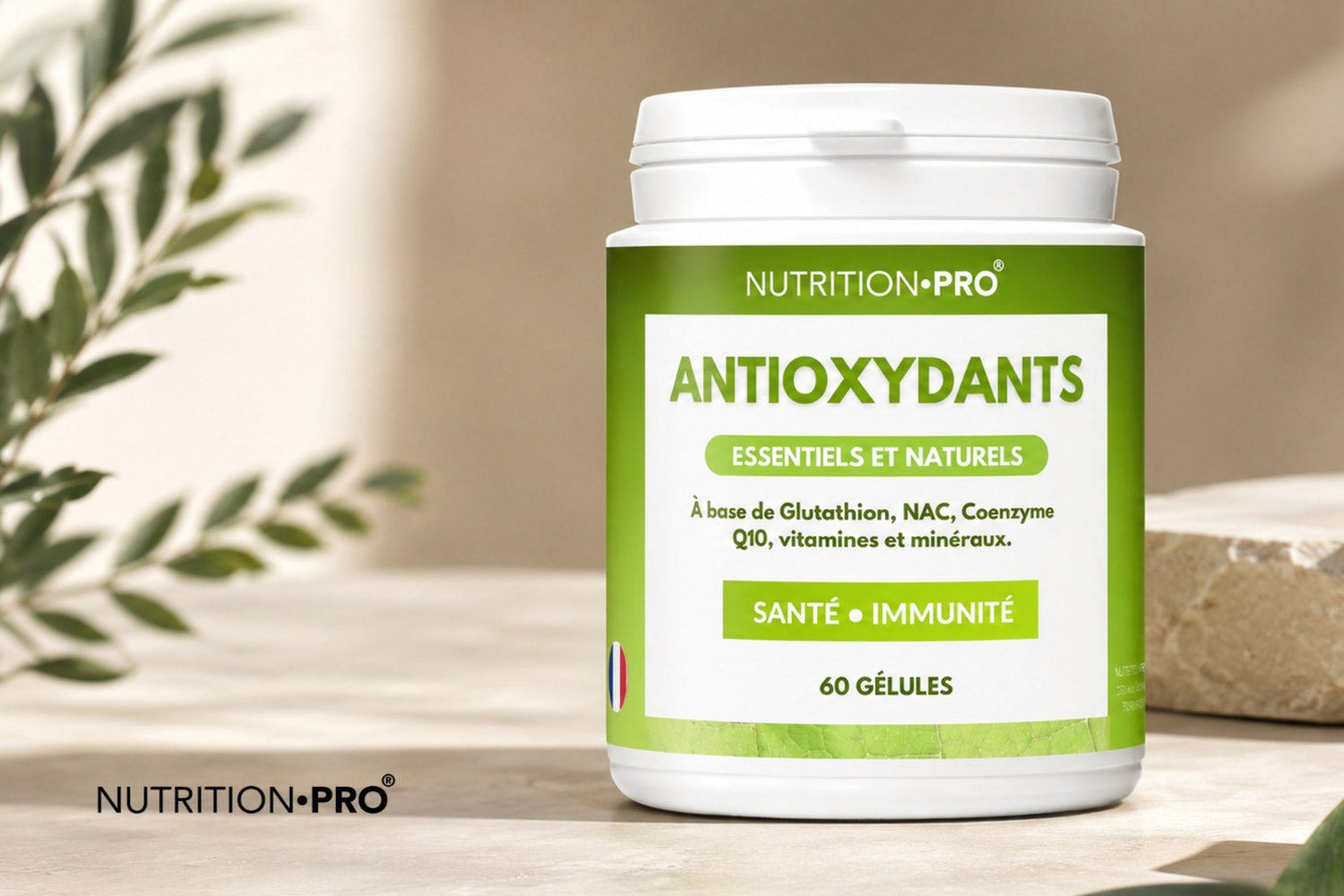
Antioxidants are everywhere: in the fruits and vegetables we eat, in anti-aging creams, in dietary supplements. Their name evokes youth, protection, longevity. But behind this popular image, what does science really say in 2026? This article takes an honest
look , drawing on Cochrane meta-analyses and leading scientific reviews. You will understand what an antioxidant is, how it works, whatoxidative stress is for, which are thefive antioxidant nutrients officially recognized by EFSA , and most importantly:how to choose an intelligent supplement by taking into account the scientific nuances that few brands acknowledge. ★ Our complete formula: ANTIOXIDANTS

A formula combining
9 synergistic active ingredients : glutathione, N-acetylcysteine, alpha-lipoic acid, coenzyme Q10, vitamins C and E, zinc, manganese, selenium. 5 nutrients have an official EFSA health claim for cell protection against oxidative stress. An approach scientifically consistent with current recommendations: moderate doses, complete composition, no beta-carotene. See our ANTIOXIDANTS formula →
IN BRIEFare molecules that neutralize free radicals , reactive oxygen species (ROS) produced continuously by our metabolism and amplified by tobacco, UV radiation, pollution, chronic stress and age. Five antioxidant nutrients have an official EFSA health claimfor "cell protection against oxidative stress": vitamins C and E, zinc, manganese and selenium. Science is nuanced . The Cochrane meta-analysis by Bjelakovic et al. 2012 (78 trials, 296,707 participants) showed that
high-dose mono-supplementation with beta-carotene and vitamin E could be associated with a slight increase in mortality in healthy individuals. Conversely, this signal was not observed for vitamin C, selenium, or for intracellular antioxidants such asglutathione , N-acetylcysteine glutathion, la N-acétylcystéine, the coenzyme Q10 andalpha-lipoic acid.
The scientific lesson: prioritize a diet rich in varied plant-based foods as the primary source, and if supplementing, choose complete formulas at moderate doses rather than single-active ingredients at megadoses. This is exactly the approach we advocate at Nutrition•pro.
- What is an antioxidant?
- Oxidative stress and free radicals: mechanisms
- Proven benefits: the 5 EFSA health claims
- Major antioxidant families
- Food sources: top foods and ORAC method
- Supplementation: when is it useful?
- The honest scientific nuance: what Bjelakovic 2012 says
- What criteria for choosing an antioxidant supplement?
- Our ANTIOXIDANTS formula: complete transparency
- Diet and lifestyle habits combined
- Decision table: your profile
- FAQ
What is an antioxidant?
A precise biochemical definition
From a chemical perspective, an antioxidant is a substance that, at low concentrations compared to those of an oxidizable substrate, can delay or prevent oxidation of that substrate. This is the classical definition proposed by Halliwell and Gutteridge, world authorities in oxidative biochemistry.
In practice, antioxidants work through several complementary mechanisms:
- Direct electron donors : they provide an electron to the free radical to neutralize its unstable charge (vitamin C, vitamin E, glutathione)
- Enzymatic cofactors : they allow antioxidant enzymes to function (zinc, manganese, selenium for superoxide dismutase, glutathione peroxidase, catalase)
- Metal chelators : they trap metal ions (iron, copper) that catalyze free radical formation
- Intracellular reducers : they maintain the redox status of cells (glutathione, alpha-lipoic acid)
Endogenous and exogenous antioxidants
Two major categories of antioxidants are distinguished based on their origin:
- <<<27>>> Endogenous antioxidants antioxydants endogènes are produced by the body. The most important are glutathione, superoxide dismutase (SOD), catalase, glutathione peroxidase and coenzyme Q10. They constitute our first line of defense, but their production decreases with age.
- <<<40>>> Exogenous antioxidants antioxydants exogènes come from food. They include vitamins C and E, carotenoids, plant polyphenols , and trace elements that activate antioxidant enzymes (selenium, zinc, manganese).
Oxidative stress and free radicals: mechanisms
What is a free radical?
A free radical is a chemical species possessing at least one unpaired electron on its outer shell. This configuration makes it extremely reactive: it seeks to "steal" an electron from a neighboring molecule to regain stability. This reaction often triggers a chain cascade, where the attacked molecule becomes in turn a radical and continues the process.
The free radicals most studied in biology are reactive oxygen species (ROS) : superoxide anion (O₂•⁻), hydrogen peroxide (H₂O₂), hydroxyl radical (OH•), as well as reactive nitrogen species (NO•, ONOO⁻).
Where are free radicals formed?
ROS production is physiological and continuous. According to the review by Pizzino et al. 2017 published in Oxidative Medicine and Cellular Longevity, they are primarily generated in:
- <<<34>>> mitochondria mitochondries (inevitable byproducts of cellular respiration and ATP production)
- <<<37>>> immune cells cellules immunitaires (which use ROS as a weapon against pathogens)
- <<<40>>> enzymes enzymes such as NADPH oxidases and cytochrome P450
- Theauto-oxidation of certain molecules (catecholamines, hemoglobin)
This normal production is amplified by external factors : UV exposure, air pollution, active and passive smoking, excessive alcohol consumption, chronic stress, heavy metals, certain medications, and certain physiological situations such as intense exercise or aging.
The important nuance: hormesis
Here is an essential point rarely addressed by marketing content. Oxidative stress is not inherently harmful. At moderate doses, ROS play essential physiological roles:
- Cell signaling : ROS are chemical messengers involved in regulating cell proliferation, apoptosis, and differentiation
- Immune defense : neutrophils and macrophages produce ROS to kill bacteria and viruses
- Exercise adaptation : moderate oxidative stress induced by sport stimulates endogenous antioxidant defenses and improves mitochondrial efficiency (hormesis)
It is only when ROS production durably exceeds the body's antioxidant capacity that we speak of deleterious chronic oxidative stress. This nuance, highlighted by the Pizzino 2017 review, is crucial to understanding why massive antioxidant supplementation is not always beneficial, and can even be counterproductive in certain contexts.
This review published in Oxidative Medicine and Cellular Longevity (cited over 6,000 times according to Google Scholar) presents a balanced view of oxidative stress. The authors emphasize that ROS are not only harmful, but play essential physiological roles (cell signaling, immune defense). The key concept is that of redox balance: it is the loss of homeostasis between ROS production and neutralization, not the simple presence of ROS, that becomes pathological.
Pizzino G, Irrera N, Cucinotta M, et al. Oxid Med Cell Longev. 2017;2017:8416763. DOI: 10.1155/2017/8416763
Proven benefits: the 5 EFSA health claims
Why EFSA claims matter
The European system is one of the strictest in the world. For a claim to be authorized under Regulation (EC) No 1924/2006, it must be based on generally accepted scientific evidence evaluated by EFSA experts. Many popular claims (anti-aging, detox, anti-cancer) are prohibited on dietary supplements because they do not meet these standards.
When a serious brand presents an antioxidant supplement, it must necessarily rely on these 5 validated claims for cellular protection:
| Nutrient | Official authorized EFSA claim | Reference NRV |
|---|---|---|
| Vitamin C | Contributes to protecting cells against oxidative stress | 80 mg/day |
| Vitamin E | Contributes to protecting cells against oxidative stress | 12 mg/day |
| Zinc | Contributes to protecting cells against oxidative stress | 10 mg/day |
| Manganese | Contributes to protecting cells against oxidative stress | 2 mg/day |
| Selenium | Contributes to protecting cells against oxidative stress | 55 µg/day |
Related antioxidant EFSA claims
Beyond the claim "protection of cells against oxidative stress," some of these nutrients have additional claims relevant to our topic:
- Vitamin C : "contributes to normal collagen formation to ensure normal skin function," "contributes to normal energy metabolism," "contributes to normal functioning of the immune system"
- Vitamin E : non-specific beyond oxidative stress
- Zinc : "contributes to the maintenance of normal skin," "contributes to the maintenance of normal bone structure," "contributes to normal DNA synthesis"
- Selenium : "contributes to normal thyroid function," "contributes to the maintenance of normal hair and nails"
These claims allow for the legal promotion of the benefits of a combined formula on skin, energy, immunity and overall wellness, in strict compliance with European regulations.
Major families of antioxidants
Family 1: Antioxidant Vitamins
<<<14>>> Vitamin C vitamine C (ascorbic acid) is the water-soluble antioxidant par excellence, present in blood plasma and intracellular fluids. It acts as a first-line defense in aqueous compartments and also regenerates oxidized vitamin E.
<<<17>>> Vitamin E vitamine E (tocopherols) is the major fat-soluble antioxidant, integrated into cell membranes where it protects polyunsaturated fatty acids against lipid peroxidation. Tocopherols (alpha, beta, gamma, delta) have complementary activities.
Family 2: Trace Mineral Cofactors
These minerals do not have direct antioxidant action, but they are essential cofactors of antioxidant enzymes :
- Selenium : cofactor of glutathione peroxidase and thioredoxin reductases
- Zinc : cofactor of cytoplasmic superoxide dismutase (Cu/Zn-SOD)
- Manganese : cofactor of mitochondrial superoxide dismutase (Mn-SOD)
- Copper : cofactor of Cu/Zn-SOD and ceruloplasmin
This is why a deficiency in these trace minerals can compromise endogenous antioxidant defenses, even in someone consuming plenty of fruits and vegetables.
Family 3: Plant Polyphenols
<<<33>>> Polyphenols polyphénols constitute the largest family of natural antioxidants with more than 8,000 molecules identified in the plant kingdom. They include:
- Flavonoids : quercetin (onion, apple, berries), catechins (green tea, cocoa), anthocyanins (red and blue berries, grapes), isoflavones (soy)
- Phenolic acids : chlorogenic acid (coffee), caffeic acid, ferulic acid
- Stilbenes : resveratrol (grapes, red wine, berries)
- Lignans : flax seeds, sesame
- Tannins : teas, pomegranate, red wine
Family 4: Carotenoids
Fat-soluble plant pigments that give their color to orange, yellow, and red fruits and vegetables:
- Beta-carotene (precursor of vitamin A): carrot, sweet potato, pumpkin
- Lycopene : cooked tomato, watermelon, pink grapefruit
- Lutein and zeaxanthin : spinach, kale, corn (important for eye health)
- Astaxanthin : salmon, shrimp, microalgae (Haematococcus pluvialis)
Important precaution : this is the family where beta-carotene is found, which was particularly flagged by the Bjelakovic 2012 meta-analysis in high-dose mono-supplementation in smokers. Dietary intake of beta-carotene (carrots, sweet potatoes) remains without any concern.
Family 5: Endogenous antioxidants and their precursors
This is the most interesting family from a therapeutic standpoint as it includes the major intracellular antioxidants :
- Glutathione (GSH) : the most abundant intracellular antioxidant, a tripeptide composed of glutamate, cysteine, and glycine
- N-acetylcysteine (NAC) : precursor of glutathione, supplies the limiting cysteine residue for synthesis
- Alpha-lipoic acid (ALA) : "universal" antioxidant, both water-soluble and fat-soluble, regenerates glutathione, vitamin C, and vitamin E
- Coenzyme Q10 (ubiquinone/ubiquinol) : mitochondrial antioxidant essential to the functioning of the respiratory chain and ATP production
Essential distinction: these antioxidants were NOT included in the Bjelakovic 2012 meta-analysis (which covered beta-carotene, vitamins A, C, E, and selenium). Their safety profile is therefore evaluated on different bases.
Food sources: top foods and ORAC method
The ORAC Index: Interest and Limitations
TheORAC index was developed by the American National Institute on Aging to quantify the antioxidant capacity of a food. It is expressed in µmol Trolox equivalent per 100 g (Trolox = water-soluble analogue of vitamin E used as a standard).
Important limitations to know honestly : ORAC measures an activity in vitro, which does not necessarily reflect biological activity in vivo after digestion, absorption and metabolism. The USDA (United States Department of Agriculture) actually removed its official ORAC database in 2012, considering that this method had become too misleading for consumers. Nevertheless, ORAC remains a roughly informative indicator for comparing foods richest in antioxidant compounds.
Top foods richest in antioxidants
| Food | Major antioxidant compounds | Primary benefit |
|---|---|---|
| Berries (blueberry, blackberry, strawberry, raspberry) | Anthocyanins, ellagic acid, quercetin, vitamin C | Low GI, protective polyphenols |
| Organic açai | Anthocyanins, polyphenols, essential fatty acids | Exceptional polyphenol density |
| Raw cacao, dark chocolate 70%+ | Flavanols (catechins, epicatechins) | Circulatory support, pleasure |
| Green tea | EGCG (epigallocatechin gallate), catechins | Metabolism, antioxidant hydration |
| Spices (turmeric, clove, cinnamon) | Curcumin, eugenol, polyphenols | Very high ORAC density |
| Dark leafy greens (kale, spinach) | Lutein, zeaxanthin, beta-carotene, vitamin C, folates | Overall nutritional density |
| Cooked tomato | Lycopene (bioavailability ×4 when cooked) | Stable and bioavailable carotenoid |
| Pomegranate | Punicalagin, anthocyanins, ellagic acid | Polyphenols with strong antioxidant capacity |
| Black garlic | S-allyl cysteine, polyphenols (Maillard) | Antioxidant activity ×7 vs raw garlic |
| Walnuts, almonds, hazelnuts | Vitamin E, polyphenols, selenium (Brazil nuts) | Fatty acids + vitamin E synergistic |
| Coffee (moderate) | Chlorogenic acid, melanoidins | Top source of polyphenols in the Western diet |
For a detailed and hierarchical ranking of the most powerful natural antioxidants, you can consult our complementary article The 9 most powerful natural antioxidants.
Supplementation: when is it useful?
Who can benefit from antioxidant supplementation?
According to available scientific reviews, several profiles may justify considering supplementation (always as a complement, never as a replacement for a good diet):
- Adults 45 years and older : progressive decline of endogenous antioxidants (glutathione, CoQ10) documented with age
- People exposed to amplified oxidizing factors : chronic urban pollution, intense UV exposure, exposed professionals (laboratory, chemical industry)
- Smokers and recent former smokers : with major caution, avoid high-dose beta-carotene supplements (see CARET and ATBC studies)
- Regular alcohol consumers : documented glutathione depletion
- Intensive athletes : moderate approach, do not overdose around training sessions (possible counterproductive effect on adaptation)
- People wishing to support a global anti-aging approach : cosmetic and wellness approach, in synergy with skincare routine and sun protection
- Restricted dietary patterns : unbalanced diet, severe caloric restrictions, aging with diminished appetite
Who should avoid or seek medical advice?
- Pregnant and breastfeeding women : not recommended without medical advice
- Diabetics : certain active ingredients such as alpha-lipoic acid may modulate blood sugar levels; medical advice required
- People undergoing chemotherapy or radiotherapy : these treatments use oxidation to destroy cancer cells; antioxidants may theoretically interfere; oncological advice is essential
- People taking anticoagulants : possible interactions with certain polyphenols and vitamin E at high doses
- People on chronic medication : always report supplement use to your doctor and pharmacist
The honest scientific nuance: what Bjelakovic 2012 says
Why this study is crucial
Bjelakovic 2012 is not an isolated study: it is a Cochrane meta-analysis, the highest level of evidence in evidence-based medicine. It aggregates results from 78 double-blind randomized trials versus placebo, totaling nearly 300,000 participants followed for an average of 3 years. The methodology is extremely rigorous: only trials with low risk of bias were retained for the main conclusions.
Cochrane meta-analysis of 78 randomized controlled clinical trials totaling 296,707 adult participants, comparing antioxidant supplementation (beta-carotene, vitamins A, C, E, selenium) to placebo or no intervention. In trials with low risk of bias (56 studies, 244,056 participants), antioxidant supplements significantly increased mortality (12.9% vs 10.6%, RR 1.04, 95% CI 1.01–1.07). Nutrient-specific analyses revealed an increased mortality signal for beta-carotene (RR 1.05) and vitamin E (RR 1.03), with no signal for vitamin C or selenium. The authors conclude that there is no evidence supporting the use of antioxidants in primary or secondary prevention in healthy individuals.
Bjelakovic G, Nikolova D, Gluud LL, Simonetti RG, Gluud C. Cochrane Database Syst Rev. 2012;(3):CD007176. DOI: 10.1002/14651858.CD007176.pub2
What this study really says, and what it doesn't
Let us clarify this important result point by point:
- The mortality signal primarily concerns high-dose monotherapy, not normal nutritional intakes. The included trials often used doses far exceeding the RDA (for example 400–800 IU/day of vitamin E, or 268–536 mg, versus an RDA of 12 mg).
- Beta-carotene and vitamin E are the most affected, particularly in smokers (CARET and ATBC studies stopped prematurely due to increased lung cancer risk with high-dose beta-carotene in smokers).
- Vitamin C, selenium, and vitamin A at normal doses did NOT show a mortality signal.
- Intracellular antioxidants (glutathione, NAC, coenzyme Q10, alpha-lipoic acid, specific polyphenols) were not included in this meta-analysis. Their safety profile must therefore be evaluated separately.
- Dietary antioxidant intakes (fruits, vegetables, tea, cocoa, spices) are absolutely not affected by this signal: the meta-analysis covers only isolated supplements.
The scientific lesson for 2026
This study does not invalidate antioxidant supplementation as a whole. It invites us to rethink intelligently the strategy:
- Foodremains the primary source : always prioritize fruits, vegetables, herbs, tea, cocoa before any supplement
- If supplementing, avoid megadoses of single actives, especially high-dose isolated beta-carotene and vitamin E
- Prioritize complete formulas at moderate doses, compliant with RDAs, where each active supports the others in a network
- Include endogenous antioxidants (glutathione, NAC, ALA, CoQ10) which do not present the unfavorable signal
- Adapt the duration: 1 to 3-month courses rather than unjustified permanent daily intake
This is exactly the logic we adopted in designing our ANTIOXIDANTS formula, as explained in detail below with full transparency.
What criteria for choosing an antioxidant supplement?
7 criteria to check before purchase
| Criterion | Why it matters |
|---|---|
| 1. Combined formula vs single-active | Antioxidants work as a network, each regenerating the other. Avoids unfavorable signals from isolated megadoses. |
| 2. Moderate doses, close to RDA | Avoids megadoses (400-800 IU vitamin E, high-dose beta-carotene) flagged by Bjelakovic 2012. |
| 3. Presence of endogenous antioxidants | Glutathione, NAC, ALA, CoQ10: major intracellular actives, not affected by Cochrane signals. |
| 4. Absence of high-dose beta-carotene | Especially in smokers: lung cancer signal (CARET, ATBC). Dietary intake from carrots without concern. |
| 5. EFSA claims respected | Avoids false promises (anti-cancer, detox, rejuvenation). Regulatory compliance = brand credibility. |
| 6. Complete and transparent composition | Precise doses displayed for each active (mg/µg), forms used indicated, plant part specified. |
| 7. Traceable origin and manufacturing | French or European manufacturing, quality controls, possible certifications (organic, GMP). |
Our ANTIOXIDANTS formula: complete transparency
Detailed composition per 2 capsules (daily dose)
| Active | Quantity | % RDA | Scientific status |
|---|---|---|---|
| N-acetylcysteine | 200 mg | / | Glutathione precursor, not affected by Bjelakovic |
| Alpha-lipoic acid | 200 mg | / | Universal antioxidant, not affected by Bjelakovic |
| Reduced L-glutathione | 150 mg | / | Major intracellular antioxidant, not affected by Bjelakovic |
| Vitamin C | 100 mg | 125 % | EFSA claim Cell protection against oxidative stress |
| Coenzyme Q10 (Cavaq10) | 20 mg | / | Mitochondrial antioxidant, not addressed by Bjelakovic |
| Zinc (gluconate) | 15 mg | 150 % | EFSA claim Cell protection against oxidative stress |
| Vitamin E (DL alpha-tocopherol) | 10 mg | 100 % | EFSA claim + moderate dose (vs 268-536 mg in Bjelakovic) |
| Manganese (gluconate) | 2 mg | 100 % | EFSA claim Cell protection against oxidative stress |
| Selenium (enriched yeast) | 50 µg | 150 % | EFSA claim Cell protection against oxidative stress |
Why this formulation is consistent with 2026 scientific data
You will note several key points that align with our scientific transparency approach:
- No beta-carotene in the formula. It was one of the most problematic ingredients in Bjelakovic 2012.
- Vitamin E at moderate dose (10 mg, or 100% NRV), very far removed from the problematic doses used in the trials included in Bjelakovic (which ranged from 268 to 536 mg).
- 5 official EFSA claims respected in the formula (vitamins C/E, zinc, manganese, selenium for cell protection against oxidative stress).
- 4 major intracellular actives (glutathione, NAC, ALA, CoQ10) that are not affected by Bjelakovic's unfavorable signals.
- Combined formula at moderate doses, consistent with the "antioxidant network" logic rather than isolated megadosing.
What we honestly acknowledge (limitations)
- No clinical trial has tested this exact formula, as is the case for virtually all multi-active supplements on the market. Evidence of efficacy is based on individual studies of the active ingredients and on the logic of network synergy.
- The Individual doses of certain active ingredients are lower than those used in certain clinical studies (for example Mortensen 2014 used 300 mg of CoQ10 vs 20 mg here, and Richie 2014 used up to 1 g of glutathione vs 150 mg here).
- Antioxidant supplementation has not demonstrated clear benefit in primary prevention (Bjelakovic 2012). We therefore position this supplement as a supporting aid, not as a medical prevention device.
- No therapeutic claims are made: no cancer prevention, no treatment of disease. Only EFSA-validated claims are asserted.
Randomized, double-blind, placebo-controlled clinical trial in 54 healthy adults, oral glutathione supplementation at 250 or 1,000 mg/day for 6 months. Significant increase in body glutathione stores: +17% to +35% in blood, erythrocytes, plasma and lymphocytes; +260% in buccal cells for the high-dose group. Reduction in the oxidized/reduced glutathione ratio after 6 months, a sign of improved redox status. Levels returned to baseline 1 month after stopping. This study demonstrates for the first time that oral glutathione supplementation effectively increases body stores in humans.
Richie JP Jr, Nichenametla S, Neidig W, et al. Eur J Nutr. 2014;54(2):251-263. DOI: 10.1007/s00394-014-0706-z
Diet and lifestyle habits combined
The Mediterranean diet as a nutritional cornerstone
The Mediterranean diet remains the best-documented dietary model for its favorable antioxidant profile. According to numerous observational studies (PREDIMED study, EPIC cohorts), this diet naturally provides:
- Varied polyphenols (olive oil, moderate red wine, aromatic herbs)
- Carotenoids (tomato, bell pepper, carrot)
- Lutein and zeaxanthin (spinach, leafy greens)
- Omega-3 fatty acids (fatty fish, walnuts)
- Prebiotic fiber (legumes, whole grains)
- Selenium (fish, shellfish, Brazil nuts)
The 10 most impactful habits
- Consume 5 to 10 servings of fruits and vegetables per day, varying the colors (red, orange, yellow, green, purple) to cover a broad spectrum of polyphenols
- Include berries several times a week (blueberries, raspberries, blackberries, strawberries) for their richness in anthocyanins
- Cook with herbs and spices (turmeric, ginger, rosemary, thyme, garlic) rather than over-salting
- Drink green tea or coffee in moderation (without excess, ideally in the morning)
- Consume 70%+ dark chocolate in moderation (10-20 g/day) for cocoa flavanols
- Prioritize healthy fats : extra virgin olive oil, avocado, nuts, fatty fish
- Limit ultra-processed foods high in added sugars, oxidized fats and pro-oxidant additives
- Practice regular moderate physical activity (30 min/day, walking, cycling, swimming) : science shows that moderate exercise stimulates endogenous antioxidant defenses through hormesis
- Sleep 7-9 hours per night : sleep is a crucial period for cellular repair and antioxidant regeneration
- Manage chronic stress : meditation, breathing, nature walks, social connection
Supplement + nutrition synergy
An antioxidant supplement achieves its full potential when part of a good lifestyle regimen. It helps bridge nutritional gaps or support specific periods (seasonal transitions, stress periods, intense UV exposure, intensive exercise), but it never replaces the complex nutritional intake and overall synergy of a balanced life.
Decision table: your profile
FAQ: Your questions about antioxidants
What exactly is an antioxidant?
An antioxidant is a molecule capable of neutralizing free radicals, these reactive oxygen species (ROS) produced continuously by cellular metabolism and amplified by certain environmental factors (UV, pollution, tobacco, stress). Antioxidants include vitamins (C, E), trace elements (selenium, zinc, manganese), plant polyphenols and endogenous molecules such as glutathione and coenzyme Q10.
What do antioxidants really do for health?
According to official health claims authorized by the EFSA (European Food Safety Authority), five antioxidant nutrients have a validated claim for protecting cells against oxidative stress: vitamin C, vitamin E, zinc, manganese and selenium. Beyond this cellular protection, oxidative stress is involved in biological aging, skin beauty and overall well-being, according to extensive scientific literature (Pizzino 2017, Oxidative Medicine and Cellular Longevity).
Are antioxidant supplements safe?
The question deserves an honest answer. The Cochrane meta-analysis by Bjelakovic et al. 2012, based on 78 clinical trials and 296,707 participants, showed that high-dose supplementation with beta-carotene and vitamin E (mono-supplementation) could be associated with a slight increase in mortality in healthy individuals. In contrast, vitamin C, selenium and glutathione do not present this risk. The lesson: avoid very high-dose mono-supplementation and favor complete formulas with moderate doses.
What's the difference between dietary and supplement antioxidants?
Dietary antioxidants (fruits, vegetables, herbs, tea, cacao) remain the primary source to prioritize because they provide a balanced natural complex of polyphenols, vitamins and trace elements in a nutritional matrix rich in fiber and micronutrients. Dietary supplements can be added when dietary intake is insufficient, during periods of increased oxidative stress (intense exercise, UV exposure, pollution, secondhand smoking) or as part of a global anti-aging approach. They do not replace a varied diet.
What are the most powerful antioxidants?
The notion of antioxidant power has long been measured by the ORAC index (Oxygen Radical Absorbance Capacity). ORAC champions include berries (acai, aronia berry, wild blueberry), spices (clove, cinnamon, turmeric), raw cacao, green tea (EGCG), pomegranate and black garlic. For a detailed ranking, consult our dedicated article on The 9 Most Powerful Natural Antioxidants.
What is glutathione and why is it important?
Glutathione is the major antioxidant produced by your body. It is an intracellular tripeptide that regulates the redox status of cells and supports the immune system. According to the clinical trial by Richie et al. 2014 in European Journal of Nutrition, oral glutathione supplementation at 250-1000 mg/day for 6 months significantly increases body stores (between +17% and +35% depending on compartments). Its natural precursors are N-acetylcysteine (NAC) and alpha-lipoic acid.
From what age should you consider an antioxidant course?
Oxidative stress and the decline of endogenous antioxidant defenses intensify from age 35-45 according to several scientific reviews. This is a window where the value of an antioxidant approach (diet enriched with fruits, colorful vegetables, polyphenols, possible supplementation) becomes fully relevant, particularly in the presence of aggravating factors: smoking, frequent sun exposure, urban pollution, intense exercise, chronic stress.
How do I know if I'm lacking antioxidants?
There is no routine test in general medicine to directly measure overall antioxidant status. Some specialized laboratories offer measurements (total antioxidant capacity, blood glutathione, plasma vitamin E) but they remain poorly standardized. Indirect signals to monitor: premature skin aging, unexplained chronic fatigue, difficult muscle recovery after exercise, increased susceptibility to infections. If in doubt, a personalized nutritional assessment with a doctor or dietitian is recommended.
Which foods are richest in antioxidants?
The best documented food sources: berries (blueberry, raspberry, blackberry, strawberry, acai), leafy green vegetables (spinach, kale, broccoli), colorful vegetables (red pepper, cooked tomato, beetroot), spices (turmeric, cinnamon, ginger, clove), green tea and black tea, raw cacao and 70% dark chocolate, tree nuts (walnuts, almonds, hazelnuts), fatty fish (omega-3 antioxidants), extra virgin olive oil. A Mediterranean diet naturally provides an excellent antioxidant profile.
Is supplemented vitamin E really dangerous?
Nuance is essential. The Bjelakovic 2012 meta-analysis highlighted a signal of modest increased mortality with vitamin E at high doses in mono-supplementation (typically 400 to 800 IU/day, or approximately 268 to 536 mg of tocopherol). At doses corresponding to recommended nutrient intakes (10-15 mg/day, the RDA), vitamin E remains essential to metabolism and benefits from an EFSA claim for protecting cells against oxidative stress. The lesson: it is not vitamin E itself that is problematic, but isolated megadoses.
How long should you take an antioxidant supplement?
Clinical studies generally use durations of 8 weeks to 6-12 months to observe effects on oxidative stress markers and antioxidant status. The Richie 2014 trial on glutathione showed effects at 1, 3, and 6 months, with progressive increases in body stores and return to baseline 1 month after stopping. A 1 to 3 month course is a reasonable duration for a supportive approach, to be renewed based on needs and seasonal periods (inter-season, winter period, UV exposure).
Do antioxidants protect against skin aging?
The oxidative stress theory is one of the major scientific explanations for photo-induced (photodamage) and chronological skin aging. UV rays, pollution, and chronic stress generate free radicals that degrade collagen and elastin in the dermis. Several clinical studies have shown that supplementation with vitamins C, E, carotenoids, and polyphenols can contribute to skin protection, in addition to adequate sun protection and good hydration. However, no dietary supplement replaces a proper skincare routine and sun protection regimen.
What precautions should be taken with supplemented antioxidants?
A few precautions to know: not recommended during pregnancy and breastfeeding without medical advice; caution in people undergoing chemotherapy or radiotherapy (antioxidants can theoretically interfere with these oxidative treatments); caution in diabetics (some active compounds like alpha-lipoic acid modulate blood sugar); avoid mono-supplementations at very high doses, especially beta-carotene and vitamin E; always inform your doctor of supplement use if you are taking chronic medications.
Is a combined formula better than a single antioxidant?
Current scientific data suggest yes. The Bjelakovic 2012 meta-analysis highlighted unfavorable signals mainly with high-dose mono-supplementations (beta-carotene, vitamin E), not with combined formulas at moderate doses. The biological logic of complementarity is sound: antioxidants work in a network, one regenerating the other. For example, vitamin C regenerates oxidized vitamin E, and glutathione in turn regenerates vitamin C. This network synergy justifies formulas combining multiple active compounds at moderate doses.
Does an intensive athlete need more antioxidants?
This is a debated question. Physical exercise generates oxidative stress, but this stress is also a positive adaptation signal for the body (hormesis phenomenon). Completely blocking this stress with megadoses of antioxidants could paradoxically reduce training adaptations. The reasonable position according to recent reviews: maintain a diet rich in natural antioxidants, but do not heavily overdose supplemented antioxidants around training sessions. A balanced formula at moderate doses remains compatible with sports practice.
- ROS (reactive oxygen species)
- Molecules derived from oxygen and possessing one or more unpaired electrons, which makes them chemically highly reactive. Include the superoxide radical, hydrogen peroxide, and the hydroxyl radical.
- Oxidative stress
- Imbalance between the production of free radicals and the antioxidant capacity of the body. Chronic imbalance can contribute to cellular aging and various biological alterations.
- ORAC (Oxygen Radical Absorbance Capacity)
- In vitro method developed by the U.S. National Institute on Aging to measure the antioxidant capacity of a food. Expressed in µmol Trolox equivalent. Considered imperfect for predicting biological effects, but remains useful as a comparative reference between foods.
- Hormesis
- Biological phenomenon in which moderate exposure to a stress factor (oxidative, thermal, metabolic) triggers beneficial adaptations in the body, while excessive exposure becomes harmful. Key concept for understanding physical exercise and nutrition.
- EFSA
- European Food Safety Authority. In charge of evaluating health and safety claims on food and food supplements. Its opinions guide European regulations.
- Glutathione (GSH)
- Tripeptide composed of glutamate, cysteine, and glycine. Major intracellular antioxidant, regulator of cellular redox status. Its production decreases with age and during certain situations of chronic oxidative stress.
- Coenzyme Q10 (ubiquinone)
- Lipid-soluble molecule found mainly in mitochondria. Essential to the respiratory chain and ATP production. Also possesses mitochondrial antioxidant activity. Its endogenous synthesis decreases with age.
- Polyphenols
- Family of plant molecules characterized by the presence of at least one phenolic ring. Over 8,000 molecules identified. Include flavonoids, phenolic acids, stilbenes, lignans, and tannins. Antioxidant activities and other biological effects studied.
- Cochrane meta-analysis
- Type of systematic review of scientific literature considered the highest level of evidence in evidence-based medicine. Cochrane reviews follow strict independent methodology to evaluate all available clinical trials on a given question.
- Bjelakovic G, Nikolova D, Gluud LL, Simonetti RG, Gluud C. Antioxidant supplements for prevention of mortality in healthy participants and patients with various diseases. Cochrane Database of Systematic Reviews. 2012;(3):CD007176. DOI : 10.1002/14651858.CD007176.pub2
- Pizzino G, Irrera N, Cucinotta M, et al. Oxidative Stress: Harms and Benefits for Human Health. Oxidative Medicine and Cellular Longevity. 2017;2017:8416763. DOI : 10.1155/2017/8416763
- Richie JP Jr, Nichenametla S, Neidig W, et al. Randomized controlled trial of oral glutathione supplementation on body stores of glutathione. European Journal of Nutrition. 2014;54(2):251-263. DOI : 10.1007/s00394-014-0706-z
- Mortensen SA, Rosenfeldt F, Kumar A, et al. The effect of coenzyme Q10 on morbidity and mortality in chronic heart failure: results from Q-SYMBIO. JACC Heart Failure. 2014;2(6):641-649. DOI : 10.1016/j.jchf.2014.06.008
- EFSA. Authorized health claims on food products - Regulation (EC) No. 1924/2006. European Food Safety Authority. EFSA official website


