

- 1. What is phycocyanin?
- 2. Cellular health: definition and issues
- 3. Preclinical data: cell protection and mechanism of action
- 4. Human studies: results and limitations
- 5. Potential applications of phycocyanin
- 6. Practical advice and precautions
- 7. Conclusion
- 8. FAQ
- 9. Scientific references
Cellular health is at the heart of proper bodily function. It determines tissue vitality, resistance to external stressors, and the body's capacity for regeneration. Among the natural molecules studied for their protective potential, phycocyanin has attracted particular attention. This blue pigment extracted from spirulina combines antioxidant and anti-inflammatory properties that could play a decisive role in preserving cellular balance.
Scientific data accumulated over recent years shows that phycocyanin acts on multiple fronts: reduction of oxidative stress, modulation of inflammatory mediators, and support of cellular viability. However, the majority of these results come from in vitro or animal studies. Human clinical trials remain rare and sometimes heterogeneous in their methods, which calls for cautious conclusions.
This article proposes a critical analysis of scientific literature. The objective is to distinguish what is solidly demonstrated, what appears plausible but requires confirmation, and what remains speculative. By exploring the biological mechanisms, preclinical data, and early human studies, we will seek to better understand the role that phycocyanin could play in cellular protection and health.

1. What is phycocyanin?
Definition and origin
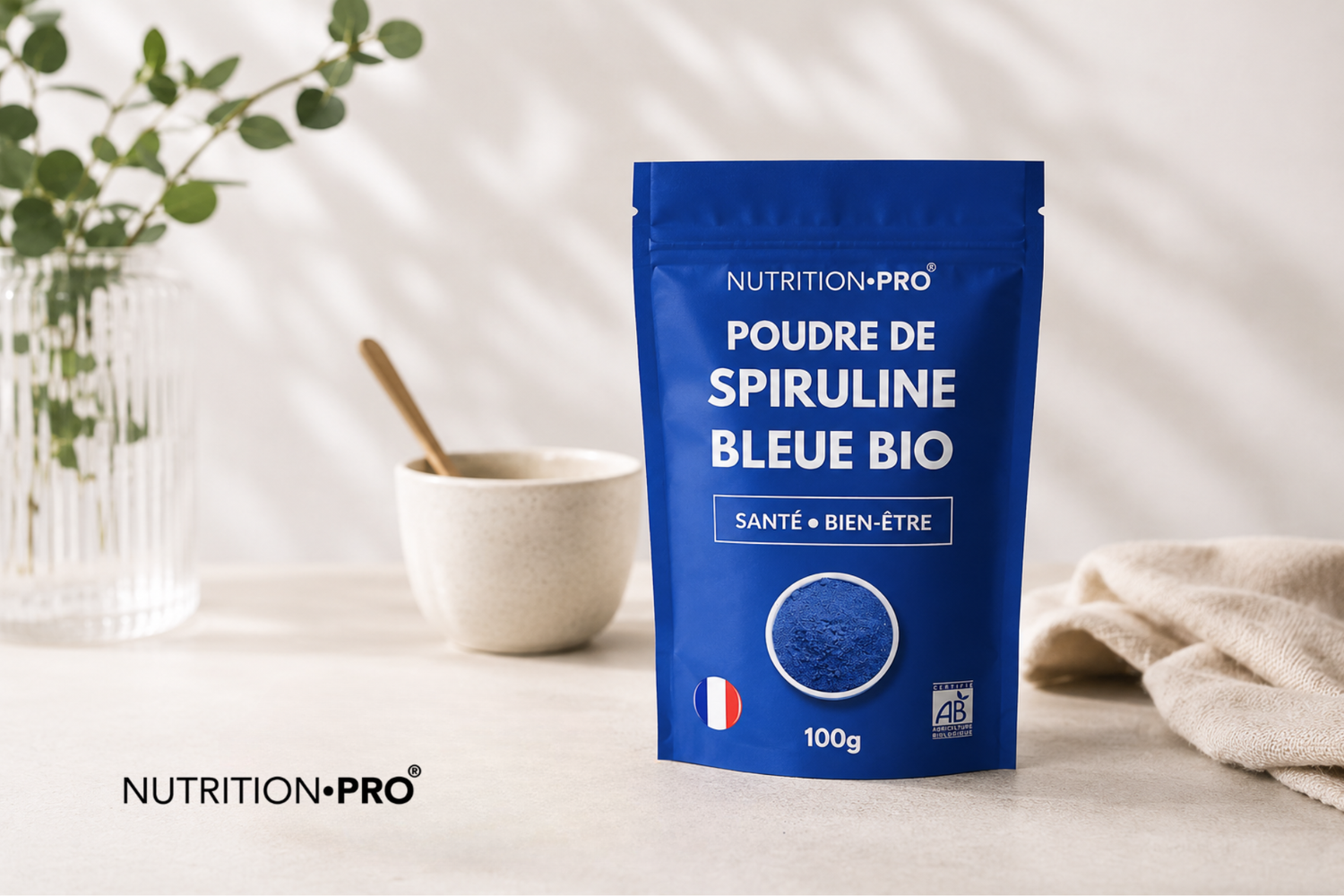
<<<27>>> Phycocyanin phycocyanine is a blue-green pigment naturally present in certain microalgae, primarily spirulina (Arthrospira platensis). It belongs to the family of phycobiliproteins, a group of pigmented proteins involved in photosynthesis. Its role is to capture light in wavelengths that chlorophyll absorbs poorly, particularly in the red and orange spectrum.
This pigment is responsible for the characteristic color of blue spirulina and constitutes a significant portion of its biomass (up to 15% of its dry mass). While it has long been used as a natural colorant in the food industry, it is above all its bioactive profile that interests researchers today.
Biochemical Composition
Phycocyanin is composed of α and β protein subunits, to which are attached chromophores called phycocyanobilins. These possess a structure similar to that of human bilirubin, a molecule known for its antioxidant capabilities. This similarity partly explains phycocyanin's ability to interact with certain biological defense pathways.
Its main characteristics are:
- Color : intense turquoise blue.
- Structure : protein complex with specific chromophores.
- Solubility : water-soluble, which facilitates its incorporation into liquid supplements.
- Fragility : unstable when exposed to heat, light, and pH variations.
Extraction and Purity
Phycocyanin must be extracted from spirulina to be used in concentrated form. Several methods exist:
- Gentle aqueous extraction, which preserves antioxidant properties.
- Membrane filtration, allowing proteins to be separated by size.
- Chromatography, which produces a highly purified extract but at higher cost.
- Encapsulation (liposomes, natural matrices), which improves its stability and bioavailability.
Depending on the process, extracts of varying purity are obtained:
- crude (20–30% phycocyanin),
- semi-purified (50–60%),
- highly purified (70% and above).
This heterogeneity partly explains the diversity of scientific results: not all extracts are equal.
Studied Biological Properties
Phycocyanin concentrates several potential effects that explain its growing interest:
- Powerful antioxidant : it neutralizes certain free radicals and limits oxidative damage.
- Anti-inflammatory : it reduces the production of pro-inflammatory cytokines (IL-6, TNF-α) and inhibits certain enzymes such as COX-2.
- Cytoprotective : it protects cell membranes and reduces apoptosis in case of stress.
- Immunomodulator : some studies suggest a regulatory action on the immune system.
- Neuroprotective : preclinical research highlights possible protection of neurons.
These effects are part of a holistic vision: phycocyanin does not target a particular organ, but contributes to strengthening the universal cellular defense and regeneration mechanisms.
Current Applications
Today, phycocyanin is used in several fields:
- Dietary Supplements : in the form of capsules, powders or fortified beverages.
- Cosmetics : incorporated into creams, serums or after-sun care products for its protective and soothing effects.
- Food and Beverage Industry : approved as a natural colorant (E18).
- Biomedical Research : used as a fluorescent probe and studied for its potential applications in oncology or neurology.
Phycocyanin is not only studied for human nutrition: in biotechnology, it is used as a **fluorescent probe** thanks to its ability to absorb and re-emit light. It thus serves in cellular and molecular research techniques.
2. Cellular Health: Definition and Challenges
What is meant by cellular health?
Cellular health refers to thestate of proper functioning of cells that make up the body. Each cell is a living unit capable of capturing nutrients, producing energy, eliminating waste and communicating with other cells. When they perform these tasks optimally, the tissues, organs and systems that depend on them remain functional.
Conversely, cells weakened by oxidative stress, chronic inflammation or a deficiency in essential nutrients lose their effectiveness. This results in premature aging, a decline in vitality, and sometimes the appearance of chronic diseases.
The Pillars of Cellular Vitality
Cellular health can be summarized in several fundamental pillars :
- Membrane Integrity : the cell membrane acts as a protective and regulatory barrier. If it is damaged, the water and ionic balance is compromised.
- Oxidative Balance : cells naturally produce free radicals, but uncontrolled excess causes damage to lipids, proteins and DNA.
- Intracellular Communication : hormonal, enzymatic and electrical signals must circulate freely to coordinate biological functions.
- Repair Capacity : damaged DNA and cellular proteins must be repaired efficiently to prevent deleterious mutations.
- Energy Availability : mitochondria ensure ATP production, the vital fuel for all cellular functions.
- Cellular renewal : the balance between apoptosis (programmed cell death) and cell division guarantees tissue regeneration.
Factors that weaken cells
Several lifestyle and environmental elements directly disrupt cellular health:
- Chronic exposure to UV and pollution : they generate an excess of free radicals.
- Unbalanced diet : lack of antioxidants, excess refined sugars and trans fats damage membranes and promote inflammation.
- Chronic stress : it increases cortisol production and promotes an inflammatory state.
- Lack of sleep : nighttime cellular regeneration is compromised.
- Tobacco and alcohol : major sources of free radicals and metabolic disruptions.
- Natural aging : gradual decline in the effectiveness of defense and repair systems.
These factors explain why it is crucial to protect cells through a combination ofhealthy lifestyle habits and protective nutrients.
Cellular health and hydration
One of the key aspects of cellular health isintracellular hydration. A well-hydrated cell maintains its shape, function and exchanges. When hydric balance is disrupted:
- enzymes function less efficiently,
- communication between cells slows down,
- skin loses its elasticity,
- and overall metabolism becomes dysregulated.
Specialized proteins, called aquaporins, play a central role in this process by regulating the flow of water and small molecules such as glycerol. Their proper functioning depends on healthy membranes and an environment not stressed by oxidation.
Why connect phycocyanin and cellular health?
Phycocyanin attracts attention because it could act on several of the pillars mentioned:
- protect membranes against oxidation,
- modulate inflammation that disrupts cellular communication,
- support endogenous defense mechanisms (antioxidant enzymes),
- and promote better hydric balance through preservation of cellular integrity.
In summary, it does not replace fundamental needs (water, nutrients, sleep, healthy lifestyle), but it could act as a protective and supportive factor in a modern environment often aggressive to cells.
3. Preclinical Data: Cell Protection and Mechanisms of Action
Early In Vitro Observations
The first research on phycocyanin was conducted in the laboratory, on cell cultures. These models make it possible to evaluate the direct effects of a molecule in a controlled environment. The results are encouraging:
- Reduction of Oxidative Stress : in several studies, phycocyanin decreases the production of free radicals induced by oxidizing agents (hydrogen peroxide, UV rays).
- Preservation of Cell Viability : cells exposed to oxidative stress survive better in the presence of phycocyanin.
- Protection of Membranes : markers of lipid peroxidation (deterioration of membrane fats) are reduced.
- Activation of Antioxidant Enzymes : increase in superoxide dismutase (SOD), catalase, and glutathione peroxidase, which constitute the first line of intracellular defense.
These effects converge toward one idea: phycocyanin acts as a protective shield, not only by directly neutralizing certain free radicals, but also by stimulating the internal defenses of cells.
The Nrf2 Pathway and Cellular Defense
A particularly studied mechanism is the activation of the Nrf2pathway. This transcription factor is a "master conductor" of antioxidant defenses. When activated, it triggers the expression of numerous genes encoding protective enzymes.
Phycocyanin appears to promote this activation, which explains its ability to strengthen endogenous protection systems beyond its role as a direct antioxidant. This means that it not only neutralizes free radicals already present, but also helps the body defend itself better against future assaults.
Modulation of Inflammation
In vitro studies also show that phycocyanin can influence cytokine expression :
- reduction of TNF-α and IL-6,
- decrease in COX-2 (key enzyme in the inflammatory cascade),
- possible increase in anti-inflammatory cytokines.
This modulation is important because chronic inflammation, even of low intensity, contributes to the degradation of cell membranes, the disruption of intercellular communication, and the progressive loss of cellular vitality.
Animal Model Studies
To complement in vitro observations, work was conducted on laboratory animals: mice, rats, and sometimes hamsters. The results confirm several points:
- Reduction of Tissue Damage : in animals exposed to oxidative stress or a pro-inflammatory diet, phycocyanin limits damage to cell membranes and proteins.
- Protection of Skin : some studies show better skin tolerance to UV rays, suggesting a protective effect against water loss and premature aging.
- Neuroprotective Effect : in models of cerebral oxidative stress, phycocyanin preserves neuronal survival.
- Metabolic Support : improvement of certain parameters related to lipid and glycemic balance, which indirectly influence overall cellular health.
Limitations of preclinical studies
While these results are promising, they must be interpreted with caution:
- High dosages : the quantities administered to animals are sometimes far superior to what is realistic in humans.
- Variability of extracts : depending on extraction and purification methods, effects can vary considerably.
- Limited translatability : a positive effect observed on isolated cells or in animals does not guarantee the same result in humans.
These limitations remind us that phycocyanin remains a promising molecule, but its effects must be confirmed under rigorous clinical conditions.
Preclinical studies show that phycocyanin acts as a **true cellular shield**: it reduces oxidative stress, protects membranes, stimulates endogenous defenses and modulates inflammation. But these results, obtained in vitro or in animals, must still be validated in humans.
4. Human studies: results and limitations
A field still little explored
Unlike abundant preclinical research, clinical studies on phycocyanin in humans remain limited. Most published trials concern whole spirulina, not purified phycocyanin. This distinction is important: spirulina contains many compounds (proteins, vitamins, minerals, various pigments), which makes it difficult to attribute observed effects solely to phycocyanin.
However, a few studies have specifically used extracts enriched or standardized in phycocyanin, allowing for preliminary answers.
Effects on oxidative stress
In several clinical trials, supplementation with spirulina or phycocyanin led to a decrease in oxidative stress markers:
- reduction of lipid peroxidation, a process that damages cell membranes,
- increase in endogenous antioxidants such as glutathione,
- improvement of overall antioxidant status, measured by total plasma capacity to neutralize free radicals.
These results support the hypothesis that phycocyanin could preserve membrane integrity and promote better cellular function.
Impact on inflammation
Clinical studies have also explored effects on systemic inflammation. In healthy volunteers or those with metabolic conditions, we observe:
- a decrease in pro-inflammatory cytokines (IL-6, TNF-α),
- a reduction in C-reactive protein (CRP), a global marker of inflammation,
- a subjective improvement in joint or muscle comfort in some participants.
These results suggest that phycocyanin may help reducelow-grade inflammation, a phenomenon often associated with aging, chronic stress, and metabolic disorders.
Dermatological Applications
A few pilot trials have explored the effects of phycocyanin on skin:
- indirect improvement in skin barrier markers (TEWL, elasticity),
- better skin tolerance to UV,
- reduction in signs of skin dryness,
- improvement in overall skin appearance in supplements combining phycocyanin with other antioxidants.
However, these trials are often of short duration (4 to 12 weeks) and involve small sample sizes (20 to 60 participants). Conclusions should therefore be interpreted with caution.
Physical Performance and Recovery
Phycocyanin has also been tested in athletes, primarily for its anti-fatigue and antioxidant properties. Results sometimes show:
- a reduction inlactic acid accumulation,
- slightly faster muscle recovery,
- a decrease in perceived pain after intense exercise.
These results are encouraging but relate more to cellular resilience to physical stress than to hydration or cellular health in the strict sense.
Methodological Limitations
Human studies present several recurring weaknesses:
- small sample sizes,
- limited duration,
- variability in extracts used (20% vs 70% phycocyanin),
- absence of direct cellular health criteria (aquaporins, bio-imaging, intracellular hydration),
- publication scattered across secondary journals.
These weaknesses explain why there is not yet a robust scientific consensus on the clinical efficacy of phycocyanin.
What we can conclude today
By compiling the available data, we can conclude that:
- phycocyanin exhibits confirmed antioxidant and anti-inflammatory activity in humans, consistent with preclinical results,
- certain skin and metabolic effects are observed, but they remain modest and require confirmation,
- direct evidence of an effect on cellular health in the strict sense is still insufficient.
Phycocyanin thus appears as a promising supplement, but its exact efficacy in humans must still be clarified through larger, standardized, and long-term clinical studies 5. Potential Applications of Phycocyanin.
Dietary Supplements and Nutrition
One of the main uses of phycocyanin is nutritional
supplementation . Thanks to its antioxidant and anti-inflammatory properties, it is being studied as support in several contexts:General vitality
- : by reducing oxidative stress, it could contribute to better resistance to cellular aging. Skin health
- : protection of the lipid barrier, reduction of transepidermal water loss (TEWL), support for elasticity and reduction of dryness. Sport and recovery
- : limitation of muscle damage after exercise, reduction of post-exercise inflammation and improved subjective recovery. Metabolism
- : some trials explore a role in blood glucose and lipid profile regulation, which has an indirect impact on cellular health. In this field, the question of
effective dosage and standardization of extracts remains central. Available studies use highly variable concentrations, making it difficult to establish universal recommendations. Cosmetics and Skincare
Phycocyanin is also attracting the attention of the cosmetics industry. Its antioxidant profile and unique blue color make it a valued ingredient in:
moisturizing
- creams , aimed at strengthening the skin barrier,antioxidant
- serums , to limit damage from UV and pollution,, pour limiter les dommages liés aux UV et à la pollution,
- soothing soothing care after sun exposure or environmental stress,
- anti-aging anti-aging formulas, seeking to preserve skin elasticity and radiance.
While scientific evidence still lacks robustness, biological logic supports the idea that phycocyanin could complement skin protection strategies, particularly in synergy with other antioxidants (vitamin C, polyphenols, coenzyme Q10).
Medical Research and Biotechnologies
Phycocyanin is also studied in experimental medicine. Its fluorescent properties make it useful as an imaging probe in cellular and molecular research. It is capable of absorbing and re-emitting light, which allows it to be used for:
- tracking the localization of molecules within cells,
- studying biomolecular interactions,
- developing non-invasive diagnostic techniques.
Beyond its role as a fluorophore, researchers are exploring its potential as a therapeutic adjuvant. Some preclinical studies are testing phycocyanin in combination with conventional cancer treatments to limit oxidative damage induced by chemotherapy. These approaches are still at an experimental stage, but they demonstrate the diversity of possible applications.
Brain Health and Neuroprotection
The neuroprotective properties of phycocyanin have generated particular interest. In animal models, it reduces neuroinflammation and improves neuronal survival. Potential applications include:
- the prevention of brain aging,
- support for memory and cognitive functions,
- protection against certain neurodegenerative processes.
Although no solid clinical study has yet validated these effects in humans, the hypothesis of a brain-supporting role remains one of the most promising.
Immunity and Chronic Inflammation
The modulation of immunity by phycocyanin opens the way to applications in disorders related to low-grade chronic inflammation. Many so-called "civilization diseases" (diabetes, metabolic syndrome, cardiovascular diseases) share in common a persistent inflammation that weakens cells. By regulating the production of certain cytokines, phycocyanin could help reduce this inflammatory burden.
Current Limitations of Applications
While the potential of phycocyanin is vast, several factors currently limit its optimal exploitation:
- Insufficient standardization : not all extracts available on the market are equivalent in concentration or stability.
- Low natural stability : sensitive to light and heat, phycocyanin must be protected to maintain its effectiveness.
- Lack of robust clinical trials : current evidence is still insufficient to validate its medical use.
- Interindividual Variability : the potential benefits appear to vary depending on age, health status, and dietary habits of individuals.
These points show that phycocyanin should be considered today as a support supplement and not as a validated therapeutic molecule.
Phycocyanin can be integrated into a comprehensive cellular protection approach, but it does not replace a balanced diet or good lifestyle habits. Its value lies especially in its **complementary role**, working synergistically with other antioxidants and essential nutrients.
6. Practical Tips and Precautions
How to Choose Quality Phycocyanin?
The market for phycocyanin-based supplements is experiencing rapid growth, but product quality varies enormously. To fully benefit from the potential benefits, it is essential to pay attention to several criteria:
- Phycocyanin Content : some products contain only 15 to 20% phycocyanin, while others exceed 60%. The higher the concentration, the more likely the product is to have significant biological activity.
- Extraction Method : gentle aqueous extraction and membrane filtration better preserve the pigment's properties. Conversely, overly aggressive extraction can alter its structure and reduce its effectiveness.
- Dosage Form : phycocyanin is available in powder, capsules, concentrated liquid, or encapsulated form. Protected forms (microencapsulation, liposomes) are often more stable and better absorbed.
- Stability : since this pigment is sensitive to light, heat, and oxidation, it is preferable to choose products packaged in opaque and hermetic containers.
- Traceability : select supplements from controlled cultures, free of heavy metals, microcystins, or contaminants. Independent analysis certificates are a mark of reliability.
In practice, a high-quality product must offer both sufficient concentration of phycocyanin, good stability and a purity guarantee.
Typical Dosages and Consumption Methods
There is not yet a universally validated dosage for phycocyanin. However, available clinical studies allow us to identify trends:
- Tested doses generally range from 200 mg to 1 g of pure phycocyanin per day, depending on the objectives.
- For general dietary supplements, phycocyanin is often offered in more modest quantities, integrated into standardized spirulina extracts.
- In trials targeting sports recovery or oxidative stress support, doses tend to be higher.
The intake can be in the form of capsules (easy to dose), of powder (convenient for smoothies or juices), or liquid solutions. The latter are often absorbed more quickly but require strict storage in cool conditions and away from light.
Integration into a comprehensive health approach
It is important to recall that phycocyanin is not a "miracle" molecule. It should be part of a broader strategy to protect cellular health. This includes:
- regular hydration (1.5 to 2 liters of water per day on average),
- a balanced diet, rich in fruits, vegetables, essential fatty acids and quality proteins,
- appropriate skin protection against UV rays and pollution,
- sufficient and restorative sleep ,
- effective management of chronic stress.
Phycocyanin can then play a complementary role, by strengthening cellular resilience against daily aggression.
Special populations and precautions
Although phycocyanin is generally considered safe and well tolerated, certain precautions are necessary:
- Pregnancy and breastfeeding : due to lack of specific data, it is recommended to avoid the use of concentrated extracts without medical advice.
- People with autoimmune diseases : since phycocyanin can modulate immune response, caution is warranted.
- Liver or kidney disorders : excessive consumption may strain these organs, which play a role in eliminating pigments.
- Drug interactions : vigilance in case of immunosuppressant, anticoagulant or hypoglycemic treatment.
- Allergies : although rare, reactions to spirulina proteins may occur.
It is therefore advised to begin with moderate doses, to check individual tolerance and, in case of special circumstances (chronic illness, medical treatment), to seek professional opinion.
Current consumption limits
Finally, it should be recalled that available scientific evidence does not yet allow phycocyanin to be defined as a clinically validated supplement. Its potential benefits rely mainly on:
- solid but preclinical data,
- a few encouraging but limited human trials in size and duration,
- an absence of consensus on the optimal dose and precise indications.
This does not diminish the molecule's interest, but requires adopting a pragmatic and realistic approach : considering phycocyanin as an interesting support, but not as a substitute for fundamental health measures.
Conclusion
Phycocyanin, the emblematic blue pigment of spirulina, stands out for its rich biological profile that justifies the growing interest it generates. Its antioxidant and anti-inflammatory properties, well demonstrated in preclinical studies, make it a promising candidate for supporting cellular health. By protecting membranes, modulating inflammation, and strengthening endogenous defenses, it creates a favorable environment for maintaining cellular vitality.
However, it is important to remain clear-eyed. Human research, still limited, confirms certain positive effects but is insufficient to establish direct and irrefutable proof of its efficacy on cellular health. The results obtained so far open interesting perspectives but require larger, better-controlled clinical studies conducted over the long term to consolidate current observations.
In practice, phycocyanin can be considered as a support supplement, to be integrated into balanced lifestyle habits and not as a standalone solution. It does not replace the importance of good nutrition, adequate hydration, sleep, stress management, and protection against external aggressions. Rather, it represents an additional tool, capable of providing extra protection in a modern context marked by multiple sources of oxidative and inflammatory stress.
Ultimately, phycocyanin perfectly illustrates the potential of natural molecules derived from microalgae : rich, versatile, and full of promise, yet still seeking robust clinical validation. Science continues to explore its role and, as research progresses, it could well establish itself as an essential player in protecting and maintaining cellular health.
Is phycocyanin identical to blue spirulina?
No. Blue spirulina refers to a spirulina extract enriched in phycocyanin. Phycocyanin is the specific pigment-protein, responsible for the blue color and most of the studied biological effects.Does phycocyanin directly improve cellular health?
Available data suggest mainly indirect effects: reduction of oxidative stress, modulation of inflammation, and membrane protection. Direct evidence in humans remains limited.What are the main benefits studied in humans?
Clinical research primarily reports antioxidant activity, decreased inflammation, modest skin benefits, and potential support for recovery after physical exertion.What criteria should be used to choose a good phycocyanin supplement?
It is preferable to choose a concentrated product (high phycocyanin content), extracted through gentle processes, packaged in opaque packaging, and accompanied by analysis certificates attesting to its purity.Does phycocyanin present risks or contraindications?
It is generally well tolerated, but should be used with caution in pregnant or breastfeeding women, people with autoimmune diseases, hepatic or renal disorders, or those taking immunosuppressant or anticoagulant medications.1. Romay C, González R, Ledón N, Remirez D, Rimbau V. C-phycocyanin: a biliprotein with antioxidant, anti-inflammatory and neuroprotective effects. *Curr Protein Pept Sci.* 2003;4(3):207-216. 2. Patel A, Mishra S, Ghosh PK. Cyanobacterial pigments as natural antioxidants: A review. *Biochem Anal Biochem.* 2017;6(1):1000308. 3. Karkos PD, Leong SC, Karkos CD, Sivaji N, Assimakopoulos DA. Spirulina in clinical practice: Evidence-based human applications. *Evid Based Complement Alternat Med.* 2011;2011:531053. 4. Riss J, Décordé K, Sutra T, et al. Phycobiliprotein C-phycocyanin from Spirulina platensis reduces oxidative stress and NADPH oxidase expression induced by an atherogenic diet in hamsters. *J Agric Food Chem.* 2007;55(19):7962-7967. 5. Henrikson R. Microalgae Spirulina superfood: the food and medicine of the future. Ronore Enterprises, 2010. 6. Li B, Gao MH, Chu XM, Teng L. C-phycocyanin: properties and biotechnological applications. *Biotechnol Adv.* 2005;23(1):37-53. 7. Bertolin TE, Costa JAV. Influence of cultivation conditions on phycocyanin production from Spirulina platensis. *J Sci Food Agric.* 2021;101(1):62-72. 8. Upadhyay RK. Nutraceutical, pharmaceutical and therapeutic uses of Spirulina (Arthrospira). *Int J Curr Microbiol Appl Sci.* 2016;5(3):32-47. 9. Wu Q, Liu L, Miron A, Klímová B, Wan D, Kuča K. The antioxidant, immunomodulatory, and anti-inflammatory activities of Spirulina: an overview. *Arch Toxicol.* 2016;90(8):1817-1840.


