

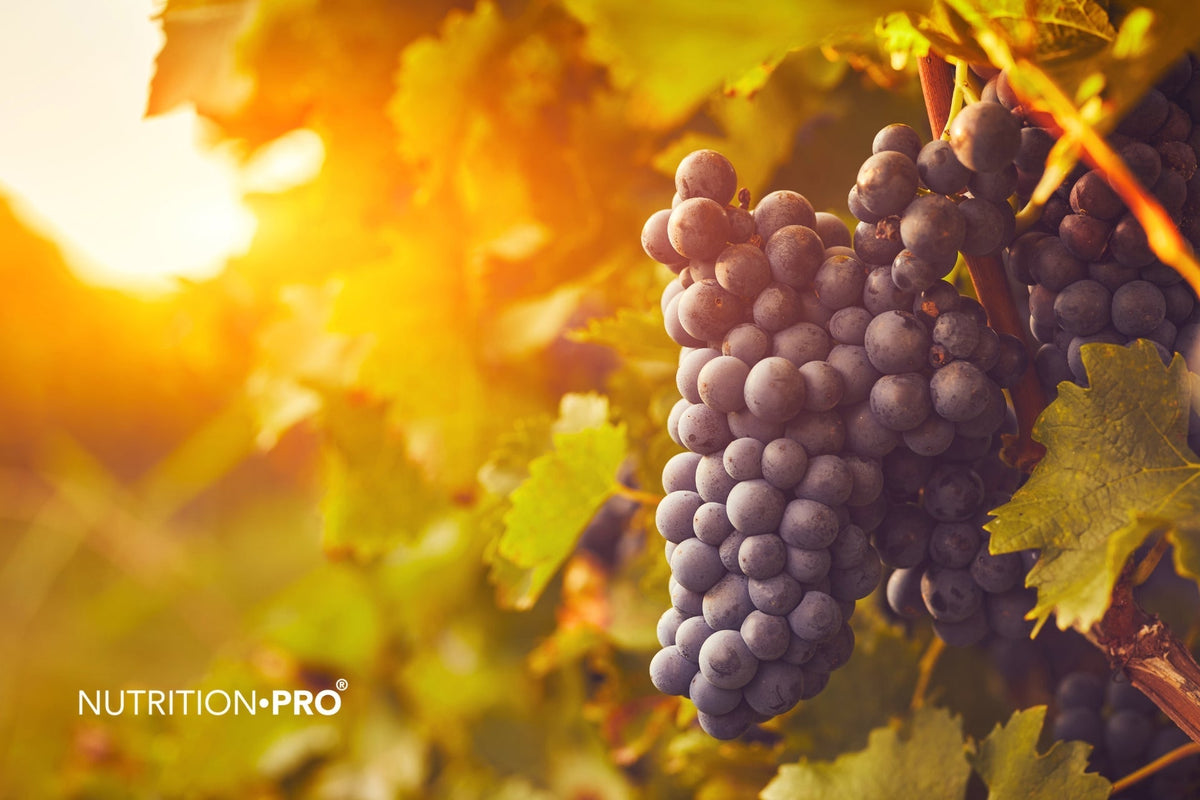
Few molecules have generated as much enthusiasm as resveratrol. A molecule from red wine, a promise of longevity, a laboratory star since the 2000s: its reputation has far exceeded what science has actually established.
This guide takes stock without compromise: what this polyphenolreally is, which benefits are solidly demonstrated and which are not, why its bioavailability is its main obstacle, at what dosage to use it and with what precautions.

<<<28>>> Resveratrol resvératrol is a polyphenol from grape skin, extracted for supplements from Japanese knotweed. Only the trans form is active, hence the importance of standardization. Its weak point is bioavailability : according to Walle and colleagues 2004 in Drug Metabolism and Disposition, it is absorbed at over 70% but is almost undetectable in free form in the blood, as it is transformed so rapidly. The measured benefits are real in individuals at metabolic risk, more uncertain in healthy subjects. Quercetin is added to slow down this degradation.
- What is resveratrol?
- The French paradox, or the origin of the myth
- Trans or cis: why the standardization changes everything
- What science really shows
- The Achilles heel: bioavailability
- Sirtuins and longevity: where does research stand
- Dosage, timing, and duration
- Precautions and contraindications
- Oral supplement or serum: don't confuse them
- How to choose your resveratrol
- Frequently asked questions
What is resveratrol?
Resveratrol belongs to the stilbene family, which is part of thepolyphenols . It is a defense molecule produced by plants when they experience stress or fungal attack, which explains its antioxidant profile. It was identified in1939 by Japanese researcher Michio Takaoka, from white hellebore, from which it takes its name. In food, it is found mainly in
black grape skin and red wine, as well as in red fruits, peanuts, pistachios, rhubarb, and cocoa. However, the quantities remain modest, far below those used in clinical studies. For dietary supplements, therefore, two plants are preferred for their naturally high content: Japanese knotweed (Polygonum cuspidatum () andgrapevine (Vitis vinifera ().The French paradox, or the origin of the myth
Quick answer:
French paradox . In the 1990s, epidemiologists observed that France had lower cardiovascular mortality than what its diet, rich in saturated fats, would suggest. An appealing explanation emerged: red wine. Dans les années 1990, des épidémiologistes constatent que la France affiche une mortalité cardiovasculaire plus faible que ce que son alimentation, riche en graisses saturées, laisserait présager. Une explication séduisante émerge : le Red wine, and within it resveratrol.
The hypothesis spread worldwide, before being nuanced: the paradox is probably explained by a set of factors (lifestyle, meal structure, death cause reporting) rather than by a single molecule. Above all, one would need to drink tens of liters of wine to reach the doses used in clinical trials. Wine is not a source of resveratrol, and alcohol carries its own risks. What remains essential: this story triggered three decades of research.
Trans or cis: why titration changes everything
This is the most important technical criterion, and the most often overlooked. Resveratrol exists in two isomeric forms cis-resveratrol and trans-resveratrol.
It is the trans form that carries the biological activity and which was used in virtually all trials. The cis form, far less active, forms under the effect of light and heat, hence resveratrol's sensitivity to storage conditions.
Practical consequence: a product that simply indicates "resveratrol" without specifying its form remains vague about what matters. A serious supplement displays a titration in trans-resveratrol, and the most demanding formulations reach 98%. This is the choice we made for our Resveratrol, dosed at 250 mg of trans-resveratrol per serving.
What science really shows
This is the point where most articles become enthusiastic. We will do the opposite, because reality is more useful.
In animals, the results were impressive: in mice fed a very rich diet, resveratrol limits weight gain and delays the onset of diabetes. This is what launched the enthusiasm of the 2000s. But humans are not mice, and the doses relative to body weight were considerable.
In humans, the dividing line is clear: benefits appear mainly in people already experiencing metabolic difficulty. According to Zhang and collaborators 2021, a systematic review and meta-analysis of randomized controlled trials in patients with type 2 diabetes reports favorable effects on glycemic control and certain lipid parameters. Conversely, a meta-analysis published in 2024 involving overweight or obese people without associated pathology found no significant improvement in triglycerides, total cholesterol or glycated hemoglobin.
Here is the current state of affairs, benefit by benefit.
Level of evidence, benefit by benefit
What human clinical trials actually allow us to affirm
This nuanced reading is not a disavowal of resveratrol: it is what allows us to use it intelligently, as a polyphenol support within a healthy lifestyle, and not as a miracle solution. The same rigor applies to other natural antioxidants.
The Achilles heel: bioavailability
Here is the point that explains almost everything, and which few articles address.
According to Walle and colleagues 2004, in Drug Metabolism and Disposition, orally administered resveratrol is absorbed at approximately 70%, which is excellent. But its blood concentration in free form remains extremely low : the body transforms it almost instantaneously through sulfation and glucuronidation, starting at the intestinal wall and liver. The study title sums up the situation: high absorption, very low bioavailability.
This limitation has been confirmed since. According to Szymkowiak and colleagues 2025, in Phytotherapy Research, a meta-analysis of clinical trial data concludes that the oral bioavailability of resveratrol remains the limiting factor for its efficacy in humans, despite promising in vitro and animal data.
Hence two strategies. Increase doses, with diminishing returns: beyond a certain threshold, blood concentrations no longer increase. Or slow down degradation, a role attributed to quercetin, a flavonoid studied for its interaction with these transformation pathways. This is the rationale behind our formula, which combines both molecules rather than providing isolated resveratrol.
Sirtuins and longevity: where does research stand
<<<39>>> Sirtuins sirtuines are enzymes involved in cell repair and adaptation to metabolic stress. Their activation is associated, in certain model organisms, with extended lifespan.
Resveratrol was presented in the early 2000s as an activator of these enzymes, capable of mimicking caloric restriction. This hypothesis generated enormous expectations, then was hotly debated, with several research teams contesting the described mechanism.
Today, research remains active but no clinical trial allows us to affirm that supplementation extends human lifespan. It is a field of research, not a commercial promise, and one must be wary of any product presenting it otherwise.
Dosage, timing, and duration
There is no official dosage, as study protocols are highly heterogeneous. The most common doses in trials range between 100 and 500 mg per day, with very high doses providing no proportional gain in blood levels.
Two recommendations stem from its fat-soluble nature: take resveratrol during a meal containing some fat, and favor consistency over occasional high doses, in courses lasting several weeks with breaks. Our Resveratrol provides 250 mg of trans-resveratrol per dose.
Precautions and contraindications
A section that too many articles gloss over. Resveratrol is well tolerated by most people, but it is not without risks.
Seek medical advice before any course if: you are taking anticoagulant or antiplatelet medication, or other supplements that thin the blood, as resveratrol may exert an effect in the same direction. Discontinue use before surgery. Resveratrol is not recommended during pregnancy and breastfeeding. It is also not recommended in case of hormone-sensitive disorder due to estrogen-like activity. Finally, if you are on long-term medication, discuss it with your doctor: drug interactions are possible.
Reported side effects are mainly mild digestive troubles (discomfort, nausea, accelerated transit), linked to high dosages and reversible with dose reduction.
Oral supplement or serum: do not confuse
Many studies mix two very different realities, so it is worth distinguishing them.
In cosmetics, resveratrol is found in serums and creams applied topically: it acts on the superficial layers of the skin, following a topical care approach, like our anti-aging cosmetics and the Caviar Cream. As a dietary supplement, the molecule is ingested and distributed through circulation, with the bioavailability limitations described above. Two complementary pathways that address different needs.
How to choose your resveratrol
Trans-resveratrol content
Criterion number one. Look for explicit mention of trans-resveratrol with its percentage. A content of 98% corresponds to the purest level. A label that only indicates "resveratrol" says nothing about its actual activity.
Dose per serving, not per bottle
Compare the actual dose provided per capsule with that of studies, generally 100 to 500 mg per day. Be wary of formulas with very low doses that would require multiple capsules daily to achieve a meaningful intake.
A synergy that compensates for bioavailability
Since bioavailability is the weak point, a formula that pairs resveratrol with a cofactor like quercetin addresses the real issue, whereas isolated resveratrol merely provides the molecule.
Extract origin and transparency
A serious brand indicates the plant origin of its extract, most often Japanese knotweed or grapevine, as well as complete composition, without unnecessary additives. The absence of this information is itself a warning sign.
Frequently asked questions
What is resveratrol and where is it found?
Resveratrol is a polyphenol from the stilbene family, produced by certain plants to defend against stress. It is found primarily in grape skin, red wine, red fruits, peanuts, and rhubarb. In dietary supplements, it is most often extracted from Japanese knotweed (Polygonum cuspidatum) or grapevine, two plants with naturally high content.
What is the difference between resveratrol and trans-resveratrol?
Resveratrol exists in two isomeric forms: cis-resveratrol and trans-resveratrol. The trans form is the biologically active one and by far the most studied. A quality supplement therefore indicates its trans-resveratrol content, ideally close to 98%. A product that only displays resveratrol without specifying its form remains vague about what matters most.
What are the truly demonstrated benefits of resveratrol?
It is important to distinguish between populations. In people with metabolic disorders, particularly type 2 diabetes, several meta-analyses of randomized trials report improvements in blood glucose levels and certain lipid parameters. In healthy individuals, however, the measured benefits remain limited and often not statistically significant. The spectacular effects observed in animal studies have not directly translated to humans.
What is the dosage of resveratrol?
Clinical studies use highly variable doses, most often ranging between 100 and 500 mg per day, with some protocols going much higher without proportional gains in blood levels. In practice, a single daily dose taken with a meal containing some fat is the most common regimen. Since resveratrol is fat-soluble, taking it during meals promotes its absorption.
Does resveratrol present any dangers or side effects?
Resveratrol is generally well tolerated. Reported adverse effects are mainly digestive and concern high doses. However, there are real precautions to observe: it can exert a blood-thinning effect, which requires medical advice in case of anticoagulant or antiplatelet therapy and discontinuation before surgery. It is not recommended during pregnancy and breastfeeding, as well as in cases of hormone-sensitive disorders, due to estrogen-like activity.
Why combine resveratrol with quercetin?
The main obstacle with resveratrol is its bioavailability: it is well absorbed by the intestine, but very rapidly transformed by the body, so that the amount of free resveratrol circulating in the blood remains low. Quercetin, another polyphenol, is being studied for its ability to slow down certain of these metabolic pathways. This is the rationale behind formulas that combine the two molecules rather than providing isolated resveratrol.
Learn more
- Polyphenol
- Large family of plant compounds with antioxidant properties, which includes stilbenes and flavonoids.
- Stilbene
- Subfamily of polyphenols to which resveratrol belongs.
- Trans-resveratrol
- Active isomeric form of resveratrol, the only one truly studied in clinical trials.
- Japanese knotweed
- Plant (Polygonum cuspidatum) with naturally high resveratrol content, the main source of supplements.
- Bioavailability
- Proportion of an ingested molecule that actually reaches the bloodstream in active form.
- Sirtuins
- Enzymes involved in cellular regulation and aging, at the heart of longevity hypotheses.
- Quercetin
- Plant flavonoid studied notably for its interaction with resveratrol metabolism.
- Walle T, Hsieh F, DeLegge MH, Oatis JE, Walle UK. High absorption but very low bioavailability of oral resveratrol in humans. Drug Metab Dispos. 2004;32(12):1377-1382. doi:10.1124/dmd.104.000885
- Szymkowiak I, Marcinkowska J, Kucinska M, Regulski M, Murias M. Resveratrol bioavailability after oral administration: a meta-analysis of clinical trial data. Phytother Res. 2025;39(1):453-464. doi:10.1002/ptr.8379
- Zhang T, He Q, Liu Y, Chen Z, Hu H. Efficacy and safety of resveratrol supplements on blood lipid and blood glucose control in patients with type 2 diabetes: a systematic review and meta-analysis of randomized controlled trials. 2021;2021:5644171. doi:10.1155/2021/5644171
- 2024 meta-analysis on metabolic risk markers and anthropometric parameters in overweight or obese individuals (5 randomized trials, 419 participants).
About this article. Written by the NUTRITION•PRO team based on referenced scientific publications. Resveratrol and quercetin are not subject to any authorized health claims at the European level: the data cited describe study results and a physiological role, without any promise of effect. Only vitamin E benefits from an authorized claim, that of helping to protect cells against oxidative stress. This content is informational and does not replace medical advice. Discover our editorial methodology.


