

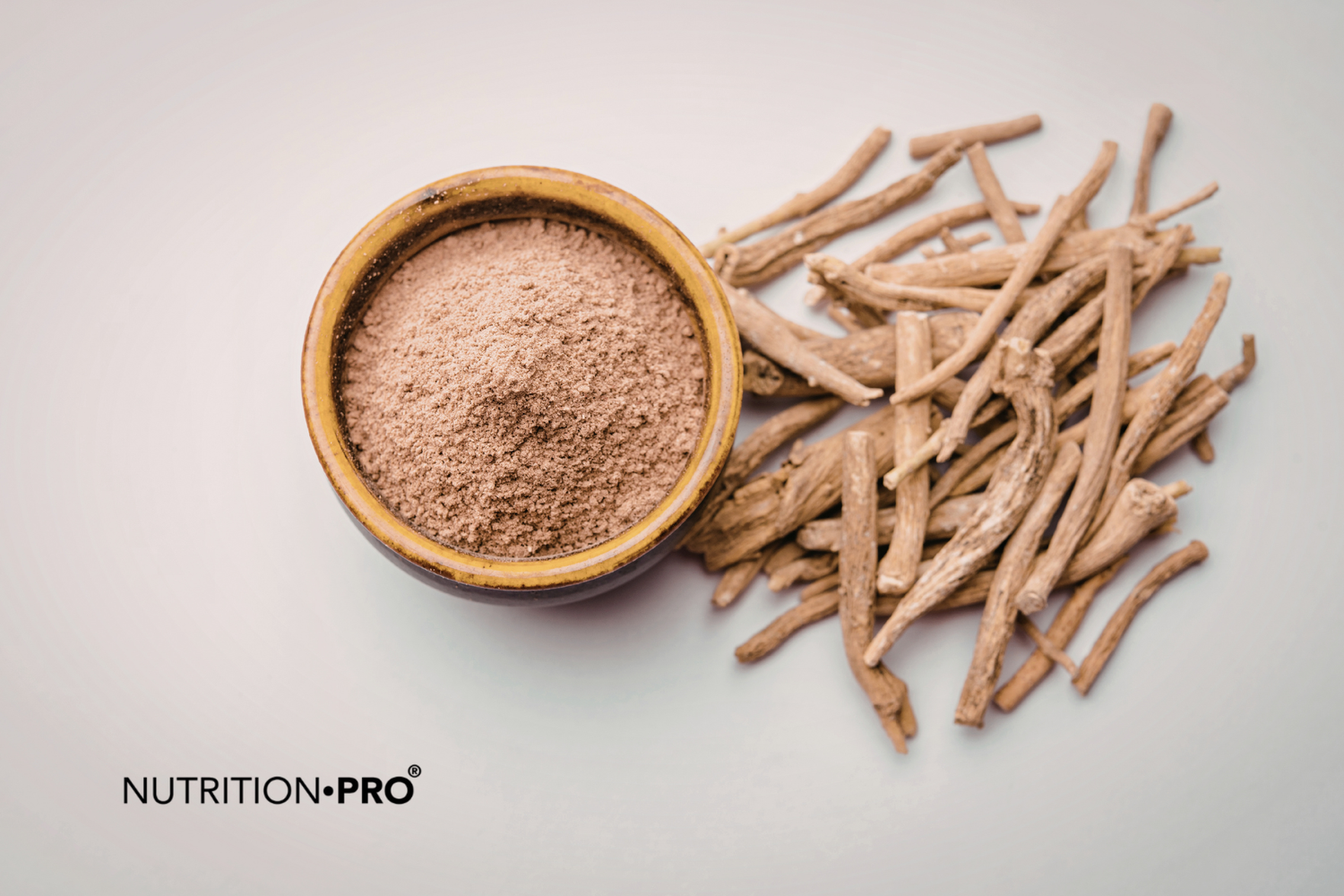
Theashwagandha (Withania somnifera) has evolved in 5 years from the status of traditional Ayurvedic plant to the most studied dietary supplement in its category worldwide. More than 250 scientific publications have appeared on PubMed between 2020 and 2024, including a dozen meta-analyses on specific clinical effects.
This article reviews the 10 benefits proven by meta-analyses and RCTs 2015-2024, with precise figures to support them. For choosing the extract (KSM-66® vs Sensoril vs Shoden), consult our comparison of patented forms.

Ashwagandha KSM-66® — 60 capsules
Standardized extract of pure roots (≥ 5% withanolides), patented KSM-66® form validated by more than 25 published clinical trials. 600 mg per dose, 1 month supply.
View Ashwagandha KSM-66® →Stress: Arumugam 2024 (Explore, 9 RCTs, n=558): PSS -4.72 points, cortisol -2.58 µg/dl vs placebo.
Sleep: Cheah 2021 (PLoS One, 5 RCTs, n=400): SMD -0.59, maximal effect in insomniacs ≥ 600 mg/day.
Strength and testosterone: Wankhede 2015 (J Int Soc Sports Nutr): +46 kg bench press, +96.2 ng/dL testosterone.
Cognition: Choudhary 2017 (J Diet Suppl): improvements in memory, attention and processing speed in 50 adults with MCI.
- Why everyone is talking about ashwagandha in 2026
- Reduces stress (meta-analysis 9 RCT, n=558)
- Decreases anxiety (meta 12 RCT, n=1002)
- Improves sleep (meta 5 RCT, n=400)
- Lowers morning cortisol
- Increases strength and muscle mass
- Improves athletic performance
- Boosts testosterone (men 40+)
- Supports memory and cognition
- Normalizes thyroid function
- Improves female sexual function
- Protocol, dosage, synergies
- Decision table
- FAQ
Why everyone is talking about ashwagandha in 2026
Ashwagandha has become in just a few years the most scientifically studied adaptogenic plant, with over 250 PubMed publications between 2020 and 2024 and a dozen meta-analyses on specific clinical effects (stress, sleep, strength, cognition, hormones).
Ashwagandha (Withania somnifera) belongs to the family of adaptogenic plants. Native to India, it has been used for over 3,000 years in Ayurvedic medicine.
Until the 2010s, the majority of publications were preclinical. The situation changed in 2021-2024 with several high-quality meta-analyses: Arumugam 2024 and Akhgarjand 2022 on stress, Cheah 2021 on sleep, Bonilla 2021 on physical performance.
Reduces stress (meta-analysis 9 RCT, n=558)
The best documented effect of ashwagandha.
According to Arumugam et al. 2024 in Explore, a meta-analysis of 9 RCTs including 558 patients: PSS -4.72 points, HAS -2.19, serum cortisol -2.58 µg/dl vs placebo.
Significant effect on the Perceived Stress Scale (PSS -4.72; 95% CI [-8.45 to -0.99]), Hamilton Anxiety Rating Scale (HAS -2.19) and serum cortisol (-2.58 µg/dl).
Arumugam V, et al. Explore (NY) 2024;20(6):103062. DOI: 10.1016/j.explore.2024.103062
Ashwagandha acts on theHPA axis by modulating cortisol overactivation. Effect more pronounced in profiles with high chronic stress (PSS > 20). To explore the Fatigue collection, also see Magnesium+ and Organic Spirulina in synergy.
Reduces anxiety (meta-analysis 12 RCTs, n=1,002)
Effective range 300-600 mg/day identified.
Akhgarjand et al. 2022 in Phytotherapy Research, meta-analysis of 12 RCTs and 1,002 participants: SMD -1.55 anxiety, SMD -1.75 stress. Effective range: 300-600 mg/day.
Supplementation reduces anxiety (SMD -1.55, 95% CI -2.37 to -0.74) and stress (SMD -1.75, 95% CI -2.29 to -1.22). Dose-response analysis: effect around 300-600 mg/day for stress.
Akhgarjand C, et al. Phytotherapy Research 2022;36(11):4115-4124. DOI: 10.1002/ptr.7598
Taking 1,200 mg/day does not provide significantly more than 600 mg/day. This is the dose chosen for theAshwagandha KSM-66® from Nutrition•pro (2 capsules of 300 mg). Certainty of evidence: low (GRADE) — sufficient evidence for reasonable use, not for a quasi-pharmaceutical effect.
Improves sleep (meta-analysis 5 RCTs, n=400)
Marked effect in insomniacs at ≥600 mg/day over ≥8 weeks.
Cheah et al. 2021 in PLoS One, meta-analysis of 5 RCTs on 400 participants: SMD -0.59 on overall sleep, significantly more pronounced in insomniac adults at 600 mg/day over 8 weeks.
Small but significant effect on overall sleep (SMD -0.59, 95% CI -0.75 to -0.42). More pronounced effects in adults diagnosed with insomnia at doses ≥ 600 mg/day and over ≥ 8 weeks. Alertness upon waking and anxiety also improved.
Cheah KL, et al. PLoS One 2021;16(9):e0257843. DOI: 10.1371/journal.pone.0257843
The name Withania somnifera (from Latin somnus) reflects millennia of use for sleep. Mechanisms: reduction of nocturnal cortisol, GABA-mimetic activity of withanolides, reduction of anxious rumination. Relevant synergy with magnesium bisglycinate.
Significantly lowers morning cortisol
Lopresti 2019: hormonal mechanism of the anti-stress effect.
Lopresti et al. 2019 in Medicine (Baltimore), RCT on 60 stressed adults (Shoden 240 mg/day, 60 days): significant reduction in morning cortisol (p < 0.001) and DHEA-S (p = 0.004). HAM-A also decreased (p = 0.040).
Significant reduction in Hamilton Anxiety Rating Scale (p = 0.040), marked decrease in morning cortisol (p < 0.001) and DHEA-S (p = 0.004). Testosterone increases in men (p = 0.038) but not in women.
Lopresti AL, et al. Medicine (Baltimore) 2019;98(37):e17186. DOI: 10.1097/MD.0000000000017186
Cortisol follows a circadian rhythm (morning peak, minimum around 10 PM). In chronic stress, this rhythm becomes disrupted, causing abdominal weight gain, paradoxical fatigue, degraded memory, weakened immunity, and disturbed sleep. Ashwagandha acts as a regulator of cortisol rhythm.
Increases muscle strength and mass (Wankhede 2015)
Reference study on 57 young men in strength training.
Wankhede et al. 2015 in J Int Soc Sports Nutr, RCT on 57 young men (600 mg/day for 8 weeks): bench press strength +46 kg (vs +26.4 kg placebo, p = 0.001), testosterone +96.2 ng/dL (p = 0.004), body fat mass -3.5%.
Significant increase in bench press strength (+46.0 kg vs +26.4 kg, p = 0.001) and leg extension (+14.5 kg vs +9.8 kg, p = 0.04). Reduction in muscle damage (creatine kinase), increase in testosterone (+96.2 ng/dL vs +18.0 ng/dL, p = 0.004), decrease in body fat mass (-3.5% vs -1.5%).
Wankhede S, et al. J Int Soc Sports Nutr 2015;12:43. DOI: 10.1186/s12970-015-0104-9
Mechanisms: increased testosterone, decreased catabolic cortisol, reduced muscle damage, improved sleep. Maximum synergy with Creapure® creatine which acts on cellular energy reserves. Also see the complete creatine guide.
Improves athletic performance (Bayesian meta-analysis 2021)
Strength, VO2max, fatigue, recovery — Bonilla 2021.
Bonilla et al. 2021 in J Funct Morphol Kinesiol, Bayesian meta-analysis of 12 clinical trials: ashwagandha is more effective than placebo on strength/power, VO2max, fatigue/recovery in healthy adults, men and women.
Supplementation is more effective than placebo for improving physical performance variables. Favorable Bayesian models for strength, power, VO2max, fatigue, recovery. Low to moderate risk of bias across the 12 included studies.
Bonilla DA, et al. J Funct Morphol Kinesiol 2021;6(1):20. DOI: 10.3390/jfmk6010020
4 improved dimensions: cardiorespiratory endurance (VO2max), resistance to muscle fatigue, recovery speed between sessions, post-exercise sleep quality. For endurance, see the Vitality • Energy collection and organic red ginseng.
Stimulates testosterone and vitality (men 40-70 years)
Lopresti 2019: 57 overweight men with mild fatigue.
Lopresti, Drummond and Smith 2019 in Am J Mens Health, crossover study of 57 men ages 40-70 (16 weeks, Shoden 240 mg/day): salivary testosterone +14.7% (p = 0.010), DHEA-S +18% (p = 0.005) vs placebo.
Shoden intake of 21 mg withanolide glycosides/day for 8 weeks associated with +18% DHEA-S (p = 0.005) and +14.7% salivary testosterone (p = 0.010). No difference in cortisol, estradiol, fatigue, vigor.
Lopresti AL, Drummond PD, Smith SJ. Am J Mens Health 2019;13(2):1557988319835985. DOI: 10.1177/1557988319835985
Modest but clinically significant effect (medical TRT = +200 to +400%). Relevant for men 40+ with low-normal testosterone, not for clinical hypogonadism. See 7 Foods That Boost Testosterone, the Libido • Fertility collection, the Organic Tribulus and the Shilajit Resin.
Supports Memory and Cognitive Function
Choudhary 2017: RCT in 50 adults with MCI.
Choudhary, Bhattacharyya and Bose 2017 in J Diet Suppl, RCT on 50 adults with mild cognitive impairment (600 mg/day for 8 weeks): improvements in immediate and general memory, executive function, sustained attention, processing speed.
After 8 weeks, significant improvements on Wechsler III (logical memory p = 0.007, verbal pairs p = 0.042, faces p = 0.020), executive function (Eriksen Flanker p = 0.002), sustained attention (Wisconsin Card Sort p = 0.014), processing speed (Trail-Making A p = 0.006).
Choudhary D, Bhattacharyya S, Bose S. J Diet Suppl 2017;14(6):599-612. DOI: 10.1080/19390211.2017.1284970
Relevant for seniors with mild cognitive decline, the chronic cognitive stress, and mental fatigue (burnout). See creatine and brain and the Brain • Cognition collection.
Normalizes Thyroid Function (Subclinical Hypothyroidism)
Sharma 2017: hormonal effect that warrants medical monitoring.
Sharma, Basu and Singh 2017 in J Altern Complement Med, RCT on 50 patients with subclinical hypothyroidism (600 mg/day of root extract, 8 weeks): significant normalization of TSH (p < 0.001), T3 (p = 0.0031) and T4 (p = 0.0096).
8 weeks of treatment (600 mg/day) significantly improve TSH (p < 0.001), T3 (p = 0.0031) and T4 (p = 0.0096) vs placebo. Effective normalization of thyroid indices. 4 subjects (8%) reported mild and temporary adverse effects.
Sharma AK, Basu I, Singh S. J Altern Complement Med 2017;24(3):243-248. DOI: 10.1089/acm.2017.0183
Improves female sexual function (Dongre 2015)
Only female-specific benefit documented in RCT.
Dongre, Langade and Bhattacharyya 2015 in BioMed Res Int, pilot trial on 50 women (HCARE 300 mg × 2/day, 8 weeks): significant improvement on FSFI scale across 6 dimensions (arousal, lubrication, orgasm, satisfaction).
Treatment resulted in greater improvement than placebo on total FSFI score (p < 0.001), arousal (p < 0.001), lubrication (p < 0.001), orgasm (p = 0.004), satisfaction (p < 0.001). FSDS (sexual distress) decreased (p < 0.001).
Dongre S, Langade D, Bhattacharyya S. BioMed Res Int 2015;2015:284154. DOI: 10.1155/2015/284154
Probable mechanisms: stress/anxiety reduction, improved sleep, cortisol reduction, improved mood (testosterone does not increase in women according to Lopresti 2019). Pilot trial to be confirmed by larger trials. See female libido: natural solutions, the Libido • Fertility collection, organic maca and Libido Duo.
How to use ashwagandha properly: protocol, dosage, synergies
Dosage: 300 to 600 mg/day of standardized extract, ideally KSM-66®. Duration: 4 to 8 weeks. Evening to target sleep/cortisol, morning for vitality/performance. To be avoided during pregnancy, breastfeeding, autoimmune diseases, thyroid pathologies under treatment.
Dosage and duration
All meta-analyses converge on 300-600 mg/day of standardized root extract (withanolides ≥ 5%). Beyond 1,200 mg/day, benefits do not increase further. Selected dosage: 600 mg/day forAshwagandha KSM-66® Nutrition•Pro.
Time of intake
- Evening with dinner : stress, anxiety, evening cortisol, sleep.
- Morning with breakfast : vitality, athletic performance, testosterone.
- Split dosing (1 morning + 1 evening) : most versatile approach.
Why KSM-66®
KSM-66® : extracted exclusively from roots, standardized concentration ≥ 5% withanolides, used in the majority of published RCTs since 2015 (Wankhede, Choudhary, Dongre). For detailed comparison KSM-66 vs Sensoril vs Shoden vs Witholytin : comparison of patented forms.
Validated synergies
Magnesium bisglycinate (sleep synergy)
The most relevant synergy for stressed/insomniac profiles.
Creatine monohydrate (strength/cognition synergy)
Reference combination for athletes.
Maca + Tribulus (libido synergy)
For men 40+ and women seeking sexual vitality.
Shilajit resin (Ayurvedic synergy)
Traditional combination for vitality and longevity.
Organic Spirulina (energy/vitamins synergy)
For chronic fatigue profiles.
Contraindications
- Pregnancy and breastfeeding
- Autoimmune diseases (lupus, MS, rheumatoid arthritis, Hashimoto)
- Hyperthyroidism or levothyroxine use
- Sedative / hypnotic medications
- Immunosuppressants
- Scheduled surgery : discontinue 2 weeks before
- Children < 18 years
Personalized decision table
FAQ — All your questions about ashwagandha
Does ashwagandha really reduce stress?
Yes, it's the best-documented effect. Arumugam 2024: PSS -4.72 points, cortisol -2.58 µg/dl vs placebo across 9 RCTs and 558 patients. Confirmed by Akhgarjand 2022 (12 RCTs, 1,002 participants).
How long before you feel the effects?
Stress and anxiety: 4 weeks at 600 mg/day. Sleep: 8 weeks. Strength and testosterone: minimum 8 weeks.
What is the best form of ashwagandha?
KSM-66® ashwagandha: extracted exclusively from roots, standardized concentration ≥5% withanolides, used in the majority of RCTs. See the KSM-66 vs Sensoril vs Shoden comparison.
What dose should I take per day?
300 to 600 mg/day of standardized extract. Beyond 1,200 mg/day, no additional benefit. Standard dose: 600 mg/day in 1 or 2 doses.
Should I take ashwagandha in the morning or evening?
Stress, anxiety, sleep: in the evening with dinner. Vitality, athletic performance, testosterone: in the morning with breakfast. Otherwise split it: 1 morning + 1 evening.
Does ashwagandha really increase testosterone?
Modestly, and in men only. Lopresti 2019: +14.7% in 57 men aged 40-70. Wankhede 2015: +96.2 ng/dL in young men doing weight training. Modest effects but clinically significant for men with low-normal testosterone.
Does ashwagandha help with muscle mass gain?
Yes, moderately. Wankhede 2015: +46 kg bench press, body fat -3.5%, testosterone +96.2 ng/dL. Maximum synergy with Creapure® creatine.
Is ashwagandha dangerous for the thyroid?
Stimulating effect: beneficial in subclinical hypothyroidism but problematic in hyperthyroidism or when taking levothyroxine. If you have a diagnosed thyroid condition or thyroid treatment, consult your doctor before use.
Does ashwagandha cause drowsiness?
Rarely. Meta-analyses report fewer than 8% adverse effects. If this occurs: reduce to 300 mg/day or take only in the evening.
Do I need to take breaks during the course?
Not mandatory. No documented loss of efficacy with prolonged use. Cautious approach: 8-12 week courses followed by 2-4 week breaks.
Can ashwagandha replace an antidepressant?
No. It is not an antidepressant. It may support mood by reducing stress but does not replace medical supervision for psychiatric disorders.
Compatible with pregnancy and breastfeeding?
No. Contraindicated in pregnancy (teratogenic risk in animal studies) and not recommended during breastfeeding.
Does ashwagandha interact with other supplements?
Beneficial synergies: magnesium, creatine, maca/tribulus/shilajit (Libido • Fertility). Caution: sedatives, immunosuppressants, thyroid medications.
What results can you expect after 8 weeks?
Chronic stress: increased sense of calm, improved sleep quality. Athletes: enhanced recovery, slightly superior strength gains. Men 40+: increased energy, improved libido. Insomnia: easier sleep onset.
Is ashwagandha safe long-term?
Long-term data (> 12 weeks) limited but no serious adverse effects reported in meta-analyses. For most healthy adults at recommended doses: considered safe for 2-3 month courses that can be repeated.
- Withania somnifera
- Scientific name for ashwagandha. Member of the Solanaceae family, used for 3,000 years in Ayurvedic medicine.
- Adaptogen
- A plant or substance that helps the body resist various forms of stress by regulating the HPA axis. Ashwagandha, ginseng, and rhodiola are the most studied.
- Withanolides
- Active steroidal molecules in ashwagandha. Standardized extracts such as KSM-66® guarantee ≥ 5%.
- KSM-66®
- Registered trademark of standardized ashwagandha extract (roots only, ≥ 5% withanolides), used in the majority of RCTs.
- HPA Axis
- Hypothalamic-Pituitary-Adrenal: the circuit that regulates the stress response via cortisol.
- Cortisol
- Stress hormone, follows a circadian rhythm (peak in the morning, minimum around 10 PM). Dysregulated in chronic stress.
- SMD
- Standardized Mean Difference. 0.2 = small effect, 0.5 = medium, 0.8 = large.
- Arumugam V, et al. Effects of Ashwagandha on stress and anxiety: meta-analysis. Explore (NY) 2024;20(6):103062. DOI
- Akhgarjand C, et al. Ashwagandha for anxiety and stress: meta-analysis of RCTs. Phytotherapy Research 2022;36(11):4115-4124. DOI
- Cheah KL, et al. Effect of Ashwagandha extract on sleep: meta-analysis. PLoS One 2021;16(9):e0257843. DOI
- Lopresti AL, et al. Ashwagandha extract on stress and cortisol: RCT. Medicine (Baltimore) 2019;98(37):e17186. DOI
- Wankhede S, et al. Ashwagandha on muscle strength and recovery: RCT. J Int Soc Sports Nutr 2015;12:43. DOI
- Bonilla DA, et al. Ashwagandha on Physical Performance: Bayesian Meta-Analysis. J Funct Morphol Kinesiol 2021;6(1):20. DOI
- Lopresti AL, Drummond PD, Smith SJ. Hormonal and Vitality Effects of Ashwagandha in Aging Overweight Males. Am J Mens Health 2019;13(2):1557988319835985. DOI
- Choudhary D, Bhattacharyya S, Bose S. Ashwagandha Root Extract in Improving Memory and Cognitive Functions. J Diet Suppl 2017;14(6):599-612. DOI
- Sharma AK, Basu I, Singh S. Ashwagandha Root Extract in Subclinical Hypothyroid Patients: RCT. J Altern Complement Med 2017;24(3):243-248. DOI
- Dongre S, Langade D, Bhattacharyya S. Ashwagandha Root Extract in Improving Sexual Function in Women: Pilot Study. BioMed Res Int 2015;2015:284154. DOI


