

Your intestine produces 95% of serotonin in your body. This molecule, associated with "mental well-being," is therefore not manufactured primarily in the brain, but in your digestive tract. This is one of the most striking findings from recent research on intestinal microbiota and its direct link to your brain.
The microbiota — these 100 trillion bacteria that live in your intestine — constantly communicates with your brain via thegut-brain axis. When this balance breaks down (antibiotics, stress, unbalanced diet), the consequences are felt everywhere: digestion, mood, sleep, immunity, skin. In this guide, we break down the scientific evidence from 2022-2025 and the 7 clinically proven actives to rebalance your flora, with exact meta-analysis figures and a practical 3-month protocol.

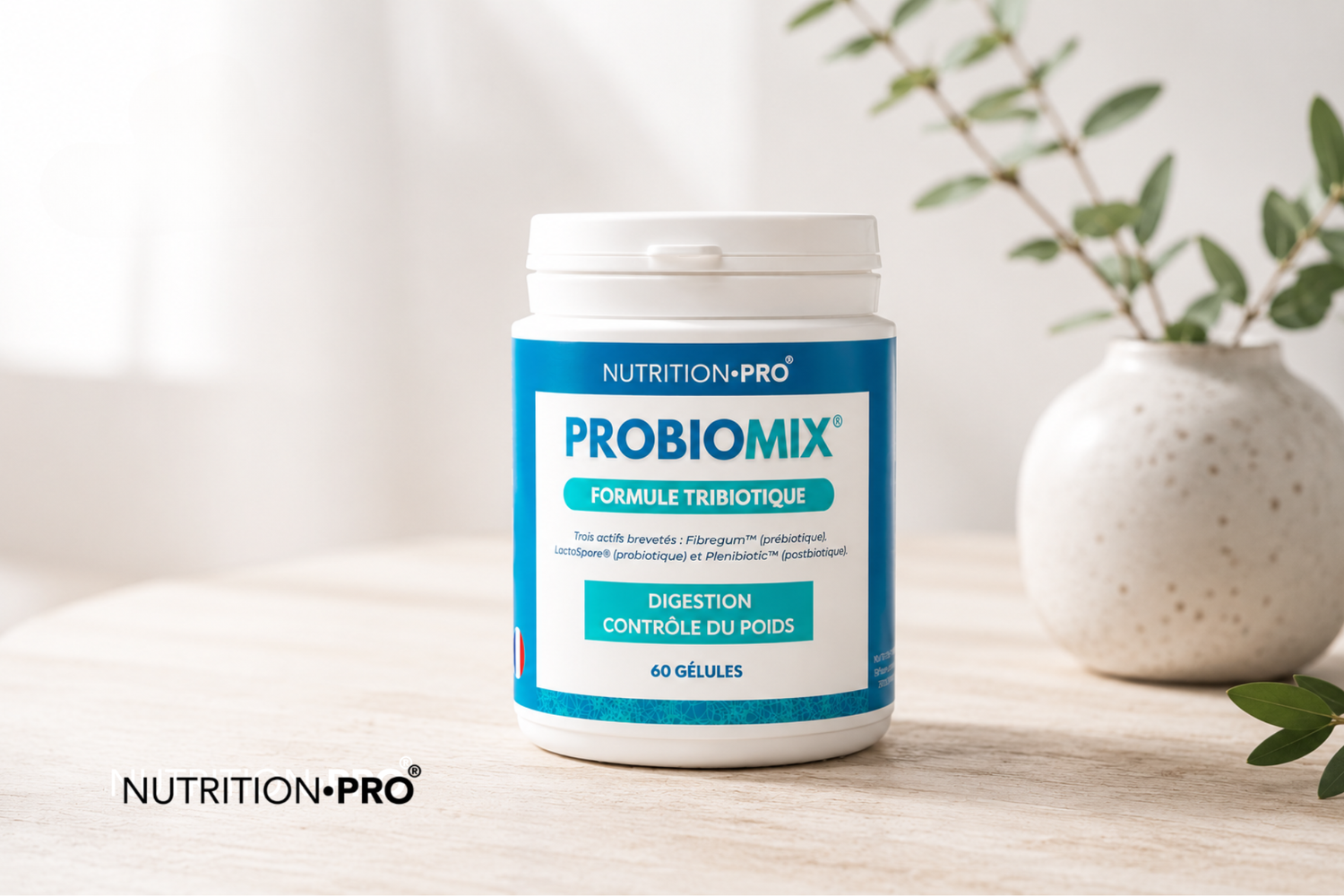
Probiomix® — 60 capsules
6 probiotic strains (Lactobacillus + Bifidobacterium) + prebiotic FOS. 17 billion CFU per day to restore intestinal microbiota balance.
View Probiomix® →
Optimal Digest® — 500 ml
Plant synergy (lemon balm, rosemary, artichoke) + fruits (fig, blueberry). Liquid format to support daily digestion.
View Optimal Digest® →Probiotics and mood: according to Asad et al. 2024 in Nutrition Reviews (meta-analysis of 23 RCTs, n=1,401), probiotics significantly reduce depressive symptoms (SMD -0.96) and anxiety symptoms (SMD -0.59) vs. placebo, confirming the role of the gut-brain axis.
Probiotics and digestion: according to Goodoory et al. 2023 in Gastroenterology (82 RCTs, n=10,332), certain multi-strain combinations improve irritable bowel syndrome symptoms. Excellent tolerability. Effects also documented on sleep (Ito 2024, PSQI) and digestive comfort with turmeric (Lopresti 2021, Curcugen® 500 mg/day).
- The microbiota, your "second brain": what science says
- The 5 key functions of the intestinal microbiota
- The gut-brain axis: how it really works
- The 4 proven active ingredients: overview
- Active ingredient #1 — Multi-strain probiotics
- Active ingredient #2 — Prebiotics (FOS and fiber)
- Active ingredient #3 — Turmeric: microbiota modulator
- Active ingredient #4 — Ashwagandha: the stress-microbiota axis
- Other complementary active ingredients (spirulina, moringa, multivitamins)
- IBS, dysbiosis, mood disorders: when to consult
- Self-test: is your microbiota in balance?
- 3-month protocol to rebalance your microbiota
- FAQ — All your questions about the microbiota
The microbiota, your "second brain": what science says
The intestinal microbiota comprises approximately 100 trillion micro-organisms (bacteria, viruses, fungi) that live in your digestive tract. Far from being a simple "passenger," it plays an active role in your digestion, immunity, metabolism, and mood. The term "second brain" refers to the enteric nervous system which contains more than 500 million neurons — as many as the spinal cord.
What is the microbiota, concretely?
The microbiota weighs approximately 1.5 to 2 kg in an adult — the equivalent of the brain. It is composed of more than 1,000 bacterial species dominated by two families: Firmicutes and Bacteroidetes. Each individual has a unique microbiota, like a fingerprint. It forms from birth (birth method, breastfeeding) and evolves throughout life under the influence of diet, medications (antibiotics), stress, and aging. High bacterial diversity is generally considered a marker of good health.
Why "second brain"
The expression comes from gastroenterologist Michael Gershon (The Second Brain, 1998) and refers to several biological realities:
- 500 million neurons in the intestinal wall, functioning semi-autonomously
- 30 neurotransmitters identified in the intestine (serotonin, dopamine, GABA…)
- Direct communication with the brain via the vagus nerve
- 70% of the immune system concentrated in the intestinal wall
The 5 key functions of the intestinal microbiota
The microbiota fulfills 5 vital functions : (1) digestion of fiber and polyphenols, (2) vitamin production (K2, B12, B9, B7), (3) immune protection (70% of immunity), (4) maintenance of the intestinal barrier, and (5) communication with the brain. An imbalance therefore affects much more than digestion.
1. Fiber digestion and fermentation
Your bacteria digest dietary fiber through fermentation, producing short-chain fatty acids (SCFAs). Butyrate, the most important one, is the primary fuel for colon cells and a powerful anti-inflammatory.
2. Vitamin synthesis
Certain bacteria directly produce vitamins: K2 (coagulation, bones), B12 (nervous system), B9 folates (cell renewal), B7 biotin (hair, skin). A poor microbiome can create vitamin deficiencies even with a proper diet.
3. Immune Protection
Approximately 70% of the immune system is concentrated in the intestinal wall. Your microbiome continuously educates your immune cells to distinguish friends (good bacteria) from enemies (pathogens).
4. Intestinal Barrier
Good bacteria maintain the integrity of the intestinal barrier that separates intestinal contents from the bloodstream. Abnormal permeability ("leaky gut") allows inflammatory molecules to pass into the blood, causing chronic low-grade inflammation.
5. Communication with the Brain
Your microbiome continuously communicates with your brain, influencing your mood, stress, and behavior. This communication occurs through 4 pathways detailed in the next section.
The gut-brain axis: how it really works
Thegut-brain axis is a system of bidirectional communication that operates through 4 pathways: (1) neural via the vagus nerve (the fastest), (2) hormonal via the bloodstream, (3) immune via cytokines, and (4) metabolic via molecules produced by bacteria (SCFAs, neurotransmitters, tryptophan).
The vagus nerve: the gut-brain highway
The vagus nerve is the direct physical connection between brain and intestine. It is composed of 80% afferent fibers (traveling toward the brain) — your intestine communicates with your brain 4 times more than the reverse. Bacteria stimulate this nerve via SCFAs, the neurotransmitters they produce, and intestinal hormones.
Serotonin: 95% comes from your gut
This is one of the most counter-intuitive facts of modern neuroscience: 95% of your body's serotonin is produced in the intestine, not in the brain. This intestinal serotonin does not cross the blood-brain barrier, but it modulates digestive motility, stimulates the vagus nerve (which transmits the signal to the brain), and regulates tryptophan availability (precursor to brain serotonin). A dysbiotic microbiome = altered signal to the brain = potential mood, sleep, and appetite disturbances.
Inflammation and "leaky gut"
When the intestinal barrier becomes permeable (dysbiosis, chronic stress), inflammatory molecules pass into the bloodstream and reach the brain. This low-grade neuroinflammation is today considered one of the major mechanisms linking the microbiota to depressive and anxiety disorders. According to Sikorska et al. 2023 in International Journal of Molecular Sciences, probiotics significantly increase BDNF (SMD +0.37) and reduce CRP (inflammation marker, SMD -0.47) in depressive patients.
The 4 proven actives: overview
Here are the 4 nutritional actives with the strongest scientific documentation to rebalance the microbiota and support the gut-brain axis, each backed by at least one recent meta-analysis (2021-2024). They work through complementary mechanisms: microbiota restoration (probiotics), feeding beneficial bacteria (prebiotics), anti-inflammatory action (turmeric), stress modulation (ashwagandha). Other supplements support intestinal balance through nutritional pathways (spirulina, moringa, multivitamins), covered in the supplementary section.
Summary table — the 4 central actives ranked by strength of scientific evidence:
Multi-strain probiotics: the cornerstone of rebalancing
The most documented active for restoring a balanced microbiota.
According to Asad et al. 2024 in Nutrition Reviews, a meta-analysis of 23 randomized controlled trials on 1,401 patients with clinical depression or anxiety confirms that probiotics reduce depressive symptoms significantly (SMD -0.96) and anxiety symptoms moderately (SMD -0.59) vs placebo. The most studied strains belong to the families Lactobacillus and Bifidobacterium, present in Nutrition•pro's Probiomix® at 6 selected strains (DOI : 10.1093/nutrit/nuae177).
Why multiple strains are superior
Nutrition•pro's Probiomix® combines 6 strains rigorously selected from the two major probiotic families: Lactobacillus (small intestine, sugar digestion, defense against pathogens) and Bifidobacterium (colon, fiber fermentation, butyrate production, immune modulation). These strains are enriched with FOS (fructo-oligosaccharides) which serve as fuel for probiotics — this is called a synbiotic.
Effective dose and treatment duration
Clinical studies typically use between 5 and 50 billion CFU per day. Probiomix® provides 17 billion CFU for 4 capsules per day, an effective dose for comprehensive rebalancing. Minimum recommended duration: 1 to 3 months, ideally in the morning on an empty stomach. According to Yu et al. 2024 in Frontiers in Neurology, probiotics also significantly improve sleep quality (SMD -0.34) in adults with sleep disorders — an effect mediated by vagus nerve modulation.
Prebiotics: nourishing the good bacteria
Specific fibers that transform the microbiota in just a few weeks.
Prebiotics are non-digestible dietary fibers that serve as selective food for beneficial bacteria nourriture sélective aux bonnes bactéries of the microbiome. The most studied are FOS (fructo-oligosaccharides) andinulin. Without prebiotics, probiotics taken alone struggle to establish themselves durably. The synergy of probiotic + prebiotic (synbiotic) is now considered the most effective approach for durably rebalancing the microbiome.
Difference with probiotics
Confusion is frequent. Here's the simple distinction:
- Probiotics = live bacteria you introduce to your intestines (Probiomix®, yogurts, kefir, sauerkraut)
- Prebiotics = fibers that feed bacteria already present AND the probiotics you take (FOS, inulin, leek fibers, onion, garlic, asparagus, green banana, Jerusalem artichoke)
- Synbiotics = combination of both in the same formula (Probiomix®)
- Postbiotics = metabolites produced by bacteria (butyrate, propionate) — emerging research
Food sources of prebiotics
The best food sources of prebiotics are: onion, garlic, leek, asparagus, Jerusalem artichoke, artichoke, banana (slightly green), chicory, legumes, oats, flaxseeds. To learn more about fibers, see our article on the proven benefits of chia seeds (another source of prebiotic fibers).
Additionally, Nutrition•pro organic Moringa powder naturally provides prebiotic fibers and organic Fenugreek is also recognized for its richness in mucilaginous fibers that support the microbiome.
Important precaution: the bloating effect
A sudden increase in prebiotics can cause bloating and gas in the first few weeks — this is paradoxically a good sign (active fermentation), but uncomfortable. The rule: introduce gradually, starting with small amounts (2-5 g/day) and increasing over 2-3 weeks. In people with IBS, certain prebiotics (particularly FODMAPs like inulin, FOS) may initially worsen symptoms — introduce with caution.
Turmeric: the anti-inflammatory modulator of the microbiota
The spice that soothes the gut and reduces anxiety — with clinical evidence to back it up.
According to Lopresti et al. 2021 in BMC Complementary Medicine and Therapies, a randomized double-blind controlled trial on 79 adults with self-reported digestive complaints demonstrated that 500 mg/day of curcumin extract (Curcugen®) for 8 weeks significantly improved overall gastrointestinal symptom score (GSRS scale) and anxiety scores (DASS-21) vs placebo, with excellent tolerability (DOI : 10.1186/s12906-021-03220-6).
Why turmeric works on the gut
Curcumin, the active compound in turmeric, exerts several effects: (1) anti-inflammatory via inhibition of NF-κB and COX-2, (2) strengthening of the intestinal barrier (anti "leaky gut"), (3) favorable modulation of the microbiota, (4) antioxidant protecting intestinal cells, (5) anti-anxiety activity via the gut-brain axis.
Which form of turmeric to choose
Curcumin is naturally poorly bioavailable (1 to 5% absorption). Effective forms use either black pepper (piperine) which multiplies absorption by 20, or a patented formula (Curcugen®, Meriva®). The Organic Turmeric Powder Nutrition•pro should be consumed with black pepper and a fat source to optimize absorption. Effective dose: 500 mg to 1 g per day.
Ashwagandha: the stress-microbiota axis
When chronic stress destroys your microbiota, act at the source.
The chronic stress raises cortisol which directly impairs the microbiota: it reduces bacterial diversity, promotes pathogenic strains, increases intestinal permeability. This is the other direction of the gut-brain axis (top-down). For people experiencing burnout, overwork, or persistent anxiety, acting on cortisol viaashwagandha can be just as effective for the microbiota as taking probiotics directly.
The vicious cycle stress → dysbiosis → stress
Chronic stress triggers a particularly harmful vicious cycle for the microbiota:
- Elevated cortisol → impaired intestinal barrier + reduction of beneficial bacteria
- Dysbiosis → reduced production of serotonin and anti-inflammatory SCFAs
- Modified signal to the brain via the vagus nerve → worsening of anxiety and mood disorders
- Increased stress → return to step 1, vicious cycle
Ashwagandha breaks this cycle by acting at the source: regulating cortisol and the HPA axis (hypothalamic-pituitary-adrenal). This is why we recommend it alongside probiotics for "stress + dysbiosis" profiles.
How to use it
Effective dose: 600 mg/day of standardized KSM-66® extract in the evening, for a minimum of 2 to 3 months. To learn more about the documented benefits of ashwagandha, see our complete guide 10 science-proven benefits. Product: Ashwagandha KSM-66® Nutrition•pro.
Other complementary actives: spirulina, moringa, multivitamins
Beyond the core microbiota actives (probiotics, prebiotics, turmeric), three supplements support intestinal balance through nutritional mechanisms: spirulina (chlorophyll + anti-inflammatory phycocyanin + bioavailable iron), moringa (prebiotic fiber + minerals), and multivitamins & minerals (zinc + vitamin D, critical for intestinal barrier and microbiota immunity).
Spirulina: phycocyanin and bioavailable iron
Organic Spirulina powder Nutrition•pro (60-70% protein) provides phycocyanin with anti-inflammatory properties, bioavailable iron (useful for women with iron deficiency) and essential B vitamins for intestinal cell metabolism. Dose: 3-5 g/day, to be introduced gradually. To learn more, see our article 10 proven benefits of spirulina.
Moringa: natural prebiotic fibers
The moringa (Moringa oleifera) acts as a natural prebiotic thanks to its mucilaginous fibers that selectively nourish Bifidobacterium. It also provides calcium, iron, magnesium, and vitamins A and C. Available in two formats: Organic moringa powder and Organic moringa capsules. Dosage: 2-5 g/day, to be introduced gradually.
Multivitamins: zinc and vitamin D are essential
The microbiota cannot thrive without a solid micronutrient foundation. Zinc is a cofactor in the regeneration of intestinal cells (renewal every 3-5 days) and in maintaining intestinal barrier integrity. Vitamin D modulates intestinal immunity and promotes bacterial diversity; in France, more than 70% of adults are deficient in winter. The Multivitamins & Minerals Nutrition•pro provides these micronutrients in a complete formula, particularly useful during microbiota rebalancing.
IBS, dysbiosis, mood disorders: when to consult
Beyond occasional digestive discomfort, certain situations require a medical consultation and cannot be managed by dietary supplements alone: severe irritable bowel syndrome (IBS), chronic inflammatory bowel diseases (IBD: Crohn's, ulcerative colitis), suspected SIBO (small intestinal bacterial overgrowth), diagnosed depressive or anxiety disorders, or persistent digestive symptoms lasting more than 3 months. Probiotics can complement medical treatment but never replace specialized care.
Irritable bowel syndrome (IBS)
According to Goodoory et al. 2023 in Gastroenterology, a major meta-analysis covering 82 randomized trials and 10,332 patients evaluated the efficacy of probiotics in IBS. Conclusion: certain probiotic combinations improve overall symptoms, particularly strains ofEscherichia coli, Lactobacillus plantarum 299v, and certain multi-strain combinations. Tolerance is excellent (no more adverse effects than placebo). The certainty of evidence according to GRADE remains low to moderate — science is advancing, but knowledge of optimal strains by IBS subtype remains incomplete. Wu et al. 2024 (Nutrients) confirms via network meta-analysis that probiotics (OR 0.53) and fecal transplantation (OR 0.46) are the most effective approaches, ahead of prebiotics and synbiotics alone.
Alert signals that require consultation
Consult without delay in case of: digestive bleeding (urgent consultation), involuntary weight loss, persistent fever, severe abdominal pain or waking up at night, chronic diarrhea (more than 4 weeks), symptoms persisting after 3 months of adapted nutritional protocol, or marked depressive/anxiety disorders. Probiotics can complement a medical approach (microbiota analysis, SIBO test, FODMAP diet under supervision, targeted antibiotherapy), but cannot replace it. In the Goodoory 2023 meta-analysis, the certainty of evidence according to GRADE remains low to moderate: science is advancing, but many unknowns remain regarding optimal strains for each IBS subtype.
Self-test: is your microbiota in balance?
Check the statements that apply to you. The dominant profile that emerges will guide you toward the protocol best suited to your situation.
3-month protocol to rebalance your microbiome
The microbiome takes 4 to 12 weeks to rebalance. An effective protocol combines 4 pillars: multi-strain probiotics in morning course on an empty stomach, digestive support before meals, pro-microbiome diet (fiber, fermented foods, polyphenols), lifestyle hygiene (7-8 hours sleep, stress management). First effects in 2-4 weeks, lasting balance at 3 months.
Month 1 — Initiation
- Morning on an empty stomach : 4 capsules of Probiomix® with a large glass of water, 30 minutes before breakfast
- Before heavy meals : Optimal Digest®
- Diet : progressive introduction of fiber (onion, garlic, green vegetables) + 1 portion of fermented foods/day (plain yogurt, kefir, raw sauerkraut)
- Avoid : refined sugars, ultra-processed foods, excessive alcohol
Month 2 — Consolidation
- Continue Probiomix® at the same dose
- Add according to profile : Turmeric if inflammatory digestion, Ashwagandha 600 mg in the evening if stressed, Multivitamins + Spirulina if immune system is fragile
- Diet : aim for 30 g of fiber/day, 5-7 plant portions to maximize bacterial diversity
Month 3 — Empowerment
- Probiomix® : continue or switch to maintenance course (1 month out of 2)
- Maintenance course at seasonal changes, after antibiotics, during stressful periods
- Monitor for relapses and restart a 1-month course if needed
Mistakes to avoid
- Probiotics + antibiotics simultaneously — always space them at least 2 hours apart
- Stopping too early — the microbiome needs 4 to 12 weeks
- Combining too many prebiotics too quickly — bloating guaranteed, introduce gradually
- Neglecting diet — probiotic capsules without dietary changes = limited effect
- Underestimating stress — a balanced microbiome during chronic burnout is impossible
Personalized decision table
Evidence-based IF / THEN Summary based on current scientific research — to decide quickly based on your situation.
FAQ — All your questions about the microbiota
How long does it take to rebalance your microbiota?
Rebalancing typically takes 4 to 12 weeks depending on the degree of dysbiosis. First effects on digestive comfort (bloating reduction, transit improvement) appear within 2 to 4 weeks. True flora restructuring requires a minimum of 3 months, especially after antibiotics.
Should probiotics be taken in the morning or evening?
Ideally in the morning on an empty stomach, 30 minutes before breakfast, with a large glass of water. Gastric acidity is then at its minimum, which maximizes the survival of strains that must pass through the stomach. If poorly tolerated on an empty stomach, take just before a light meal.
Should you take probiotics after antibiotics?
Yes, it is strongly recommended. A course of antibiotics can destroy 30% of microbiota diversity. A multi-strain probiotic course for 1 to 3 months after antibiotic therapy restores diversity and limits associated diarrhea. Important: space at least 2 hours apart when taking both if overlapping.
Does the microbiota really influence mood?
Yes, and it is solidly documented. According to Asad et al. 2024 in Nutrition Reviews, a meta-analysis of 23 clinical trials (n=1,401) showed that probiotics significantly reduce depressive symptoms (SMD -0.96) and anxiety symptoms (SMD -0.59). 95% of the body's serotonin is produced in the intestine. Probiotics complement medical treatment, they do not replace it.
Are yogurts and kefir sufficient as probiotics?
No, they are complementary but insufficient for therapeutic rebalancing. Fermented foods provide a few billion bacteria per serving with limited diversity. Probiomix® provides 17 billion CFU with 6 strains + prebiotic FOS in validated therapeutic doses. Ideal approach: Probiomix® in targeted course + fermented foods daily for maintenance.
Probiomix® or Optimal Digest®: which to choose?
Probiomix® : deep microbiota rebalancing (6 strains + FOS). 1-3 month course, morning on an empty stomach. For dysbiosis, post-antibiotics, mood, immunity.
Optimal Digest® : daily digestive comfort (plants + fruits, liquid format). Before rich meals.
The ideal is to combine both: Probiomix® in the morning + Optimal Digest® before meals.
How do I know if my probiotics are working?
Signs of effectiveness appear between week 2 and week 4: more regular transit, reduced bloating, better overall digestive comfort, often improved mood and sleep. If no improvement after 6-8 weeks: unsuitable strains (switch brands), low-fiber diet, unmanaged chronic stress, or underlying condition requiring medical diagnosis (IBS, SIBO, IBD).
- Intestinal Microbiome
- All micro-organisms (bacteria, viruses, fungi, archaea) that live in the digestive tract. Weighs 1.5 to 2 kg in adults. Composed of over 1,000 bacterial species. Each individual has a unique microbiota, like a fingerprint.
- Dysbiosis
- Imbalance of the intestinal microbiota: reduction in diversity, proliferation of pathogenic strains, deficiency in beneficial bacteria. Causes: antibiotics, unbalanced diet, chronic stress, aging. Consequences: digestive troubles, mood changes, immune dysfunction, metabolic issues.
- Gut-Brain Axis
- Bidirectional communication system between the intestinal microbiota and the brain. Operates through 4 pathways: nervous (vagus nerve), hormonal (bloodstream), immune (cytokines), and metabolic (SCFA, neurotransmitters produced by bacteria).
- Vagus Nerve
- 10th cranial nerve, the longest in the autonomic nervous system. Connects the brain to almost all organs, including the intestine. Composed of 80% ascending fibers (intestine to brain). The fastest communication pathway between microbiota and brain.
- Probiotics
- Live micro-organisms which, in adequate amounts, exert a beneficial effect on the body. The most studied belong to the Lactobacillus and Bifidobacterium families. Should be taken as a course lasting several weeks, ideally on an empty stomach.
- Prebiotics
- Non-digestible dietary fibers that serve as selective food for beneficial microbiota bacteria. Main types: FOS (fructo-oligosaccharides), inulin, mucilaginous fibers. Dietary sources: onion, garlic, leek, asparagus, banana, legumes.
- Synbiotic
- Combination of a probiotic and a prebiotic in a single formula. Superior effect compared to taking them separately because the prebiotic facilitates the survival and colonization of probiotic strains. Probiomix® is a synbiotic (strains + FOS).
- Asad A, Kirk M, Zhu S, Dong X, Gao M. Effects of Prebiotics and Probiotics on Symptoms of Depression and Anxiety in Clinically Diagnosed Samples: Systematic Review and Meta-analysis of Randomized Controlled Trials. Nutrition Reviews 2025;83(7):e1504-e1520. DOI : 10.1093/nutrit/nuae177
- Sikorska M, Antosik-Wójcińska AZ, Dominiak M. Probiotics as a Tool for Regulating Molecular Mechanisms in Depression: A Systematic Review and Meta-Analysis of Randomized Clinical Trials. International Journal of Molecular Sciences 2023;24(4):3081. DOI : 10.3390/ijms24043081
- Le Morvan de Sequeira C, Hengstberger C, Enck P, Mack I. Effect of Probiotics on Psychiatric Symptoms and Central Nervous System Functions in Human Health and Disease: A Systematic Review and Meta-Analysis. Nutrients 2022;14(3):621. DOI : 10.3390/nu14030621
- Goodoory VC, Khasawneh M, Black CJ, Quigley EMM, Moayyedi P, Ford AC. Efficacy of Probiotics in Irritable Bowel Syndrome: Systematic Review and Meta-analysis. Gastroenterology 2023;165(5):1206-1218. DOI : 10.1053/j.gastro.2023.07.018
- Wu Y, Li Y, Zheng Q, Li L. The Efficacy of Probiotics, Prebiotics, Synbiotics, and Fecal Microbiota Transplantation in Irritable Bowel Syndrome: A Systematic Review and Network Meta-Analysis. Nutrients 2024;16(13):2114. DOI : 10.3390/nu16132114
- Lopresti AL, Smith SJ, Rea A, Michel S. Efficacy of a curcumin extract (Curcugen) on gastrointestinal symptoms and intestinal microbiota in adults with self-reported digestive complaints: a randomised, double-blind, placebo-controlled study. BMC Complementary Medicine and Therapies 2021;21(1):40. DOI : 10.1186/s12906-021-03220-6
- Yu B, Wang KY, Wang NR, Zhang L, Zhang JP. Effect of probiotics and paraprobiotics on patients with sleep disorders and sub-healthy sleep conditions: a meta-analysis of randomized controlled trials. Frontiers in Neurology 2024;15:1477533. DOI : 10.3389/fneur.2024.1477533
- Ito H, Tomura Y, Kitagawa Y, et al. Effects of probiotics on sleep parameters: A systematic review and meta-analysis. Clinical Nutrition ESPEN 2024;63:623-630. DOI : 10.1016/j.clnesp.2024.07.006


