

Functional mushrooms have become one of the most dynamic categories in modern dietary supplementation. Lion's Mane that "boosts the brain", Cordyceps "energy for athletes", Reishi "mushroom of immortality", Chaga "forest diamond", Shiitake "longevity elixir": the marketing around these 5 species is as enthusiastic as it is imprecise.
What science really says: each mushroom has a distinct active profile (beta-glucans, triterpenes, hericenones, lentinan, cordycepin) and measurable targeted effects on specific functions. But to benefit from them, you need to understand how to choose them (mycelium vs fruiting body), how to combine them, and who should avoid them. In this pillar guide: the 5 Nutrition•pro mushrooms decoded, the clinical studies 2017-2025 that validate them, and the 3 angles that competitors keep silent about.

Lion's Mane (Hericium) — 60 capsules
The cognition mushroom. Hericenones and erinacines stimulating NGF production — neurogenesis and working memory.
View Lion's Mane →
Cordyceps — 60 capsules
The energy mushroom. RCT Hirsch 2017: +4.8 ml/kg/min VO2max and +69.8 s endurance after 3 weeks.
View Cordyceps →Lion's Mane proven: according to La Monica et al. 2023 in Nutrients, 1 g of Lion's Mane Nordic in acute dose significantly improves working memory, reaction time and complex attention within 2 hours in healthy adults — via NGF stimulation (Nerve Growth Factor).
Cordyceps proven: according to Hirsch et al. 2017 in Journal of Dietary Supplements, a 3-week course of Cordyceps militaris (4 g/day) improves VO2max by 4.8 ml/kg/min and time to exhaustion by 69.8 seconds — data documented in 28 adults in a crossover RCT.
- Functional mushrooms: what are they really?
- Beta-glucans, triterpenes, hericenones: the key active compounds
- The 5 Nutrition•pro mushrooms: comparative overview
- Lion's Mane (Hericium erinaceus) — cognition, memory, nerves
- Cordyceps (militaris) — energy, endurance, VO2max
- Reishi (Ganoderma lucidum) — immunity, stress, sleep
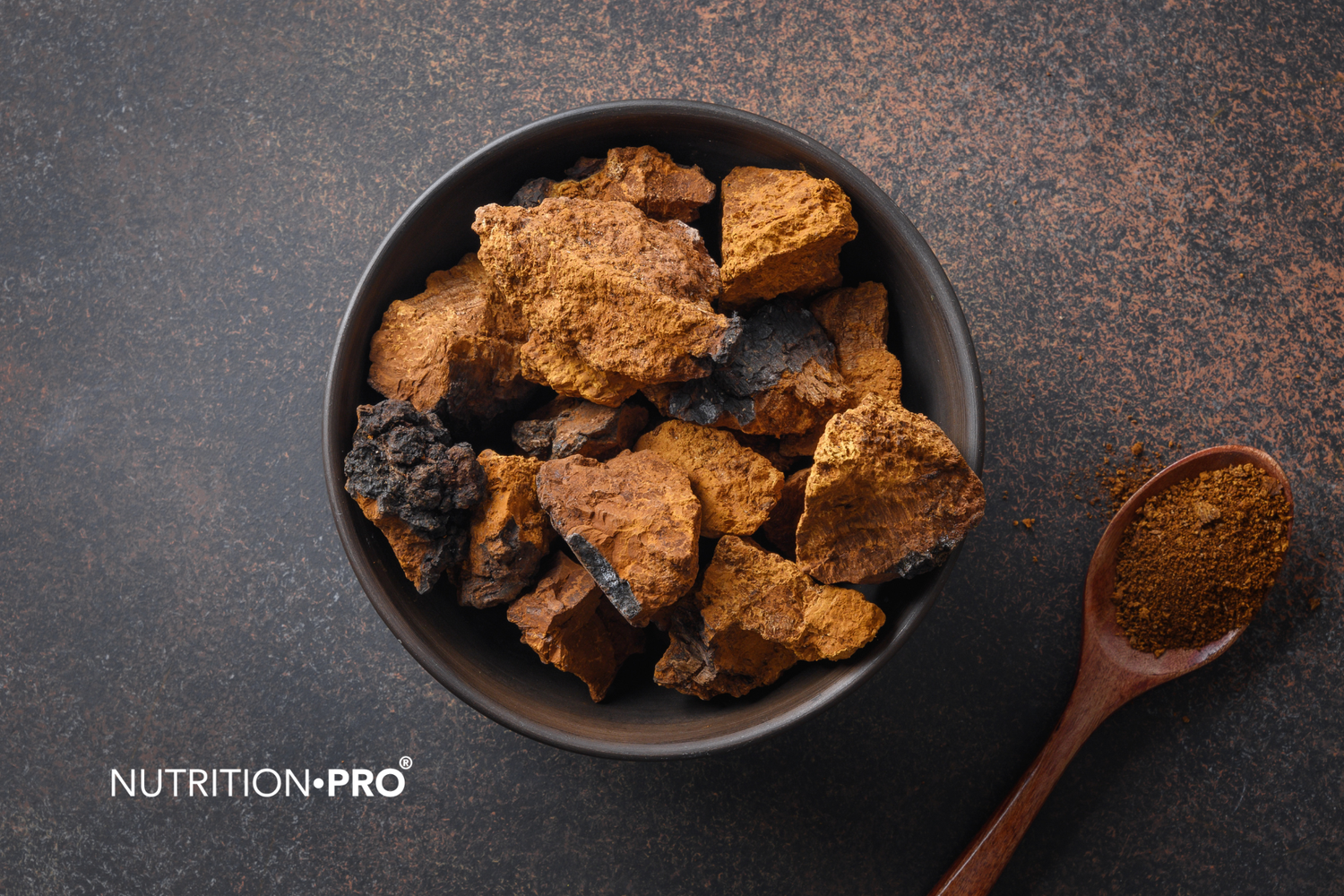
- Chaga (Inonotus obliquus) — antioxidant, vitality
- Shiitake (Lentinula edodes) — defenses, lentinan
- The myth: all mushrooms "boost immunity"
- Mycelium vs fruiting body: why it changes everything
- Precautions: drug interactions, contraindications
- Self-test: which mushroom is right for you?
- How to combine mushrooms (synergies & protocols)
- Personalized decision table
- FAQ — All your questions
Functional mushrooms: what are they really?
The functional mushrooms (also called "medicinal mushrooms" in traditional medicine, or "fungal adaptogens") are species consumed not for their culinary value but for their measurable physiological effects on the body — cognition, immunity, energy, antioxidant defenses, hormonal balance.
An ancient tradition, modern science
The therapeutic use of mushrooms dates back more than 2,000 years in Traditional Chinese Medicine (TCM), Tibetan, and Japanese medicine. Reishi (Ling Zhi) is mentioned in the Shen Nong Ben Cao Jing, a 1st-century Chinese pharmacopoeia treatise. Lion's Mane (Yamabushitake) has traditionally been consumed by Japanese Buddhist monks. Chaga has been used for centuries in Siberia. Cordyceps appears in Tibetan treatises, and Shiitake has been cultivated in Japan since the 13th century.
But it was only from the 1970s-1980s onward that Western science became interested in their secondary metabolites. Today, thousands of studies published in PubMed document their effects — often confirming traditional uses through precise molecular mechanisms (NGF, lentinan, cordycepin, etc.).
Culinary mushroom or functional mushroom?
The line is not clear-cut. Shiitake and Lion's Mane are consumed both as vegetables (fresh) and as supplements (standardized concentrated extracts). The difference: a Shiitake dish provides approximately 5-10 mg of beta-glucans per serving; a Nutrition•pro standardized extract provides 100-200 mg/day, or 20 to 40 times more. This concentration is what transforms food into a supplement with measurable physiological effects.
Beta-glucans, triterpenes, hericenones: the key active compounds
All functional mushrooms share a family of common active compounds (beta-glucans, polysaccharides), but each species possesses its own signature active compounds that explain its specific effects. Understanding these molecules allows for intelligent selection.
Beta-glucans: the common foundation
<<<13>>> Beta-glucans bêta-glucanes are polysaccharides present in the cell wall of all mushrooms (and in oats, barley, yeast). Their distinctive feature: they are recognized by Dectin-1 receptors and TLR2 on the surface of innate immune cells (macrophages, dendritic cells, neutrophils). This recognition triggers a modulated activation of the immune system — not an overactivation, but a preparation against pathogens.
Beta-glucan concentration in fruiting bodies: 20 to 40% by dry weight depending on the species. This is the measurable foundation of quality for a functional mushroom extract.
Signature active compounds of each species
Beyond common beta-glucans, each mushroom possesses unique molecules that explain its effects profile:
- Lion's Mane: hericenones (fruiting body) and erinacines (mycelium) — stimulate the production of NGF (Nerve Growth Factor) and BDNF, factors of hippocampal neurogenesis
- Cordyceps: cordycepin (3'-deoxyadenosine) and CS-4 polysaccharide — increase cellular ATP production and improve oxygen utilization
- Reishi: triterpenes (ganodermic acid, lucidenic acid) and GLP polysaccharide — modulate the autonomic nervous system and stress response
- Chaga: melanins, betulinic acid and SOD (superoxide dismutase) — antioxidant capacity measured among the highest in the world (very high ORAC)
- Shiitake: lentinan (specific beta-1,3-glucan) and eritadenine — modulates the Th1/Th2 response and supports lipid balance
This molecular diversity explains why no single mushroom does it all, and why combining them strategically potentiates the effects.
The 5 Nutrition•pro mushrooms: comparative overview
Here are the 5 best-documented species that we offer in standardized Nutrition•pro capsules. Each mushroom has its area of excellence — use this table to quickly identify which one matches your primary need.
Hericium erinaceus
Cordyceps militaris
Ganoderma lucidum
Inonotus obliquus
Lentinula edodes
All our mushrooms are sourced from fruiting body, guaranteed grain-free cultivation, dosed at 500 mg per capsule, manufactured in France and tested by independent laboratory. They are available individually or grouped in the Functional Mushrooms collection.
Lion's Mane: the mushroom for cognition and neurogenesis
Hericenones and erinacines stimulating NGF production — memory, concentration, nervous system support.
The Lion's Mane (Hericium erinaceus), also called "lion's mane" or "Yamabushitake", is one of the rare natural compounds documented to stimulate NGF production (Nerve Growth Factor) — nerve growth factor involved in hippocampal neurogenesis and synaptic plasticity.
2023 and 2025 RCTs — working memory and complex attention
According to La Monica et al. 2023 in Nutrients, a double-blind crossover RCT compared the acute effect of 1 g of Lion's Mane Nordic vs placebo on cognition in 30 healthy adults. Results at 2 hours post-ingestion: significant improvement in working memory (N-Back test), reaction time andcomplex attention (Go/No-Go test), with parallel improvement in subjective perceptions of happiness and mental clarity (DOI: 10.3390/nu15245018).
According to Surendran et al. 2025 in Frontiers in Nutrition, a crossover RCT in 18 young adults tested a Lion's Mane fruiting body extract (3 g, 10:1 ratio). The effect on overall cognition in single dose remains modest — but significant improvement appears on the pegboard test (fine psychomotor coordination) (DOI: 10.3389/fnut.2025.1405796). The authors conclude that major cognitive benefits require chronic supplementation (8-12 weeks), not a single dose.
The NGF Mechanism: Why It's Unique
Hericenones (fruiting body) and erinacines (mycelium) are among the rare natural molecules capable of crossing the blood-brain barrier and stimulating endogenous production of NGF and BDNF. This mechanism explains the particular interest of Lion's Mane for long-term cognitive support — different from stimulating nootropics like caffeine that act only acutely. Dosage and Timing
Lion's Mane Nutrition•pro
provides 500 mg of fruiting body per capsule, dosage 2 capsules/day or 1 g, a dose validated in recent RCTs. To be taken in the morning or early afternoon (effect of supporting alertness and concentration). Minimum 8-week course to evaluate lasting cognitive effects. Possibility of combining with a multivitamin complex (B9 and B12 cofactors essential for methylation and neuro-synthesis). Also see our creatine and cognition guide
for a complementary approach to scientifically-validated nootropics. ★ IMPROVED WORKING MEMORY (LA MONICA 2023) Lion's Mane (Hericium) — 60 Capsules
Cordyceps militaris
has been used in Tibetan and Chinese traditional medicine for centuries for
jing (vital energy). Modern research has validated its effect on aerobic performance via measurable mitochondrial mechanisms — it is the most studied fungus in athletes. The Hirsch 2017 RCT: VO2max and Endurance According to Hirsch et al. 2017 in the Journal of Dietary Supplements
, a double-blind randomized controlled trial tested the effect of
4 g/day of a Cordyceps militaris-based blend in 28 adults over 1 then 3 weeks. Results after 3 weeks:significant improvement in VO2max (+4.8 ml/kg/min) , in time to exhaustion (+69.8 seconds) , and inventilatory threshold (+0.7 L/min) . None of these gains appeared in the placebo group (DOI: 10.1080/19390211.2016.1203386 ).. Aucun de ces gains n'apparaît dans le groupe placebo (DOI : 10.1080/19390211.2016.1203386).
To put this gain in perspective: +4.8 ml/kg/min of VO2max corresponds to the effect of approximately 4 to 6 weeks of moderate endurance training. This is neither a placebo effect nor anecdotal. Supplementation accelerates physiological adaptations to aerobic exercise.
The cordycepin + CS-4 mechanism
The cordycepin (3'-deoxyadenosine) is the signature active compound of Cordyceps militaris. Structurally similar to adenosine, it modulates AMPK activity (central regulator of cellular energy metabolism) and stimulates ATP production by mitochondria. The CS-4 polysaccharide improves peripheral oxygen utilization at the muscle level. The combination explains the VO2max and endurance gains observed in RCTs.
Cordyceps militaris vs sinensis: essential clarification
Two species exist: Cordyceps militaris (cultivable in laboratory, rich in cordycepin, standardizable active content) and Cordyceps sinensis (wild Tibetan form, ultra-rare and expensive, often counterfeited). All modern clinical studies focus on militaris cultivated — this is the form we use in Cordyceps Nutrition•pro. Beware of "wild sinensis" products at rock-bottom prices: it's mathematically impossible.
For whom, at what dosage
Cordyceps is particularly relevant for: endurance athletes (running, cycling, swimming, trail running), people resuming physical activity, active seniors, or anyone experiencing a lack of daily energy. Dosage: 2 capsules/day (1 g of fruiting body), to be taken in the morning or before training. For maximum effect, a minimum 3-week course — the effect is progressive.
Also see our creatine guide for complementary performance synergy (phosphocreatine energy + Cordyceps mitochondrial energy).
Reishi: the adaptogen for stress, sleep, and calm
Triterpenes (ganodermic acid) and polysaccharides — modulation of the autonomic nervous system.
The Reishi (Ganoderma lucidum) is nicknamed in Chinese "Ling Zhi" — the spiritual mushroom or mushroom of immortality. Used for over 2,000 years in traditional Chinese medicine for its "shen" properties (spirit, inner calm), it is today the most studied functional mushroom in the world — over 4,000 PubMed publications.
Triterpenes and ganodermic acid: the unique profile
Reishi is the only mushroom in our range to contain a high concentration of triterpenes — more than 150 identified, including ganodermic acids A to Z. These molecules are responsible for Reishi's characteristic bitter taste and most of its unique effects: modulation of the autonomic nervous system (calming effect without drowsiness), cortisol/DHEA balance, liver support.
Additionally, its GLP polysaccharides act on innate immunity via Dectin-1 and TLR2 receptors — fine immune modulation, not brutal stimulation.
The documented NK/CD8 mechanism
According to Lian et al. 2023 in Journal of the Chinese Medical Association, a preclinical study demonstrated that Ganoderma lucidum spore oil increases the population of CD8+ T lymphocytes andNatural Killer (NK) cell activity in the spleen, in a murine model. This immune modulation is considered one of Reishi's anti-tumor mechanisms as a chemotherapy adjuvant (DOI : 10.1097/JCMA.0000000000001038). Note: this study is animal-based, benefits in humans must be confirmed by clinical RCTs.
Reishi and sleep: why it makes sense
Unlike a sedative (melatonin, valerian), Reishi does not cause direct drowsiness — it modulates the autonomic nervous system toward parasympathetic dominance (recovery state). Taken in the evening, it promotes more natural sleep onset and deeper sleep quality, without a "groggy next morning" effect. It's the ideal adaptogen for profiles "I'm exhausted but I can't sleep" — typical state of chronic stress.
For whom, at what dosage
The Reishi Nutrition•pro (500 mg fruiting body per capsule) is particularly relevant for: chronic stress, light or disrupted sleep, convalescence, mental and emotional fatigue, fragile immune systems (recurring colds). Dosage: 2 capsules/day, ideally in the evening with meals. Excellent synergy withAshwagandha KSM-66® to amplify the anti-stress effect.
Important precaution: Reishi has a slight blood-thinning effect. It is not recommended with anticoagulants (AVK, AOD) and 2 weeks before scheduled surgery. See detailed precautions section below.
Chaga: the antioxidant "diamond of the forest"
Melanins, betulinic acid, SOD — antioxidant capacity among the highest in the world.
The Chaga (Inonotus obliquus) is a parasitic fungus growing on birch trees in cold regions (Siberia, Canada, Scandinavia, northern Russia). Used for centuries in Siberian folk medicine as an infusion, it possesses one of the highest antioxidant capacities (ORAC) of all known foods — superior to that of goji berries, acai, or raw cacao.
Melanins and SOD: the antioxidant signature
The characteristic black appearance of Chaga (charcoal-like growth on birch) comes from its exceptional richness in fungal melanins — biological pigments with powerful antioxidant properties. Combined with superoxide dismutase (SOD), an endogenous antioxidant enzyme highly concentrated in Chaga, they effectively neutralize free radicals involved in cellular aging and chronic inflammation.
Chaga also containsbetulinic acid (derived from the host birch), a molecule studied for its anti-inflammatory and anti-tumor properties in preclinical studies. And specific beta-glucans that contribute to overall immune support.
For whom, for what
Chaga is particularly relevant for: people exposed to high oxidative stress (intensive athletes, smokers quitting, urban pollution), chronic inflammatory conditions, cellular anti-aging support, convalescence, skin that marks easily. It is the most powerful natural antioxidant available in capsule form.
The Chaga Nutrition•pro (500 mg fruiting body per capsule, 2 capsules/day) is particularly complementary to other antioxidants such as vitamin C or the Antioxidants 60 capsules.
Important precaution: oxalate and kidneys
Chaga contains a relatively high concentration ofoxalate. It is not recommended in case of history of kidney stones (oxalate-calcium lithiasis) or renal insufficiency. Proper hydration recommended (1.5-2 L water/day) during the treatment course. See detailed precautions section below.
Shiitake: lentinan and Th1/Th2 balance
The most studied beta-glucan in the world — immune defenses, inflammatory modulation.
The Shiitake (Lentinula edodes) is the most consumed edible mushroom in Japan and one of the best clinically documented functional mushrooms. Its signature active compound, lentinan, has been used as an adjuvant medication in oncology in Japan since 1985 (official approval for advanced gastric cancer).
Lentinan: a unique beta-1,3-glucan
<<<7>>> Lentinan lentinane is a beta-(1→3)-glucan with specific branching that particularly activates Th1 lymphocytes (cellular immunity) at the expense of Th2 (humoral immunity linked to allergies). This Th1/Th2 rebalancing is particularly relevant in individuals with allergic or chronic inflammatory profiles.
According to Song et al. 2024 in Phytomedicine, a preclinical study demonstrated that lentinan attenuates airway inflammation and epithelial barrier dysfunction in an allergic asthma model, via inhibition of the PI3K/AKT/NF-κB pathway (DOI: 10.1016/j.phymed.2024.155965). Animal study — benefits in humans as a dietary supplement remain to be confirmed in RCT.
Eritadenine and lipid profile
Shiitake also containseritadenine, a compound identified in the 1970s capable of modulating lipid metabolism. Early studies showed modest reductions in total cholesterol among regular Shiitake consumers. Effect to be confirmed in modern RCT, but consistent with the traditional role of Shiitake in Japanese diet (correlated with high life expectancy).
For whom, at what dosage
<<<22>>> Shiitake Nutrition•pro Shiitake Nutrition•pro (500 mg fruiting body per capsule, 2 capsules/day) is particularly relevant for: individuals prone to recurrent infections (ENT, urinary), chronic allergic profiles, convalescence from viral infections, seasonal immune support (fall/winter). Excellent synergy with Reishi (globally modulated immunity) and organic Propolis (direct antibacterial action).
To deepen your overall immune approach, see our complete propolis and immunity guide.
The myth: all mushrooms "boost immunity"
Every e-commerce site, wellness blog and app repeats the same phrase: "functional mushrooms boost immunity". This is simplistic, marketing, and false in the details. Each mushroom acts on very different functions — and some should not even be given to specific profiles. Here's what science actually says.
Why "boosting" immunity is a misleading term
Immunity is not a slider you turn up or down. It's a complex system of balance between innate immunity (immediate, non-specific response) and adaptive immunity (T and B lymphocytes, immune memory), between Th1 dominance (cellular, antiviral) and Th2 (humoral, allergic), between useful acute inflammation and harmful chronic inflammation.
A generalized "boost" would be not only useless but potentially dangerous. In a person suffering from autoimmune disease (lupus, multiple sclerosis, rheumatoid arthritis), overactivating immunity worsens the disease. True immunomodulators balance, they don't "boost".
What each mushroom in our range actually does
Lion's Mane : no major documented immune effect. Its domain is neurogenesis and cognition. Don't take it to "prepare for winter" — that's not its function.
Cordyceps : moderate immune effect. Its domain is energy and endurance via mitochondria. Indirect immune effect (a better-oxygenated body defends itself better), not direct.
Reishi : fine immune modulation. Activates NK and CD8 cells (Lian 2023), but also rebalances Th1/Th2 and calms inflammation. It's the most "immune anti-stress" — not a boost but a balancing.
Chaga : antioxidant action + beta-glucans. Immune support via reduction of oxidative stress that depletes defenses, and via common beta-glucans. Not a direct immune stimulant.
Shiitake : specific Th1 activation via lentinan. It's the only mushroom whose immune effect is documented in old human RCT (gastric cancer, Japan). Particularly relevant for antiviral cellular defenses, less so for allergies.
The right question: "which mushroom for which immune terrain?"
Chronic stress that weakens defenses → Reishi. Convalescence or recurrent viral infections → Shiitake. Oxidative stress and inflammation → Chaga. Energy burnout → Cordyceps. Cognitive impairment related to fatigue → Lion's Mane. Seek professional health advice if on chronic treatment.
Mycelium vs fruiting body: why it changes everything
This is the least understood topic in the functional mushroom market — and the one that distinguishes an effective product from a useless one. 80% of "mushroom" supplements sold online are actually mycelium cultivated on grain — that is, mainly starch with a few traces of mushroom. Here's how to tell the difference.
What exactly is a mushroom?
A mushroom is an organism composed of two very different parts:
The mycelium is the filamentous underground network (or within-wood for wood-decay species). It's the equivalent of "roots" — the vegetative organism that colonizes the substrate and absorbs nutrients. Mycelium can extend for kilometers and live for decades.
The fruiting body is the visible part — what is commonly called "the mushroom." It's the reproductive organ that emerges from the substrate to disperse spores. It grows periodically (seasonally), concentrates bioactive compounds, and it's the part consumed culinarily.
Why active compounds are concentrated in the fruiting body
The signature molecules of functional mushrooms (hericenones from Lion's Mane, cordycepin from Cordyceps, ganoderic acid from Reishi, lentinan from Shiitake) are produced during the fruiting phase. They serve to protect the mushroom against pathogens, UV radiation, and predators during its reproductive phase. The mycelium contains these in very low to undetectable quantities.
Rigorous clinical studies (notably La Monica 2023 on Lion's Mane, Hirsch 2017 on Cordyceps, Japanese trials on Shiitake lentinan) focus almost exclusively on fruiting bodies.
The "mycelium on grain" trap
Common practice in the low-cost industry is to cultivate mycelium on a cereal substrate (rice, oats, sorghum) in a bioreactor. After a few weeks, the entire mixture — mycelium + colonized substrate — is harvested, ground up, and sold in capsules under the mushroom's name. The problem: the final product contains 60-80% residual starch from the cereals, traces of mycelium, and infinitesimal quantities of signature active compounds.
Independent tests (Sullivan 2017, Hammond 2019, analyses by the American Mushroom Council) have shown that these products often contain less than 5% beta-glucans — whereas an authentic fruiting body contains 20 to 40%.
How to verify quality
4 criteria to identify a high-quality mushroom supplement:
1. Clear mention of "fruiting body" or "corps fructifère" on the label. If this isn't specified, it's a bad sign.
2. Beta-glucan content measured and indicated (ideally >20%, measured by specific α-glucan vs β-glucan method). A product that only indicates "total polysaccharides" often hides cereal starch.
3. Absence of residual starch (beta-glucan / alpha-glucan test: a pure product shows <5% α-glucan = starch).
4. Standardization of signature active compounds : cordycepin for Cordyceps, hericenones for Lion's Mane, etc.
Nutrition•pro mushrooms are all derived from fruiting body, dosed at 500 mg per capsule, with no grain cultivation, manufactured in France and tested by independent laboratory. The Functional Mushrooms collection meets this standard across all 5 species.
Precautions: drug interactions, contraindications
Functional mushrooms are generally well tolerated, but they contain true active biological molecules. This implies precise precautions for certain profiles — precautions too often omitted by e-commerce sites. Here is the complete inventory.
1. Anticoagulants — Reishi contraindicated
Reishi has a moderate blood-thinning effect (modulation of platelet aggregation). It is not recommended in case of anticoagulant treatment (warfarin, VKA, DOAC such as Eliquis, Xarelto, Pradaxa) and in case of coagulation disorders (hemophilia, thrombocytopenia). Discontinuation recommended 2 weeks before any scheduled surgery. Always mention its use to your surgeon and primary care physician.
2. Kidney pathologies — Chaga not recommended
Chaga contains a relatively high concentration of oxalate. It is not recommended in case of history of kidney stones (calcium oxalate calculi) orrenal insufficiency. Maintain proper hydration (1.5-2 L of water/day) during the treatment course. Medical advice recommended if in doubt.
3. Immunosuppressants — All not recommended
Beta-glucans activate innate immunity — which can counteract the effect of immunosuppressants prescribed to transplant recipients (anti-rejection), those with autoimmune diseases treated with biotherapy (methotrexate, infliximab, rituximab), or in blood disorders. All mushrooms are contraindicated in these situations without approval from the specialist physician.
4. Pregnancy and breastfeeding — General precaution
Clinical data in pregnant women are insufficient for the majority of functional mushroom species in concentrated extracts. As a precaution, supplementation should be avoided during pregnancy and breastfeeding. Normal culinary consumption (Shiitake in cooking, for example) remains without known risk.
5. Cancer treatments — Medical advice mandatory
Although certain mushrooms (notably Reishi and Shiitake) are used as adjuvants to chemotherapy in Japan, their combination with cancer treatment must necessarily be validated by the oncologist. Certain mushrooms can modulate liver enzymes (cytochromes CYP450) that influence the metabolism of anti-cancer drugs.
6. Mushroom allergies — Elementary precaution
People allergic to mushrooms (rare but existent): absolute contraindication. First trial at reduced dose recommended to assess personal tolerance.
7. Possible adverse effects
At correctly observed recommended doses, adverse effects are rare and mild: mild digestive disorders (bloating, changes in bowel movements at the start of treatment), dry mouth (especially Reishi), transitory taste changes (Shiitake), mild skin itching (very rare). These effects generally disappear within 1-2 weeks or upon stopping the treatment course.
Self-assessment: which mushroom is right for you?
Check the statements that apply to you. Your dominant profile will guide you toward the most relevant mushroom — or toward an appropriate combination. The 5 profiles correspond to the 5 mushrooms in our range.
How to combine mushrooms (synergies & treatment protocols)
Once a mushroom has been evaluated alone for 8 weeks, experienced users can combine 2 to 3 mushrooms to multiply the benefits. Here are the coherent combinations by objective and implementation protocol.
The 4 coherent synergies
1. Lion's Mane + Reishi — Brain and sleep
Lion's Mane in the morning (memory, concentration) + Reishi in the evening (nervous recovery, sleep). Perfect combination for stressed intellectual profiles who need cognitive performance during the day and deep recovery at night. 8-12 week course.
2. Cordyceps + Lion's Mane — Cognitive Athletes
Cordyceps before training (energy, VO2max) + Lion's Mane at another time (concentration, coordination). Excellent for athletes who combine physical effort and mental demands (precision sports, orienteering trail, strategic competitions). Synergy with creatine monohydrate for explosive sports.
3. Reishi + Chaga — Antioxidant Adaptogen
The "cellular longevity" duo: Reishi for stress and immunity modulation, Chaga for antioxidant protection. Relevant as an autumn/winter course and for 50+ profiles. See also our guide for after 50 for a complete metabolic approach.
4. Shiitake + Reishi — Overall Defenses
For fragile immune systems or during recovery: Shiitake (antiviral Th1 activation) + Reishi (Th1/Th2 modulation, anti-stress). 8 to 12 week course in September-October to prepare for winter. Possible synergy with organic Propolis and Zinc 60 capsules.
Combinations with Herbal Adaptogens
Functional mushrooms combine well with herbal adaptogens :
- Reishi + Ashwagandha KSM-66® = most powerful anti-stress duo (morning cortisol + sleep)
- Cordyceps + Rhodiola rosea = physical endurance + mental stress tolerance (athletes)
- Lion's Mane + Organic Red Ginseng = complete nootropic (cognition + vitality)
See our complete ashwagandha guide 2026 to deepen the herbal adaptogen approach.
The Cycling Rule
Adaptogens (fungal or herbal) respond better to cycles than to continuous use. Recommendation: 8-12 week course, 2-4 week break, possible resumption. Alternative: seasonal rotation :
- Winter : Reishi + Shiitake (immunity, sleep)
- Spring : Lion's Mane (cognitive renewal, neurogenesis)
- Summer : Cordyceps (energy, performance)
- Fall : Chaga (winter preparation, antioxidants)
Personalized Decision Chart
IF / THEN summary to quickly decide on the approach suited to your situation.
FAQ — All your questions
Which functional mushroom should I choose to get started?
The choice depends on your primary objective. Lion's Mane for cognition and memory (the most versatile entry-level option). Cordyceps for energy and physical performance. Reishi for stress, sleep and calm. Chaga for antioxidant and general vitality. Shiitake for seasonal immune defenses. Best way to start: a single mushroom targeting your primary need, for 8-12 weeks, to evaluate its specific effect.
Can multiple functional mushrooms be combined?
Yes, it's even recommended for experienced users. Coherent combinations: Lion's Mane + Reishi (brain + sleep), Cordyceps + Lion's Mane (energy + focus), Reishi + Chaga (immunity + antioxidant), Shiitake + Reishi (defenses + adaptogen). Maximum 2-3 mushrooms simultaneously to keep it clear. Always start with just one for 8 weeks before combining.
How long should you take functional mushrooms?
A minimum 8 to 12-week course is necessary to evaluate effects on cognition, energy, immunity, or sleep. Benefits typically appear between week 4 and week 8. For lasting effects: maintenance courses of 2-3 months per year, or seasonal rotation. Take a 2-4 week break every 3 months — adaptogens respond better in cycles than continuously.
What's the difference between fruiting body and mycelium?
The fruiting body is the visible mushroom (the "fruit" that grows from the substrate) — it contains the highest concentration of beta-glucans, triterpenes, hericenones (Lion's Mane) or cordycepin (Cordyceps). The mycelium is the underground filamentous network — often cultivated on grain (rice, oats) and sold as extract, it contains mostly residual starch and very low amounts of active compounds. Clinical studies focus almost exclusively on fruiting bodies. Always check the label mention.
Do functional mushrooms have side effects?
At correctly respected nutritional doses, all 5 mushrooms are generally well tolerated. Rare adverse effects: mild digestive issues (bloating, changed stools at the start of treatment), dry mouth (Reishi), taste changes. Important precautions: Reishi not recommended if taking anticoagulants (blood-thinning effect), Chaga not recommended with kidney disease (oxalate), all mushrooms to avoid with medical immunosuppression (transplant, treated lupus). Always inform your doctor of use if on chronic treatment.
Can you take functional mushrooms during pregnancy?
As a precaution, functional mushroom supplementation is NOT recommended during pregnancy and breastfeeding. Clinical data in pregnant women are insufficient for most species. Traditional cooking (shiitake, mushrooms in dishes) remains safe, but concentrated extracts at nutritional doses should be avoided when in doubt. Resume possibly after breastfeeding ends, with medical approval.
Is Lion's Mane really effective on memory?
According to La Monica et al. 2023 in Nutrients, 1 g of Lion's Mane Nordic in acute dose improves working memory, reaction time, and complex attention within 2 hours in healthy adults. According to Surendran et al. 2025 in Frontiers in Nutrition, the effect on overall cognition in single dose remains modest — benefits build mainly through chronic 8-12 week courses. The mechanism: hericenones and erinacines stimulate NGF (Nerve Growth Factor) production, a factor in hippocampal neurogenesis.
Is Cordyceps banned for competitive athletes?
No, Cordyceps militaris is NOT on the World Anti-Doping Agency (WADA) prohibited substance list. It is consumed during competition by many endurance athletes. According to Hirsch et al. 2017 (J Diet Suppl), 4 g/day of Cordyceps militaris-based blend for 3 weeks significantly improves VO2max (+4.8 ml/kg/min) and time to exhaustion (+69.8 s). As with any supplement, verify product purity and require an anti-contamination certificate (Cologne List or Informed Sport standard) for elite competitors.
- Beta-glucans
- Glucose polysaccharides linked by β-(1→3) and β-(1→6) bonds, present in the cell wall of mushrooms, oats, barley, and yeast. Recognized by Dectin-1 and TLR2 receptors on immune cells (macrophages, dendritic cells), they activate innate immunity. Measurable concentration in fruiting bodies: 20 to 40% dry weight.
- Fruiting body
- The visible and reproductive part of the mushroom that emerges from the substrate to disperse spores. Bioactive compounds are concentrated in the fruiting body: hericenones, cordycepin, triterpenes, lentinan, melanins. Rigorous clinical studies focus almost exclusively on fruiting bodies, as opposed to mycelium cultivated on grain.
- Hericenones and erinacines
- Compounds from the cyathane terpenoid family, present respectively in the fruiting body (hericenones A to H) and mycelium (erinacines A to K) of Hericium erinaceus (Lion's Mane). These molecules cross the blood-brain barrier and stimulate the production of NGF and BDNF, factors in hippocampal neurogenesis and synaptic plasticity.
- Cordycepin (3'-deoxyadenosine)
- A nucleoside structurally similar to adenosine, identified as early as 1950, present in high concentration in Cordyceps militaris (up to 1-7 mg/g of fruiting body). Modulates AMPK activity (central regulator of energy metabolism) and stimulates mitochondrial ATP production. Central mechanism of Cordyceps' ergogenic effect on VO2max.
- Triterpenes
- Family of organic molecules (C30) constructed from 6 isoprenic units. In Reishi (Ganoderma lucidum), more than 150 triterpenes have been identified, including ganoderic acids (A to Z). Responsible for the characteristic bitter taste and most of Reishi's unique effects: modulation of the autonomic nervous system, hepato-protective and adaptogenic activity.
- Lentinan
- Beta-(1→3)-D-glucan with beta-(1→6) branches extracted from the fruiting body of Shiitake (Lentinula edodes). Approved in Japan as an adjuvant for chemotherapy (advanced gastric cancer) since 1985. Mechanism of action: recognition by Dectin-1 receptors on dendritic cells → activation of Th1 lymphocytes, production of cytokines (IL-12, IFN-gamma) → strengthening of cellular and antimicrobial immunity.
- NGF (Nerve Growth Factor)
- Essential neurotrophic factor for the survival, growth, and differentiation of neurons. Discovered by Rita Levi-Montalcini (Nobel Prize 1986). Its production decreases with age; its stimulation by certain compounds (hericenones from Lion's Mane) is being studied as a strategy for cognitive support and neuroprotection.
- Surendran G, Saye J, Binti Mohd Jalil S, et al. Acute effects of a standardised extract of Lion's Mane mushroom on cognition and mood in healthy younger adults: a double-blind randomised placebo-controlled study. Frontiers in Nutrition 2025;12:1405796. Crossover RCT in 18 young adults testing a fruiting body extract (3 g, 10:1 ratio). Modest effect on global cognition in single dose, significant improvement on pegboard test. DOI : 10.3389/fnut.2025.1405796
- La Monica MB, Raub B, Ziegenfuss EJ, et al. Acute Effects of Naturally Occurring Guayusa Tea and Nordic Lion's Mane Extracts on Cognitive Performance. Nutrients 2023;15(24):5018. Double-blind crossover RCT: 1 g Nordic Lion's Mane vs placebo. Significant improvement in working memory (N-Back), reaction time, complex attention at 2 hours post-ingestion. DOI : 10.3390/nu15245018
- Hirsch KR, Smith-Ryan AE, Roelofs EJ, Trexler ET, Mock MG. Cordyceps militaris Improves Tolerance to High-Intensity Exercise After Acute and Chronic Supplementation. Journal of Dietary Supplements 2017;14(1):42-53. Double-blind RCT in 28 adults: 4 g/day of Cordyceps militaris-based blend for 1-3 weeks. After 3 weeks: VO2max +4.8 ml/kg/min, time to exhaustion +69.8 s, ventilatory threshold +0.7 L/min. DOI : 10.1080/19390211.2016.1203386
- Lian S, Li W, Zhong C, et al. Ganoderma lucidum spore oil synergistically enhances the function of cyclophosphamide in the prevention of breast cancer metastasis. Journal of the Chinese Medical Association 2024;87(3):305-313. Preclinical study (murine model): Reishi spore oil increases CD8+ lymphocytes and NK cell activity in the spleen, with synergistic anti-tumor effect with cyclophosphamide. DOI : 10.1097/JCMA.0000000000001038
- Song Y, Chen Y, Cai H, et al. Lentinan attenuates allergic airway inflammation and epithelial barrier dysfunction in asthma via inhibition of the PI3K/AKT/NF-κB pathway. Phytomedicine 2024;134:155965. Preclinical study on a murine model of allergic asthma. Lentinan reduces airway inflammation and eosinophilia, restores the epithelial barrier via inhibition of PI3K/AKT/NF-κB. DOI: 10.1016/j.phymed.2024.155965
- EFSA Health Claims Register. Authorized health claims for beta-glucans (oats, barley). European Food Safety Authority. Beta-glucans contribute to the maintenance of normal cholesterol levels (minimum 3 g/day). Specific claims for fungal beta-glucans are not yet formalized in Europe.
- ANSES. Opinions and reports on mushroom-based dietary supplements. National Food, Environmental and Occupational Safety Agency. Precautionary recommendations on drug interactions, at-risk populations (pregnancy, breastfeeding, immunosuppression).


