

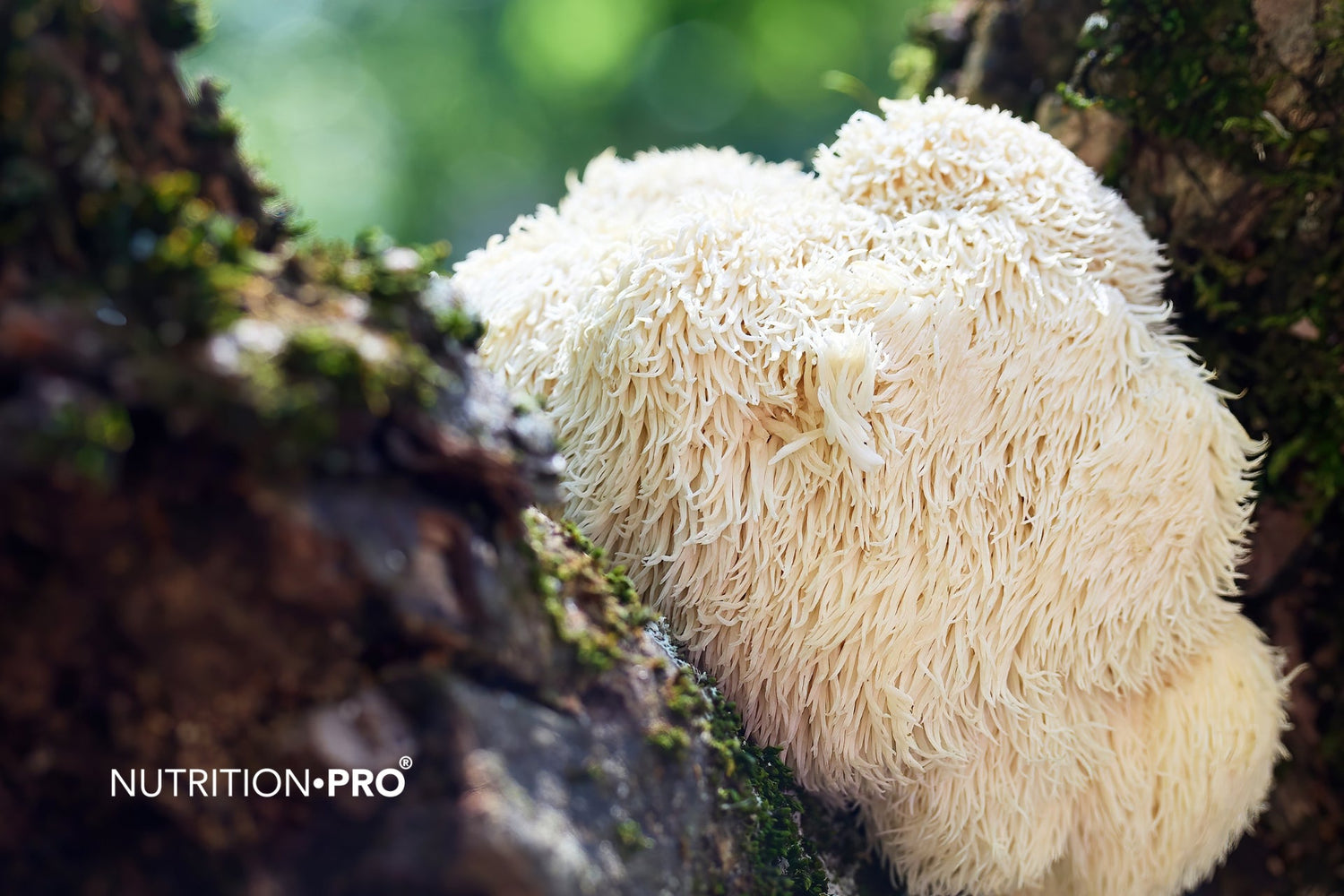
The Lion's Mane — or Hericium erinaceus in Latin, "Yamabushitake" in Japanese — has become one of the most publicized functional mushrooms in recent years. Nicknamed "the brain mushroom," "natural nootropic," or even "the neurogenesis promoter," it is the subject of often exaggerated marketing claims.
What science actually says: according to several randomized clinical trials published since 2009, Lion's Mane effectively improves working memory, attention, mood, and supports neurogenesis via stimulation of NGF (Nerve Growth Factor). But with chronic effects, not immediate ones : it takes 8 to 16 weeks to see benefits develop. In this pillar guide: the 8 documented benefits, the "limitless boost" myth, the crucial difference between fruiting body and mycelium, and the validated 12-week protocol.

Landmark study: according to Mori et al. 2009 in Phytotherapy Research, a double-blind RCT in 30 older subjects (50-80 years) with mild cognitive impairment (MCI) demonstrated that a 1 g/day course of Lion's Mane for 16 weeks significantly improves HDS-R cognitive scores at 8, 12, and 16 weeks — with significant decline 4 weeks after discontinuation (proof of causality).
2025 Review: according to Menon et al. 2025 in Frontiers in Nutrition, a PRISMA-compliant systematic review covering 5 RCTs confirms efficacy on cognition (weighted average MMSE gain +1.17), neurogenesis (BDNF), the gut-brain axis (microbiota SCFA), and anxious and depressive symptoms.
- Lion's Mane: Why All the Buzz?
- Hericenones, Erinacines, NGF, BDNF: The Science
- The 8 Proven Benefits: Overview
- Benefit #1 — Working Memory (La Monica 2023)
- Benefit #2 — Support for Mild Cognitive Impairment (Mori 2009)
- Benefit #3 — Complex Attention and Reaction Time
- Benefit #4 — Hippocampal Neurogenesis and BDNF
- Benefit #5 — Anxiety and Mood (Menon 2025)
- Benefit #6 — Gut-Brain Axis and SCFA Microbiota
- Benefit #7 — Peripheral Nerve Support
- Benefit #8 — Deep Sleep and Recovery
- Myth: "Lion's Mane = Limitless / Immediate Boost"
- Fruiting Body vs. Mycelium: Why It's Non-Negotiable
- Precautions and Contraindications
- Self-Test: Is Lion's Mane Right for You?
- 12-Week Protocol: How to Integrate Lion's Mane
- Personalized Decision Table
- FAQ — All Your Questions
Lion's Mane: Why All the Buzz?
The Lion's Mane (Hericium erinaceus) is an edible mushroom recognizable by its unique appearance: a cascade of long white filaments resembling a lion's mane or stalactites. Consumed for centuries in Asia for its culinary and therapeutic virtues, it became in 2022-2026 one of the most searched dietary supplements on Google, driven by biohacking communities, students cramming for exams, and seniors concerned about their cognitive health.
A Mushroom, A Millennial History
Lion's Mane grows wild on wounded beech and oak trees, in autumn, in the temperate forests of Asia, Europe, and North America. In Traditional Chinese Medicine (TCM), it is called Hou Tou Gu ("monkey head mushroom") and has been used for over 2,000 years to support the stomach, spleen, and longevity. In Japan, ascetic Buddhist monks Yamabushi consumed it before long meditation sessions to support mental clarity — hence its Japanese name "Yamabushitake".
From the kitchen to modern pharmacopeia
In cooking, Lion's Mane is appreciated for its texture close to that of crab or lobster once cooked — a prized plant-based meat in traditional Japanese cuisine. But it was in the 1990s, with the first work by Japanese researcher Hirokazu Kawagishi, that the scientific community discovered its signature molecules: hericenones (present in the fruiting body) and erinacines (present in the mycelium). These compounds have a unique characteristic: they stimulate the production of NGF, nerve growth factor — a discovery that paves the way for modern clinical studies on cognition.
The peak of research since 2020
According to Google Trends, searches for "Lion's Mane" in France increased approximately 8-fold between 2020 and 2025. PubMed now indexes over 800 scientific publications on Hericium erinaceus, including about a dozen randomized clinical trials in humans. It is one of the best-documented supplements in the "natural nootropics" category — but also one of the most misunderstood by the general public.
Hericenones, erinacines, NGF, BDNF: the science of Lion's Mane
Lion's Mane works through a unique mechanism among dietary supplements: it stimulates endogenous NGF production (Nerve Growth Factor), nerve growth factor discovered by Rita Levi-Montalcini (Nobel Prize 1986). Understanding this mechanism makes it possible to understand why its effects are chronic, not immediate.
The two families of signature molecules
Lion's Mane contains several hundred bioactive compounds, but two families concentrate the bulk of its therapeutic interest:
The hericenones (A to H) are concentrated in the fruiting body (the visible part of the mushroom). Identified in the 1990s by researcher Kawagishi, they stimulate NGF production in neural cells in culture.
The erinacines (A to K) are concentrated in the mycelium (underground filamentous network). Also discovered in the 1990s, they have NGF-stimulating activity comparable to hericenones, sometimes with better blood-brain barrier penetration.
This dual molecular family explains why some commercial extracts focus on the fruiting body, others on the mycelium, and still others combine both. The majority of human clinical RCTs focus on the fruiting body — this is the current scientific standard.
NGF: the Nobel factor of neurogenesis
The NGF (Nerve Growth Factor) is an essential neurotrophin discovered by Rita Levi-Montalcini in 1952, which earned her the Nobel Prize in Medicine in 1986. NGF is essential for the survival, growth, and differentiation of neurons, particularly in the peripheral nervous system and certain brain regions (basal cholinergic regions of the forebrain).
With age, endogenous NGF production progressively decreases, which contributes to the weakening of neural connections and age-related cognitive decline. Lion's Mane is one of the very rare natural compounds documented to stimulate endogenous NGF production — which is what makes it such an intense subject of research.
BDNF: the other messenger of plasticity
The BDNF (Brain-Derived Neurotrophic Factor) is another neurotrophin, particularly involved in synaptic plasticity of thehippocampus, a key structure for memory and learning. According to the review by Menon et al. 2025 in Frontiers in Nutrition, Lion's Mane increases pro-BDNF and BDNF production, and promotes hippocampal neurogenesis in animals — a mechanism consistent with cognitive benefits observed in human RCTs (DOI: 10.3389/fnut.2025.1641246).
Why this explains the "chronic not immediate" effect
Stimulating endogenous NGF and BDNF production is not an immediate stimulating effect (like caffeine on adenosine, for example). It is a long-term plasticity effect : neurotrophins take weeks to produce new synaptic contacts, to promote axon growth, to support hippocampal neurogenesis. This is why the landmark RCT Mori 2009 measured benefits at 8, 12, and 16 weeks — and why promising a "cognitive boost in 1 dose" amounts to misleading marketing.
The 8 proven benefits: overview
Here are the 8 areas for which clinical research has documented an effect of Lion's Mane. Each benefit is then detailed with its reference study, mechanism, and context of use.
Working memory: acute effect proven in 2 hours
Crossover RCT La Monica 2023 — 1 g Lion's Mane Nordic vs placebo, significant N-Back test improvement.
Working memory is the ability to temporarily maintain and manipulate information in your mind to perform a complex task — remembering a phone number long enough to dial it, following a conversation, solving a mental problem. It is one of the cognitive functions that declines most rapidly with stress, fatigue, and age.
The La Monica 2023 RCT — protocol and results
According to La Monica et al. 2023 in Nutrients, a double-blind randomized controlled crossover trial compared the acute effect of 1 g of Lion's Mane Nordic vs placebo vs guayusa (South American tea) in 30 healthy adults. Subjects were assessed at 1h, 2h, and 4h post-ingestion on a battery of computerized cognitive tests (DOI: 10.3390/nu15245018).
Results at 2 hours post-ingestion of Lion's Mane vs placebo:
- Working memory (N-Back test): significant improvement
- Reaction time : significantly faster
- Complex attention (Go/No-Go test): significantly improved
- Subjective perceptions : improvement in feelings of happiness and mental clarity
Important: these results concern a standardized Nordic extract with a specific dosage. Generalization to all Lion's Mane extracts is not automatic — hence the importance of the quality of the extract chosen.
Who it's relevant for
The acute effect on working memory is particularly useful for: students revising or taking exams, professionals facing complex cognitive tasks, people in meetings or public speaking. However, it is thechronic effect (8-16 week course) that delivers the most profound benefits — see benefit #2.
Mild cognitive impairment (MCI): the landmark Mori 2009 study
Double-blind RCT 16 weeks in 30 Japanese seniors — reversible HDS-R effect upon discontinuation.
The RCT by Mori et al. 2009 became the historical reference on Lion's Mane and senior cognition. Its rigorous protocol (double-blind, placebo-controlled, 16 weeks, post-discontinuation follow-up) and clear results make it a pivotal study cited in virtually all subsequent publications.
The detailed protocol
According to Mori et al. 2009 in Phytotherapy Research, the trial recruited 30 Japanese men and women aged 50 to 80 years, diagnosed with mild cognitive impairment (MCI) according to standard Japanese criteria.
The 30 subjects were randomized into two groups of 15: Yamabushitake (Lion's Mane) group and placebo group. The Yamabushitake group received 4 tablets of 250 mg three times daily, totaling 3 g per day of Lion's Mane powder at 96% dry matter content, for 16 weeks. Subjects were assessed at 4, 8, 12, and 16 weeks using the HDS-R (Revised Hasegawa Dementia Scale), a standard Japanese cognitive assessment tool. They were then observed for an additional 4 weeks after discontinuation (DOI: 10.1002/ptr.2634).
The results — and proof of causality
At weeks 8, 12, and 16, the Yamabushitake group showed significant improvement in HDS-R scores compared to placebo. Scores progressed with treatment duration — a "time-dependent" dose effect.
The most important finding : 4 weeks after discontinuing supplementation, cognitive scores in the Lion's Mane group declined significantly. This reversibility upon cessation is one of the best available proofs of causality in nutritional medicine — it rules out a persistent placebo effect or natural age-related improvement.
No significant adverse effects were reported on laboratory assessments. The authors' conclusion: "Yamabushitake is effective in improving mild cognitive impairment".
Important perspective
The Mori 2009 RCT focuses on individuals with MCI — a state intermediate between normal aging and dementia. This does NOT mean that Lion's Mane treats Alzheimer's disease or established dementias. For these conditions, specialized medical monitoring is essential and Lion's Mane can only be considered as a potential complementary nutritional support, never as a replacement for medical treatment.
For individuals experiencing early cognitive aging (frequent forgetfulness, difficulty concentrating, "brain fog") without diagnosed pathology, Lion's Mane represents an interesting preventive nutritional strategy, to be integrated into a holistic approach (quality sleep, physical activity, Mediterranean diet, cognitive stimulation).
Complex attention and reaction time
Significant improvement on the Go/No-Go test in 2 hours (La Monica 2023).
Complex attention refers to the ability to filter distractions, inhibit inappropriate automatic responses, and maintain focus on a demanding cognitive task. It is one of the executive functions most heavily used in modern professional life (multitasking, decision-making, managing interruptions).
The Go/No-Go test explained
The Go/No-Go test measures the ability to inhibit an automatic response. The subject sees stimuli flash by (for example letters) and must press a button quickly only for certain letters ("Go") and inhibit the response for others ("No-Go"). It is a test sensitive to states of cognitive fatigue and the effects of nootropics.
In the La Monica 2023 RCT, the Lion's Mane Nordic group showed, 2 hours post-ingestion:
- A significant reduction in commission errors (incorrect "No-Go" presses)
- A shorter reaction time on "Go" stimuli
These results demonstrate an improvement in inhibitory executive functions — the ability to filter distractions and maintain focus.
Interesting synergies
To amplify the attention effect, Lion's Mane can be combined with neuro-energetic cofactors. The Creapure® creatine monohydrate provides rapid cellular energy to the brain (phosphocreatine recovery) — see our creatine and brain guide. The Omegavie® Omega 3 provide the membrane DHA essential for proper neuronal function.
Hippocampal neurogenesis and long-term plasticity
Stimulation of neurotrophins NGF and BDNF — mechanistic basis of cognitive effects.
The neurogenesis is the production of new neurons in the adult brain. Long considered impossible, it is now documented in several brain regions, notably in thehippocampus — the seat of memory and learning. Lion's Mane is one of the best-documented dietary supplements to support this process.
What does the Menon 2025 review say
According to Menon et al. 2025 in Frontiers in Nutrition, the systematic review analyzed 15 laboratory and preclinical studies on the cellular effects of Lion's Mane. The consolidated results:
- Increased production of pro-BDNF and BDNF in neural cells in culture and in animal models
- Stimulation of hippocampal neurogenesis in rodents, measured by cellular labeling
- Improvement of synaptic plasticity in regions involved in memory
- Reduction of behavioral symptoms of depression, anxiety, sleep disorders, and compulsive eating behavior in animal models
(DOI: 10.3389/fnut.2025.1641246)
The molecular mechanism
Hericenones and erinacines from Lion's Mane cross the blood-brain barrier and activate tyrosine kinase receptors TrkA and TrkB on neurons. This activation triggers endogenous production of NGF (via TrkA) and BDNF (via TrkB), which in turn:
- Promote growth of existing dendrites and axons (neuronal arborization)
- Strengthen synapses (consolidation of connections)
- Support survival of new neurons produced in the dentate gyrus of the hippocampus
- Protect existing neurons against oxidative stress and inflammation
Why this explains the patience required
These plasticity processes take time. Adult hippocampal neurogenesis is measured in weeks, not hours. New neurons produced must migrate, integrate into existing circuits, and create functional connections. This is why the Mori 2009 RCT saw cognitive effects appear progressively between week 8 and week 16 — and why promising a "neurogenic boost in 1 dose" is misleading marketing.
Anxiety, mood, and depressive symptoms
Documented effect from the Menon 2025 review — reduction of anxious and depressive symptoms.
Beyond pure cognitive effects, several studies document an effect of Lion's Mane onmood, anxiety, and mild depressive symptoms. A mechanism consistent with its action on hippocampal neurogenesis — hippocampal dysfunction being implicated in the pathophysiology of mood disorders.
The data from the Menon 2025 review
The systematic review by Menon et al. 2025 in Frontiers in Nutrition concludes that Lion's Mane "improves symptoms of anxiety and depression" across the RCTs and clinical studies analyzed. The proposed mechanisms are multiple:
- Increase in cerebral BDNF — a neurotrophin whose levels are decreased in major depression and whose elevation is associated with remission
- Hippocampal neurogenesis — a process altered in chronic depression, restored by antidepressants and by interventions promoting plasticity
- Modulation of the gut microbiota — increase in SCFA-producing bacteria (short-chain fatty acids), linked to better mood balance via the gut-brain axis (see benefit #6)
- Reduction of neuroinflammation — factor involved in chronic depression
Who it's relevant for
Lion's Mane can be interesting support in case of: chronic stress with mood impact, "baby blues" or cognitive rumination, mental and emotional fatigue, difficult adjustment period (bereavement, separation, professional change). It in no way replaces an antidepressant treatment prescribed by a doctor, which must always remain under medical supervision.
Interesting synergy withAshwagandha KSM-66® (stress-reducing adaptogen validated in RCT). See our complete ashwagandha benefits and dosage guide for more information.
Gut-brain axis and SCFA microbiota
Increased short-chain fatty acid-producing bacteria (SCFA).
Thegut-brain axis has become one of the most active research fields in neuroscience over the past 10 years. The Menon 2025 review documents an effect of Lion's Mane on intestinal microbiota composition — an indirect but powerful mechanism to support cognition and mood.
SCFAs: messengers between the gut and the brain
<<<21>>> SCFAs (Short-Chain Fatty Acids) SCFA (Short-Chain Fatty Acids) — acetate, propionate, butyrate — are produced by fermentation of dietary fiber by specific intestinal bacteria. Butyrate, in particular, plays a key role in:
- <<<24>>> nutrition of colonocytes nutrition des colonocytes (colon cells) — intestinal barrier health
- <<<27>>> reduction of systemic inflammation réduction de l'inflammation systémique — including neuroinflammation
- <<<30>>> crossing the blood-brain barrier traversée de la barrière hémato-encéphalique — direct action on mood and cognition
- <<<33>>> stimulation of brain BDNF production stimulation de la production de BDNF cérébral — positive feedback loop with Lion's Mane
What the Menon 2025 review documents
According to Menon et al. 2025, Lion's Mane "increases intestinal microbiota diversity and the abundance of SCFA-producing bacteria, thus reducing inflammation and protecting intestinal health". This mechanism represents an indirect but powerful pathway through which an orally consumed supplement can influence the brain — via SCFAs produced in the intestine that then cross the bloodstream and reach brain structures.
It's one of the most modern arguments in favor of Lion's Mane: its action is not limited to hericenones crossing the blood-brain barrier. It also includes a "microbiotic" effect that amplifies the benefits.
Support for peripheral nerves
NGF is the key trophic factor of the peripheral nervous system.
NGF was historically discovered in the context of the peripheral nervous system before being studied for its central effects. It is what maintains the survival and growth of sensory and sympathetic neurons outside the brain. Logically, a compound that stimulates endogenous NGF production can support peripheral nerve regeneration.
Preclinical data
Several animal studies have documented an effect of Lion's Mane on peripheral nerve regeneration following experimental injury. In rats with peroneal nerve injury, Lion's Mane supplementation accelerates axonal regrowth and improves functional recovery. These data are preclinical and must be interpreted with caution — human RCTs on this subject remain limited.
Practical implications
For conditions involving the peripheral nervous system (mild neuropathies, "tingling" sensations, recovery after minor nerve compression), Lion's Mane can be a consistent nutritional support. However, any persistent neuropathy warrants mandatory medical advice to identify the underlying cause (diabetes, B12 deficiency, herniated disc, etc.) and appropriate treatment — Lion's Mane never replaces medical diagnosis.
Relevant synergies: Multivitamins (providing B9, B12 essential for nerve health), Magnesium+ (neuromuscular balance).
Deep sleep and nerve recovery
Improvement documented in several studies — indirect effect via cortisol and neuroinflammation.
Contrary to popular belief, Lion's Mane is not a stimulant that would prevent sleep. Several studies instead document improved sleep quality after an 8-12 week course, linked to reduced stress, anxiety, and brain inflammation.
The indirect mechanism
Lion's Mane improves sleep quality not by acting as a sedative (melatonin, valerian), but by reducing the factors that disrupt sleep :
- Reduction of anxiety and nighttime cognitive rumination
- Cortisol modulation via the HPA axis
- Reduction of chronic low-grade neuroinflammation
- Improvement of gut microbiota health (linked to sleep quality)
It is a chronic and progressive effect, not immediate. Do not expect results on the first night — benefits build over 4 to 12 weeks.
Sleep synergies
For specific sleep support combined with Lion's Mane: Magnesium+ bisglycinate (well-tolerated form, GABA support), Reishi (calming fungal adaptogen), Ashwagandha KSM-66® (anti-cortisol).
The myth: "Lion's Mane = limitless / immediate cognitive boost"
On social media and many e-commerce sites, Lion's Mane is presented as "the pill from the Limitless movie" or "the ultimate natural cognitive boost". This representation is scientifically false and misleading — here's why.
Why this comparison is wrong
The film Limitless (2011) features a fictional molecule (NZT-48) that transforms the hero into a super-brain within minutes. This portrayal has shaped popular culture and fuels the fantasy of a "cognitive miracle pill". Lion's Mane has absolutely nothing to do with this imaginary mechanism.
Lion's Mane is not a psychotropic stimulant (like caffeine, amphetamines, or modafinil). It produces neither euphoria, nor mental acceleration, nor heightened focus. When La Monica 2023 measures an improvement in working memory at 2 hours post-ingestion, the effect is statistically significant but clinically modest — not a radical cognitive transformation.
The real mechanism: long-term neuroplasticity
Lion's Mane's primary action is chronic and structural : it promotes NGF and BDNF production, supports hippocampal neurogenesis, improves synaptic plasticity. These processes take weeks, sometimes months. The Mori 2009 RCT sees benefits appear between 8 and 16 weeks of supplementation — not 30 minutes after the first capsule.
Useful comparison: creatine takes 4 weeks to saturate muscles, Omega 3s take 3-6 months to modify neuronal membrane composition, Lion's Mane takes 8-16 weeks to produce its deep cognitive effects. This is the normal pace of structural nutritional interventions.
Realistic expectations to have
Here's what you can reasonably expect from a 12-week Lion's Mane supplementation course:
- A moderate and progressive improvement in working memory and concentration
- A reduction in "brain fog" and cognitive fatigue
- A positive impact on mood and baseline anxiety
- Better deep sleep quality (in the long term)
Here's what you should not DO NOT expect:
- An immediate IQ boost
- Laser-sharp focus like amphetamines
- Radical cognitive transformation
- A "second brain" effect like marketing-driven limitless claims
If these realistic expectations suit you, Lion's Mane is an excellent long-term investment. If you're looking for an "immediate boost," consider caffeine, creatine, or prescription pharmacological nootropics instead.
Fruiting body vs mycelium: why it's non-negotiable
This is the quality criterion #1 when choosing a Lion's Mane supplement — and it's also the one that most budget brands hide. Here's how to distinguish an effective product from a diluted one.
The biology explained simply
A mushroom is composed of two biologically distinct parts:
The mycelium is the filamentous underground network (or within wood) — the equivalent of a plant's "roots." It's the vegetative organism that colonizes the substrate. It can extend for miles and live for decades without ever forming a visible mushroom.
The fruiting body is the visible part of the mushroom — what you pick in the forest or buy at the grocery store. It's the reproductive organ that emerges from the substrate seasonally to disperse spores. It concentrates the bioactive compounds.
The distribution of active compounds between the two
In Lion's Mane, hericenones (A through H) are produced mainly in the fruiting body during the fruiting phase. Erinacines (A through K) are concentrated in the mycelium. Both families stimulate NGF, but their distribution varies depending on the tissue.
Important: the most robust human clinical RCTs (Mori 2009, La Monica 2023, Surendran 2025) focus almost exclusively on fruiting body. This is the scientific reference standard.
The "mycelium on grain" trap
Common practice in the low-cost American, Asian, and European industry is to grow mycelium on a cereal substrate (rice, oats, sorghum, wheat) in a bioreactor. After 4-8 weeks, everything is harvested — mycelium + colonized grain — ground up, and sold in capsules under the mushroom's name.
Problem: the final product typically contains 60 to 80% residual starch from cereals, mycelium traces, and infinitesimal amounts of signature actives. Independent analyses (notably those published by Christopher Hobbs and the American Mushroom Council ) have shown these products often contain less than 5% beta-glucans — whereas an authentic fruiting body contains 20 to 40%.
How to verify the quality of a Lion's Mane product
4 quality criteria to check on the label:
1. Explicit mention "fruiting body" or "corps fructifère". If the label doesn't specify and only indicates "Lion's Mane" or "Hericium erinaceus" without clarifying the part used, be cautious.
2. Measured beta-glucan content and indication (ideally >20%, measured by β-glucan assay vs specific α-glucan to exclude starch).
3. Absence of residual starch — a β-glucan / α-glucan test indicates <5% α-glucan on a pure product (cereal starch being an α-glucan).
4. Standardization of signature active compounds : indication of hericenones or percentage of total fungal polysaccharides.
The Lion's Mane Nutrition•pro is derived from 100% organic fruiting body, without grain cultivation, dosed at 500 mg per capsule, manufactured in France and tested by an independent laboratory.
Precautions and contraindications
Lion's Mane is one of the best tolerated functional mushrooms, but it contains biologically active molecules. Precautions to know before any supplementation, particularly for certain specific profiles.
1. Mushroom allergy — Absolute contraindication
People allergic to mushrooms (rare but existing) must absolutely avoid Lion's Mane. The Menon 2025 review cites isolated cases of allergic reactions (skin, respiratory) in sensitive individuals. If you have previously had a reaction to another mushroom (shiitake, oyster, button mushroom), seek medical advice before supplementation.
2. Pregnancy and breastfeeding — General precaution
Clinical data in pregnant women are insufficient for the majority of Lion's Mane extracts. As a precaution, supplementation should be avoided during pregnancy and breastfeeding. Occasional culinary consumption of fresh Lion's Mane in a dish remains without known risk, but concentrated extracts in capsule form should be avoided if in doubt.
3. Scheduled surgery — Stop 2 weeks before
Although poorly documented, certain functional mushrooms may modulate coagulation. As a standard precaution for any dietary supplement, stop Lion's Mane 2 weeks before any scheduled surgery and inform the surgeon-anesthetist of its use.
4. Immunosuppressive treatment — Medical advice mandatory
Like all functional mushrooms, Lion's Mane contains beta-glucans that activate innate immunity. This activation may theoretically counteract the effect of immunosuppressants prescribed to transplant patients (anti-rejection), people with autoimmune diseases on biotherapy, or those with hematologic disorders. Specialist physician advice is mandatory before any supplementation.
5. Possible adverse effects
According to the Menon et al. 2025 review, documented adverse effects are rare and mild:
- Gastrointestinal discomfort : bloating, slow digestion sensations at the beginning of treatment (generally resolved in 1-2 weeks)
- Mild headaches (rare, transient)
- Allergic reactions (rare but possible in people sensitive to mushrooms)
If these symptoms appear: reduce the dose to 1 capsule/day, then stop if symptoms persist and consult a healthcare provider.
6. Self-medication in confirmed cognitive pathologies
Lion's Mane is a dietary supplement, not a medication. It does not treat Alzheimer's disease, other confirmed dementias, multiple sclerosis, or Parkinson's disease. These conditions require diagnosis and specialized medical monitoring. Any supplementation in a diagnosed person must be validated by their referring neurologist and never replaces prescribed treatments.
Self-test: Is Lion's Mane right for you?
Check the statements that apply to you. Your dominant profile will guide you toward the main benefit to expect — and toward the most relevant synergies for your situation.
12-week protocol: how to integrate Lion's Mane
Here is a structured protocol for integrating Lion's Mane into a coherent cognitive approach, based on existing RCTs (Mori 2009, La Monica 2023) and adapted for modern dietary supplement use.
Phase 1 (Week 1-2) — Start and adjustment
- Check for contraindications (allergy, pregnancy, surgery, immunosuppression)
- Lion's Mane: 1 capsule/day in the morning with a meal for 1 week to assess digestive tolerance
- Keep a simple cognitive journal : record each evening your assessment of concentration, memory, mood and sleep quality (0-10)
- Hydration 1.5-2 L/day, regular sleep 7-8 hours
Phase 2 (Week 3-8) — Full dose and cofactors
- Lion's Mane: 2 capsules/day (1 g) in the morning with a meal
- Optional based on profile: add Omega 3 Omegavie® (2 capsules/day, membrane DHA for neurons)
- Optional for athletes/cognitive performance: add Creatine Creapure® (3-5 g/day, acute brain energy)
- Evaluation at 8 weeks: note perceived changes compared to baseline (Phase 1)
Phase 3 (Week 9-12) — Consolidation
- Continue Lion's Mane 2 capsules/day
- If stress / anxiety dominates: add Ashwagandha KSM-66® (1 capsule in the evening)
- Evaluation at 12 weeks: if net benefit → maintenance course (2-3 months/year of Lion's Mane). If no difference: review overall approach (sleep, nutrition, stress, possible medical exam)
Pause and restart
The Mori 2009 RCT documented a significant decrease in cognitive scores 4 weeks after discontinuation — proof that benefits require continuous supplementation during the course. Recommendation: 12-16 week courses, 4-8 week pause, eventual restart based on needs. Or seasonal rotation with other functional mushrooms (Reishi for autumn/winter, Cordyceps for spring/summer).
To explore mushroom synergies further, see our complete functional mushrooms guide (5-species pillar).
Personalized decision table
IF / THEN summary to quickly decide on the approach suited to your situation.
FAQ — All your questions
Is Lion's Mane really effective for memory?
Yes, according to several published RCTs. According to Mori et al. 2009 in Phytotherapy Research, a course of 1 g/day for 16 weeks in 30 older subjects (50-80 years) with mild cognitive impairment (MCI) significantly improved scores on the HDS-R scale, with a reversible effect 4 weeks after discontinuation. According to La Monica et al. 2023 in Nutrients, 1 g of Lion's Mane Nordic in acute dose improves working memory and reaction time within 2 hours in healthy adults. The systematic review by Menon et al. 2025 in Frontiers in Nutrition confirms efficacy on cognition across 5 analyzed RCTs.
How long does it take to see the effects of Lion's Mane?
This depends on the area. For working memory and attention in the acute phase: 2 hours after intake (La Monica 2023). For deep cognitive effects (long-term memory, MCI, neurogenesis): 8 to 16 weeks of continuous treatment according to the historical RCT Mori 2009. For mood and anxiety: 4 to 8 weeks generally. Lion's Mane is NOT an immediate stimulant like caffeine — it is long-term neuro-plastic support.
What is the difference between hericenones and erinacines?
These are the two families of active molecules in Lion's Mane, distributed differently throughout the mushroom. Hericenones (A to H) are present primarily in the fruiting body (the visible part). Erinacines (A to K) are concentrated in the mycelium (underground filamentous network). Both stimulate NGF production, but their distribution differs. The strongest clinical studies focus on the fruiting body — this is the scientific reference standard.
Is Lion's Mane suitable for students studying for exams?
Lion's Mane is not a stimulating nootropic for last-minute study sessions (different from caffeine or creatine). It is long-term neuro-plastic support: starting a course 8 to 12 weeks before an exam allows you to benefit from the documented improvements in working memory and complex attention from La Monica 2023. Possible synergy with Omega 3 (membrane DHA), Magnesium (nerve recovery), and Creatine monohydrate (acute brain energy).
Are there side effects from Lion's Mane?
At recommended doses (1 g/day), side effects are rare. The Menon et al. 2025 review cites: gastric discomfort, mild headaches, allergic reactions (rare but possible in people allergic to mushrooms). Important precautions: mushroom allergy (contraindication), pregnancy and breastfeeding (insufficient data), scheduled surgery (discontinue 2 weeks before as a precaution), immunosuppressive treatment (mandatory medical advice).
Can Lion's Mane be combined with other supplements?
Yes, several coherent combinations: Lion's Mane + Omega 3 (membrane DHA for neurons), Lion's Mane + Organic Ginkgo (cerebral vascular + neurogenesis), Lion's Mane + Ashwagandha KSM-66® (anti-stress + cognition), Lion's Mane + Creatine monohydrate (acute brain energy + long-term plasticity), Lion's Mane + Magnesium (sleep and nerve recovery). Always start with Lion's Mane alone for 8 weeks to assess its independent effect before combining.
Lion's Mane and age-related cognitive decline: what does science say?
The historical RCT Mori et al. 2009 remains the reference for mild cognitive impairment (MCI). In 30 older people aged 50 to 80 diagnosed with MCI, 1 g/day of Yamabushitake (Lion's Mane) powder for 16 weeks significantly improved HDS-R scores at weeks 8, 12, and 16, with no adverse effects reported. Important: this is nutritional support in people with MCI, and not a treatment for Alzheimer's disease or other confirmed dementias, which require specialized medical follow-up.
What is the best time to take Lion's Mane?
Morning or early afternoon are ideal. Take with a meal to optimize absorption. Avoid taking late in the evening, not because there would be a stimulating effect (Lion's Mane has none), but because the benefits for concentration and alertness are more useful during the day. If the goal is rather anxiety/sleep: 1 capsule in the morning + 1 capsule in late afternoon, or according to personal preference.
- Lion's Mane (Hericium erinaceus)
- Edible mushroom recognizable by its cascade-like appearance of long white filaments resembling a lion's mane. Grows primarily on beech and oak trees in autumn. Known in Japanese as Yamabushitake ("mushroom of mountain monks"), in Chinese as Hou Tou Gu ("monkey head mushroom"). Consumed culinarily and therapeutically for centuries in Asia.
- Hericenones
- Family of compounds (A to H) in the cyathane terpenoid class, present mainly in the fruiting body of Hericium erinaceus. Discovered and characterized by Hirokazu Kawagishi in the 1990s. Stimulate NGF synthesis in neural cells in culture and cross the blood-brain barrier in animal models.
- Erinacines
- Family of diterpenoid molecules (A to K) present in the mycelium of Hericium erinaceus. Structurally distinct from hericenones but share the same capacity to stimulate NGF synthesis. Particularly studied for their ability to efficiently cross the blood-brain barrier.
- NGF (Nerve Growth Factor)
- Essential neurotrophic factor discovered by Rita Levi-Montalcini in 1952 (Nobel Prize in Physiology or Medicine 1986). Indispensable for neuronal survival, growth, and differentiation, particularly in the peripheral nervous system and certain brain regions. Its production decreases with age — its stimulation is studied as a strategy for cognitive support and neuroprotection.
- BDNF (Brain-Derived Neurotrophic Factor)
- Neurotrophic factor essential for synaptic plasticity, hippocampal neurogenesis, and neuronal survival. Reduced levels in major depression, chronic anxiety, and cognitive decline. Its increase is associated with mood disorder remission and cognitive improvement. Stimulated by physical exercise, intermittent fasting, and certain compounds such as hericenones from Lion's Mane.
- Hippocampus
- Brain structure shaped like a seahorse located in the medial temporal lobe, involved primarily in the formation of new memories (declarative memory), long-term memory consolidation, and spatial orientation. It is one of the rare regions of the adult brain where continuous neurogenesis (production of new neurons) has been demonstrated throughout life.
- SCFA (Short-Chain Fatty Acids)
- Short-chain fatty acids (acetate, propionate, butyrate) produced by fermentation of dietary fiber by certain bacteria in the colonic microbiota. Butyrate is the primary energy source for colonocytes; propionate regulates blood glucose; acetate crosses the blood-brain barrier and modulates mood. Impaired SCFA production is associated with depression, anxiety, and cognitive decline.
- Mori K, Inatomi S, Ouchi K, Azumi Y, Tuchida T. Improving effects of the mushroom Yamabushitake (Hericium erinaceus) on mild cognitive impairment: a double-blind placebo-controlled clinical trial. Phytotherapy Research 2009;23(3):367-72. Historic double-blind RCT in 30 Japanese subjects (50-80 years) with MCI, 1 g/day for 16 weeks. Significant HDS-R improvement at weeks 8, 12, 16 + reversibility 4 weeks after discontinuation (proof of causality). DOI: 10.1002/ptr.2634
- Menon A, Jalal A, Arshad Z, Nawaz FA, Kashyap R. Benefits, side effects, and uses of Hericium erinaceus as a supplement: a systematic review. Frontiers in Nutrition 2025;12:1641246. PRISMA-compliant systematic review (CRD42024571250) covering 5 RCTs + 15 laboratory studies + 3 pilot trials. Confirms: neuroprotection, BDNF, microbiota SCFA, anxiety/depression. Mean weighted MMSE gain +1.17. DOI: 10.3389/fnut.2025.1641246
- La Monica MB, Raub B, Ziegenfuss EJ, et al. Acute Effects of Naturally Occurring Guayusa Tea and Nordic Lion's Mane Extracts on Cognitive Performance. Nutrients 2023;15(24):5018. Double-blind crossover RCT: 1 g Nordic Lion's Mane vs placebo. Significant improvement in working memory (N-Back), reaction time, complex attention at 2 hours post-ingestion. DOI: 10.3390/nu15245018
- Surendran G, Saye J, Binti Mohd Jalil S, et al. Acute effects of a standardised extract of Lion's Mane mushroom on cognition and mood in healthy younger adults: a double-blind randomised placebo-controlled study. Frontiers in Nutrition 2025;12:1405796. Crossover RCT in 18 young adults testing a fruiting body extract (3 g, 10:1 ratio). Effect on global cognition modest at single dose, significant improvement on pegboard test. DOI: 10.3389/fnut.2025.1405796
- Levi-Montalcini R. The nerve growth factor 35 years later. Science 1987;237(4819):1154-62. Foundational article on Rita Levi-Montalcini's discovery of NGF (Nobel Prize in Medicine 1986). Mechanistic basis for understanding the effect of Lion's Mane on neurogenesis and plasticity.
- EFSA Health Claims Register. Authorized health claims for beta-glucans. European Food Safety Authority. Beta-glucans contribute to the maintenance of normal cholesterol levels (minimum 3 g/day). Specific claims for fungal beta-glucans are not yet formalized in Europe.
- Kawagishi H, et al. Reference studies on heriacenones and erinacines from Hericium erinaceus. Foundational studies from the 1990s-2000s published in Tetrahedron Letters, Heterocycles and Biological & Pharmaceutical Bulletin. Identification and characterization of signature compounds and their ability to stimulate NGF synthesis.


