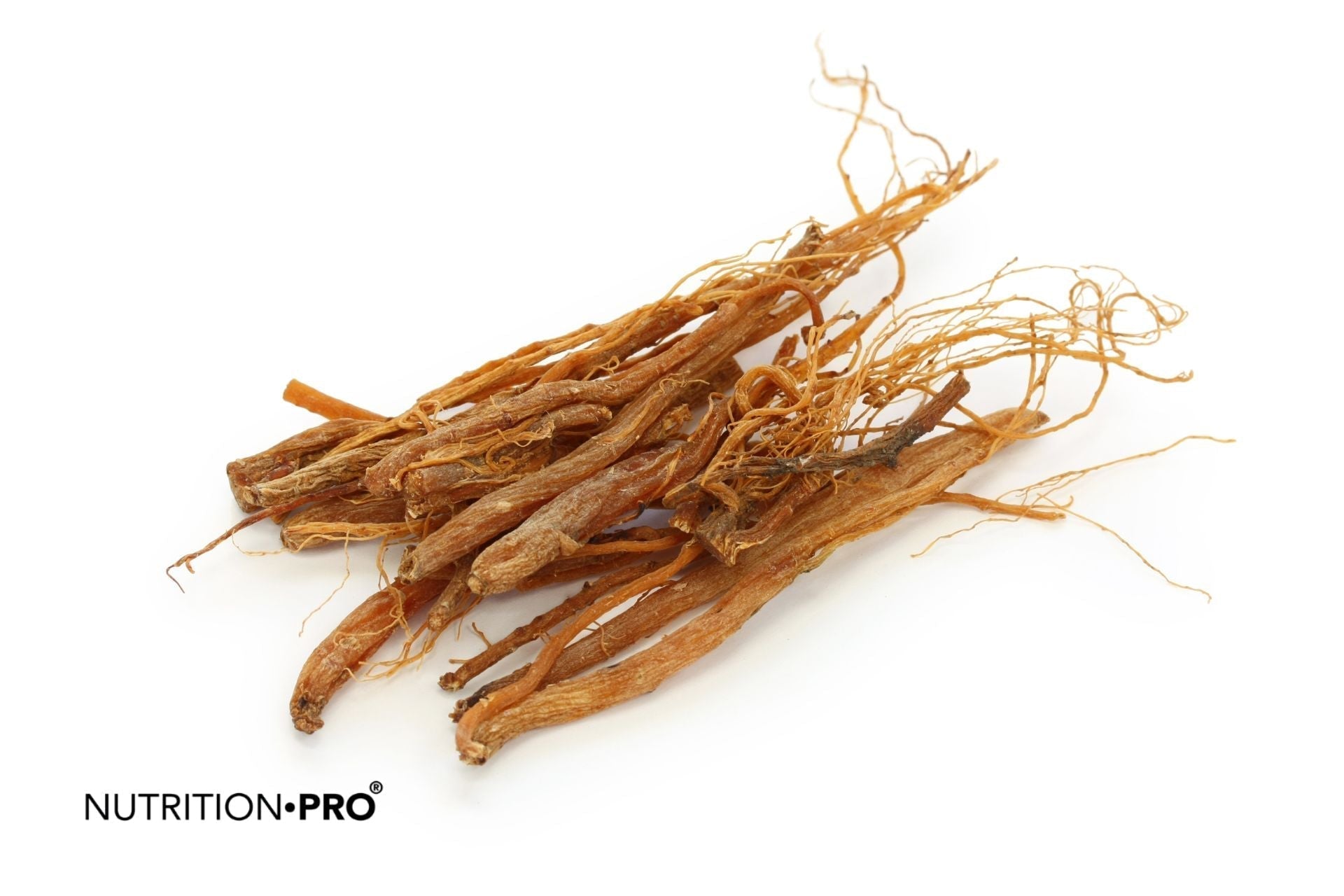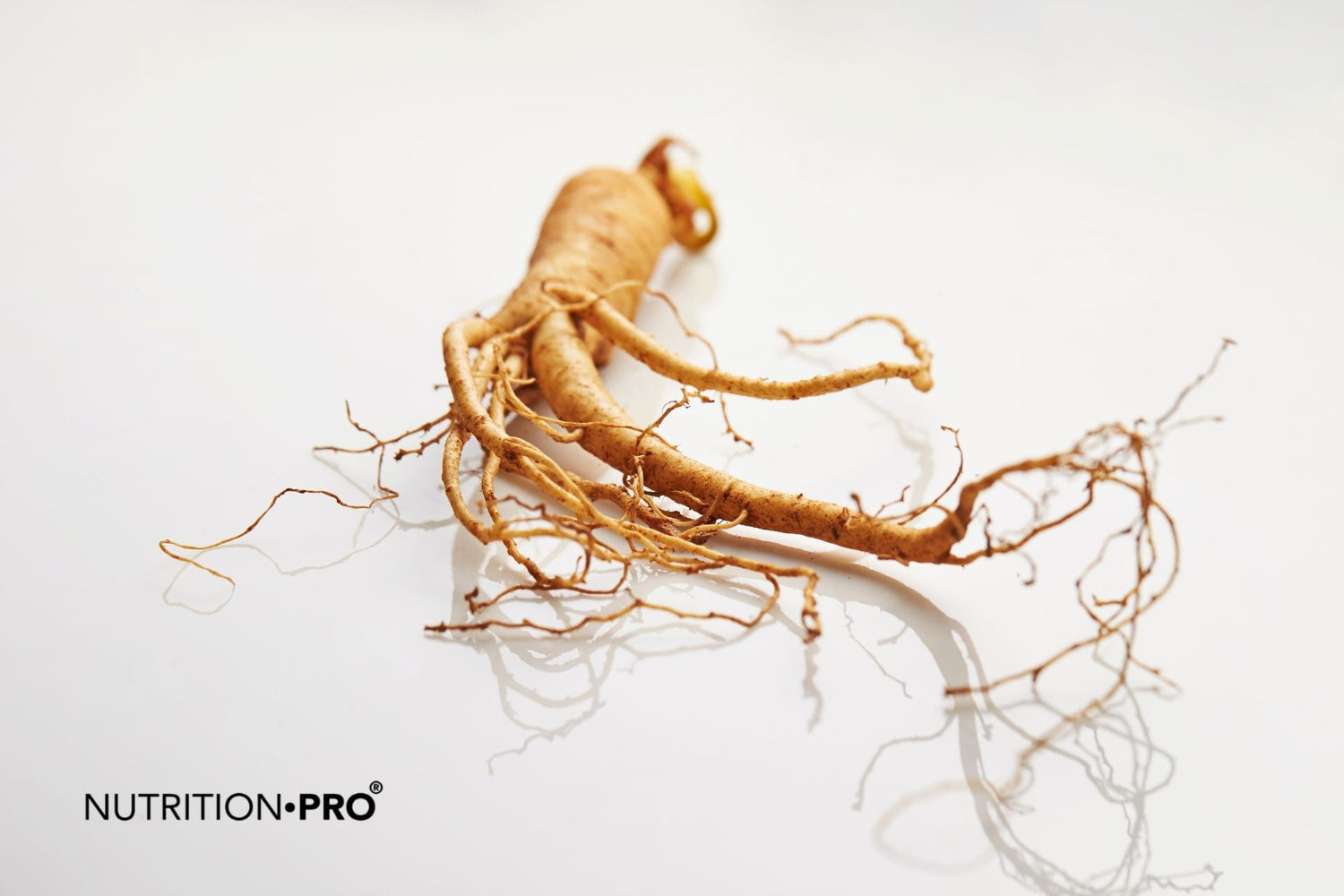
A root revered for millennia in Asia, ginseng has become one of the most popular supplements in the West, driven by a reputation as a universal tonic. But between tradition, marketing, and science, what is it really worth? Which benefits have solid evidence, and which remain mere promise?
This comprehensive guide separates fact from hype, without overselling: what ginseng is and its different forms, its composition, what studies say about energy, cognition, immunity, libido and blood sugar, the difference between red and white ginseng, how to take it, and all the precautions. It's also the starting point of our ginseng dossier, which links to our detailed guides.

Panax ginseng root, steamed and dried according to the traditional red ginseng method, ground into 100% organic powder. Ideal to mix into a drink in the morning.

The same organic red ginseng from Panax ginseng, in convenient capsules without the characteristic taste, for an easy course to take anywhere.
Ginseng (Panax) is the reference adaptogen. Its best-recognized use is fighting fatigue: the WHO and ESCOP acknowledge it for exhaustion and convalescence, and a meta-analysis confirms a reduction in cancer-related fatigue (Luo, Cancer Nursing, 2022). Studies also support a modest effect on cognition (Bell, Eur J Nutr, 2021), possible immune support (Allan, CMAJ, 2014), improved erectile function with low certainty (Lee, Cochrane, 2021), and modest reduction in fasting blood sugar (Shishtar, PLoS One, 2014). Real but often moderate effects: ginseng supports good lifestyle habits without replacing them. Caution with high blood pressure, medications, or pregnancy.
- What is ginseng?
- Composition and active compounds
- Benefits by level of evidence
- Ginseng, energy and fatigue
- Ginseng, Memory and Concentration
- Ginseng and Immunity
- Ginseng, Libido and Erectile Function
- Ginseng and Blood Sugar
- Red or White Ginseng, Asian or American
- How to Consume Ginseng
- Side Effects and Precautions
- Frequently Asked Questions
1. What is Ginseng?
The word Panax comes from Greek and means "panacea," a universal remedy, which says a lot about its reputation. The root, fleshy and slow-growing (6 to 7 years for red ginseng), is used in traditional Chinese and Korean medicine as a tonic for "Qi," vital energy.
Cultivated mainly in Korea, China, and northeast Asia, ginseng is a woodland plant with very slow growth: it often takes 6 to 7 years for the root to fully develop its active compounds, which explains its high price. Its root, whose silhouette sometimes evokes a human body, has earned it an almost mythical status in Asian pharmacopoeia, where it has been used for over two millennia as a reference tonic and symbol of longevity.
Two species dominate: the Asian ginseng (Panax ginseng), known for its invigorating and stimulating properties, and the American ginseng (Panax quinquefolius), considered more calming. Not to be confused with "Siberian ginseng" (eleuthero), which is another plant. Ginseng is the leading adaptogen : plants supposed to improve the body's resistance to physical and mental stress.
2. Composition and Active Compounds
The signature of ginseng is the ginsenosides (also called ginsenosides), a family of specific saponins. Many types are known (Rg1, Rb1, Rg3…), with sometimes opposite effects: some are considered more stimulating, others more calming, which explains the nuanced profile of the plant.
Ginseng also contains polysaccharides (studied for immunity), antioxidants and various minor compounds. Important point: the concentration of ginsenosides varies greatly depending on the species, the age of the root, and the method of preparation (drying for white ginseng, steam cooking for red ginseng). This is why not all ginseng products are equal, and why study results depend on the extract used.
Two ginsenosides often cited illustrate this complexity: Rg1 is more associated with a stimulating effect, Rb1 with a more calming effect, hence the "balancing" action attributed to the plant. This is why good extracts are standardized in percentage of total ginsenosides, a guarantee of consistency from one batch to another. When purchasing, the origin, cultivation method (organic), and this stated content are much better indicators than price alone.
3. Benefits by level of evidence
Here is an honest overview, ranked by strength of evidence. Details on each aspect follow, and our dedicated guides in the ginseng file delve deeper.
Energy and fatigue
Its primary use.
Use approved by the WHO and ESCOP in cases of fatigue and convalescence; positive meta-analysis on cancer-related fatigue (Luo 2022).
Cognition
Short-term.
Improvement in working memory and attention in young adults (Bell 2021), especially in the short term.
Erectile function
Mild to moderate cases.
Possible improvement according to a Cochrane review, but with low certainty (Lee 2021).
Blood sugar
Support, not treatment.
Modest reduction in fasting blood sugar in meta-analysis (Shishtar 2014).
Immunity
Mixed results.
Among plants studied for the common cold, with modest evidence (Allan 2014).
Antioxidant, general wellness
Primarily preclinical.
Antioxidant properties mainly demonstrated in the laboratory; general interest as a tonic.
4. Ginseng, energy and fatigue
If ginseng is famous for one thing, it's for combating fatigue and supporting energy. This use is not merely a matter of tradition: it is recognized by reference bodies. TheWorld Health Organization considers ginseng use as clinically established for improving physical and mental capacity in cases of fatigue, exhaustion, and convalescence, and theESCOP (European scientific cooperation in phytotherapy) is in agreement.
How to explain this effect? As an adaptogen, ginseng would work by helping the body better regulate its stress response, rather than directly "boosting" energy. It is also studied for physical performance and endurance, with results to date mixed : some positive trials, others inconclusive. It is therefore better to consider it as a support for general vitality rather than as a true sports performance product.
In patients affected by cancer-related fatigue, ginseng intake significantly reduced fatigue and improved physical and emotional well-being, compared to the control group.
Luo WT, Huang TW. Cancer Nurs 2022;46(2):120-127. DOI : 10.1097/NCC.0000000000001068
Key takeaway: the effect is moderate, and ginseng is not a substitute for sleep, proper nutrition, and stress management. It can support temporary fatigue and convalescence periods. For persistent fatigue, see our guide on chronic fatigue, and to compare with other adaptogens, our guide on ashwagandha.
The tonic root par excellence, to integrate as a treatment in a beverage or yogurt, in the morning.
Discover red ginseng →5. Ginseng, memory and concentration
A tonic for the body, ginseng is also one for the mind, at least in part. Research on American ginseng (Panax quinquefolius) is encouraging for cognitive function.
In healthy young adults, an American ginseng extract improved working memory and attention, with effects reinforced after two weeks of use.
Bell L, et al. Eur J Nutr 2021;61(1):413-428. DOI : 10.1007/s00394-021-02654-5
These results, observed mainly in the short term, suggest a boost to concentration and mental sharpness, useful during intellectual efforts or mental fatigue. Let us remain measured: this is not a treatment for memory disorders, and long-term effects require confirmation.
Beyond memory, the same study noted an improvement in mental fatigue and certain aspects of mood (Bell, 2021). Consistent with its adaptogen profile, ginseng could thus help you stay the course during demanding periods, without being a treatment for anxiety or depression, which require appropriate support.
6. Ginseng and immunity
Ginseng, and particularly its polysaccharides, is traditionally associated with immune support. A reference review on cold prevention ranks ginseng among supplements that have shown some benefit, alongside zinc or vitamin D, while emphasizing modest evidence (Allan, CMAJ, 2014).
In practice: ginseng can be considered as a winter support, as a treatment course, without expecting guaranteed protection. The fundamentals remain healthy lifestyle habits, sleep, and where applicable, vaccination. American ginseng in particular has been studied in the prevention of winter respiratory infections, popularized in the form of dedicated extracts. Again, the observed effect is modest and mainly preventive: it would be a matter of reducing the frequency or duration of episodes rather than treating an already established cold. For the immunity aspect, also find our zinc guide and the collection immunity.
7. Ginseng, libido and erectile function
Reputed as an aphrodisiac in Asia, ginseng is one of the rare ones with a high-level synthesis on the subject.
Ginseng appears to improve erectile function and reported ability to have intercourse compared to placebo, but evidence is of low certainty.
Lee HW, et al. World J Mens Health 2021;40(2):264-269. DOI: 10.5534/wjmh.210071
In other words: an interesting option for mild to moderate disorders, provided you maintain realistic expectations and do not view it as equivalent to medications. Male libido is multifactorial (vitality, stress, hormones, vascularization): ginseng is part of a holistic approach, alongside lifestyle. See our guide naturally boost your testosterone and our pillar fertility.
8. Ginseng and blood sugar
Ginseng has long been studied for its effect on sugar metabolism.
Ginseng modestly but significantly reduced fasting blood glucose in people with and without diabetes, across 16 randomized trials.
Shishtar E, et al. PLoS One 2014;9(9):e107391. DOI: 10.1371/journal.pone.0107391
The effect, while real, is modest, and most trials were short. Key takeaway: ginseng may possibly support good lifestyle habits, but never replaces proper management. For blood sugar information, see our collection blood sugar.
9. Red or white ginseng, Asian or American
This is a frequent source of confusion. Let's keep it simple:
| Type | What it is | Reputation |
|---|---|---|
| White Ginseng | Root of Panax ginseng simply dried | Milder, classic tonic. |
| Red Ginseng | Same root, steamed then dried | More concentrated and invigorating, the most widespread. |
| Asian Ginseng | Panax ginseng (Korea, China) | Stimulating, energizing. |
| American Ginseng | Panax quinquefolius | More soothing, studied for cognition. |
On the formsside, ginseng comes mainly in powder, capsules or extract. Red ginseng powder is versatile and easy to dose in a beverage; red ginseng capsules are convenient and free from the characteristic taste. Both provide the same root: the choice comes down to your usage preference, with neither being superior to the other. As a vitality synergy, we can also mention maca.
10. How to Take Ginseng
Final practical tip: choose a product with clearly indicated ginsenoside content and origin, ideally from organic farming. Like any adaptogen, it is the consistency of a course of treatment that matters, rather than a single high dose.
Select what suits you best: guidance appears instantly. This is a reference point, not medical advice.
Red ginseng, taken in the morning and as a course, is most recommended for tone. Combine it with good lifestyle habits. View the collection vitality & energy.
American ginseng is the most studied for working memory and short-term attention.
Ginseng may support libido and erectile function (low certainty evidence). See also testosterone.
11. Side effects and precautions
Pregnancy and breastfeeding : not recommended. High blood pressure : use with caution, as ginseng may affect blood pressure. Interactions : use with caution with anticoagulants (bleeding risk), antidiabetic medications (hypoglycemia risk), and certain treatments; seek advice from a doctor or pharmacist.
Possible adverse effects , especially at high doses: sleep disturbances, nervousness, headaches, digestive issues, palpitations. Limiting them is simple: take in the morning, use moderate doses, opt for courses rather than continuous use.
Often overlooked: due to its possible effects on blood clotting and blood sugar, it is prudent tostop taking ginseng one to two weeks before surgery, and to inform the medical team. Similarly, elderly people or those taking multiple medications should seek advice before starting a course. Used at reasonable doses, outside the situations described above, ginseng is generally well tolerated. Like any supplement, it does not replace good lifestyle habits, and professional advice remains the best approach in case of doubt or when taking medication.
Frequently asked questions
What are the benefits of ginseng?
Ginseng is a traditional adaptogen used against fatigue. Studies support mainly an effect on fatigue and energy, cognition (memory, short-term attention), possible immune support, improvement in erectile function (evidence of low certainty; Lee, Cochrane, 2021) and a modest decrease in fasting blood sugar (Shishtar, PLoS One, 2014). Several effects remain modest or require further confirmation.
Does ginseng provide energy and help against fatigue?
This is its most recognized use: the WHO and ESCOP acknowledge the use of ginseng in cases of fatigue, exhaustion, and convalescence. A meta-analysis also shows a reduction in cancer-related fatigue (Luo, Cancer Nursing, 2022). The effect is real but moderate, and fits within good lifestyle habits.
Does ginseng improve memory and concentration?
A few trials suggest so: American ginseng improved working memory and attention in young healthy adults (Bell, Eur J Nutr, 2021). Effects are mainly observed in the short term and remain modest; it is not a treatment for cognitive disorders.
Does ginseng strengthen immunity?
Ginseng is among the plants studied for the common cold, with modest results (Allan, CMAJ, 2014). It could support defenses, but evidence does not support it as a remedy: lifestyle habits and vaccination remain priorities.
Does ginseng improve sexual performance and erectile function?
A Cochrane review concludes that ginseng can improve erectile function and reported ability to have intercourse, but with low certainty (Lee, World J Mens Health, 2021). It is an interesting option for mild to moderate disorders, not a medication; if symptoms persist, consult a healthcare provider.
Does ginseng increase testosterone?
Data are limited and inconclusive: ginseng acts mainly on vitality, energy, and erectile function, without solid evidence of an increase in testosterone. For testosterone, lifestyle factors are what matter most.
Does ginseng lower blood sugar?
A meta-analysis shows a modest but significant reduction in fasting blood sugar in people with or without diabetes (Shishtar, PLoS One, 2014). Ginseng does not replace treatment: if you have diabetes, discuss it with your doctor, as it may interact with antidiabetic medications.
What is the difference between red ginseng and white ginseng?
It is the same plant (Panax ginseng), processed differently. White ginseng is simply dried; red ginseng is steamed then dried, which modifies its ginsenosides and gives it a reputation as more invigorating. The choice depends on personal preference and intended use.
What is the difference between Asian ginseng and American ginseng?
Asian ginseng (Panax ginseng) has a reputation as more invigorating and stimulating, while American ginseng (Panax quinquefolius) is considered more calming. Their ginsenoside profiles differ, hence slightly different traditional uses.
How to take ginseng and at what dose?
Ginseng is taken as powder (in a drink or yogurt), in capsules, or as an extract. Traditional use and studies often use the equivalent of 1 to 2 g of root per day, in a course. Start low, follow product instructions, and preferably take it in the morning.
When to take ginseng, morning or evening?
Rather in the morning or early in the day, as its invigorating effect may interfere with sleep if taken in the evening. This is one of the simplest habits to get the most benefit without disrupting sleep.
How long does a ginseng course last?
A course typically lasts a few weeks (often 4 to 12 weeks), followed by a break. It is better to avoid prolonged continuous use without interruption; if in doubt or taking medications, consult a healthcare professional.
What are the side effects of ginseng?
Ginseng is generally well tolerated, but can cause sleep disturbances, nervousness, headaches, or digestive issues, especially at high doses. Reducing the dose or taking it in the morning minimizes these effects.
What are the contraindications for ginseng?
Ginseng is not recommended during pregnancy and breastfeeding, and requires caution in cases of high blood pressure, bleeding disorders, or use of anticoagulants, antidiabetic medications, or certain other drugs. If you have a medical condition or are taking medications, seek medical advice before taking ginseng.
Does ginseng prevent sleep?
Taken in the evening or at high doses, ginseng can interfere with falling asleep due to its stimulating effect. To avoid this, take it in the morning and follow recommended doses.
Is ginseng an adaptogen?
Yes, ginseng is the reference adaptogen: a plant believed to help the body better resist physical and mental stress. It is used for this reason against fatigue and to support energy and concentration.
- Panax
- Botanical genus of ginseng; from the Greek meaning "panacea," universal remedy.
- Panax ginseng
- Asian ginseng (Korean, Chinese), reputed to be invigorating and stimulating.
- Panax quinquefolius
- American ginseng, considered more calming, studied for cognition.
- Ginsenosides
- Specific active compounds in ginseng, responsible for most of its effects.
- Adaptogen
- A plant believed to help the body better resist physical and mental stress.
- Red ginseng
- Root of Panax ginseng steamed and then dried, more concentrated and invigorating.
- White ginseng
- Root of Panax ginseng simply dried, milder.
- Eleuthero
- "Siberian ginseng," a plant different from true ginseng (genus Panax).
- Luo WT, Huang TW. Effects of ginseng on cancer-related fatigue: a systematic review and meta-analysis of randomized controlled trials. Cancer Nurs 2022;46(2):120-127. DOI: 10.1097/NCC.0000000000001068
- Bell L, Whyte A, Duysburgh C, et al. American ginseng (Cereboost) on mood and cognition in healthy young adults: a randomized, placebo-controlled trial. Eur J Nutr 2021;61(1):413-428. DOI: 10.1007/s00394-021-02654-5
- Lee HW, Lee MS, Kim TH, et al. Ginseng for erectile dysfunction: a Cochrane systematic review. World J Mens Health 2021;40(2):264-269. DOI: 10.5534/wjmh.210071
- Shishtar E, Sievenpiper JL, Djedovic V, et al. The effect of ginseng (the genus Panax) on glycemic control: a systematic review and meta-analysis of randomized controlled clinical trials. PLoS One 2014;9(9):e107391. DOI: 10.1371/journal.pone.0107391
- Allan GM, Arroll B. Prevention and treatment of the common cold: making sense of the evidence. CMAJ 2014;186(3):190-199. DOI: 10.1503/cmaj.121442