

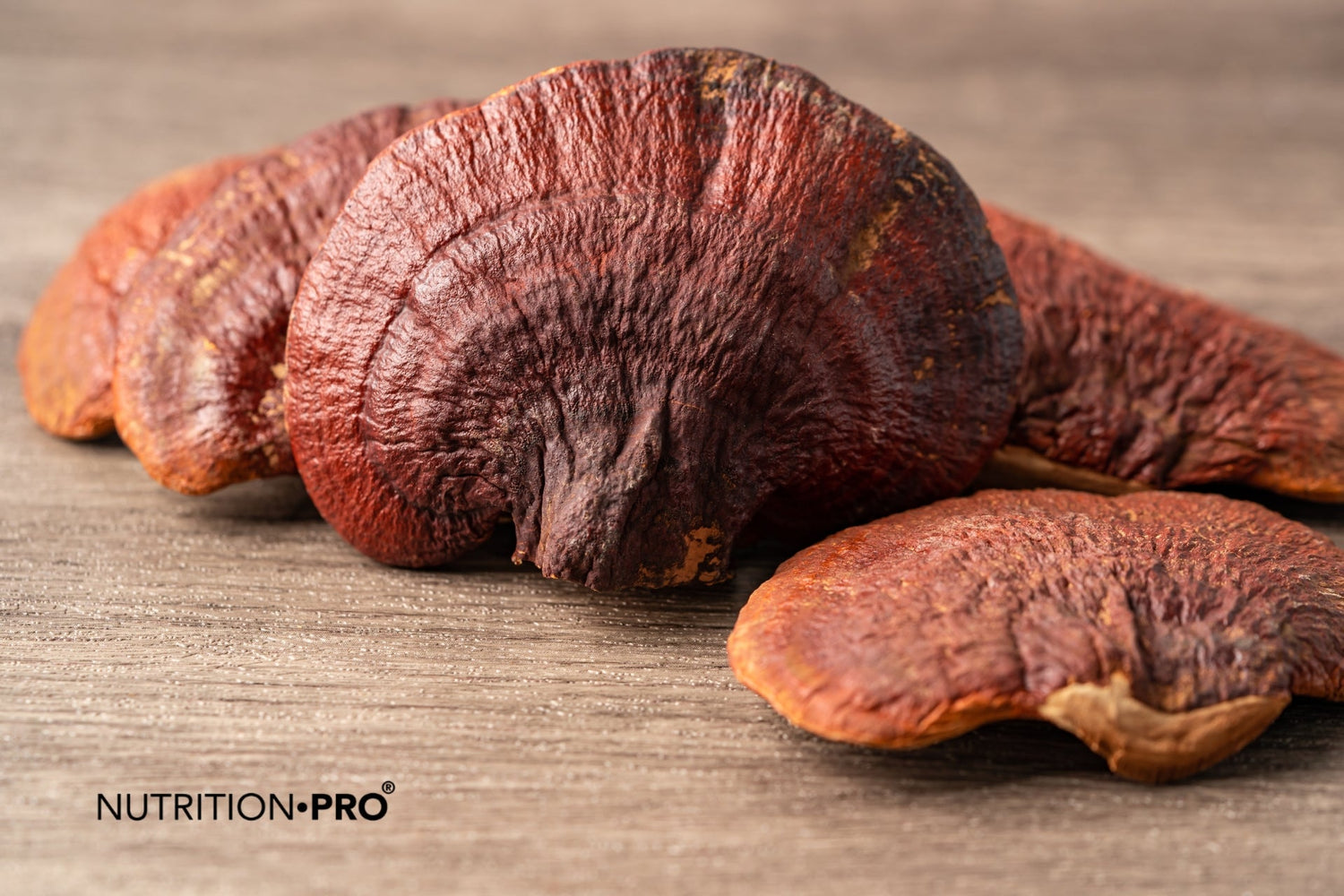
The Reishi (Ganoderma lucidum), nicknamed Lingzhi in Chinese and called the "mushroom of immortality" for 2,000 years in Asia, is one of the most studied medicinal mushrooms in the world. With its characteristic bright lacquered red appearance, it holds a unique place: both a sacred remedy of the Yellow Emperor and the subject of hundreds of modern scientific publications.
What science really says: according to a double-blind RCT published in Journal of Medicinal Food, 8 weeks of Reishi polysaccharide supplementation resulted in a 28.3% reduction in fatigue in 132 neurasthenic patients. More recently, a mechanistic study published in Scientific Reports (Nature group) demonstrated that Reishi promotes sleep via an unprecedented microbiota-serotonin axis . In this guide: the 6 documented benefits on stress, sleep, immunity and fatigue; the often-hidden anticoagulant risk; the differences between broken spores vs fruiting body; and the 8-12 week protocol to benefit from Reishi safely.

Pivotal RCT: according to Tang et al. 2005 in Journal of Medicinal Food, a double-blind RCT in 132 neurasthenic patients demonstrated that supplementation of 1800 mg × 3/day of Reishi polysaccharide (Ganopoly®) for 8 weeks significantly reduces fatigue (−28.3% vs −20.1% placebo) and improves overall well-being (51.6% clinical improvement vs 24.6% placebo, p = 0.002).
Unprecedented sleep mechanism: according to Yao et al. 2021 in Scientific Reports, a mouse study demonstrated that Reishi shortens sleep onset latency and prolongs sleep duration via a mechanism dependent on intestinal microbiota and hypothalamic serotonin. This microbiota-serotonin axis is a major discovery for understanding the adaptogenic effects of Reishi.
- Reishi: "the mushroom of immortality" in TCM
- Triterpenes, polysaccharides, microbiota-serotonin axis
- The 6 documented benefits: overview
- Benefit #1 — Sleep and rest quality (Yao 2021)
- Benefit #2 — Stress and adaptogenic resilience (Tang 2005)
- Benefit #3 — Modulated immunity (GLP polysaccharides)
- Benefit #4 — Chronic fatigue and vitality
- Benefit #5 — Antioxidant and neuroprotection
- Benefit #6 — Cardiovascular support
- Myth: "Reishi = mushroom of immortality, extends lifespan"
- Broken spores vs fruiting body: what you need to know
- Anticoagulant risk — major safety angle
- General precautions and contraindications
- Self-test: Is Reishi right for you?
- 8-12 week protocol with evening timing
- Personalized decision table
- FAQ — All your questions
Reishi: "the mushroom of immortality" in TCM
The Reishi (Ganoderma lucidum) is probably the most emblematic medicinal mushroom in Asia. Recognizable by its shiny red-burgundy lacquered cap in a kidney shape, it has occupied a unique cultural, spiritual, and medicinal place for over 2,000 years in traditional Chinese (TCM), Korean, and Japanese medicine.
A plant of the yellow emperor
Reishi is mentioned as early as the Shen Nong Ben Cao Jing (the "Classic of the Materia Medica of the Yellow Emperor"), one of the oldest Chinese medical treatises, written around the 1stst century. It appears there among the "superior remedies" (Shang Pin) — the most prestigious category, reserved for substances deemed capable of prolonging life, strengthening vitality, and usable long-term without known toxicity.
Its Chinese name Lingzhi (灵芝) literally translates to "the spiritual mushroom" or "the mushroom of the divine soul". It was so rare in nature and so coveted that it was reserved for the use of emperors and Taoist monks. When found in nature, it could be worth a fortune and was considered a favorable sign from heaven.
A mushroom with a unique appearance
Reishi distinguishes itself visually from other medicinal mushrooms through its striking appearance:
- Shiny lacquered cap red-burgundy in a kidney or fan shape
- Lateral stem attached to the side of the cap, asymmetrical
- Hard and woody texture at maturity — not edible raw, consumed as a decoction or extract
- Slow growth on dead wood of hardwoods (oaks, maples, plums)
It is this shiny red lacquered appearance that gave it its scientific name Ganoderma lucidum (from the Greek ganos = shiny, derma = skin, and Latin lucidum = shiny).
From sacred remedy to modern cultivated mushroom
Until the 20th century, Reishi was virtually impossible to find in nature (estimated probability of approximately 1 oak in 100,000 hosting a mature Reishi). This extreme rarity made it a luxury product inaccessible to the general population.e In 1972, Japanese researchers developed the first techniques for
controlled cultivation of Reishi on woody substrate (oak stumps or enriched wood sawdust). This revolution democratized access to Reishi while guaranteeing standardization and quality control. Today, more than 95% of commercial Reishi comes from controlled cultivation in China, Japan, Korea, Taiwan, and increasingly in Europe. According to Sarkar et al. 2025 in
Natural Product Research , Reishi contains, le Reishi contient "over 400 bioactive compounds including triterpenes, polysaccharides and proteins, primarily isolated from the fruiting body, mycelium and spores". This chemical diversity explains its unique multifaceted pharmacology among medicinal mushrooms.
Triterpenes, polysaccharides, microbiota-serotonin axis: the science
Reishi owes its properties to three families of major active compounds acting synergistically: ganoderic triterpenes (adaptogenic and anti-inflammatory effects), GLP polysaccharides (immune modulation, sleep via microbiota), and peptidoglycans (active proteins). A recent discovery — the microbiota-serotonin axis — sheds light on its mechanism for sleep.
Ganoderic triterpenes: the signature of Reishi
The ganoderic triterpenes are a family of over 200 compounds (ganoderic acids, ganoderas, lucidumols, ganoderaals) characteristic of Reishi. These are what give Reishi extract its characteristic bitter taste — a direct sign of its quality (a Reishi that is not bitter is generally poor quality or grain mycelium low in triterpenes).
These molecules exhibit several biological activities documented in preclinical studies:
- Adaptogenic effect — modulation of the HPA axis (hypothalamic-pituitary-adrenal) and stress response
- NF-κB inhibition — central signaling pathway of chronic inflammation
- Antihistamine effect — useful in allergies and inflammation
- Hepatoprotective effect — protection of liver cells against oxidative stress
- Antiplatelet activity — see anticoagulant precautions below
Since ganoderic triterpenes are lipid-soluble, they require ethanol extraction (hydroalcoholic) to be fully released. This is why quality extracts use double extraction (water + alcohol) to capture both triterpenes and polysaccharides.
GLP polysaccharides: immune modulation
The GLPs ((Ganoderma Lucidum Polysaccharides) are heteropolysaccharides rich in β-glucans (1→3) and (1→6). Water-soluble, they typically represent 1 to 10% of the dry mass of quality Reishi fruiting body.
Like all fungal beta-glucans, GLPs are recognized by the Dectin-1, TLR2 and TLR4 receptors of innate immune cells (macrophages, neutrophils, dendritic cells). This recognition activates a signaling cascade (Syk-CARD9-NF-κB) that modulates — rather than over-activates — the immune response.
According to Wang et al. 2025 in International Journal of Biological Macromolecules, GLPs demonstrate additionally "remarkable anti-inflammatory and antioxidant effects, as well as regulatory effects on glucose and lipid homeostasis", with cardioprotective potential documented in preclinical studies.
The microbiota-serotonin axis: the 2021 discovery
This is one of the most exciting angles of recent Reishi research. According to Yao et al. 2021 in Scientific Reports (Nature group), a mouse study demonstrated a novel mechanism by which Reishi promotes sleep:
- Theacidic alcoholic extract of Reishi mycelium (GLAA) administered for 28 days shortens sleep onset latency and extends sleep duration in mice
- The sleep effect is associated with an increase in beneficial bacteria of the intestinal microbiota (notably Bifidobacterium)
- The modified microbiota induces increased production of 5-hydroxytryptamine (serotonin) in the hypothalamus
- The hypothalamic serotonergic pathway (genes Tph2, Iptr3, Gng13) is activated — this is the major pathway for sleep regulation
- When the mice's microbiota is destroyed by antibiotics, the Reishi sleep effect disappears completely
This mechanistic demonstration is major. It confirms that Reishi is not a classical sedative (no direct GABA effect like valerian or benzodiazepines), but works by modulating the gut-brain axis via the microbiota. This is a completely different approach, gentler and more sustainable, which also explains why the Reishi sleep effect takes time to establish (need to reshape the microbiota).
(DOI: 10.1038/s41598-021-92913-6)
The 6 documented benefits: overview
Here are the 6 areas for which research has documented an effect of Reishi. We selected the 6 truly defensible ones with transparent evidence level (human RCT, mechanistic study, recent scientific review) — the majority of functional mushrooms suffer from rare human RCTs and Reishi is no exception, but it benefits from solid earlier studies (Tang 2005) and recent 2025-2026 reviews.
Sleep: the microbiota-serotonin axis documented
Mechanistic study Yao 2021 in Scientific Reports — discovery of a unique mechanism among sleep supplements.
Sleep is the primary modern use of Reishi in the West, and one of the best documented mechanistically since 2021. But be aware: Reishi is not a sedative like valerian or melatonin. It works in the background, more slowly, via a completely different mechanism and probably more sustained.
The mechanistic RCT Yao 2021 — the major discovery
According to Yao et al. 2021 in Scientific Reports (Nature group), a mouse study demonstrated for the first time an unprecedented mechanism of Reishi on sleep. The protocol: administration for 28 days of an acid-alcohol extract of Reishi mycelium (GLAA) at doses of 25, 50 and 100 mg/kg in mice.
Main results:
- Shortened sleep onset latency in treated mice
- Extended total sleep duration
- Significant increase in hypothalamic serotonin (5-HT)
- Activation of serotonergic pathway genes: Tph2, Iptr3, Gng13
- Positive modulation of gut microbiota: increase in beneficial Bifidobacterium
- Reduction of intestinal inflammatory markers (LPS) and increase in protective peptidoglycans
And the mechanistic proof: when the mice's microbiota was destroyed by antibiotics, the sleep effect of Reishi completely disappeared. This demonstrates that Reishi acts via the gut microbiota, not directly on the brain (DOI: 10.1038/s41598-021-92913-6).
Why it's different from all other sleep supplements
Most sleep supplements work through relatively direct pathways:
- Melatonin — binding to brain MT1/MT2 receptors (direct signal)
- Valerian — GABA-A modulation (mild benzodiazepine-like sedation)
- Passionflower, California poppy — moderate GABAergic effects
- Magnesium — cofactor for melatonin synthesis and nervous-muscular relaxant
Reishi, however, works via an indirect pathway: microbiota modulation → 5-HTP production → conversion to serotonin → effect on the hypothalamus → better sleep. This is a more "systemic"approach, which takes longer to establish (requires 2-4 weeks to reshape the microbiota) but could be more sustainable and gentler than conventional sedatives.
Who it's relevant for
Reishi for sleep is particularly interesting for: people with light or restless sleep, nighttime awakenings related to stress or rumination, microbiota imbalances associated with sleep disorders, people wanting to avoid conventional sedatives (continuous melatonin, sleeping pills). Coherent synergy: Magnesium+ bisglycinate (nervous balance), Optimal Sleep (complete sleep formula Nutrition•pro).
Stress and adaptogenic resilience
RCT Tang 2005 in 132 neurasthenic patients — fatigue modulation and well-being improvement in 8 weeks.
Reishi is classically classified among adaptogenic plants of traditional Chinese medicine, that is, substances that help the body better resist and adapt to prolonged physical, mental, and emotional stress. This adaptogenic property is documented in humans in a pivotal RCT.
The Tang 2005 pivotal RCT — the human reference
According to Tang et al. 2005 in the Journal of Medicinal Food, a randomized double-blind placebo-controlled trial included 132 Chinese patients suffering from neurasthenia (according to ICD-10 criteria) — a diagnosis that groups in practice chronic fatigue, persistent asthenia, chronic stress with exhaustion, and loss of vitality.
Protocol: Ganopoly® (standardized polysaccharide of Ganoderma lucidum), 1800 mg three times daily for 8 weeks (5.4 g/day of pure polysaccharide). Assessment using CGI (Clinical Global Impression) and Visual Analogue Scale (VAS) scales for fatigue and well-being.
Results after 8 weeks:
- Fatigue reduction: −28.3 % (Reishi group) vs −20.1 % (placebo)
- CGI clinical severity score: −15.5 % (Reishi) vs −4.9 % (placebo)
- Overall well-being: +38.7 % (Reishi) vs +29.7 % (placebo)
- 51.6 % of patients in the Reishi group reported clinically significant improvement, vs 24.6 % in the placebo group (p = 0.002)
The clinical magnitude of the effect is moderate but significant and reproducible. Reishi was well tolerated, with no major adverse effects reported (DOI: 10.1089/jmf.2005.8.53).
The adaptogenic mechanism
According to Sarkar et al. 2025 in Natural Product Research, ganodermic triterpenes modulate the HPA axis (hypothalamic-pituitary-adrenal), which is the main biological pathway for stress response:
- Modulation of cortisol release (the stress hormone)
- Support of nervous recovery after chronic stress
- Balancing effect on the autonomic nervous system (sympathetic vs parasympathetic)
- Improvement of stress tolerance (true definition of an adaptogen)
This modulation explains why Reishi is traditionally combined in TCM with other adaptogens (ginseng, schisandra) for synergistic effects on resilience.
Who this is relevant for
Reishi for stress and resilience is particularly useful for: individuals under chronic professional stress, profiles with mild to moderate burnout, individuals recovering post-illness or post-intensive period, seniors with decreased energy and resilience. Particularly coherent synergy: Ashwagandha KSM-66® (complementary HPA mechanism), Saffron Safr'Inside® (mood modulation). See our ashwagandha guide for deeper insight.
Modulated and balanced immunity via GLPs
Polysaccharides recognized by Dectin-1 — intelligent modulation, not overactivation.
Theimmunomodulation is probably the most documented property of Reishi, studied since the 1980s in Asia and confirmed by 2025-2026 reviews. Reishi is used in China and Japan as an adjuvant in certain oncology protocols to support immunity in vulnerable patients.
The Dectin-1 mechanism explained
Like all functional mushrooms, Reishi's GLPs are recognized by Dectin-1 receptors on innate immune cells. This activation triggers a cascade:
- Activation of macrophages and neutrophils — improved pathogen phagocytosis
- Balanced production of cytokines (TNF-α, IL-6, IL-10) — neither excess nor deficit
- Activation of NK (Natural Killer) cells — first line of antitumor and antiviral defense
- Modulation of regulatory T lymphocytes — Th1/Th2/Th17 balance
- Support of humoral immunity (antibody production)
According to Mohamed et al. 2026 in Phytotherapy Research, these immunomodulatory effects are "among the best documented pharmacological properties of Ganoderma lucidum", studied in numerous preclinical and clinical studies in diverse populations (oncology, viral infections, elderly, immunocompromised).
What that means in practical terms
Reishi is not an immune boost like high-dose echinacea. It's a modulator, which means it has a balancing effect:
- In people with weakened immunity (chronic stress, convalescence, elderly), it supports and strengthens
- In people with excessive inflammatory response (early autoimmunity, chronic allergy), it calms and balances
- Effect more gentle and sustained than aggressive "boosters" that can exhaust the immune system over the long term
Who it's relevant for
Reishi for immunity may be suitable for: people catching respiratory infections easily in winter, immunity weakened by chronic stress, seniors with immunosenescence (age-related immune decline), intensive athletes during "open window" post-exercise period, benign chronic allergies.
Major precaution : in case of immunosuppressive treatment (post-transplant, autoimmune diseases under biotherapy, hematologic disorders), Reishi is contraindicated without specialized medical advice as it could counteract the treatment's effect.
Coherent synergies: Shiitake (mushroom cluster, lentinan), Organic Propolis (natural antimicrobial), Multivitamins (vitamin D, zinc, selenium).
Chronic fatigue and daily vitality
Two convergent human RCTs: Tang 2005 (neurasthenia) and Collado 2015 (fibromyalgia).
Chronic fatigue is one of the main reasons for Reishi supplementation in Asia as well as in the West. Two human RCTs, on different populations, converge toward a documented positive effect of Reishi on subjective fatigue and overall vitality.
RCT 1 — Tang 2005 (neurasthenia/chronic fatigue)
The pivotal RCT Tang 2005 (already detailed in benefit #2) measured a 28.3% reduction in fatigue in 8 weeks in 132 neurasthenic patients. Neurasthenia in TCM practically groups together modern French profiles of chronic fatigue, overwork with asthenia, mild post-viral fatigue syndrome, and persistent decline in vitality.
RCT 2 — Collado Mateo 2015 (fibromyalgia)
According to Collado Mateo et al. 2015 in Nutrición Hospitalaria, a RCT evaluated 64 women with fibromyalgia — a condition characterized by chronic pain, stiffness, poor physical conditioning, and non-restorative sleep. Protocol: 6 g/day of Reishi for 6 weeks, vs Ceratonia siliqua (carob, control).
Results: significant improvement in the Reishi group in:
- Aerobicendurance (walking test)
- Lower body flexibility
- Functional velocity (functional speed)
No significant improvement was observed in the carob group. The authors conclude that Reishi "may improve physical fitness in women suffering from fibromyalgia" (DOI: 10.3305/nh.2015.32.5.9601).
The mechanism: adaptogen + immunomodulator + neuroprotection
Chronic fatigue generally has multiple causes (chronic stress, low-grade inflammation, intestinal dysbiosis, autonomic nervous system imbalance, mitochondrial energy deficit). Reishi acts on several of these pathways simultaneously, which could explain its overall effect:
- Adaptogenic modulation of the HPA axis
- Reduction of chronic inflammation (NF-κB)
- Improvement of gut microbiota (Yao 2021)
- General immune support
- Cellular antioxidant effect
Who it's relevant for
Reishi for fatigue may concern: people experiencing persistent post-infection fatigue (long covid, mononucleosis, flu), burnout/occupational exhaustion profiles, fibromyalgia and chronic pain, convalescents post-surgery or post-heavy medical treatment. Without replacing medical investigation of unexplained chronic fatigue.
Coherent adaptogenic synergies: Ashwagandha KSM-66®, Rhodiola (opposite yang tonic vs Reishi yin), Cordyceps (performance mushroom cluster).
Antioxidant and brain neuroprotection
Triterpenes and polysaccharides protecting neurons from oxidative stress — solid preclinical studies.
The activity antioxidant and neuroprotective of Reishi is documented primarily in preclinical studies (cell cultures, animal models). While specific human RCTs on neuroprotection are still lacking, the consistency of mechanistic data is strong.
The antioxidant profile of Reishi
According to Mohamed et al. 2026 in Phytotherapy Research, Reishi exhibits documented antioxidant activity attributed to several families of compounds:
- Ganoderic triterpenes — activation of the Nrf2 pathway (central regulator of endogenous antioxidant defenses: glutathione, superoxide dismutase, catalase)
- GLP polysaccharides — direct neutralization of free radicals and support of antioxidant enzymes
- Polyphenols — complementary direct antioxidant activity
- Phenolic acids — protection of membrane lipids against peroxidation
The neuroprotection dimension
According to Qin et al. 2024 in Frontiers in Pharmacology, a study in rats modeling sporadic Alzheimer's disease showed that a Reishi spore extract at 720 mg/kg for 14 days improves:
- Total sleep time and REM sleep
- Cognitive performance (object recognition test)
- Neuroinflammation <<<28>>> in the medial prefrontal cortex (NF-κB/NLRP3 inhibition) dans le cortex préfrontal médian (inhibition NF-κB/NLRP3)
- Activity of GABAergic neurons in the parabrachial nucleus
These preclinical data are consistent but do not constitute human clinical proof. To be considered as a promising avenue for neuroprotection, to be confirmed by human RCTs.
Who this is relevant for
The neuroprotection angle may interest: seniors wishing to support cognitive aging, individuals with a family history of neurodegenerative diseases (without treating or preventing), professionals under chronic high cognitive load. Coherent cognition synergy: Lion's Mane (documented NGF and BDNF mushroom cluster), Organic Omega 3 (structural DHA for neurons), Multivitamins (B vitamins neurological cofactors).
Cardiovascular support: 2025 dedicated review
Wang et al. 2025 — recent scientific review on cardioprotective effects of Reishi polysaccharides.
Cardiovascular diseases remain the leading cause of mortality worldwide. A scientific review published in 2025 synthesized preclinical evidence on the cardioprotective effects of Reishi polysaccharides — a lesser-known but documented angle.
The Wang 2025 review
According to Wang et al. 2025 in International Journal of Biological Macromolecules, Reishi GLP polysaccharides demonstrate "remarkable anti-inflammatory and antioxidant activities, as well as regulatory effects on glucose and lipid homeostasis". Documented cardiovascular mechanisms:
- Improvement of endothelial function — vascular endothelium is the first line of cardiovascular protection
- Modulation of angiogenesis — formation of new blood vessels (important in post-ischemic recovery)
- Attenuation of atherosclerosis in animal models — reduction of atherosclerotic plaques
- Hypolipidemic effect — reduction of LDL cholesterol and triglycerides in preclinical studies
- Hypoglycemic effect — improvement of insulin sensitivity (major cardiovascular factor)
- Mild hypotensive effect — modulation of the renin-angiotensin system
- Attenuation of chemical cardiotoxicity (notably doxorubicin in oncology) (DOI: 10.1016/j.ijbiomac.2025.148001)
Editorial honesty
Important: this data is essentially preclinical (animals, cultured cells). Specific human RCTs on Reishi for hard cardiovascular outcomes (myocardial infarction, stroke, cardiovascular mortality) do not exist to date. The evidence is promising but does not allow claims of an "anti-infarction" or "anti-stroke" effect in humans.
Reishi can be support within a comprehensive approach to cardiovascular prevention (Mediterranean diet, physical activity, stress management, quality sleep), never a substitute for prescribed cardiovascular treatment or medical investigation.
Important precaution
The effect blood pressure-lowering of Reishi may be added to conventional antihypertensive treatment (ACE inhibitors, ARBs, beta-blockers, diuretics, calcium channel blockers). Blood pressure monitoring is recommended at the start of treatment in people already being treated, and medical adjustment may need to be discussed with the cardiologist or primary care physician.
The myth: "Reishi = mushroom of immortality, extends life"
The nickname "mushroom of immortality" is widely used in the marketing of Reishi-based supplements. It's a fascinating cultural reference, but one that deserves to be analyzed with scientific honesty. Here's what you need to know.
The cultural origin of the myth
The name Lingzhi (灵芝) appears in Chinese culture as far back as antiquity. In the Shen Nong Ben Cao Jing (1stcentury ), it is classified as a "superior remedy" and associated with prolonged life and spiritual immortality. It appears in many classical Chinese paintings with the "eight immortals" of Taoism, and was associated with emperors and monks seeking immortality.
This cultural association "Reishi = immortality" is deeply rooted in 2,000 years of Asian collective imagination. It's a powerful, beautiful, fascinating myth — but it is a cultural myth, not a biological truth.
What modern science says
No modern scientific study has demonstrated that Reishi extends human lifespan (what is technically called longevity or lifespan). No RCT on overall mortality, no epidemiological study on regular Reishi consumers.
On the other hand, what science documents is that Reishi can contribute to "healthspan" (years lived in good health) through its effects on:
- Adaptogenic resilience against chronic stress
- Immune balance and reduction of low-grade chronic inflammation
- Sleep quality (nocturnal recovery)
- Cellular antioxidant support
- Modulation of the gut microbiota
These effects, accumulated over years with an overall healthy lifestyle, can contribute to aging better — without making one immortal or significantly extending maximum lifespan.
Why this distinction matters
Presenting Reishi as an "elixir of immortality" creates several problems:
- Marketing overselling — creating unrealistic expectations that lead to disappointment
- Neglecting conventional medicine — some people may ignore essential medical care by believing in Reishi's magical powers
- Misuse — excessive doses or continuous use without breaks in hopes of maximum effect
- Credibility of dietary supplements overall — the sector is already weakened by deceptive practices
The right approach
Reishi is an interesting and well-documented dietary supplement, particularly for profiles with chronic stress, light sleep, and immune support. It's a companion to a healthy lifestyle, not a magic potion. 8-12 week course, feel the effect (or not), evaluate honestly, adjust.
Broken spores vs fruiting body: what you need to know
The Reishi market offers several forms: fruiting body (classic cap), broken spores (spore powder whose wall has been cracked), mycelium on grain (to avoid). Understanding the differences saves you from overpaying or buying an inferior product.
The fruiting body (basidiocarp) — the classic reference
The basidiocarp is the visible cap of Reishi, what is commonly called "the mushroom." It's the part used in traditional Chinese medicine for 2,000 years and in the vast majority of human clinical studies (Tang 2005, Collado 2015).
Composition of quality fruiting body:
- GLP polysaccharides : 1 to 10% of dry mass (water-soluble, extracted by aqueous decoction)
- Ganoderic triterpenes : 1 to 5% (fat-soluble, extracted by alcohol/ethanol)
- Peptidoglycans : active proteins
- Phenolic acids and other compounds
For a quality extract, ideally use double extraction (water + ethanol) to capture both water-soluble polysaccharides and fat-soluble triterpenes. This is what Reishi Nutrition•pro does.
Broken spores — premium marketing, nuanced interest
The broken spores are a very hyped premium form of Reishi. The process: harvesting of microscopic spores (suspended in air at cap maturation), grinding under high pressure to break the outer wall (highly resistant chitinous layer), then using the resulting powder.
Claimed advantages:
- Higher concentration in triterpenes (1.5 to 2× more than the classic fruiting body)
- Marketing "the purest Reishi"
Real disadvantages:
- Very high cost (2 to 5× more expensive than the fruiting body)
- Energy-intensive process (not ecological)
- Limited human clinical studies on this specific form (the majority of RCTs use the fruiting body)
- Lower polysaccharide concentration than the fruiting body
Mycelium on grain — the form to avoid
This form — rapid mycelium production on grain substrate (rice, oats, sorghum) — poses a problem: the final product contains 60 to 80% residual starch and only traces of active Reishi. It's the most widespread fraud on the American market (where researchers measured that some "Reishi" products contained virtually no Reishi but mainly rice starch).
Absolutely avoid it. Read the labels, steer clear of vague mentions like "Ganoderma extract" without specifying the part used.
How to verify the quality of commercial Reishi
4 quality criteria to check on the label:
1. Part specified: "fruiting body" or "basidiocarp". If you only see "Ganoderma extract" or "Reishi extract" without specification, be cautious.
2. No "mycelium on grain" (the major fraud). Mention "mycelium grown on grain" = to avoid.
3. Polysaccharide percentage indicated (ideally >15% for a quality extract, measured by specific assay excluding starch).
4. Double extraction (water + ethanol) to capture polysaccharides + triterpenes, or at minimum standardized extract from the fruiting body.
The NUTRITION•PRO Reishi is sourced from authentic fruiting body, dosed at 500 mg per capsule, manufactured in Europe with independent laboratory controls.
Anticoagulant risk — the major safety angle underestimated
This is the safety information that few French articles mention clearly. Reishi has a documented antiplatelet aggregation effect more pronounced than other medicinal mushrooms. For people on anticoagulants or antiplatelet agents, this is a strong precaution to be aware of.
Why Reishi Has an Antiplatelet Effect
Several preclinical studies have documented the antiplatelet effect of Reishi, primarily attributed to certain ganoderic triterpenes. The proposed mechanisms:
- Inhibition ofplatelet aggregation induced by ADP, collagen, and thrombin
- Modulation of prostaglandins and thromboxanes (mediators of aggregation)
- Effect on vasodilation and vascular fluidity
According to Sarkar et al. 2025 in Natural Product Research, the "antiplatelet" activity is cited among the documented pharmacological properties of Reishi. Several older studies (notably Wang 1991, Tao 1990) had already documented this effect.
Medications Concerned by This Precaution
The risk of interaction concerns several drug classes:
Direct Oral Anticoagulants (DOACs) :
- Eliquis® (apixaban)
- Xarelto® (rivaroxaban)
- Pradaxa® (dabigatran)
- Lixiana® (edoxaban)
Vitamin K Antagonists (VKAs) :
- Sintrom® (acenocoumarol)
- Préviscan® (fluindione)
- Coumadine® (warfarin)
Antiplatelet Agents :
- Aspirin (Aspégic®, Kardégic®) at cardiology doses (75-160 mg/day)
- Plavix® (clopidogrel)
- Brilique® (ticagrelor)
- Efient® (prasugrel)
The additive risk is theoretical in most individuals but real in sensitive profiles or with polypharmacy. No serious bleeding cases specifically linked to Reishi alone are documented in recent French medical literature, but caution remains warranted.
The Practical Recommendation
If you are taking one of these treatments and considering Reishi:
- Systematically inform your primary care physician or cardiologist of the planned use
- If you receive medical clearance, Enhanced monitoring At the start of treatment: INR (for anticoagulants), absence of abnormal bleeding, easy bruising, nosebleeds or bleeding gums
- Immediate discontinuation In case of signs of bleeding (urgent: medical consultation)
- Preventive discontinuation 2 weeks Before any planned surgery, tooth extraction, biopsy
- Prefer an other adaptogen without antiplatelet effect if your doctor advises against it
Reassuring perspective
The risk concerns a specific population: people taking anticoagulants or antiplatelet agents (estimated at 5-10% of adults in France depending on age). For the vast majority of consumers without this type of treatment, the antiplatelet effect of Reishi is completely non-problematic — even beneficial for cardiovascular prevention in a holistic approach.
The information is provided to enable an informed decision, not to frighten. This is the exact opposite of the practice of most French e-commerce sites that remain silent about this scientifically-known precaution.
General precautions and contraindications
Beyond the anticoagulant risk addressed in a dedicated section, Reishi presents several precautions to know for safe use.
1. Mushroom allergy — Absolute contraindication
Like all medicinal mushrooms, Reishi is contraindicated in people allergic to mushrooms. If you have previously had a reaction to another mushroom (shiitake, oyster mushroom, button mushroom), seek medical advice.
2. Pregnancy and breastfeeding
Clinical data in pregnant women are insufficient for Reishi in concentrated extracts. As a precaution, supplementation should be avoided during pregnancy and breastfeeding. Occasional consumption of Reishi tea may be tolerated but concentrated capsules should be avoided if in doubt.
3. Immunosuppressive treatment — Medical advice mandatory
Reishi's immunomodulatory polysaccharides could theoretically counteract the effect of immunosuppressants prescribed to transplant recipients (anti-rejection), people with autoimmune diseases under biotherapy (anti-TNF, anti-IL6), or those with blood disorders under treatment. Medical specialist advice mandatory before any supplementation.
4. Antihypertensive treatment — Monitoring
The mild hypotensive effect documented in preclinical studies may add to an antihypertensive treatment (ACE inhibitors, ARBs, beta-blockers, diuretics, calcium channel blockers). Blood pressure monitoring recommended at the start of treatment and possible medical adjustment.
5. Antidiabetic treatment — Glycemic monitoring
The mild hypoglycemic effect documented may potentiate an antidiabetic treatment (metformin, sulfonylureas, insulin). Glycemic monitoring recommended at the start of treatment and possible medical adjustment.
6. Possible adverse effects at reasonable doses
At recommended doses (500 mg-2 g/day), adverse effects are rare and mild:
- Dry mouth and nasal passages At the start of treatment (generally resolved in 1-2 weeks)
- Slight nosebleeds In sensitive individuals (related to the antiplatelet effect)
- Mild gastrointestinal discomfort at startup
- Marked bitter taste in case of powder consumption (rare in capsule form)
- Mild orthostatic hypotension in sensitive individuals
7. Drug interactions to know beyond anticoagulants
- Chemotherapy — possible interactions, oncologist consultation mandatory
- Cyclosporine and tacrolimus (immunosuppressants for transplant) — documented interference
- Insulin and antidiabetic agents — potential additive effect
Self-test: Is Reishi right for you?
Check the statements that apply to you. Your dominant profile will guide you toward the most relevant use of Reishi — and toward the most coherent synergies for your situation.
8 to 12 week protocol with evening timing
Here is a structured protocol to integrate Reishi while respecting the timing of its effects (chronic mechanism via microbiota-serotonin) while optimizing benefits documented in human RCTs.
Phase 1 (Week 1-2) — Initiation and adaptation
- Verify absence of contraindications (anticoagulant/antiplatelet treatment, immunosuppressant, pregnancy, mushroom allergy)
- Reishi: 1 capsule/day (500 mg) in the evening 30-60 minutes before bedtime during the first 2 weeks to assess tolerance
- Ideally on an empty stomach or away from dinner (at least 1 hour after) for better absorption
- Keep a simple journal: note sleep quality, time to fall asleep, stress levels, morning energy
Phase 2 (Week 3-8) — Full dose and establishment of effects
- Reishi: 2 capsules/day (1 g) in the evening before bedtime
- It is during this phase that the effects become established according to the timeline of the Tang 2005 RCT (measurable effects at 8 weeks)
- Optional depending on profile:
- Chronic stress → add Ashwagandha KSM-66® in the morning
- Fragile sleep → add Magnesium+ in the evening
- Immunity → add Organic Propolis during cold season
- Chronic fatigue → add Rhodiola in the morning (yang vs yin of Reishi)
- Assessment at 8 weeks: compare with baseline (before treatment)
Phase 3 (Week 9-12) — Consolidation
- Continue Reishi 2 capsules/day in the evening
- Assessment at 12 weeks: if net benefit → maintenance course (8 weeks, 2-3 times per year). If no clear difference: review the overall approach (sleep hygiene, stress management, nutrition)
- Minimum 4-week break before any possible new cycle
Seasonal rotation with the functional mushroom cluster
Reishi integrates ideally into a seasonal rotation of functional mushrooms following current needs:
- Fall-winter : Reishi (sleep, stress, immunity) + Lion's Mane (cognition for intellectual return)
- Spring : Reishi in transition + Chaga (antioxidant detox post-winter)
- Summer : Cordyceps (energy, performance) for intensive sports activities
- ENT/Winter Period : Shiitake (targeted immunity)
To explore the complete ecosystem, see our complete functional mushrooms guide (parent pillar).
Personalized Decision Table
IF / THEN summary to quickly decide on the approach suited to your situation.
FAQ — All Your Questions
Is Reishi really effective against fatigue?
Yes, it is one of the rare functional mushrooms with solid human clinical evidence on this subject. According to Tang et al. 2005 in Journal of Medicinal Food, a double-blind RCT in 132 patients with neurasthenia (chronic fatigue) demonstrated that a 1800 mg course three times daily for 8 weeks reduces the feeling of fatigue by −28.3% (vs −20.1% placebo) and improves overall clinical status in 51.6% of patients (vs 24.6% placebo, p=0.002). Effects on sleep also documented mechanistically (Yao 2021).
How does Reishi improve sleep?
According to Yao et al. 2021 published in Scientific Reports (Nature Group), Reishi improves sleep in mice via a novel mechanism: the microbiota-serotonin axis. Supplementation increases beneficial Bifidobacterium bacteria, which elevates hypothalamic 5-HT (serotonin) production — a neurotransmitter precursor to melatonin. This effect disappears if the intestinal microbiota is destroyed by antibiotics. A different and complementary mechanism compared to conventional sleep aids (GABA). Progressive action over 4 to 8 weeks, not an immediate sedative effect.
Reishi and anticoagulants: what are the risks?
This is the most important precaution to know about Reishi. Several preclinical studies document a significant antiplatelet effect of Reishi (more marked than other functional mushrooms). If you are taking an anticoagulant (VKA type warfarin, DOAC type Eliquis/Xarelto/Pradaxa) or an antiplatelet agent (aspirin, clopidogrel), you must inform your doctor of Reishi use for INR or hemostasis monitoring. Documented increased bleeding risk. Mandatory discontinuation 2 weeks before any scheduled surgery or invasive dental work.
What dose of Reishi should you take?
Recommended dosage of Reishi Nutrition•pro : 2 capsules per day (1 g), ideally in the evening with a meal to optimize the sleep effect. For intensive anti-fatigue use (Tang 2005 reference), the dose validated in RCTs was higher (5.4 g/day) — can be achieved by doubling the dosage on nutritionist's advice. Always start with 1 capsule/day for 1 week to assess digestive tolerance. 8 to 12-week courses with 4-week breaks.
What is the difference between red Reishi, Lingzhi, and Ganoderma lucidum?
Three names for the same species: Ganoderma lucidum is the Latin scientific name, Lingzhi (灵芝) is the traditional Chinese name used in TCM for 2,000 years, and Reishi is the Japanese name popularized in the West. The color varieties (red Reishi, black, blue, white, yellow, purple) are mentioned in traditional pharmacopeias, but only the red variety (Chizhi) is widely studied scientifically and commercially available. This red variety is what we use in Reishi Nutrition•pro.
Broken Reishi spores vs fruiting body: what should you choose?
Broken spores are heavily marketed and expensive: they concentrate ganodermic triterpenes but represent only part of Reishi's active profile. The fruiting body (lacquered red basidiocarp) contains the complete profile: triterpenes + polysaccharides + proteins + minerals. This is the form historically studied and used in TCM. Major human RCTs (Tang 2005) were conducted on fruiting body extracts, not broken spores. For general use, fruiting body offers the best efficacy-to-price ratio.
Reishi and Ashwagandha: can they be combined?
Yes, it's actually a classic combination in integrative adaptogenic herbalism. Complementary mechanisms: theAshwagandha KSM-66® acts on the HPA axis (morning cortisol reduction), while Reishi acts on the microbiota-serotonin axis (deep sleep, rest quality). Practical protocol: Ashwagandha 600 mg in the morning + Reishi 1 g in the evening. Coherent synergy for people with chronic stress and degraded sleep. See our ashwagandha guide to learn more.
How long does it take to see the effects of Reishi?
Reishi is a chronic-action supplement, not an acute sedative. According to Tang et al. 2005, effects on fatigue and clinical status build up over 8 weeks of continuous use. For effects on sleep via the microbiota-serotonin axis, expect 4 to 6 weeks for the first changes in sleep quality. For maximum effect on resilience to daily stress, plan for 8 to 12 weeks. Do not expect an immediate effect like valerian or melatonin — Reishi progressively builds adaptogenic resilience.
- Ganoderma lucidum (Reishi)
- Mushroom growing primarily on stumps and dead wood trunks in Asia. Queen species of traditional Chinese medicine for over 2,000 years, classified among the "superior remedies" (Shang Pin) of the Shen Nong Ben Cao Jing. Characterized by its glossy red lacquered cap at maturity. Cultivated today on a large scale to meet global demand for functional supplements.
- Lingzhi (灵芝)
- Traditional Chinese name for Reishi, literally meaning "spiritual mushroom" or "mushroom of the spirit". Used in classical Chinese pharmacopeia to support the Shen (spirit), calm the mind, strengthen the Qi and promote longevity. Represented in classical Taoist iconography as a symbol of immortality.
- Ganoderic Triterpenes
- Family of over 150 triterpenes (ganoderic acids, ganodérals, ganoderols) specific to Reishi, responsible for its characteristic bitter taste and numerous pharmacological properties: anti-inflammatory, hepatoprotective, anti-androgenic, central nervous system modulation. Higher concentration found in broken spores and standardized extracts.
- GLPs Polysaccharides (Ganoderma lucidum polysaccharides)
- Heteropolysaccharides rich in β-glucans (β-(1→3), β-(1→6)) responsible for Reishi's immunomodulatory and antioxidant activities. According to Wang et al. 2025 in International Journal of Biological Macromolecules, they also demonstrate documented protective cardiovascular effects. Recognized by Dectin-1 and TLR2/TLR4 receptors on innate immune cells.
- Microbiota-Serotonin Axis
- Novel mechanism documented by Yao et al. 2021 in Scientific Reports : Reishi promotes the proliferation of beneficial intestinal bacteria (particularly Bifidobacterium) that produce metabolites stimulating hypothalamic 5-HT (serotonin) synthesis. This brain serotonin is a precursor to melatonin and plays a key role in sleep regulation. The effect disappears if the microbiota is destroyed by antibiotics.
- Basidiocarp
- Scientific name for the fruiting body of basidiomycetes, which includes Reishi. It is the visible red lacquered part of the mushroom, which contains most of the bioactive compounds studied in human RCTs. To be distinguished from the mycelium (invisible filamentous network beneath the substrate) and spores (reproductive cells released by the basidiocarp at maturity).
- Ganoderans
- Particular sub-family of Reishi polysaccharides (ganoderan A, B, C) documented for hypoglycemic and hypocholesterolemic effects in preclinical studies. Identified as early as the 1980s in Japanese research on Reishi. Contribute to Reishi's cardiovascular and metabolic profile.
- Tang W, Gao Y, Chen G, Gao H, Dai X, Ye J, Chan E, Huang M, Zhou S. A randomized, double-blind and placebo-controlled study of a Ganoderma lucidum polysaccharide extract in neurasthenia. Journal of Medicinal Food 2005;8(1):53-58. Double-blind RCT in 132 neurasthenic patients (ICD-10): 1800 mg three times daily of Ganopoly® for 8 weeks vs placebo. Fatigue reduction of −28.3% (vs −20.1% placebo) and significant clinical improvement in 51.6% of patients (vs 24.6% placebo, p=0.002). Pivotal Reishi study on chronic fatigue. DOI : 10.1089/jmf.2005.8.53
- Yao C, Wang Z, Jiang H, Yan R, Huang Q, Wang Y, Xie H, Zou Y, Yu Y, Lv L. Ganoderma lucidum promotes sleep through a gut microbiota-dependent and serotonin-involved pathway in mice. Scientific Reports 2021;11(1):13660. Mechanistic study in mice: Reishi (25-100 mg/kg for 28 days) shortens sleep latency and extends sleep duration via a microbiota-serotonin axis. Increase in Bifidobacterium and hypothalamic 5-HT. Effect disappeared after microbiota destruction by antibiotics. DOI : 10.1038/s41598-021-92913-6
- Collado Mateo D, Pazzi F, Domínguez Muñoz FJ, Martín Martínez JP, Olivares PR, Gusi N, Adsuar JC. Ganoderma lucidum improves physical fitness in women with fibromyalgia. Nutricion Hospitalaria 2015;32(5):2126-2135. RCT in 64 women with fibromyalgia: 6 g/day of Reishi for 6 weeks significantly improves aerobic endurance, lower body flexibility and velocity (p<0.05). No improvement in the control Ceratonia siliqua group. DOI : 10.3305/nh.2015.32.5.9601
- Mohamed G, Sun Z, Yu L, Junka A, Bei R, Sethi G, Yu M, Sun Y. Unlocking the Therapeutic Potential of Ganoderma lucidum: From Bioactive Compounds to Clinical Translation. Phytotherapy Research 2026. Ultra-recent 2026 Review synthesizing the phytochemistry, biological activities and therapeutic applications of Reishi. Bioactive compounds: polysaccharides, triterpenes, sterols, polyphenols. Mechanisms of immunomodulation, anti-inflammation, antioxidant defense, hepatoprotection. Safety profile evaluation. DOI : 10.1002/ptr.70356
- Sarkar T, Mazumder B, Nandi G, Sen S. Reishi Mushroom (Ganoderma lucidum): pharmacology of a potent healer in traditional Chinese medicine. Natural Product Research 2025;1-18. Review of Reishi pharmacology in traditional Chinese medicine. Over 400 bioactive compounds identified in the basidiocarp, mycelium and spores. Immunomodulatory, anticancer, antioxidant, antidiabetic, neuroprotective effects documented. DOI : 10.1080/14786419.2025.2511162
- Wang Y, Zuo Y, Weng J, Peng X. Health benefits of Ganoderma lucidum polysaccharides: A review of potential cardiovascular protective effects. International Journal of Biological Macromolecules 2025;330:148001. Targeted review of GLP polysaccharides and their cardiovascular effects: anti-inflammatory, antioxidant, glucose and lipid regulation, improvement of endothelial function, attenuation of atherosclerosis. DOI : 10.1016/j.ijbiomac.2025.148001
- EFSA Health Claims Register. Authorized health claims for beta-glucans. European Food Safety Authority. Beta-glucans contribute to the maintenance of normal cholesterol levels (minimum 3 g/day). Specific claims for fungal beta-glucans from Ganoderma lucidum and ganoderic triterpenes are not yet formalized in Europe.


