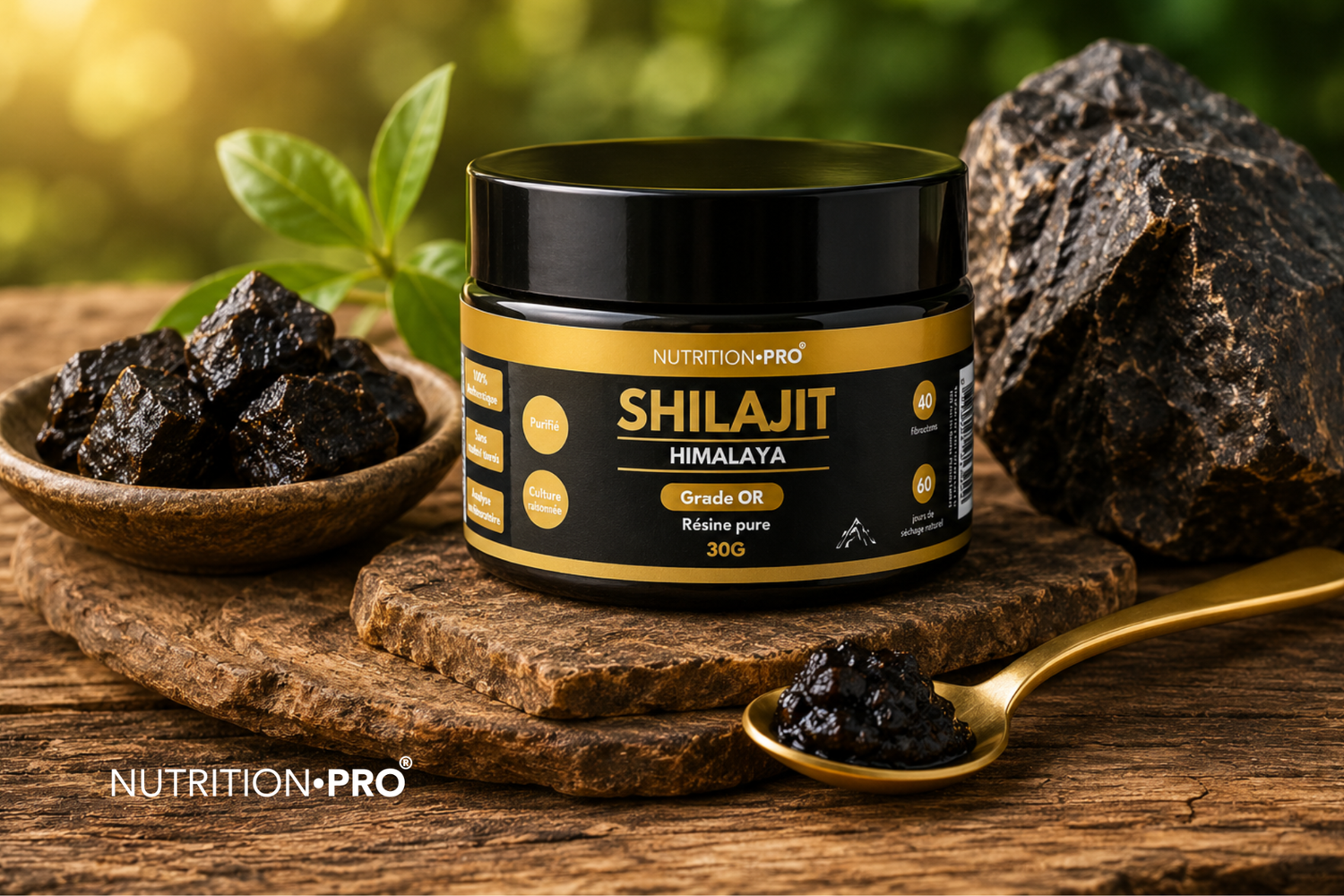
The Shilajit. A black resin, lustrous, almost metallic. Seeping from rock crevices in the high mountains of the Himalayas at over 5100 meters altitude, where the air is thin and purity absolute. Formed over millions of years by the slow decomposition of organic matter under extreme geological pressure. Revered for over 5000 years in Ayurvedic medicine as " destroyer of weakness " and supreme rasayana . Today, as ancestral tradition meets modern science, Shilajit has become one of the most studied natural supplements in the fields of vitality, cellular energy and testosterone. According to Pandit et al. 2015 in Andrologia, a randomized, double-blind clinical trial demonstrated that supplementation of 500 mg/day for 90 days significantly increased total testosterone, free testosterone and DHEAS in volunteers aged 45 to 55 years. This guide brings together everything you need to know about this extraordinary resin: unique composition, biological mechanisms, documented benefits, quality criteria and the 3 available forms to integrate into your routine.


In brief: Shilajit is a natural Himalayan resin formed over millions of years, composed of over 85 organic minerals fulvic and humic acids, dibenzo-alpha-pyrones (DBPs), , trace elements, omega 3-6-9 and antioxidants. Used for 5000 years in Ayurveda as a "destroyer of weakness" and rasayana. According to Pandit et al. 2015 inAndrologia (RCT 90 days, 500 mg/day), it significantly increases total and free testosterone and DHEA-S . According to Biswas et al. 2010 inAndrologia , it also improves sperm quality (+61.4% sperm count).3 forms available according to your preferences:
(1) Pure Resin for authentic Ayurvedic tradition (rice grain dose, maximum potency), (2) 60ml Liquid for daily convenience (drops in beverage, easy to transport), (3) PrimaVie® capsules for scientific rigor (patented standardized extract >50% fulvic acids, clinical dose 500 mg/day, published studies). All guarantee GOLD category , 45-60 day solar drying and absence of heavy metals. Expected benefits: vitality, cellular energy, testosterone support, cellular anti-aging, mental clarity.85+
- What is Shilajit: origin, formation, geology
- Exceptional composition: 85+ minerals, fulvic acids, DBPs
- Ayurvedic tradition and millennia-old history
- Benefit 1: Cellular energy and ATP production
- Benefit 2: Testosterone and physical performance
- Benefit 3: Anti-aging at cellular level and oxidative stress
- Benefit 4: Cognitive vitality and mental clarity
- Which form to choose? Self-test 4 profiles
- Quality criteria for good Shilajit
- Usage plan, dosage and precautions
1. What is Shilajit: origin, formation, geology
A fossilized resin formed over millions of years under geological pressure
UNDER HIMALAYAN PRESSURE
The word "Shilajit" comes from Sanskrit शिलाजतु (shilājatu), literally "conqueror of stone" or "that which flows from rocks". This poetic name reflects a fascinating geological reality: Shilajit is a dark semi-solid resin that naturally seeps from rock crevices in high mountains during warm periods, when internal pressure increases.
How is Shilajit formed?
The formation process spans millions of years and combines several stages:
- Initial decomposition of plant matter — Millions of years ago, certain areas of the Himalayas were covered in subtropical forests and marshy zones. When the Indian subcontinent collided with the Eurasian plate, these forests were buried under layers of sediment.
- Geological uplift — The tectonic collision raised these lands to form the Himalayan mountain range, trapping organic matter under colossal pressure between rock layers.
- Anaerobic biochemical transformation — Under the combined effect of pressure, temperature, and microbial action in an oxygen-free environment, organic matter slowly transforms into a unique mineral-organic concentrate.
- Contemporary exudation — Today, during the warm months (summer), the accumulated resin naturally seeps through rock crevices, where it can be manually harvested.
Geographic zones of origin
True Shilajit is found only in certain very specific zones in the world, all located at high altitude (between 3,280 and 18,045 feet / 1,000 and 5,500 meters):
| Region | Country | Reputation |
|---|---|---|
| Himalaya | India, Nepal, Bhutan | Traditional Ayurvedic origin, considered the purest |
| Karakoram | Pakistan, northern India | Nearby mountainous zone, variable quality |
| Altai | Russia, Mongolia | Known as Mumie/Mumijo |
| Caucasus | Georgia, Azerbaijan | Local tradition, less scientifically documented |
| Pamir and Tien Shan | Tajikistan, Kyrgyzstan | Variants of Central Asian Mumijo |
Our Nutrition•pro Shilajit comes exclusively from the Himalaya, harvested at altitudes exceeding 5100 meters, in areas untouched by industrial pollution. This extreme altitude guarantees maximum purity and corresponds to the area of origin traditionally recognized as the most prestigious in Ayurveda.
Appearance and physical characteristics
Authentic raw Shilajit presents several identifiable characteristics:
- Color : deep black to very dark brown, sometimes with golden highlights
- Texture : semi-solid resinous at room temperature, softer when warm
- Taste : bitter, earthy, slightly metallic — this is normal and characteristic
- Smell : earthy, smoky, organic
- Solubility : dissolves in hot water within a few minutes
A Shilajit that does not dissolve in hot water, or that displays a uniformly brown color without nuances, should raise suspicions about its authenticity.
2. Exceptional composition: 85+ minerals, fulvic acids, DBPs
One of the densest natural nutritional concentrates known to science
IN THE PRIMAVIE® EXTRACT
If Shilajit is the subject of growing scientific attention, it is primarily because of its unique biochemical composition. No other natural supplement offers such a density of bioactive compounds in synergy. Here are the main families of molecules present.
Family 1: Fulvic and humic acids
Fulvic acids and humic acids are the organic compounds most characteristic of Shilajit. They often represent 20 to 50% of total mass, and more in standardized extracts like PrimaVie® (>50%).
Fulvic acids : small-sized organic molecules (molecular weight 1000-10000 Da), water-soluble at all pH levels. Their key properties:
- Mineral chelation : they coat minerals to facilitate their transport across cell membranes (increased bioavailability)
- Antioxidant action : they neutralize free radicals and support endogenous systems (glutathione, SOD)
- Mitochondrial support : they participate in ATP production by supplying minerals necessary for Krebs cycle enzymes
- Inflammatory modulation : documented anti-inflammatory effect
Humic acids : larger organic molecules (10000-100000 Da), soluble only in alkaline environments. Complementary action on toxic metal binding (sentinel role) and immune support.
Family 2: Dibenzo-alpha-pyrones (DBPs)
Dibenzo-alpha-pyrones (DBPs) are compounds specific to Shilajit . They are considered one of the main markers of quality and biological activity. The patented PrimaVie® extract is notably standardized for minimum DBP content (at least 10%).Documented biological roles:
Electron transporters
- in the mitochondrial respiratory chain (role similar to CoQ10) dans la chaîne respiratoire mitochondriale (rôle similaire à la CoQ10)
- Direct support of ATP production at the cellular level
- Mitochondrial anti-aging action through preservation of mitochondrial functional integrity
- Modulation of the oxidative stress response
Family 3: The 85+ chelated organic minerals
This is one of the most remarkable characteristics of Shilajit: it contains more than 85 different minerals and trace elements, present in chelated organic form (bound to fulvic acids), which gives them significantly superior bioavailability compared to conventional mineral forms.
| Major minerals | Minor minerals | Trace elements |
|---|---|---|
| Magnesium | Copper | Selenium |
| Calcium | Manganese | Chromium |
| Potassium | Zinc | Molybdenum |
| Iron | Silicon | Vanadium |
| Sodium | Phosphorus | Cobalt, lithium, boron... |
This mineral diversity is impossible to reproduce artificially with the same bioavailability, which distinguishes Shilajit from conventional synthetic mineral supplements.
Family 4: Omega 3-6-9 and fatty acids
Shilajit also contains essential fatty acids in modest but notable quantities: omega 3, omega 6, omega 9. These lipids participate in cellular membrane integrity and support the absorption of fat-soluble compounds.
Family 5: Antioxidants and phytocompounds
Several other bioactive compounds are present: polyphenols, alkaloids (low concentrations), natural pigments, vitamins (B12, niacinamide), fossil eukaryote (ancestral plant fragments). All contribute to the overall synergistic effect.
3. Ayurvedic Tradition and Thousand-Year History
Over 5000 years of continuous use in Indian Ayurvedic medicine
IN AYURVEDIC MEDICINE
Long before Western science took an interest in Shilajit, the sages of ancient India had identified this resin as one of the most precious rasayanas. Its place in Ayurvedic medicine dates back more than 5000 years, making it one of the most continuously used natural supplements since ancient times.
Mention in Vedic texts
Shilajit is mentioned in several major Ayurvedic texts:
- Charaka Samhita (1500-500 BCE) — The founding text of Ayurveda in which Shilajit is described as one of the best rasayanas for longevity and vitality
- Sushruta Samhita — Reference text in Ayurvedic surgery, which mentions its therapeutic properties
- Ashtanga Hridaya — Vagbhata's classic where it is designated as " destroyer of weakness »
The theory of rasayanas in Ayurveda
In Ayurveda, the rasayanas are a specific category of elixirs intended to:
- Rejuvenate the body (overall anti-aging)
- Regenerate tissues (cells, skin, muscles, bones)
- Extend longevity in good health
- Supportojas, essential vital energy
- Enhanceagni, digestive fire and metabolism
Shilajit is traditionally classified among the 3 most powerful rasayanas, alongside Ashwagandha (Withania somnifera) and Amalaki (Phyllanthus emblica).
The 3 doshas and the action of Shilajit
According to Ayurvedic theory, Shilajit balances the 3 doshas (energetic constitutions):
| Dosha | Action of Shilajit |
|---|---|
| Vata (air, movement) | Supports nervous stability and energy, anti-fatigue |
| Pitta (fire, transformation) | Moderates inflammatory excess, liver support |
| Kapha (earth, water, structure) | Activates metabolism, eliminates stagnation |
This tridoshic action makes it a supplement considered universally beneficial in the Ayurvedic system, unlike many plants that target a specific dosha.
From tradition to modern science
Over the past few decades, the millennia-old use of Shilajit has attracted the attention of scientific research. Several university centers in India (Banaras Hindu University, J.B. Roy State Ayurvedic Medical College) and internationally have initiated clinical studies to scientifically validate the properties claimed by tradition.
This tradition-science convergence is one of the most fascinating dimensions of modern Shilajit. Where tradition spoke poetically of "destroyer of weakness," modern science now identifies:
- An activation of mitochondrial enzymes (ATP production)
- A stimulation of testosterone synthesis
- An antioxidant action via the Nrf-2/Keap-1 pathway
- Support for cognitive functions via fulvic acids
4. Benefit 1: Cellular energy and ATP production
Direct support of mitochondria, the energy centers of each cell
PRODUCED BY MITOCHONDRIA
The most emblematic mechanism of modern Shilajit — one that explains why users often report a subjective energy boost — is its direct action on mitochondria, the power plants of every cell.
The role of mitochondria in cellular energy
<<<8>>> Mitochondria mitochondries are cellular organelles present in large quantities in every cell (up to 2000 per muscle cell). Their primary function: to produceATP (adenosine triphosphate), the universal molecule that serves as fuel for all biological processes (muscle contraction, nerve transmission, protein synthesis, etc.).
When mitochondria function poorly — which occurs with age, chronic stress, sedentary lifestyle, or certain conditions — ATP production decreases, and chronic fatigue becomes a direct and palpable consequence.
How Shilajit supports mitochondria
Several complementary mechanisms have been identified:
1. Supply of essential mineral cofactors. ATP production requires several minerals: magnesium (ATP cofactor), iron (electron transporter), zinc, manganese, copper (mitochondrial enzymes). Shilajit provides these minerals in chelated organic form, guaranteeing optimal bioavailability.
2. Mitochondrial transport via fulvic acids. Fulvic acids easily cross mitochondrial membranes and deliver nutrients directly inside the organelles. This is one of Shilajit's unique characteristics.
3. Action of DBPs as electron transporters. Dibenzo-alpha-pyrones play a role similar to coenzyme Q10 in the mitochondrial respiratory chain, optimizing ATP production efficiency.
4. Mitochondrial protection against oxidative stress. Mitochondria themselves produce free radicals during normal functioning. Shilajit's antioxidants (particularly fulvic acids) protect mitochondrial integrity over time.
Effects perceived by users
The subjective benefits reported in connection with mitochondrial support include:
- Reduction of chronic fatigue unrelated to a diagnosed condition
- Better morning energy, sharper awakening
- Improved physical endurance (sports, daily activities)
- Faster post-exercise recovery <<<37>>> Sustained energy levels
- Stabilité énergétique throughout the day (fewer energy dips at 11am and 4pm)
- Improved mental clarity (the brain consumes 20% of total body ATP)
Time to action and protocol
The first effects on energy are generally noticeable after 2 to 3 weeks of daily use. For stable and deeper effects (structural mitochondrial support), a course of 8 to 12 weeks minimum is necessary — this is the duration of published clinical protocols.
Recommended course to target cellular energy:
- Pure Resin : 1 grain of rice (300-500 mg) in the morning on an empty stomach in a hot beverage
- Liquid 60ml : 5 to 10 drops in the morning on an empty stomach
- PrimaVie® capsules : 2 capsules in the morning (500 mg, clinical study dose)
5. Benefit 2: Testosterone and physical performance
The effect best documented scientifically by randomized clinical trials
PANDIT 2015 (90 DAYS)
This is probably the best scientifically documented effect of modern Shilajit, thanks to several published randomized clinical trials. For men in particular (but also women through general support of hormonal vitality), Shilajit demonstrates measurable effects on hormonal markers.
A second convergent clinical study
Another major clinical study by Biswas et al. 2010 examined the effect of processed Shilajit (PS) on sperm quality and hormonal parameters in 35 oligospermic patients:
Hormonal Mechanisms of Shilajit
How does Shilajit increase testosterone? Several complementary mechanisms have been identified:
1. Stimulation of testicular steroidogenesis. According to Rajpoot et al. 2024 in Journal of Ayurveda and Integrative Medicine, Shilajit activates the 3β-HSD and 17β-HSD enzymes, which are essential for testosterone biosynthesis from cholesterol at the testicular level.
2. Protection of Leydig cells. Leydig cells (testosterone producers) are particularly sensitive to oxidative stress. Shilajit's antioxidants (fulvic acids, Nrf-2/Keap-1 pathway) protect them and maintain their production capacity.
3. Support of Sertoli cell function. Sertoli cells support spermatogenesis. Shilajit improves their function through N-Cadherin and β-Catenin markers.
4. Modulation of the Bax/Bcl2 ratio. This cellular modulation reduces apoptosis of testicular germ cells and preserves hormonal production over time.
Physical and Athletic Performance
Beyond testosterone itself, several studies (particularly on the PrimaVie® extract) have demonstrated effects on:
- Muscle strength and post-exercise recovery
- Physical endurance via mitochondrial support
- Preservation of muscle mass in aging men
- Reduction of muscle collagen degradation during exercise
Who should use it? Priority profiles
| Profile | Shilajit Benefits |
|---|---|
| Men 40-65 years old | Physiological testosterone decline, andropause prevention |
| Athletes and sports enthusiasts | Recovery, performance, muscle mass |
| Couples planning pregnancy | Sperm quality (Biswas 2010) |
| Chronic stress | Elevated cortisol lowers testosterone, adaptogenic support |
| Postmenopausal women | General support for hormonal vitality and energy |
Shilajit is not a medical treatment for hypogonadism or clinical hormonal disorders. If you experience symptoms (severely diminished libido, extreme fatigue, male depression), a medical consultation with hormonal testing should be prioritized.
Benefit 3: Cellular Anti-aging and Oxidative Stress
Preservation of cellular integrity via activation of the Nrf-2 pathway and neutralization of free radicals
Biological aging is largely determined by progressive accumulation of oxidative damage at the cellular level (free radical theory of aging, mitochondria, telomeres). Modern research on Shilajit focuses on its role in cellular anti-aging via several complementary mechanisms.
The Nrf-2/Keap-1 pathway: a major mechanism
The Nrf-2 pathway is considered the "master regulator" of endogenous antioxidant response. When activated, it triggers the production of more than 200 cellular antioxidant enzymes (glutathione, SOD, catalase, etc.).
According to Rajpoot et al. 2024, Shilajit activates the Nrf-2 pathway and inhibits Keap-1 (its negative regulator). This dual action powerfully increases endogenous antioxidant defenses — a mechanism far more effective than simply providing exogenous antioxidants.
Effects on oxidative stress markers
Studies measured the impact of Shilajit on several biological markers:
- Increase in SOD (superoxide dismutase) — major antioxidant enzyme
- Increase in intracellular glutathione — primary endogenous antioxidant
- Decrease in MDA (malondialdehyde) — marker of lipid peroxidation (-18.7% in Biswas 2010)
- Decrease in IL-6 — systemic inflammatory marker (Alshubaily 2022)
Mitochondrial anti-aging
Mitochondria play a central role in biological aging. With age, their number and efficiency decrease (mitochondrial theory of aging). Shilajit exhibits several supportive effects:
- Preservation of mitochondrial membrane integrity
- Reduction of excessive mitochondrial free radical production
- Maintenance of respiratory chain efficiency (via DBPs)
- Support of mitochondrial biogenesis (creation of new mitochondria)
Implications for healthy longevity
These cellular anti-aging mechanisms partly explain why Shilajit is traditionally considered a longevity rasayana in Ayurveda. Without claiming to "extend lifespan," it contributes to preserve the quality of cellular function over time, which translates subjectively as:
- Perceived aging more harmonious (skin, energy, vitality)
- Preservation of cognitive functions related to aging
- Preserved recovery from physical effort
- Quality sleep maintained
- Capacity to adapt to stress improved (adaptogenic effect)
7. Benefit 4: Cognitive vitality and mental clarity
Brain support via fulvic acids and optimization of cerebral energy
CONSUMED BY THE BRAIN
Beyond physical effects, Shilajit presents particular interest for cognitive functions. The brain, which represents only 2% of body weight, consumes approximately 20% of total ATP, making it the most energy-demanding organ in the body. Anything that supports ATP production indirectly supports cognitive function.
Cognitive mechanisms of Shilajit
1. Support of cerebral energy. Via the mitochondrial optimization described previously, Shilajit supports neuronal ATP production, which is essential for synaptic transmission, working memory, and sustained concentration.
2. Crossing the blood-brain barrier. Fulvic acids, with their small molecular size, easily cross the brain's protective barrier and deliver their bioactive compounds directly to brain tissue. This is a rare characteristic.
3. Neuronal antioxidant protection. The brain is particularly vulnerable to oxidative stress (high oxygen consumption, rich in lipids). Shilajit's antioxidants protect neurons and preserve their integrity over time.
4. Action on neurotransmitters. Several preclinical studies suggest a modulatory effect on cholinergic and dopaminergic systems, which are important for memory and motivation.
Cognitive effects perceived by users
Regular Shilajit users frequently report:
- Mental clarity improved, reduced brain fog
- Sustained concentration on demanding tasks
- Working memory more available
- Mental resilience improved in the face of stress
- Motivation and increased engagement
- Quality sleep (paradoxical but coherent: better overall energy metabolism)
Priority cognitive profiles
| Profile | Cognitive interest |
|---|---|
| Students and intellectual workers | Sustained concentration, working memory |
| Cognitively demanding work | Mental energy, resistance to mental fatigue |
| Chronic stress and mild burnout | Adaptogenic, support for executive functions |
| Normal cognitive aging | Preservation of functions, neuroprotective support |
| Athletes and sportspeople | Competition focus, decision-making clarity |
For optimized cognitive effect, Shilajit can be combined with other documented natural supplements: Ashwagandha (stress, recovery sleep), Ginseng (cognitive energy, performance), Bacopa monnieri (long-term memory), Maca (overall vitality), Magnesium bisglycinate (nerve function). These combinations reflect the traditional Ayurvedic approach to rasayana synergy.
8. Which form of Shilajit to choose? Self-test 4 profiles
Identify your profile to choose the form best suited to your daily life
The 3 forms of Shilajit offered by Nutrition•pro meet different needs and preferences. None is superior to the others in absolute terms — each has its specific strengths. The self-assessment below automatically identifies your dominant profile and the most relevant form for you.
SELF-ASSESSMENT: WHICH FORM OF SHILAJIT FOR YOU?
Check the items that apply to you truly or almost always. The result displays automatically and identifies the form of Shilajit best suited to your profile.
Comparison table of the 3 forms
| Criterion | Pure Resin | 60ml Liquid | PrimaVie® capsules |
|---|---|---|---|
| Format | Semi-solid resin in jar | Liquid in glass bottle | 60 HPMC capsules |
| Daily dosage | 1 grain of rice × 1-2/day | 5-10 drops × 1-2/day | 2 capsules (500 mg) |
| Administration | Dissolve in hot beverage | Add to beverage | Swallow with water |
| Travel convenience | Moderate | Excellent | Excellent |
| Taste | Powerful earthy | Earthy in beverage | Tasteless |
| Clinical studies | Ayurvedic tradition | Tradition + quality | Published RCTs |
| Standardized actives | Natural (variable) | Natural (variable) | >50% fulvic acids |
| Price | 34.99 € | 29.99 € | 34.99 € |
Three excellent options according to your profile and personal preferences. All guarantee the same Nutrition•pro quality : origin Himalayas 5100m+, solar drying, 40 nano filtrations, heavy metal absence testing.
9. Quality criteria for good Shilajit
The Shilajit market is filled with questionable products — knowing how to recognize quality is essential
NUTRITION•PRO
Since Shilajit is a rare natural product that is expensive to produce correctly, the market is filled with counterfeits and poor-quality products. Cheap or untested Shilajit can present real health risks (heavy metals, contaminants). Here are the 5 key criteria to verify.
Criterion 1: Geographic origin
The best Shilajit traditionally comes from theHimalayas (India, Nepal, Bhutan). Other regions produce Shilajit or Mumijo (Altai, Caucasus, Pamir) but Ayurvedic tradition considers the Himalayas as the most prestigious origin.
Good sign : precise origin indicated (region, altitude, harvesting method).
Bad sign : vague origin ("Asia", "mountains"), no traceability, anonymous online sellers.
Criterion 2: Harvesting altitude
Altitude is a marker of purity. At 5000 m+, you are in a zone without industrial pollution, without intensive agriculture, in extreme conditions that concentrate bioactive compounds. The higher the altitude, the higher the quality tends to be.
Our Nutrition•pro Shilajit is harvested at over 5100 meters.
Criterion 3: Drying method
This is one of the most discriminating criteria between premium and low-cost Shilajit.
| Drying method | Quality | Description |
|---|---|---|
| Natural solar drying (45-60 days) | Premium GOLD category | Preserves all heat-sensitive compounds, traditional method |
| Ambient air drying with ventilation | Good | Longer process, quality preserved |
| Fire drying / direct heat | Poor | Degrades heat-sensitive bioactive compounds |
| High-temperature industrial drying | Poor | Destroys most active compounds, accelerates production |
Our Nutrition•pro Shilajit is naturally sun-dried for 45 to 60 days, traditional method respectful of bioactive compounds.
Criterion 4: Purification and filtration
Raw Shilajit, as it comes from the rock, contains impurities (mineral fragments, undecomposed plant matter, sometimes trace heavy metals). Good purification is essential.
Our process includes 40 successive nano filtrations, guaranteeing maximum purity and elimination of potential contaminants.
Criterion 5: Heavy metals absence testing
This is probably the most crucial criterion for consumer safety. Shilajit harvested from Himalayan soils can naturally contain traces of heavy metals (lead, arsenic, cadmium, mercury). Without rigorous testing, the product presents real health risks.
Several studies have shown that Shilajit sold at low prices on the Internet contained heavy metal levels far exceeding European standards. The consequences can be serious in case of prolonged regular consumption. Always demand independent laboratory tests certifying compliance with European standards for lead, arsenic, cadmium and mercury. Our Nutrition•pro Shilajit undergoes systematic testing guaranteeing the absence of detectable heavy metals.
Bonus criterion for PrimaVie®: standardization of active compounds
For users who prioritize scientific rigor, the patented extract PrimaVie® adds an additional criterion: precise standardization of bioactive compounds.
- More than 50% of fulvic acids (primary quality indicator)
- Minimum 10% of DBPs (dibenzo-alpha-pyrones)
- Rigorous testing for absence of heavy metals and contaminants
- Complete traceability of raw materials
- Published clinical studies validating claimed effects
This standardization guarantees that each capsule contains exactly the same level of active compounds, which is not the case with non-standardized natural resins (natural variability between batches).
anonymous seller
Himalaya 5100m+, identified manufacturer
certificate absent
certificates available
(less than €15/30g)
(30-50 €/30-60g)
Industrial homogeneous texture
Natural resinous texture
without data
(clinical studies for PrimaVie®)
10. Usage plan, dosage and precautions
Precise protocols according to the chosen form to optimize benefits safely
FOR STABLE MEASURABLE EFFECTS
To get the most out of Shilajit, strict adherence to dosages and protocols is essential. Here are the practical details for each form.
Pure Resin Shilajit Protocol
- Dose : 300 to 500 mg per day, equivalent to a grain of rice
- Preparation : extract with the provided spatula or a wooden toothpick (never metal which can react), dissolve in 200 ml of hot water, warm plant-based milk or herbal tea
- Timing : ideally in the morning on an empty stomach, 20 minutes before breakfast
- Frequency : once daily to start, twice daily (morning + afternoon) if well tolerated
- Duration : 8 to 12-week treatment course, followed by a 4-week break
- Storage : sealed container, away from light and heat, at room temperature. The resin keeps for several years
Liquid Shilajit 60ml Protocol
- Dose : 5 to 10 drops per serving (integrated dropper)
- Preparation : add directly to a hot or cold beverage (water, plant-based milk, herbal tea, smoothie)
- Timing : ideally in the morning, also possible at noon
- Frequency : one to two times per day
- Duration : 8 to 12-week course, followed by a 4-week break
- Storage : sealed bottle, away from light and heat. Use within 12 months after opening
Shilajit PrimaVie® Capsules Protocol
- Dose : 2 capsules per day (500 mg of standardized extract)
- Preparation : swallow with a large glass of water
- Timing : 1 capsule in the morning + 1 capsule at noon, ideally with or after a meal
- Frequency : single daily dose in 2 intakes
- Duration : 12-week course (90 days = duration of clinical studies), followed by a 4-week break
- Storage : sealed container, away from light and humidity, at room temperature
Relevant Synergies
Shilajit works very well in synergy with other natural supplements. Here are the most relevant combinations according to your objectives:
| Objective | Recommended Synergy |
|---|---|
| Overall Vitality and Energy | Shilajit + Organic Maca + Red Ginseng |
| Sports Performance | Shilajit + Creatine + Omega 3 |
| Testosterone and Male Fertility | Shilajit (PrimaVie® form preferred) + Ashwagandha |
| Chronic Stress and Adaptation | Shilajit + Ashwagandha + Magnesium Bisglycinate |
| Cellular Anti-Aging | Shilajit + Omega 3 + Turmeric + Resveratrol |
| Cognition and Mental Clarity | Shilajit + Bacopa monnieri + Magnesium Bisglycinate |
Possible Side Effects
Quality Shilajit is generally well tolerated. Side effects are rare and usually minor:
- Mild digestive reactions at the beginning of treatment (rare): nausea, transient bloating
- Mild dizziness in certain sensitive individuals (reduce the dose)
- Mild excitability if taken late in the day (prefer morning)
- Very slight alteration of taste in the mouth lasting 1-2 hours after intake
In case of unusual reaction, stop and consult a healthcare professional.
Pregnant or nursing women : not recommended, insufficient data on safety for the unborn child or infant. Children and adolescents under 18 years of age: not recommended, as Shilajit is traditionally reserved for adults in Ayurveda. People taking anticoagulant medication (warfarin, VKA, direct oral anticoagulants): theoretical risk of interaction, seek medical advice. Hemochromatosis or iron overload disorders : Shilajit contains organic iron, therefore not recommended. Active gout : caution in those sensitive to uric acid changes. Thyroid treatments or iron supplementation : separate Shilajit intake by a minimum of 2 hours (absorption interaction). Hypotension : monitor blood pressure in predisposed individuals. Chronic treated conditions (diabetes, hypertension, hormonal disorders): always seek medical advice before supplementation. Allergies to natural compounds : start with half dose to test individual tolerance. If surgery is planned, stop Shilajit 2 weeks before the procedure.
Frequently asked questions about Shilajit
What exactly is Shilajit?
Shilajit is a natural resin that seeps from rock crevices in the high mountains of the Himalayas, at altitudes above 5,100 meters. Formed over millions of years by the slow decomposition of plant and mineral matter under geological pressure, it is one of the densest known natural nutritional concentrates. It contains more than 85 organic minerals, fulvic and humic acids, dibenzo-alpha-pyrones (DBPs), trace elements, omega 3-6-9 and antioxidants. Used for over 5,000 years in Ayurvedic medicine.
What are the scientifically proven benefits of Shilajit?
Several effects are documented. According to Pandit et al. 2015 in Andrologia, purified Shilajit at 500 mg/day for 90 days significantly increases total testosterone, free testosterone and DHEAS in volunteers aged 45-55 years (double-blind RCT vs. placebo). According to Biswas et al. 2010 in Andrologia, it also improves semen quality in oligospermia: +61.4% sperm count, +37.6% motile sperm, reduced oxidative stress. Other studies confirm its antioxidant properties, cellular anti-aging effects, and support for mitochondrial ATP production.
Which form of Shilajit to choose: resin, liquid, or PrimaVie® capsules?
All three forms have unique advantages. The Pure Resin is the traditional Ayurvedic form, maximum potency, strong ritual aspect (to be dissolved in hot beverage, rice grain dose). The 60ml Liquid is the most convenient version for travel and active daily life (5 to 10 drops in a beverage). The PrimaVie® capsules is the premium scientific form: patented extract standardized to over 50% fulvic acids + DBPs, the only Shilajit with published clinical studies, precise dosing 500 mg/day, unflavored.
Does Shilajit really increase testosterone?
Yes, in published clinical studies. The reference study by Pandit et al. 2015 in Andrologia (double-blind RCT versus placebo in healthy men aged 45-55) showed that supplementation with 250 mg of purified Shilajit twice daily for 90 days significantly increased total testosterone, free testosterone, and DHEAS, without disrupting gonadotropin hormones (LH, FSH). The patented extract PrimaVie® uses precisely this clinically tested 500 mg/day protocol.
What are fulvic acids and why are they important?
<<<18>>> Fulvic acids acides fulviques are complex organic compounds resulting from the decomposition of ancestral plant matter over millions of years. In Shilajit, they represent one of the main bioactive compounds. Their properties: chelation and transport of minerals across cell membranes (increased bioavailability), powerful antioxidant action, support for mitochondrial function and ATP production, inflammation modulation. The concentration of fulvic acids is the primary indicator of Shilajit quality. PrimaVie® is standardized to over 50%, which is exceptionally high.
What is PrimaVie® and why is it different?
PrimaVie® is a patented extract of purified Shilajit developed by Natreon laboratory. It is today the world scientific reference for Shilajit, because it is the only one with published double-blind clinical studies (testosterone, energy, muscle recovery). Its distinctive characteristics: standardization to over 50% fulvic acids and minimum 10% DBPs, rigorous testing for absence of heavy metals, complete traceability. Our formula PrimaVie® capsules delivers 500 mg/day exactly as in clinical protocols.
How to take pure Shilajit resin?
The traditional Ayurvedic method: take a small quantity equivalent to a rice grain (approximately 300 to 500 mg) with the provided spatula or wooden toothpick, then dissolve it in a hot or warm beverage (water, plant-based milk, herbal tea). Ideally on an empty stomach in the morning, once or twice daily. The resin dissolves in a few minutes. The taste is strong, earthy, and bitter—this is normal and characteristic. The recommended course is 8 to 12 weeks, followed by a 4-week break.
Is liquid Shilajit as effective as pure resin?
Yes, it is essentially the same quality in a different format. Our Shilajit liquid is composed of 95% pure resin and 5% Himalayan spring water, which simply makes it more convenient to dose and transport. The same extraction rigor is applied: manual Himalayan harvesting, 45 to 60 days solar drying, 40 nano filtrations, absence of heavy metals. Dosage: 5 to 10 drops once or twice daily in a beverage. Ideal for users who want the authenticity of resin without the handling.
How long before experiencing the effects of Shilajit?
The first effects are generally perceived in 2 to 4 weeks of regular daily intake: improved energy, better recovery, more stable sense of vitality. The measurable hormonal and metabolic effects (testosterone, antioxidant parameters) typically require 8 to 12 weeks of regular supplementation, as demonstrated in the Pandit 2015 study (90 days). For lasting results, a typical protocol consists of doing 2 to 3 courses of 12 weeks per year, with a 4-week break between each course.
Does Shilajit present risks related to heavy metals?
This is a crucial point. Raw, unpurified Shilajit can indeed contain heavy metals (lead, arsenic, cadmium). This is why the purification process is essential. Our Nutrition•pro Shilajit is GOLD category : natural sun drying 45 to 60 days, 40 successive nano-filtrations, rigorous testing in independent laboratory to guarantee the absence of heavy metals, compliance with European standards. Absolutely avoid cheap, untested shilajits sold online without traceability, which can present real health risks.
Who should not take Shilajit?
Several contraindications: pregnant or nursing women (insufficient data), children and adolescents under 18 years old, people under anticoagulant treatment (potential interactions), hemochromatosis or iron overload disorders (Shilajit being rich in organic iron), active gout, people hypersensitive to natural compounds. In case of chronic medical treatment, always consult a doctor before supplementation. The course must be spaced 2 hours apart from thyroid or iron medication intake.
Does Shilajit also work for women?
Yes, contrary to popular belief. Although published clinical studies focus mainly on male testosterone, Shilajit presents relevant effects for women: energy support (fulvic acids + minerals), improved mitochondrial ATP production, cellular anti-aging antioxidant action, bone density support (Alshubaily 2022 on osteoporosis), improved athletic recovery. Women in perimenopause or postmenopause can particularly benefit from its global vitality effect. Identical dosage: 500 mg/day or equivalent resin/liquid.
Can Shilajit be combined with other supplements?
Yes, several synergies are relevant. With Maca for overall vitality. With Ginseng for energy and cognitive performance. WithAshwagandha for stress and endurance (classic Ayurvedic synergy). With creatine for athletic performance. With Magnesium for muscle function. Space 2 hours apart from: other iron-rich supplements, thyroid medications. Avoid simultaneously with: anticoagulant medications.
What is the difference between Shilajit and Mumijo?
These are similar terms designating similar mineral resins of different origins. Shilajit is the name used in the Ayurvedic tradition for the resin harvested in the Himalayas (India, Nepal, Bhutan). The Mumijo (or Mumie) is the Russian and Central Asian name for similar resins harvested in the mountains of the Altai, Caucasus, Pamir or Tien Shan. Their composition is generally comparable (fulvic acids, minerals, DBPs) but varies depending on the precise geological origin. Our Nutrition•pro Shilajit comes exclusively from the Himalayas at over 5100 m altitude.
Is Shilajit considered an adaptogen?
Yes, Shilajit is classified among natural adaptogens, that is, substances that help the body adapt to physical, emotional and environmental stress by modulating physiological responses. In Ayurveda, it is qualified as a rasayana, a term designating substances that rejuvenate and regenerate. Its adaptogenic properties include: support of adrenal functions, modulation of oxidative stress, improvement of physical and mental endurance, support of mitochondrial functions. It is one of the three oldest documented adaptogens, along with Ashwagandha and Ginseng.
Glossary
- Shilajit
- Natural semi-solid resin that seeps from rock crevices in high mountains (primarily the Himalayas) at over 5100 m altitude, formed over millions of years by the decomposition of plant matter under geological pressure. Exceptional natural nutritional concentrate.
- Fulvic acids
- Complex organic molecules of small size (1000-10000 Da), soluble at all pH levels. Major bioactive compound of Shilajit. Capable of chelating minerals to increase their bioavailability, crossing cell membranes, and supporting mitochondrial function.
- Humic acids
- Organic molecules larger than fulvic acids (10000-100000 Da), soluble in alkaline medium. Present in Shilajit, they complement the action of fulvic acids through capture of toxic metals and immune support.
- DBPs (Dibenzo-alpha-pyrones)
- Bioactive compounds specific to Shilajit. Play a role similar to coenzyme Q10 in the mitochondrial respiratory chain. Considered one of the main markers of quality and biological activity of Shilajit. The PrimaVie® extract is standardized in DBPs (minimum 10%).
- PrimaVie®
- Patented extract of purified Shilajit developed by Natreon laboratory. Standardized to over 50% fulvic acids and minimum 10% DBPs. Only shilajit with published double-blind clinical studies. World scientific reference.
- Rasayana
- Category of elixirs in Ayurvedic medicine intended to rejuvenate the body, regenerate tissues, extend healthy longevity and support ojas (vital energy). Shilajit is classified among the most powerful rasayanas with Ashwagandha and Amalaki.
- Ayurveda
- Traditional Indian medicine practiced for over 5000 years, founded on the balance of the three doshas (Vata, Pitta, Kapha) and the use of plants, minerals and lifestyle practices. One of the oldest documented holistic medicines.
- Adaptogen
- Natural substance (plant, mineral) that helps the body adapt to physical, emotional and environmental stress by modulating physiological responses without exaggerated effect in any given direction. Shilajit, Ashwagandha and Ginseng are the oldest documented adaptogens.
- OR Category (Gold Grade)
- Maximum quality classification for Shilajit, indicating: Himalayan origin 5100m+, solar drying 45-60 days, 40 successive nano filtrations, rigorous testing for absence of heavy metals, complete traceability. This is the grade used in traditional Ayurvedic medicine.
- Mitochondria
- Cellular organelles present in large quantities in each cell (up to 2000 per muscle cell). Energy powerhouses that produce ATP, the universal molecule of cellular energy. Shilajit supports their functioning via fulvic acids and DBPs.
Scientific sources
- Pandit S, Biswas S, Jana U, De RK, Mukhopadhyay SC, Biswas TK. Clinical evaluation of purified Shilajit on testosterone levels in healthy volunteers. Andrologia 2015;48(5):570-575. DOI : 10.1111/and.12482
- Biswas TK, Pandit S, Mondal S, et al. Clinical evaluation of spermatogenic activity of processed Shilajit in oligospermia. Andrologia 2010;42(1):48-56. DOI: 10.1111/j.1439-0272.2009.00956.x
- Rajpoot A, Yadav K, Yadav A, Mishra RK. Shilajit mitigates chemotherapeutic drug-induced testicular toxicity: Study on testicular germ cell dynamics, steroidogenesis modulation, and Nrf-2/Keap-1 signaling. Journal of Ayurveda and Integrative Medicine 2024;15(4):100930. DOI: 10.1016/j.jaim.2024.100930
- Alshubaily FA, Jambi EJ. Correlation between Antioxidant and Anti-Osteoporotic Activities of Shilajit Loaded into Chitosan Nanoparticles and Their Effects on Osteoporosis in Rats. Polymers 2022;14(19):3972. DOI: 10.3390/polym14193972
- Carrasco-Gallardo C, Guzmán L, Maccioni RB. Shilajit: A Natural Phytocomplex with Potential Procognitive Activity. International Journal of Alzheimer's Disease 2012;2012:674142. DOI: 10.1155/2012/674142