

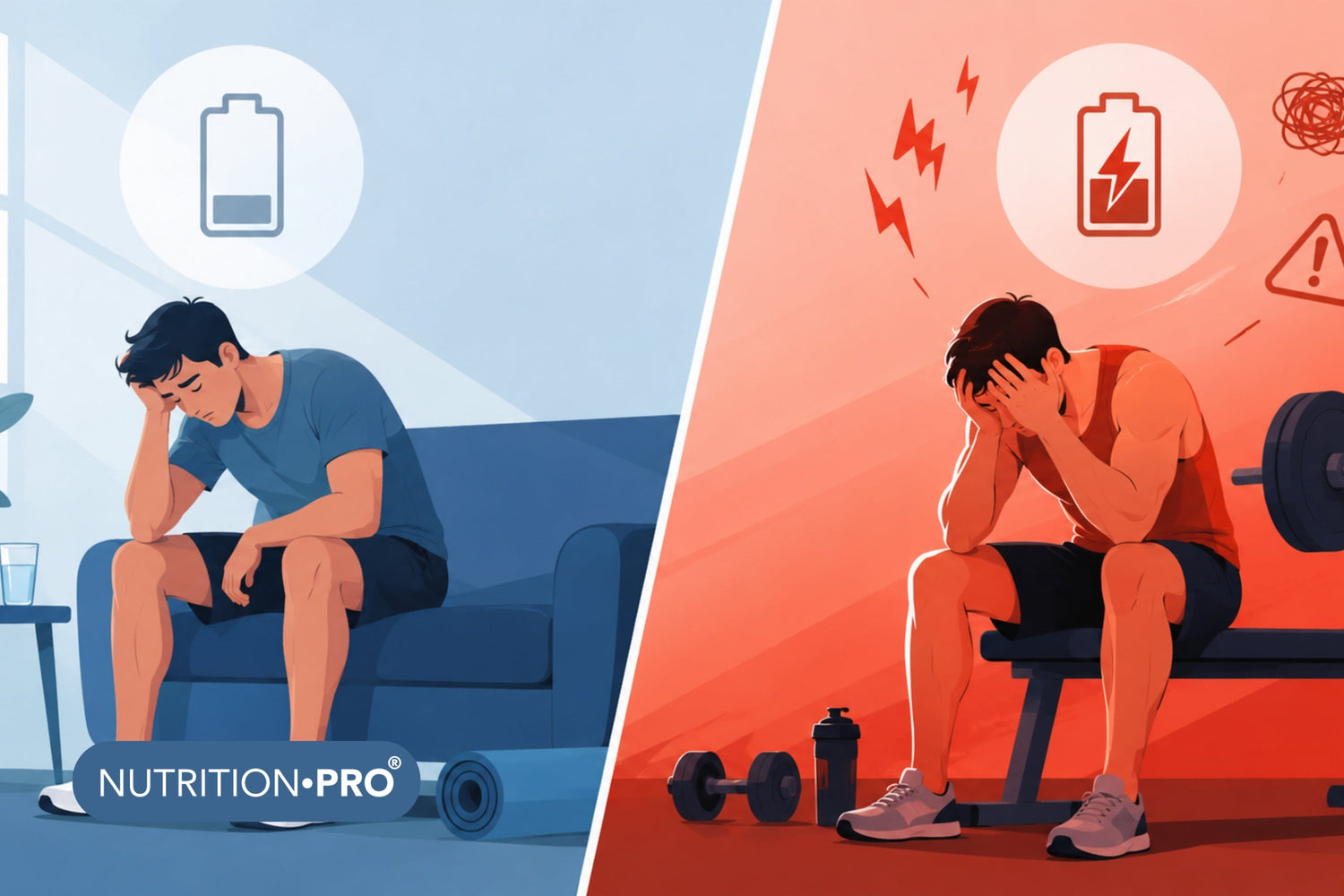
You've been dragging yourself through the past few weeks, your performance is stagnating or declining despite training, your sleep is suffering, and you're catching every bug that comes your way. Are you simply tired, or genuinely overtrained? The difference is crucial: post-exercise fatigue resolves within 24 to 72 hours, whereas overtraining syndrome (OTS) may require 6 to 24 months of recovery. This guide reviews the 3 stages of overload (functional, non-functional, and full syndrome), the physical and psychological symptoms, the biomarkers, the RED-S (the common confusion that everyone misses), and the 12-week recovery protocol validated by 2021–2024 meta-analyses. Bonus: we also debunk common misconceptions, including the belief that most amateur athletes who think they're overtrained are actually under-recovered or in an energy deficit.


The scientific essentials in 5 key points. (1) True overtraining syndrome (OTS) is rare: fewer than 10% of amateur athletes who believe they have it actually do. (2) 3 stages to distinguish : functional overreaching (3–7 days), non-functional overreaching (2–12 weeks), full syndrome (6–24 months). (3) According to Stellingwerff et al. 2021 in Sports Medicine, 86% of OTS studies actually show an underlying relative energy deficiency (RED-S). (4) No single reliable biomarker exists: clinical diagnosis by exclusion (Armstrong 2022 in Front Netw Physiol). (5) No supplement can cure OTS : only extended rest (weeks to months) combined with nutritional rebalancing and quality sleep (Vitale 2019) enables recovery.
- Normal fatigue vs overtraining: the crucial difference
- The 3 stages of overload: functional, non-functional, OTS
- Physical symptoms of overtraining
- Psychological and emotional symptoms
- Self-assessment: am I overtraining?
- Biomarkers: what blood work reveals
- OTS vs RED-S: a common source of confusion
- Main causes and aggravating factors
- Heart rate variability (HRV)
- 12-week recovery protocol
- Recovery nutrition in cases of overload
- Sleep: why it's non-negotiable
- Adaptogenic herbs and helpful supplements
- Mistakes that make overtraining worse
- When to see a sports medicine doctor
1. Normal fatigue vs overtraining: the crucial difference
What sets them concretely apart
Normal fatigue after exercise follows a predictable pattern: peaking within 24 to 48 hours and resolving in 3 to 5 days with good recovery habits. Performance returns to at least its previous level, often slightly improved through adaptation. This is the very principle of training: stress the body, give it time to supercompensate, and progress.
Overtraining does not follow this pattern. Fatigue sets in, and performance stagnates or declines despite rest. Mood deteriorates. Infections occur one after another. Sleep paradoxically worsens (insomnia in the presence of intense fatigue). Several days or weeks of recovery are no longer enough to restore fitness.
| Criterion | Normal fatigue | Overtraining |
|---|---|---|
| Duration | 24-72 hours | Weeks to months |
| Recovery | Complete with rest | Insufficient despite rest |
| Performance | Restored then improved | Stagnates or durably regresses |
| Sleep | Deep and restorative | Disrupted, paradoxical insomnia |
| Mood | Normal or euphoric post-session | Irritability, loss of motivation, or even sadness |
| Resting HR | Stable or slightly low | Elevated 5-10 bpm vs baseline |
| Immunity | Normal | Recurring infections |
| Appetite | Normal or increased post-exercise | Disrupted, loss of appetite or compulsive eating |
| Desire to train | Present after recovery | Absent, sense of obligation |
2. The 3 stages of overload: functional, non-functional, OTS
Functional Overreaching
Short-term, intentional, beneficial
This is the normal progression mechanism. Deliberately overloading for 1-2 weeks (training camp, intensive course, temporary volume increase) creates transient fatigue followed by supercompensation : performance exceeds the previous level after 3-7 days of appropriate recovery. The fatigue is expected, managed, and controlled. Not pathological.
Non-Functional Overreaching
Abnormally long recovery, first warning signs
The expected recovery no longer occurs. Performance plateaus or declines after 7-14 days of rest. Onset of the first psychological symptoms (irritability, loss of motivation), physical symptoms (elevated resting heart rate, disrupted sleep) and immune symptoms (recurring colds). 2 to 12 weeks of deload with a massive reduction in volume and intensity are required. This is the moment to take action, before tipping into stage 3.
Overtraining Syndrome (OTS)
Multisystemic exhaustion, prolonged recovery
The result of months of unmanaged overload. Major dysregulation of the HPA axis (cortisol, ACTH), the autonomic nervous system, the immune system, and energy metabolism. Recovery of 6 to 24 months, sometimes requiring complete cessation of sport for several weeks. According to Armstrong et al. 2022 in Frontiers in Network Physiology, OTS is a complex systemic phenomenon that cannot be reduced to a single cause: possible involvement of chronic inflammation, the microbiome, immunity, and neuroendocrine function.
3. Physical symptoms of overtraining
Persistent performance decline
Stagnation or regression of usual performance despite a constant or reduced training load. Particularly pronounced during maximal efforts and endurance activities. Cardinal sign: without a performance decline, no OTS.
Elevated resting heart rate
An increase of 5 to 10 bpm in morning resting heart rate compared to personal baseline, persisting over several days. Measured upon waking, lying down, before getting up. An early sign detectable with a connected watch.
Paradoxical sleep disturbances
Difficulty falling asleep despite intense fatigue. Light, fragmented sleep. Nocturnal awakenings. Feeling of non-recovery upon waking. Linked to nocturnal sympathetic hyperactivation.
Recurring infections
Recurring colds, tonsillitis, and upper respiratory tract infections (more than 3-4 per year). Immunosuppression linked to chronically elevated cortisol and oxidative stress. Low-grade systemic inflammation detectable through blood work.
Persistent muscle soreness
Muscle soreness lasting beyond 7 days when it should resolve within 3-5 days. Incomplete muscle recovery. See our complete pillar on muscle soreness recovery to distinguish between normal muscle fatigue and warning signs.
Loss of appetite or weight fluctuations
Paradoxical decrease in appetite despite high energy expenditure. Or food cravings. Unintended weight loss or weight stagnation despite training. Often associated with underlying RED-S.
Digestive issues
Bloating, bowel irregularities, irritable bowel syndrome. Overtraining disrupts the gut microbiome and increases intestinal permeability (chronic stress on the gut-brain axis).
Amenorrhea in women
Absence of periods or very irregular cycles in female athletes. A major warning sign often linked to concurrent RED-S. Long-term consequences include: bone loss, stress fracture risk, and temporary infertility. Requires prompt medical consultation.
Recurring injuries
Recurrent tendinopathies, muscle strains, stress fractures. According to Madzar et al. 2023 in Medicina, overtraining is a major risk factor for bone injuries in athletes. Bone tissue can no longer remodel properly.
4. Psychological and emotional symptoms
The emotional profile of the overtrained athlete
The athlete who was typically motivated, cheerful, and energetic gradually becomes:
Loss of motivation and procrastination
Desire to skip usually enjoyable training sessions. Feeling of obligation rather than desire. Finding excuses not to train. An early and reliable indicator.
Irritability and impatience
Reduced tolerance for frustration. Unusual conflicts at work or at home. Heightened emotional reactivity. Persistent bad mood. Feeling constantly on edge.
Depressive mood and anhedonia
Generalized loss of pleasure, not just in sport. Persistent sadness. Feeling of emptiness. If dark thoughts or suicidal ideation arise: seek emergency medical care. Overtraining can trigger or reveal an underlying depression.
Anxiety and hypervigilance
Excessive preoccupation with performance. Disproportionate fear of failure. Rumination about past and future training sessions. Feeling of never doing enough.
Difficulty concentrating
Decline in cognitive performance: concentration, working memory, decision-making. Brain fog. Unusual mistakes at work. According to Vitale 2019 in Int J Sports Med, chronic sleep deprivation (an almost constant component of OTS) significantly impairs reaction time, accuracy, and cognitive function.
Sports burnout
Triad: emotional exhaustion, devaluation of sport (loss of meaning), reduced sense of accomplishment. According to Brenner 2024 in Pediatrics, this is one of the leading causes of sports dropout among young athletes. Often associated with OTS but can occur independently.
5. Self-assessment: am I overtraining?
0–2 boxes : normal fatigue, no concerning signs. Optimize sleep, nutrition, and progression. 3–5 boxes : signs of functional overload, monitor closely. Consider a deload week (−50% volume). Medical consultation recommended if symptoms persist. 6–8 boxes : strong suspicion of non-functional overload. 12-week recovery protocol to be initiated. Prompt medical consultation (sports medicine physician or nutritionist). 9–12 boxes : suspected overtraining syndrome. Complete cessation of structured training. Priority medical consultation with comprehensive blood work. See our Fatigue collection and Vitality Energy for support supplements.
6. Biomarkers: what biology reveals
Recommended biological workup
A comprehensive sports medical assessment ideally includes the following tests, to be interpreted together by a physician:
| Marker | What it indicates | Relevance |
|---|---|---|
| CBC, ferritin | Anemia, iron deficiency | High - common cause of fatigue |
| 25-OH-vitamin D | Vitamin D status | High - 80% deficiency rates in winter |
| TSH, T3, T4 | Thyroid function | High - hypothyroidism mimics OTS |
| Vitamin B12, B9 | Common deficiencies (vegetarians) | High |
| Erythrocyte magnesium | True magnesium status | Moderate - better than serum |
| Creatine kinase (CK) | Muscle damage | Moderate - varies with training |
| CRP, ESR | Chronic inflammation | Moderate - non-specific |
| Morning cortisol | HPA axis | Low - highly variable |
| Testosterone (men) | Androgenic status | Moderate - decreases in RED-S |
| Estradiol, LH (women) | Ovarian function | Elevated if amenorrhea |
| Fasting blood glucose, HbA1c | Carbohydrate metabolism | Moderate |
| Urea, creatinine | Renal function | Low but useful |
Historically, the free testosterone / cortisol ratio was considered a marker of overreaching. A decrease in this ratio (rising cortisol, falling testosterone) is consistent with OTS. But in practice, interindividual variability is such that this ratio cannot be used alone as a diagnostic tool. It remains relevant for individual longitudinal monitoring.
7. OTS vs RED-S: a common source of confusion
What exactly is RED-S?
The RED-S (Relative Energy Deficiency in Sport) is a syndrome in which caloric intake is insufficient to cover both the body's baseline needs and the energy expenditure of training. As a result, the body shifts into "economy mode," downregulating several energy-intensive functions (reproduction, immunity, bone growth, thyroid function).
RED-S risk profiles
- Female athletes in endurance sports (running, triathlon, cycling): very high energy expenditure, often underestimated intake.
- Weight-category sports (combat sports, lightweight rowing): chronic caloric restriction.
- Aesthetic sports (dance, gymnastics, fitness): pressure to be lean.
- Athletes on voluntary caloric restriction (seeking weight loss).
- Vegetarian / vegan athletes misinformed about their needs.
- Athletes with a history of eating disorders.
How to differentiate between pure OTS and RED-S
| Criterion | Pure OTS | RED-S |
|---|---|---|
| Caloric intake | Sufficient relative to expenditure | Insufficient |
| Training volume | Absolutely very high | Variable (sometimes moderate) |
| Menstrual cycle (women) | Often preserved | Often disrupted / amenorrhea |
| Bone density | Normal | Decreased, stress fractures |
| Thyroid hormones | Often normal | T3 often low |
| Solution | Extended rest | Increase intake |
RED-S is a medical diagnosis that requires a specialized consultation (sports physician or nutritionist). Do not attempt to self-diagnose or self-treat. The long-term consequences on bone health, fertility, and the cardiovascular system can be serious. An amenorrhea in female athletes is always a warning sign requiring medical evaluation.
8. Main causes and aggravating factors
The overtraining equation
Overtraining results from a prolonged imbalance between demands and resources:
- Demands (allostatic load) : training volume and intensity, but also occupational stress, family stress, lack of sleep, travel, infections, environmental factors (heat, altitude), and negative life events.
- Resources (recovery capacity) : quality sleep in sufficient quantity, adequate nutritional intake, social support, mental management, rigorous periodization.
When constraints consistently exceed resources, the system tips over. This is why the same training volume can be very well tolerated during one period and trigger OTS during another, depending on life circumstances.
The 7 Main Aggravating Factors
- Too rapid an increase in volume or intensity (more than 10% per week).
- Insufficient caloric and carbohydrate intake (a major cause that is often overlooked).
- Sleep deprivation (chronically less than 7 hours per night).
- Concurrent major occupational or personal stress.
- Lack of periodization (no deload week every 3–5 cycles).
- Lack of variety in training (excessive monotony).
- Underlying condition that has gone undiagnosed (deficiency, chronic infection, hypothyroidism).
9. Heart Rate Variability (HRV)
How to Use HRV Correctly
HRV can now be measured by most smartwatches (Garmin, Polar, Whoop, Oura). However, it requires rigorous use to be meaningful:
- Establish a personal baseline over 2–4 weeks of daily measurements under stable conditions.
- Measure under the same conditions : in the morning, upon waking, before getting up, while fasted.
- Track trends over 7–14 days, not individual data points.
- Cross-reference with other indicators : sleep, resting HR, subjective feelings.
The limits of HRV
- Enormous interindividual variability : absolute values are not informative when comparing between individuals.
- Sensitivity to many factors : alcohol, dehydration, menstrual cycle, acute stress, previous night's sleep quality.
- Reflects the state of the autonomic nervous system, not specifically overtraining.
- Not a diagnosis : a decision-support tool among others.
10. 12-Week Recovery Protocol
11. Recovery Nutrition in Cases of Overload
Caloric intake: don't restrict
During periods of overload or recovery, this is not the time to try to lose weight. Intake must fully cover energy expenditure to allow for repair:
- Calculating energy expenditure : basal metabolic rate (Mifflin-St Jeor) × activity factor (1.6 to 2.4 depending on training volume).
- Do not go below basal metabolism : major risk of RED-S.
- Eat even without hunger : appetite is often impaired during overtraining, and must be compensated for through dietary discipline.
Carbohydrates: the absolute priority
The availability of carbohydrates is one of the most important factors in the prevention and resolution of overtraining. Target intake based on training volume:
- Moderate effort (1h/day) : 4-5 g/kg/day.
- Intense effort (1-2h/day) : 6-7 g/kg/day.
- Very intense effort (2h+/day) : 8-10 g/kg/day.
Quality sources: rice, whole grain pasta, sweet potato, quinoa, fresh fruit, legumes, whole grain bread. To be spread across meals and snacks.
Proteins: maintaining high muscle synthesis
1.6 to 2.0 g/kg/day spread across 4-5 servings. Sources: lean meat, fish, eggs, dairy products, whey isolate, legumes for vegetarian profiles.
Essential micronutrients to check
- Iron : target ferritin > 30-40 ng/mL for athletes (and > 50 ng/mL for runners).
- Vitamin D : 25-OH-D > 30 ng/mL, supplementation 1000-2000 IU/day if deficient. See our Vitamin D3.
- Magnesium : 300-400 mg/day, bisglycinate form. See our Magnesium+.
- B12 : essential, especially for vegetarians/vegans.
- Omega 3 : 2-3 g/day EPA+DHA to modulate inflammation. See our omega 3 OMEGAVIE®.
12. Sleep: Why It's Non-Negotiable
Practical Recommendations
- Target quantity : 7–9 hours for active adults, 8–10 hours for elite athletes, 9–10 hours during overload recovery phases.
- Banking sleep : extending sleep by +1 to +2 hours per night for several weeks before a major event improves performance.
- Consistency : going to bed and waking up at the same times, including on weekends.
- Evening routine : no screens 1 hour before bed, no caffeine after 2 PM, light dinner 2–3 hours before bedtime.
- Environment : cool bedroom (18–19°C), complete darkness, silence.
- Napping : a 20–30 minute nap in the early afternoon can help recover from partial sleep debt.
- Magnesium bisglycinate 300–400 mg 1 hour before bed promotes deep sleep.
13. Adaptogenic Plants and Useful Supplements
Rhodiola Rosea
Central anti-fatigue, HPA axis
Multiple RCTs show improvements in subjective fatigue and mental performance under stress. Particularly beneficial when fatigue is the predominant symptom. Dosage: 200–400 mg/day of standardized extract. See our complete rhodiola guide and Rhodiola Extract.
Ashwagandha (KSM-66®)
Chronic cortisol, anxiety
Multiple RCTs document a reduction in salivary cortisol and improvements in sleep quality and anxiety. Particularly relevant when stress and anxiety are predominant. Dosage: 300-600 mg/day of KSM-66®. See our ashwagandha guide and Ashwagandha KSM-66®.
Cordyceps
Endurance, VO2 max
Adaptogenic mushroom with documented effects on VO2 max and endurance. Particularly interesting for endurance profiles during recovery. Dosage: 1-3 g/day. See our cordyceps guide and Cordyceps capsules.
Red Ginseng
Vitality, chronic energy
Traditional Chinese adaptogen with documented effects on chronic fatigue and immunity. Best used in 2-3 month cycles. See our Organic red ginseng.
Magnesium bisglycinate
Nervous system, sleep
Cofactor in over 300 enzymatic reactions. 70% of French people are deficient (ANSES). 300-400 mg/day in the evening promotes deep sleep. Essential during recovery from overload. See Magnesium+ bisglycinate.
Essential vitamins and minerals
Addressing deficiencies
In case of blood test deficiencies: vitamin D (1000-2000 IU/day), iron (only if proven deficiency), B12, B9, zinc. multivitamins can serve as a basic supplement. spirulina provides bioavailable iron. acerola provides natural vitamin C.
14. Mistakes That Worsen Overtraining
Mistake 1: Forcing a Return Too Soon
The most common mistake. After a few days of apparent improvement, returning to previous volumes and intensities: relapse is guaranteed. The return must be massively underloaded and progress by a maximum of +10% per week.
Mistake 2: Restricting Caloric Intake
A common temptation: "I'm training less so I should eat less." A major mistake in cases of undiagnosed RED-S (the majority of cases). Undereating prolongs the syndrome by several months. Recovery requires more calories than a normal period, not fewer.
Mistake 3: Chasing "Miracle Solutions"
Stacking 15 different supplements, following contradictory advice online, changing strategy every week: all counterproductive. A consistent, patient approach works better than a chaotic accumulation.
Mistake 4: Ignoring Psychological Signs
Treating lack of motivation, irritability, or low mood as "weaknesses" to overcome. These signs are biological (dysregulated HPA axis) and need to be addressed. Trying to "push through" mentally worsens overtraining.
Mistake 5: Anti-Inflammatory Self-Medication
Regularly taking ibuprofen or other NSAIDs to "keep going." This worsens chronic inflammation in the long term and compromises muscular adaptation. See our article on muscle soreness recovery for a detailed breakdown of the risks.
Mistake 6: Not Seeking Medical Advice
Trying to manage everything alone. A sports medicine physician or nutritionist doctor can quickly identify alternative causes (deficiencies, RED-S, depression, hypothyroidism) that you cannot diagnose on your own. The earlier the diagnosis, the faster the recovery.
Mistake 7: Overlooked Life Stress
Continuing to accumulate professional stress, family conflicts, and lack of sleep during recovery. Overtraining is a global equation: training load is only one part. All stressors must be reduced simultaneously.
15. When to See a Sports Medicine Doctor
following an intense session
2–3 days of rest is sufficient
+ elevated resting heart rate
Reassess after 1 week
persisting for more than 2 weeks
Basic blood panel
marked performance decline
Full workup + training cessation
Suspected RED-S
General practitioner or psychiatrist
Suspected stress fracture
Immune system workup
after 4–6 weeks
Investigation for underlying cause
pre-competitive period
Preventive monitoring
Frequently asked questions
How do I know if I am overtraining?
OTS differs from normal fatigue by its duration (weeks to months) and the combination of several signs: persistent performance decline despite rest, elevated resting HR (+5-10 bpm), paradoxical sleep disturbances, altered mood, recurrent infections, loss of appetite, muscle soreness that no longer resolves. According to Stellingwerff 2021 in Sports Med, the diagnosis is one of exclusion: first rule out RED-S, deficiencies, infection, hypothyroidism, depression.
What is the difference between fatigue and overtraining?
Post-exercise fatigue = physiological and transient (24-72h). Functional overreaching (1-2 weeks) = intentional and beneficial. Non-functional overreaching (2-12 weeks) = problematic, with degraded performance. OTS (6-24 months) = multisystemic exhaustion. According to Armstrong 2022 in Front Netw Physiol, OTS is a complex systemic phenomenon involving the HPA axis, ANS, immunity, microbiome, and metabolism.
How long does overtraining last?
Depending on the stage: functional overreaching 3-7 days of rest. Non-functional overreaching 2-12 weeks of significant load reduction. Confirmed OTS: 6-24 months. The earlier the diagnosis, the faster the recovery. Recognizing early signs (irritability, elevated resting HR, stagnating performance) is essential.
What are the first signs of overtraining?
Often psychological before physical : (1) irritability, lack of motivation, (2) paradoxical sleep disturbances, (3) resting HR +5-10 bpm over several days, (4) performance plateau, (5) muscle soreness > 5-7 days, (6) repeated infections, (7) loss of appetite. If 3 or more signs persist beyond 7-10 days, reduce training load.
Is overtraining syndrome common?
True OTS is rare among amateur athletes: probably less than 10% of suspected cases. Most cases involve chronic under-recovery, RED-S, deficiencies, or life stress. According to Stellingwerff 2021, 86% of OTS studies analyzed showed evidence of unrecognized energy deficiency. Management differs: RED-S is treated by increasing intake, while true OTS requires prolonged rest.
What is RED-S and why does it matter?
RED-S = Relative Energy Deficiency in Sport. A syndrome in which caloric intake is insufficient to meet the body's needs plus training energy expenditure. Consequences: hormonal dysfunction, bone loss, amenorrhea, impaired immunity, decreased performance. More common in endurance sports, weight-class sports, and aesthetic sports. Often confused with OTS, but treatment = increasing caloric and carbohydrate intake.
Can HRV be used to detect overtraining?
An interesting but imperfect. A persistent decline in morning HRV over 7–14 days may signal an accumulation of fatigue. According to Lima-Borges 2018, this correlates with the stress/recovery ratio. However interindividual variability is high. Useful for individual longitudinal tracking (personal baseline), less so as an absolute value. A supportive tool, not a diagnostic one.
How do you recover from overtraining?
Gradual protocol: (1) Complete rest for a minimum of 1–2 weeks + light walking. (2) Increase caloric and carbohydrate intake. (3) Sleep 9–10 hours per night. (4) Reduce life stressors. (5) Progressive return with 50–75% reduction from usual volume. (6) Maximum 10% increase per week. (7) Monitor for signs and symptoms. No supplement shortens this process— only extended rest works.
Should you stop exercising completely in cases of overtraining?
Depends on the stage. Functional overreaching: no full stop, reduce load for 3–7 days. Non-functional overreaching: pause specific training for 1–3 weeks; light walking or recreational cycling tolerated. Confirmed OTS: complete rest for a minimum of 2–4 weeks, under medical supervision. Gentle yoga and walking are tolerated. Always return to training under reduced load. Pushing through prolongs the syndrome by several months.
Do adaptogenic herbs help?
Yes, as modest support, not as a replacement for rest. Rhodiola : subjective fatigue + mental performance. Ashwagandha : chronic cortisol levels. Cordyceps : VO2 / endurance. These herbs support recovery but do not significantly shorten it.
Which deficiencies can mimic overtraining?
(1) Iron / low ferritin : very common in female athletes. (2) Vitamin D (80% of deficiencies occur in winter). (3) Magnesium. (4) B12 (vegetarians/vegans). (5) Hypothyroidism. Minimum workup: CBC, ferritin, 25-OH vitamin D, TSH, B12. Always rule these out BEFORE concluding OTS.
Is sleep really that important for preventing overtraining?
Yes, it is the single most powerful recovery factor. According to Vitale 2019 in Int J Sports Med, sleep deprivation impairs reaction time, accuracy, strength, endurance, and mood. Sleep extension (banking, +1–2 hours) improves all parameters. Chronic sleep debt closely mirrors OTS and remains a leading cause among recreational athletes.
What is the difference between athletic burnout and overtraining?
Athletic burnout = a psychological phenomenon (emotional exhaustion, devaluation of sport). Can occur independently of training volume. Overtraining = primarily physiological (hormonal dysregulation). In practice, the two often coexist. Management: rest + nutrition + psychological support.
At what resting heart rate should I be concerned?
It's not the absolute value but rather the trend relative to your personal baseline. An increase of +5–10 bpm in morning readings over several days is a warning signal. Measure upon waking while lying down, ideally automatically with a smartwatch. A sudden rise over 3–5 days combined with fatigue and declining performance indicates excessive load. Persistence over 2 weeks warrants an immediate deload.
What medical tests should I get if I suspect overtraining?
CBC, ferritin, CRP, fasting blood glucose, 25-OH vitamin D, TSH, B12, magnesium, B9, creatine kinase, urea, creatinine. Women: hormonal panel depending on context. Male athletes: testosterone levels. RED-S suspected: DEXA bone density. Prefer a sports medicine doctor or nutritionist over a general practitioner.
Can overtraining be prevented?
Yes. (1) Periodization : deload weeks every 3–5 cycles. (2) Progression of +10% max per week. (3) Daily monitoring (resting HR, sleep, mood, motivation). (4) Nutrition tailored to training load. (5) 7–9 hours of sleep. (6) Overall stress management. (7) Variety. (8) Listening to your body: skipping a session when your body asks for it = intelligence, not weakness.
Are female athletes at greater risk?
More at risk of RED-S than true OTS. Causes: frequent caloric restriction, aesthetic pressure, lack of awareness of nutritional needs. Specific signs: amenorrhea (major warning sign), stress fractures, chronic fatigue, mood disorders. The female athlete triad (disordered eating + amenorrhea + osteoporosis) remains a real risk. Regular nutritional monitoring and blood work recommended.
When should I see a doctor for suspected overtraining?
(1) Symptoms lasting > 2–3 weeks of relative rest. (2) Sustained marked decline in performance. (3) Recurrent infections (3–4+/year). (4) Severe sleep disturbances. (5) Depressive symptoms (anhedonia, dark thoughts). (6) Amenorrhea (women). (7) Bone pain without trauma. (8) Unexplained extreme fatigue. Prefer a sports medicine doctor or nutritionist.
Glossary
- OTS (Overtraining Syndrome)
- Overtraining Syndrome. A state of multisystemic exhaustion with persistent decline in performance despite rest, along with neuroendocrine and immune dysregulation. Recovery takes 6 to 24 months depending on severity.
- Functional Overreaching
- Functional overload. A state of transient fatigue (1–2 weeks) deliberately induced to produce supercompensation. Beneficial when followed by adequate recovery.
- Non-Functional Overreaching
- Non-functional overload. Prolonged fatigue (2–12 weeks) with performance degradation and the onset of early symptoms. An intermediate stage between normal fatigue and full OTS.
- RED-S (Relative Energy Deficiency in Sport)
- Relative Energy Deficiency in Sport. A syndrome in which caloric intake is insufficient to meet the body's baseline needs plus training energy expenditure. A major cause of pseudo-OTS that often goes unrecognized.
- HPA Axis (Hypothalamic-Pituitary-Adrenal)
- Neuroendocrine system regulating the stress response. Cortisol secretion via the hypothalamus → pituitary → adrenal gland cascade. Dysregulated in chronic overtraining.
- Autonomic Nervous System (ANS)
- Regulates unconscious bodily functions (heart, digestion, breathing). Comprises the sympathetic branch (activation) and the parasympathetic branch (recovery). Chronic sympathetic dominance observed in OTS.
- HRV (Heart Rate Variability)
- Variations between successive heartbeats. Reflects autonomic nervous system activity. Reduced in cases of chronic stress and overtraining.
- Athletic Burnout
- A psychological syndrome characterized by emotional exhaustion, devaluation of sport, and a reduced sense of accomplishment. Related to but distinct from OTS.
- Amenorrhea
- Absence of menstruation for at least 3 months in a previously menstruating woman. A frequent warning sign in cases of RED-S or overtraining in female athletes.
- Adaptogen
- A plant that helps the body better resist stress (physical, mental, environmental) by acting on the HPA axis. Rhodiola, ashwagandha, ginseng, cordyceps.
- Cortisol
- Stress hormone secreted by the adrenal glands. Physiological morning peak. Chronically elevated under prolonged stress. Muscle and bone catabolism, immunosuppression.
- Periodization
- Rigorous organization of training alternating loading and recovery phases. Includes deload weeks (-30 to -50% volume) every 3-5 cycles to prevent fatigue accumulation.
Scientific sources
- Stellingwerff T, Heikura IA, Meeusen R, et al. Overtraining Syndrome (OTS) and Relative Energy Deficiency in Sport (RED-S): Shared Pathways, Symptoms and Complexities. Sports Med 2021;51(11):2251-2280. DOI: 10.1007/s40279-021-01491-0
- Armstrong LE, Bergeron MF, Lee EC, et al. Overtraining Syndrome as a Complex Systems Phenomenon. Front Netw Physiol 2022;1:794392. DOI: 10.3389/fnetp.2021.794392
- Brenner JS, Watson A. Overuse Injuries, Overtraining, and Burnout in Young Athletes. Pediatrics 2024;153(2):e2023065129. DOI: 10.1542/peds.2023-065129
- Madzar T, Masina T, Zaja R, et al. Overtraining Syndrome as a Risk Factor for Bone Stress Injuries among Paralympic Athletes. Medicina 2023;60(1):52. DOI: 10.3390/medicina60010052
- Konopka MJ, Zeegers MP, Solberg PA, et al. Factors associated with high-level endurance performance: An expert consensus derived via the Delphi technique. PLoS One 2022;17(12):e0279492. DOI: 10.1371/journal.pone.0279492
- Vitale KC, Owens R, Hopkins SR, Malhotra A. Sleep Hygiene for Optimizing Recovery in Athletes: Review and Recommendations. Int J Sports Med 2019;40(8):535-543. DOI: 10.1055/a-0905-3103
- Lima-Borges DS, Martinez PF, Vanderlei LCM, et al. Autonomic modulations of heart rate variability are associated with sports injury incidence in sprint swimmers. Phys Sportsmed 2018;46(3):374-384. DOI: 10.1080/00913847.2018.1450606
- ANSES (French Agency for Food, Environmental and Occupational Health & Safety). Recommended dietary intakes. anses.fr


